

 Előnézet
 Megosztás
 Megosztás
 Részletek
 Útmutató

 Letöltés
 Hasonló darabok
 X-ray felvétel
 Diavetítés
 Statisztika
War Series: The Letter


 Tovább olvasom
Az ezen az oldalon megjelenített műalkotások szerzői jogi védelem alatt állnak, ami azt jelenti, hogy törvényileg nem készíthetünk és nem adhatunk el belőlük pontos másolatokat. Ez a védelem olyan nemzetközi megállapodások alapján érvényesül, mint például a Berni Egyezmény és a nemzeti törvények által, beleértve azokat is, amelyeket meghatározott Az USA szerzői jogi törvénye – 17. cím.
Ez a módszer teljes mértékben megfelel a szerzői jogi szabályozásnak, mivel nem tartalmazza a védett műalkotás másolását vagy duplikálását. Ehelyett ez egy kreatív újinterpretáció – egy új festmény, amely az eredetivel való összefüggései miatt hatással van rá, de nem az az.
Giclée / Műnyomat
Múzeumi minőségű giclée vagy vászonnyomat, gyors gyártással és rugalmas finomítási lehetőségekkel. ( Kézzel festett másolat vásárlása Áttérés digitális képre)




P118B Ft10

P118H Ft10

P118W Ft10

P438Z Ft10

P508JH Ft12

P508YH Ft12

P805H Ft10

P805Z Ft10

P919BZ Ft10

P919G Ft10

P919XJ Ft10

P959ZH Ft10

P968JZ Ft12

W106C Ft8

W218G Ft10

W218JH Ft8

W218Y Ft10

W307PJ Ft10

W316G Ft10

W316PJ Ft8

W316Y Ft10

W398PJ Ft8

W4111J Ft10

W500HY Ft15

W500JH Ft15

W692G Ft12

W849H Ft8

W940BG Ft15

W953PJ Ft8




Válasszon előre meghatározott méreteink közül, amelyek megfelelnek a műalkotás eredeti arányainak.

Írja be a keretének vagy a falának megfelelő szélességet és magasságot. A nyomatot csak le lehet vágni, soha nem tehető nagyobbá, mint az eredeti kép, így egy eltérő alakú méretnél a kép egy része elveszik. Mielőtt bármit kinyatintanánk, küldünk egy digitális próbamodellt jóváhagyásra. Az oldalon látható kép nem tartalmazza a valós levágást — ezt csak a próbamodell mutatja meg.
Világszerte történő kiszállítás területére mindössze 2 hét alatt, a szokásos 4-5 hét helyett. (23 október)

Ingyenes globális expressz szállítás

Prémium minőségű len vászon

Teljes körű szállítási biztosítás

Vámvisszatérítési Garancia

Tökéletes színarányosság garancia

100 napos visszaküldési garancia (csak gyártási hibás termékek esetén)

100% pénzvisszatérítési garancia

Több darab vásárlásakor kedvezmény
 Az üvegkeretes opció csak 110 cm alatti méretben érhető el

War Series: The Letter
Giclée / Műnyomat
Reprodukció méretei
-


Összesített ár
Ft 25565
A Study in Somber Grief: Jacob Lawrence's "The Letter"
Jacob Lawrence’s “The Letter,” part of his monumental “War Series” created in 1946, is not merely a depiction of sorrow; it’s an embodiment of profound human experience distilled into its most potent form. This work, rendered with the artist's signature flattened planes and stark geometry, immediately commands attention with its emotionally charged atmosphere. The central figure, hunched and isolated within a confined space, speaks volumes about the devastating impact of war – not just on battlefields, but on the very fabric of domestic life and personal relationships. Lawrence’s deliberate simplification of form, characteristic of his Social Realist style, amplifies the raw emotion, forcing the viewer to confront the uncomfortable realities of loss and despair.
Composition and Technique: A Graphic Narrative
- Geometric Precision: The composition relies heavily on geometric shapes – rectangles defining both the backdrop and the floor, a stage for this silent drama. These forms contribute to the artwork’s graphic quality, reminiscent of woodcuts or lithographs, emphasizing clarity and directness over illusionistic realism.
- Controlled Application: Lawrence employs a technique characterized by smooth, even layers of paint, applied with minimal blending. This creates a surface that is both visually striking and subtly textured, avoiding the impression of brushstrokes while still conveying a sense of physicality. The deliberate lack of gradations in tone further intensifies the emotional impact, focusing attention on the stark contrasts between light and shadow.
- Vertical Emphasis: The prominent vertical lines flanking the central figure create a powerful sense of enclosure, reinforcing the feeling of isolation and vulnerability that permeates the entire scene.
Symbolism and Historical Context – Echoes of War’s Impact
Created in the aftermath of World War II, “The Letter” is inextricably linked to Lawrence's exploration of African-American experiences during this turbulent period. The title itself—"The Letter"—immediately evokes the devastating news that would have accompanied such a communication: the loss of a loved one on the front lines. The hunched posture of the figure isn’t simply an indication of grief; it represents defeat, resignation, and the crushing weight of unimaginable sorrow. The limited color palette – dark browns, blacks, and muted reds – mirrors the bleakness of wartime and the emotional desolation experienced by those left behind. This work reflects Lawrence's broader engagement with themes of social justice and the human cost of conflict, aligning him firmly within the Social Realist movement.
Emotional Resonance and Artistic Legacy
"The Letter" transcends a simple depiction of sadness; it’s a timeless meditation on loss, isolation, and the enduring power of human emotion. Lawrence's ability to convey such profound feeling through simplified forms and restrained color is a testament to his artistic genius. This piece remains a powerful example of his commitment to social commentary and his mastery of narrative painting. Its stark beauty and emotional depth continue to resonate with viewers today, solidifying its place as a cornerstone of American art history.
NoneGyakran Ismételt Kérdések
„War Series: The Letter”, Jacob Lawrence alkotása festmény, rajz vagy grafika?
A "War Series: The Letter" egy WallArt alkotás.
Mikor készült „War Series: The Letter”, Jacob Lawrence alkotása, és milyen stílusú?
A „War Series: The Letter”, Jacob Lawrence alkotása alkotás 1946-ból származik, és a Social Realism stílushoz tartozik.
Milyen érzést kelt „War Series: The Letter”, Jacob Lawrence alkotása színei?
A "War Series: The Letter" alkotásban a Earthy színek Melancholic érzetet kölcsönöznek.
A művész életrajza
A Life Painted in Story: The World of Jacob Lawrence
Jacob Armstead Lawrence, born September 7, 1917, in Atlantic City, New Jersey, emerged as one of the most significant American artists of the 20th century. His life story is inextricably woven into his art—a powerful narrative shaped by the realities of being African-American during a period of profound social change. Following his parents’ divorce in 1924, Lawrence experienced a childhood marked by movement and adaptation, spending time in foster care in Philadelphia before ultimately finding a home with his mother in Harlem during the vibrant years of the Harlem Renaissance. This immersion into the cultural heart of Black America would become the wellspring of his artistic vision—a deep connection to community, history, and the enduring spirit of his people. It was within the bustling streets and communal spaces of Harlem that Lawrence first encountered art, attending classes at Utopia Children’s House and later studying under Charles Alston at the Harlem Art Workshop—a formative experience that instilled in him a commitment to visual storytelling and a unique approach to representation.Dynamic Cubism: A Style Born of Experience
Lawrence didn't simply adopt artistic styles; he forged his own, famously describing it as “dynamic cubism.” This wasn’t an imitation of the European avant-garde—the movements dominating Paris at the time—but rather a unique synthesis of modernist principles and the lived experiences of his community. Influenced by the bold colors and flattened forms of African sculpture – objects that spoke volumes through their simplicity and symbolic power – and Mexican muralists like Diego Rivera and José Clemente Orozco, who prioritized narrative and social commentary in their monumental works, Lawrence developed a visual language that was both strikingly modern and deeply rooted in Black culture. His paintings are characterized by strong, simplified shapes—often geometric and deliberately abstracted—vibrant color palettes that pulsate with energy, and a deliberate rejection of traditional perspective. He wasn’t interested in creating photographic realism; instead, he sought to distill the essence of his subjects, capturing their emotions and experiences with remarkable immediacy. This approach wasn't merely aesthetic; it served to emphasize the emotional weight of his subjects and create a sense of accessibility—making complex narratives understandable and engaging for a wide audience. Lawrence’s work can be seen as a bridge between the formal experimentation of European modernism and the powerful storytelling traditions of African art.Chronicling History & Everyday Life
Lawrence's artistic output is remarkable for its breadth and thematic consistency. He didn’t focus on isolated portraits or landscapes; instead, he created sweeping series that tackled monumental historical events and the nuances of everyday Black life. His breakthrough came with *The Migration Series*, a powerful sequence of sixty panels depicting the Great Migration—the mass movement of African Americans from the rural South to the industrial North in search of opportunity and escape from Jim Crow segregation. This ambitious project, begun in 1940-41, catapulted Lawrence to national recognition, earning him accolades and securing his place as a leading voice in American art. The panels aren’t simply historical records; they are infused with emotion—depicting the hopes, fears, and struggles of those who embarked on this transformative journey. The series is notable for its use of captions – short, evocative phrases that provide context and deepen the narrative. Alongside the panels, Lawrence also created a series titled *The Life of Frederick Douglass*, exploring the life and legacy of the abolitionist leader; another focused on Harriet Tubman, highlighting her courageous role in the Underground Railroad. Beyond these grand historical cycles, Lawrence found beauty and significance in the ordinary: scenes of barbershops, diners, and domestic life became canvases for exploring themes of community, resilience, and identity—capturing the vibrant textures of Harlem’s social fabric. Bar and Grill, a stark depiction of segregation within a New Orleans café, exemplifies his ability to distill complex social realities into potent visual statements. Similarly, Victory and Defeat, with its imposing wall of cannonballs, commemorates the pivotal siege of Yorktown, Virginia, offering a nuanced reflection on American history.Legacy & Enduring Influence
Jacob Lawrence’s impact extends far beyond his impressive body of work. He was not only an artist but also a dedicated educator, teaching at institutions like Black Mountain College and the University of Washington for sixteen years. Through his teaching, he nurtured generations of artists, encouraging them to find their own voices and explore themes relevant to their experiences. Lawrence paved the way for countless African-American artists who followed—challenging prevailing norms and expanding the boundaries of American art. His work continues to resonate today, prompting critical conversations about race, history, and social justice. Featured in prominent museums such as the Smithsonian American Art Museum and the University of Washington’s collection, his paintings serve as enduring testaments to the power of art to illuminate the human condition and inspire change. He left behind a legacy not just of beautiful images but of courageous storytelling—a visual chronicle of a people's journey toward freedom and self-determination. His work remains a vital contribution to American art history, reminding us of the importance of diverse voices and perspectives in shaping our cultural landscape.
Jacob Lawrence
1917 - 2000 , Egyesült Államok
Gyors információk
- Artistic Movement Or Style: Dinamikus kubizmus
- Artists Or Movements Influenced By This Artist: ['Afrikai művészek']
- Date Of Birth: 1917. szeptember 7.
- Date Of Death: 2000. június 9.
- Full Name: Jacob Armstead Lawrence
- Nationality: Amerikai
- Notable Artworks:
- Vándorlás sorozata
- Győzelem és vereség
- Place Of Birth: Atlantic City, USA
Kapcsolódó cikkek

Romantic Realism's Finest: 10 Masterpieces for Your Home | OriginalUniqueArt
Explore 10 defining masterpieces of Romantic Realism! Discover Courbet, Millet & Daumier's powerful paintings—capturing emotion and social realities. Find museum-quality reproductions for your home at OriginalUniqueArt.com.
Jacob Kainen: A Pioneer of American Color Field Painting & Abstract Expressionism
Explore the life & work of Jacob Kainen, a pivotal figure in American Abstract Expressionism and Color Field painting. Discover his journey from Social Realism to vibrant abstraction and lasting influence on 20th-century art.
Echoes of Society: Exploring Social Realism's Enduring Legacy in Art
Explore the powerful world of Social Realism art! Discover key artists, masterpieces & its profound social commentary. Expert insights into this influential movement's history and enduring legacy.
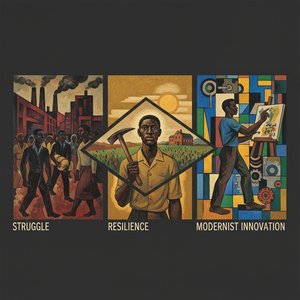
Jacob Lawrence: Narratives of Struggle, Resilience & Modernist Innovation
Explore the powerful narratives of Jacob Lawrence, a pivotal African American artist of the Harlem Renaissance. Discover his iconic 'Migration Series,' dynamic cubism style, and lasting impact on American art history.

Vasily Vereshchagin: Realism, War & Subversion in 19th-Century Russian Painting
Explore the powerful realism of Vasily Vereshchagin's war paintings & Central Asian scenes. Discover how this Russian master challenged artistic conventions and offered a brutal, honest depiction of 19th-century conflict. Learn about his legacy for discerning collectors.