

 Előnézet
 Megosztás
 Megosztás
 Részletek
 Útmutató

 Letöltés
 Hasonló darabok
 X-ray felvétel
 Diavetítés
 Statisztika
The Angels' Kitchen
 Oil On Canvas
- WallArt
- Surrealism
 2005
2005 59.0 x 47.0 cm
 Tovább olvasom
Az ezen az oldalon megjelenített műalkotások szerzői jogi védelem alatt állnak, ami azt jelenti, hogy törvényileg nem készíthetünk és nem adhatunk el belőlük pontos másolatokat. Ez a védelem olyan nemzetközi megállapodások alapján érvényesül, mint például a Berni Egyezmény és a nemzeti törvények által, beleértve azokat is, amelyeket meghatározott Az USA szerzői jogi törvénye – 17. cím.
Mint tiszteletes és törvényes alternatívát, olyan egyedi, kézzel festett alkotásokat kínálunk, amelyek az eredetiből merítnek inspirációt. Tapasztalt és professzionális művészeink alaposan tanulmányozzák az eredeti stílusát, hangulatát és művészeti esszenciáját, hogy egy olyan új, egyedi alkotást hozzunk létre, amely ugyanazt az érzést kelti – miközben önálló, eredeti alkotásként létezik.
Ez a módszer teljes mértékben megfelel a szerzői jogi szabályozásnak, mivel nem tartalmazza a védett műalkotás másolását vagy duplikálását. Ehelyett ez egy kreatív újinterpretáció – egy új festmény, amely az eredetivel való összefüggései miatt hatással van rá, de nem az az.
Kézzel készített olajfestmény reprodukció
Kézzel festett olajvastú vászon, az Ön által választott méretben és keretben, művészeink készítik meglévőre. ( Váltás nyomtatványra Áttérés digitális képre)




P118B Ft10

P118H Ft10

P118W Ft10

P438Z Ft10

P508JH Ft12

P508YH Ft12

P805H Ft10

P805Z Ft10

P919BZ Ft10

P919G Ft10

P919XJ Ft10

P959ZH Ft10

P968JZ Ft12

W106C Ft8

W218G Ft10

W218JH Ft8

W218Y Ft10

W307PJ Ft10

W316G Ft10

W316PJ Ft8

W316Y Ft10

W398PJ Ft8

W4111J Ft10

W500HY Ft15

W500JH Ft15

W692G Ft12

W849H Ft8

W940BG Ft15

W953PJ Ft8




Válasszon előre meghatározott méreteink közül, amelyek megfelelnek a műalkotás eredeti arányainak.

Ön megadhat saját méreteket egy adott kerethez vagy térhez igazításhoz. Ha a kiválasztott méret nem egyezik az eredeti kép arányával, akkor a műalkotást levágjuk, vagy további kézzel festett elemekkel meghosszabbítjuk a festményt. A gyártás megkezdése előtt küldünk Önnek egy digitális előnézetet jóváhagyásra.
Kérjük, vegye figyelembe, hogy a képernyőn megjelenő előnézet nem tükrözi a tényleges vágást vagy kiterjesztést. Csak az előnézet fog pontosan mutatni a végső kompozíciót.
Bár egyedi méretek állnak rendelkezésre, javasoljuk, hogy válasszon egy méretet az előre meghatározott listából az eredeti arányok megőrzése érdekében.
A rendelést követően a OriginalUniqueArt.com csapata e-mailt küld az ügyfélnek az instrukciókért, és biztosít egy előnézeti képet (mockup).
Világszerte elérhető szállítás () 3-4 hét alatt a szokásos 5 hét helyett. (13 október). A minőség nem kérdőjelezhető.

Ingyenes globális expressz szállítás

Prémium minőségű len vászon

Teljes körű szállítási biztosítás

Vámvisszatérítési Garancia

Tökéletes színarányosság garancia

100 napos visszaküldési garancia (csak gyártási hibás termékek esetén)

100% pénzvisszatérítési garancia

Több darab vásárlásakor kedvezmény
 Az üvegkeretes opció csak 110 cm alatti méretben érhető el

The Angels' Kitchen
Reprodukciós technika
Reprodukció méretei
-


Összesített ár
Ft 94012
The Angels' Kitchen: A Surrealist Reverie by Jacek Yerka
Jacek Yerka’s “The Angels’ Kitchen,” painted in 2005, is more than just a depiction of a domestic scene; it’s an immersive journey into a meticulously crafted surrealist dream. Measuring 59 x 47 cm, this artwork immediately captivates with its juxtaposition of the familiar – a kitchen brimming with everyday objects – and the extraordinary – a fully-fledged angel engaged in culinary activities amidst an orchard bursting with life.
- A Flemish Masterpiece: Yerka’s dedication to the classic Flemish technique, honed through years of study and unwavering commitment, is strikingly evident. The painting's rich detail, meticulous rendering of textures, and masterful use of light evoke the spirit of masters like Jan van Eyck and Pieter Bruegel, while simultaneously forging a distinctly modern vision.
- A Dreamscape in Detail: The composition itself is layered with symbolic richness. A cat calmly observes from the sink, an apple tree dominates the center – laden with fruit – and bottles are scattered across surfaces, adding to the whimsical atmosphere. This isn’t simply a kitchen; it's a carefully constructed world where the mundane and the divine intertwine.
Yerka’s artistic lineage is profoundly influential, drawing inspiration from figures like Hieronymus Bosch and Hugo van der Goes. This influence manifests in the painting’s slightly unsettling yet undeniably beautiful depiction of fantastical elements – a blend of recognizable objects and imaginative additions that invites contemplation on themes of creation, nourishment, and perhaps even spiritual grace.
Decoding the Symbolism
“The Angels’ Kitchen” is replete with symbolic meaning. The angel itself represents purity and divine intervention, yet it's presented in an utterly ordinary setting – preparing food. This deliberate contrast elevates the painting beyond a simple still life; it prompts us to consider the intersection of the sacred and the secular. The kitchen, traditionally associated with nourishment and earthly pursuits, becomes imbued with spiritual significance within Yerka’s vision.
- The Apple Tree: Symbolizing abundance, fertility, and knowledge – a recurring motif in Western art – the apple tree is central to the painting's narrative.
- The Cat: Often associated with mystery and intuition, the cat’s presence adds an element of quiet observation and perhaps even guardianship.
The overall effect is one of serene contemplation, inviting viewers to lose themselves in Yerka’s meticulously rendered world. The diffused lighting and soft edges contribute to a sense of dreamlike tranquility, further enhancing the painting's emotional impact.
Technique and Materials
Yerka employs a predominantly watercolor or gouache technique on paper, evidenced by the painting’s subtle blending, soft edges, and delicate textures. This approach lends the artwork a luminous quality, capturing light with remarkable sensitivity. The artist’s attention to detail is breathtaking, from the individual strands of grass in the foreground to the polished surfaces of the kitchen implements.
- Traditional Supplies: The use of traditional painting supplies – likely watercolor or gouache – reinforces the connection to the Flemish masters and contributes to the artwork’s timeless appeal.
- Layered Approach: Yerka's masterful layering creates depth and complexity, drawing the viewer into the scene and inviting repeated observation.
A Legacy of Surrealist Vision
"The Angels’ Kitchen" stands as a testament to Jacek Yerka’s artistic vision – a bold exploration of surrealism that seamlessly blends reality with fantasy. Exhibited across continents, including Poland, Germany, Monaco, France, and the United States, Yerka's work has garnered significant recognition within the art world. This piece is not merely a beautiful image; it’s an invitation to embrace the unexpected, question conventional perceptions, and discover beauty in the most unlikely of places.
Gyakran Ismételt Kérdések
Hogyan egyensúlyozza a fényt és a sötétséget a "The Angels' Kitchen"?
A „The Angels' Kitchen”, Jacek Yerka alkotása fényerősége bright, luminanciája pedig Gentle Luminance.
Mely művészeti irányba tartozik a „The Angels' Kitchen”, Jacek Yerka alkotása?
A „The Angels' Kitchen”, Jacek Yerka alkotása művészeti irányata a Surrealism. Ez a klasszifikáció a művet a kapcsolódó alkotók és alkotások közé sorolja.
Milyen színpalettát és milyen érzést ötvöz a "The Angels' Kitchen"?
A „The Angels' Kitchen”, Jacek Yerka alkotása Neutrals palettája harmonikában van Spiritual érzelmi hangulatával. A szín az egyik módja annak, ahogyan egy mű érzelmeket közvetít.
Milyen technika és milyen méret jellemzi az eredeti „The Angels' Kitchen”, Jacek Yerka alkotása alkotást?
A „The Angels' Kitchen”, Jacek Yerka alkotása technikája Oil On Canvas, méretei pedig a dokumentált 59 x 47 cm.
Hogyan ötvölik a kontraszt és a harmónia a(z) "The Angels' Kitchen" alkotásban?
A „The Angels' Kitchen”, Jacek Yerka alkotása színelemzése egy Statement kontrasztot és egy Softly Mixed Palette harmóniát mutat be.
Milyen hangulatot áraszt a "The Angels' Kitchen"?
A "The Angels' Kitchen" Ethereal hangulatú.
A „The Angels' Kitchen”, Jacek Yerka alkotása portré, tájékép vagy négyzet alakú kompozíció?
A „The Angels' Kitchen”, Jacek Yerka alkotása Landscape formátumú alkotás. A formátum a kompozíció arányait határozza meg.
A dátum alapján The Angels' Kitchen melyik szakaszába tartozik Jacek Yerka pályájának?
A 2005 évszám alapján a "The Angels' Kitchen" Jacek Yerka Mature Period korszakába tartozik.
A művész életrajza
Early Life and Artistic Beginnings
Jacek Yerka, a name synonymous with surrealist fantasy landscapes, emerged from a family steeped in artistic tradition in Toruń, Poland, back in 1952. Both his parents were graduates of the local Fine Art Academy – his father a celebrated sculptor, and his mother a skilled painter – creating an environment where brushes, paints, and canvases were as familiar as toys. From a young age, Yerka found solace not in playgrounds or social gatherings, but within the quiet solitude of his own creative pursuits: sketching intricate details on scraps of paper and sculpting miniature worlds from clay. This preference for solitary creation, however, led to some challenges during his primary school years; described by Yerka himself as a “grey, sometimes horrifying reality,” he was often viewed as an outsider, a boy lost in his own imaginative universe. Despite these social difficulties, his exceptional talent for drawing earned him a measure of respect among his peers, particularly in high school where his sketches were admired and occasionally displayed. This early exposure to both the beauty and the isolation of artistic expression would profoundly shape his future path.Artistic Journey and Development
Initially, Yerka entertained ambitions that seemed worlds away from the realm of art – he considered careers in astronomy and medicine, drawn by a fascination with the vastness of space and the intricacies of the human body. However, after completing his studies at Nicolaus Copernicus University in Toruń, he made a decisive choice: to dedicate himself entirely to fine art and graphic design. A key element of this decision was his resistance to embracing contemporary artistic trends. Instead, Yerka steadfastly adhered to the meticulous and highly detailed painting techniques of the Flemish masters – a commitment that would become instantly recognizable as the defining characteristic of his unique style. This dedication wasn’t merely an aesthetic preference; it represented a deep respect for tradition and a desire to master a technique honed over centuries. He saw in the works of artists like Jan van Eyck and Hieronymus Bosch not just beautiful images, but profound insights into human perception and the nature of reality.Influences and Inspirations
Yerka’s artistic vision is profoundly shaped by the legacy of masters from the past. He cites a remarkable range of influences – Hieronymus Bosch with his unsettling visions of medieval life, Pieter Bruegel for his depictions of everyday scenes infused with symbolic meaning, and even figures like Cagliostro, known for his enigmatic persona and blending of science and mysticism. The influence of the Renaissance artist Jan van Eyck is evident in Yerka’s meticulous attention to detail and use of perspective, while the dramatic compositions of Hugo van der Goes inspire his grand, theatrical landscapes. Beyond art history, Yerka draws inspiration from scientific concepts – particularly theories about cosmology and evolution – as well as vivid memories from his childhood spent exploring the Polish countryside. These diverse sources of influence converge in his work to create a world that is both fantastical and strangely familiar.Key Characteristics of His Work
Yerka’s paintings are immediately recognizable for their distinctive blend of surrealism, Flemish technique, and intricate detail. He doesn't simply paint landscapes; he constructs entire worlds – often populated by bizarre creatures, impossible architecture, and a sense of timeless mystery. The Flemish technique, with its painstaking layering of glazes and meticulous rendering of textures, is evident in every brushstroke, creating an almost photographic realism within the realm of fantasy. The level of intricate detail is astonishing; viewers are invited to lose themselves in the smallest corners of a painting, discovering hidden narratives and symbolic clues. Yerka’s works frequently explore themes of science fiction, mythology, and the relationship between humanity and the cosmos – often merging scientific concepts with artistic expression in unexpected and thought-provoking ways. His creations aren't merely beautiful; they are invitations to dream, to question, and to contemplate the mysteries of existence.Notable Works and Achievements
Throughout his career, Jacek Yerka has produced a vast body of work that has garnered international acclaim. Some of his most celebrated paintings include “The Angels’ Kitchen,” a surreal depiction of a celestial banquet, and “Wegener's Theory,” which reimagines the controversial theory of continental drift as a fantastical journey through time and space. Yerka’s art has been exhibited extensively in Poland, Germany, Monaco, France, and the United States, establishing him as one of the leading surrealist painters of his generation. Notably, he collaborated with Hollywood producer Renee Daalder on designs for the science fiction film “Strawberry Fields,” further expanding his reach beyond the art world. His work is now held in private collections around the globe and continues to inspire artists and collectors alike.Historical Significance and Legacy
Jacek Yerka’s unique artistic vision has cemented his place as a significant figure in contemporary art. His ability to seamlessly blend the surreal, the scientific, and the mythological creates captivating works that resonate with audiences worldwide. He represents a continuation of a long tradition of European fantasy painting, while simultaneously pushing the boundaries of the genre with his meticulous technique and imaginative storytelling. Yerka’s legacy extends beyond his individual paintings; he embodies a spirit of creative exploration and a willingness to challenge conventional notions of art and reality – a testament to the enduring power of imagination.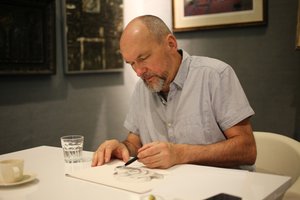
Jacek Yerka
1952 - , Lengyelország
Gyors információk
- Artistic Movement Or Style: Surrealista
- Artists Or Movements Influenced By This Artist: ['Flemish Painting']
- Artists Who Influenced This Artist:
- Hieronymus Bosch
- Pieter Bruegel
- Jan van Eyck
- Date Of Birth: 1952
- Full Name: Jacek Yerka
- Nationality: Lengyel
- Notable Artworks:
- An Angels' Kitchen
- Wegener's Theory
- Place Of Birth: Toruń, Lengyelország
Kapcsolódó cikkek
Divine Beauty: A Curated Guide to the Celestial Majesty of Angelic Figures in Art History
Explore the profound beauty of angelic figures in art history. From Renaissance masterpieces to celestial symbolism, our expert guide offers a sophisticated journey through the divine imagery of the Old Masters for discerning collectors and art enthusiasts.

Celestial Messengers: Angels in Painting – A Historical & Artistic Exploration
Explore the captivating history of angels in painting! Discover symbolism, iconic Renaissance & Byzantine masterpieces, and renowned artists. Expert insights for art lovers & collectors at OriginalUniqueArt.

Jacek Yerka: Surreal Visions & Nostalgia in Contemporary Polish Painting
Explore the captivating surreal worlds of Jacek Yerka, a leading Polish painter renowned for his meticulous Flemish technique & dreamlike landscapes. Discover his unique style and learn about collecting this exceptional artist's work.
A szürrealizmus 10 legikonikusabb festménye: művészeti remekművek otthonába – OriginalUniqueArt
Fedezze fel a szürrealizmus 10 legmeghatározóbb festményét! Salvador Dalí, René Magritte és más művészek álomvilágába kalauzoljuk. Vászonképek, faliképek – inspirálódjon otthonához a OriginalUniqueArt-on! Fedezze fel a teljes gyűjteményt online.

Celestial Messengers: A Comprehensive Exploration of Angelic Representation in Art History
Explore the captivating history of angels in art! Discover symbolism, iconic Renaissance masterpieces & renowned artists. Expert insights for art lovers & collectors at OriginalUniqueArt.