Text size

() ·

A painting made for you, by hand

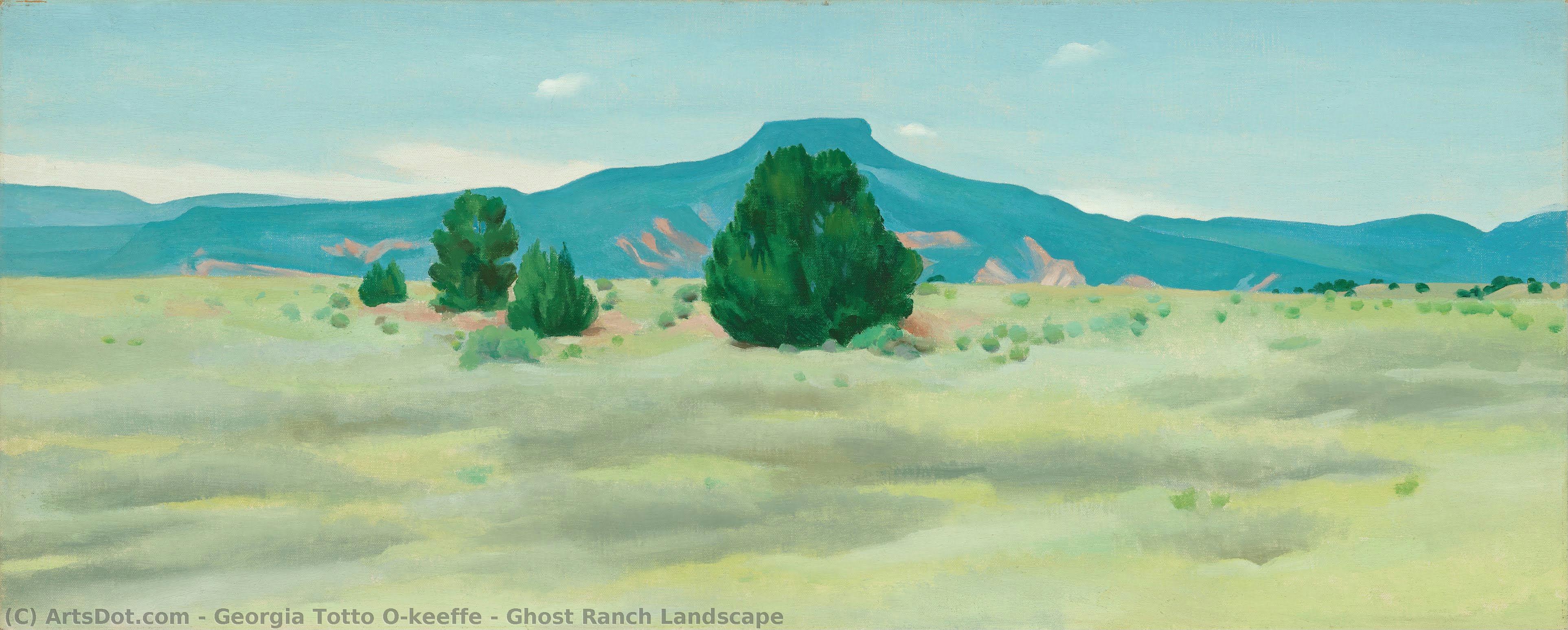
Ghost Ranch Landscape

Kézzel készített olajfestmény reprodukció

Kézzel festett olajvastú vászon, az Ön által választott méretben és keretben, művészeink készítik meglévőre. ( Váltás nyomtatványra Áttérés digitális képre)

A gyűjtemény leírása

Georgia O’Keeffe’s "Ghost Ranch Landscape," ca. 1936 is an oil painting on canvas capturing the beauty of New Mexico's landscape. Featuring a mountain range, trees, and shrubs, it exemplifies O’Keeffe’s signature style—bold abstraction combined with meticulous observation.

A művész életrajza

O'Keeffe, az amerikai modernizmus ikonja! Mesmerező virágfestményei és Új-Mexikó tájai a természet szépségének, egyéni kifejezésnek szimbóluma. Fedezd fel a lenyűgöző művészetét!

from ·

Chapter 1

How large should it be?

Slide to change the size; the picture on the left shows the frame at its real width. The proportions of the original are kept.

Standard méret
egyedi méretű
CM
INCH

Válasszon előre meghatározott méreteink közül, amelyek megfelelnek a műalkotás eredeti arányainak.

szélesség
magasság

Írja be a kívánt szélességet és magasságot, hogy illeszkedjen a keretéhez vagy a falához. Mivel ez kézzel festett alkotás, egy eltérő formájú méret esetén a művész akár festhet is valamivel többet a kép körül, vagy korolathat is belőle — az Ön döntésének megfelelően. A festés megkezdése előtt küldünk egy digitális tervezetet jóváhagyásra. Az oldalon látható kép nem tartalmazza a végeredményt — csak a tervezet mutatja meg a valódi eredményt.

Chapter 2

How should it arrive?

Choose the edges of the stretched canvas

Choose your frame

Corner sample of the WhiteWrap canvas edge finish, stretched on tömörfa bars
White Ft1
Corner sample of the BlurSideWrap canvas edge finish, stretched on tömörfa bars
Blurside Ft1
Corner sample of the ExtendedWrap canvas edge finish, stretched on tömörfa bars
Extended Ft1
Corner sample of the P118B picture frame: formázott polisztirol, 5 cm wide and 3 cm thick
P118B Ft10
Corner sample of the P118H picture frame: formázott polisztirol, 5 cm wide and 3 cm thick
P118H Ft10
Corner sample of the P118W picture frame: formázott polisztirol, 5 cm wide and 3 cm thick
P118W Ft10
Corner sample of the P438Z picture frame: formázott polisztirol, 5.5 cm wide and 3.5 cm thick
P438Z Ft10
Corner sample of the P508JH picture frame: formázott polisztirol, 7 cm wide and 3.5 cm thick
P508JH Ft12
Corner sample of the P508YH picture frame: formázott polisztirol, 7 cm wide and 3.5 cm thick
P508YH Ft12
Corner sample of the P805H picture frame: formázott polisztirol, 5 cm wide and 3.5 cm thick
P805H Ft10
Corner sample of the P805Z picture frame: formázott polisztirol, 5 cm wide and 3.5 cm thick
P805Z Ft10
Corner sample of the P919BZ picture frame: formázott polisztirol, 7 cm wide and 3.5 cm thick
P919BZ Ft10
Corner sample of the P919G picture frame: formázott polisztirol, 7 cm wide and 3.5 cm thick
P919G Ft10
Corner sample of the P919XJ picture frame: formázott polisztirol, 7 cm wide and 3.5 cm thick
P919XJ Ft10
Corner sample of the P959ZH picture frame: formázott polisztirol, 5 cm wide and 3 cm thick
P959ZH Ft10
Corner sample of the P968JZ picture frame: formázott polisztirol, 6 cm wide and 4 cm thick
P968JZ Ft12
Corner sample of the W106C picture frame: tömörfa, 5 cm wide and 3 cm thick
W106C Ft8
Corner sample of the W218G picture frame: tömörfa, 5 cm wide and 3 cm thick
W218G Ft10
Corner sample of the W218JH picture frame: tömörfa, 5 cm wide and 3 cm thick
W218JH Ft8
Corner sample of the W218Y picture frame: tömörfa, 5 cm wide and 3 cm thick
W218Y Ft10
Corner sample of the W307PJ picture frame: tömörfa, 6 cm wide and 3 cm thick
W307PJ Ft10
Corner sample of the W316G picture frame: tömörfa, 6 cm wide and 3 cm thick
W316G Ft10
Corner sample of the W316PJ picture frame: tömörfa, 6 cm wide and 3 cm thick
W316PJ Ft8
Corner sample of the W316Y picture frame: tömörfa, 6 cm wide and 3 cm thick
W316Y Ft10
Corner sample of the W398PJ picture frame: tömörfa, 5 cm wide and 3 cm thick
W398PJ Ft8
Corner sample of the W4111J picture frame: tömörfa, 6.5 cm wide and 3.5 cm thick
W4111J Ft10
Corner sample of the W500HY picture frame: tömörfa, 7 cm wide and 5 cm thick
W500HY Ft15
Corner sample of the W500JH picture frame: tömörfa, 7 cm wide and 5 cm thick
W500JH Ft15
Corner sample of the W692G picture frame: tömörfa, 8 cm wide and 4 cm thick
W692G Ft12
Corner sample of the W849H picture frame: tömörfa, 5 cm wide and 3 cm thick
W849H Ft8
Corner sample of the W940BG picture frame: tömörfa, 7.5 cm wide and 4.5 cm thick
W940BG Ft15
Corner sample of the W953PJ picture frame: tömörfa, 6 cm wide and 3.5 cm thick
W953PJ Ft8
Corner sample of the H24-GOLD picture frame: faragott fa gesszóval, 10 cm wide and 6 cm thick
H24-GOLD Ft30
Corner sample of the H24-SILVER picture frame: faragott fa gesszóval, 10 cm wide and 6 cm thick
H24-SILVER Ft30
Corner sample of the H36-GOLD picture frame: faragott fa gesszóval, 15 cm wide and 6.5 cm thick
H36-GOLD Ft45
Corner sample of the H36-SILVER picture frame: faragott fa gesszóval, 15 cm wide and 6.5 cm thick
H36-SILVER Ft45

Moulding: . Overall size with the frame: .

Chapter 3

Who paints it, and should anything change?

Examples of what can be changed: Replace face with customer photo; Add pet (e.g., replace cat with dog); Include hidden message in background; Change background landscape or elements.
After order, OriginalUniqueArt.com team will email client for instructions and provide a mockup preview

Világszerte elérhető szállítás () 3-4 hét alatt a szokásos 5 hét helyett. (2 november). A minőség nem kérdőjelezhető.

Chapter 4

The finishing touches

A nameplate, as in a museum?

A gravírozott bronztábla részletei

This elegant plaque features the artist's name and the title of the artwork, finely engraved for a timeless presentation.

It is made from bronze with a refined, elegant finish. The text is precisely laser-engraved for a sharp and permanent result. Measuring 9x2 cm, the plaque is compact yet easy to read. It's built to be durable and scratch-resistant, offering a professional, museum-quality look. Mounting is simple thanks to the included adhesive backing.

Átlátszó akril tábla részletei

The plaque includes essential engraved details such as the artist's name, the title of the artwork, the date it was created, the type of media used-like oil on canvas or watercolor-a brief description of the piece, and a QR code that links to the complete artwork information.

It is crafted from clear acrylic, offering a sleek, modern appearance. The text is UV-engraved in black to ensure strong visual contrast. With a size of 10x15 cm, it ensures optimal readability. It comes equipped with two metal hooks for secure wall mounting. The plaque is designed to be weather-resistant, making it suitable for various environments, and it includes interactive features that work seamlessly with smartphone scanning.

Fekete akril tábla részletei

This elegant plaque includes engraved information such as the artist's name, the title of the artwork, the date it was created, the type of media used (like oil on canvas or watercolor), a short description of the artwork, and a QR code for quick access to more information.

The plaque itself is made from refined black acrylic with a premium finish. The text is laser-engraved in white for high contrast and readability. Its size is 10x15 cm, designed to be easy to read. It comes with two metal hooks for professional mounting. The design is sleek and fits any interior style. It is also weather-resistant and durable, with built-in digital integration for mobile compatibility.

A protective varnish?

When do you need it?

Chapter 5

Your painting, as you ordered it

Ghost Ranch Landscape

Reprodukciós technika

Reprodukció mérete

-

Kiváló mesterművész

Nagyobb részletesség, finomság és bővített gyártási idő

-

Reprodukció keretezése

-

-

A bármely oldalsó méretét túlszálaló 105 cm (kb. 41 hüvelyk) meghaladó műalkotások vagy reprodukciók esetében a keret összeszerelhető készletként, szétszerelve kerül szállításra. Ez a módszer biztosítja a biztonságos szállítást, és megakadályozza a szállítás során fellépő sérüléseket.

Szakmész összeszerelést igényel – ez nem DIY (önösszeszerelhető) termék.
A készletet egy tapasztalt keretező szakembernek kell összeszerelnie és a vásznat feszítenie kell, fa ragasztó (nem tartalmazza a csomag), vásznfeszítő fogó és szorítók használatával, amelyek a ragasztó száradásáig a keretrészeket egymáshoz vuôngjba tartják. A helytelen összeszerelés vagy a nem egyenletes vásznfeszítés maradandó károsíthatja a műalkotást, és ez nem része a garanciánknak.

  • A készlet tartalmazza az összes tömörfa rudat, pontosan méretre vágva.

  • A mellékelt csavarokkal, valamint a sarokszerekhez szükséges faütő ragasztóval kell összeszerelnie (ez nem tartalmazható a csomagban), így a keretrendezőnek külön kell beszereznie.

  • A csomag nem tartalmazza a szükséges professzionális eszközöket: egy vászonfeszítőt és klipseket a rácsok vízszintes tartásához a ragasztó megszáradásáig.

Fontos:
A sarokcsatlakozásokhoz fánylagra van szükség, a keretrudakat szorítókapcsokkal kell rögzíteni, amíg a rag teljesen meg nem szárad, a kész keretre feszített vászonhoz pedig vászonfeszítő fogat szükséges. Ezek egyike sem található meg a készletben. Kérjük, rendelés előtt győződjön meg róla, hogy rendelkezik tapasztalt keretező szakemberrel.

Névtábla

-

-

Védőréteg (Lakk)

Fényes lakk (intenzívabb színek, védelem a fény és a nedvesség hatása ellen)

-

Műalkotásom egyedi igényre szabása

Példák a módosíthatóságra: az arc kicserélése az ügyfél fotójára; háziállat hozzáadása (pl. macska helyett kutya); rejtett üzenet elhelyezése a háttérben; a háttér tájainak vagy elemeinek megváltoztatása.

-

Sürgős

Világszerte szóló szállítás () mindössze 3-4 hét alatt, a szokásos 5 hét helyett. (2 november). A minőség nem kérdőjelezhető.

-

Express szállítás

Világszerte elérhető szállítás területre 5 héten belül. (9 november).

A szállítás díja tartalmazza

Összesített ár

Ft 98255

Összesített ár Ft 98255

Az üvegkeretes opció csak 110 cm alatti méretben érhető el

Included with every order

  • Ingyenes globális expressz szállítás
  • Prémium minőségű len vászon
  • Teljes körű szállítási biztosítás
  • Vámvisszatérítési Garancia
  • Hiteles színarányosság garancia
  • 100 napos visszaküldési lehetőség (csak hibás termékek esetén)
  • 100% pénzvisszatérítési garancia
  • Több darab vásárlásakor kedvezmény

Georgia O’Keeffe's Ghost Ranch Landscape: A Meditation on Southwestern Silence

The painting “Ghost Ranch Landscape,” created in 1936 by Georgia O’Keeffe, transcends mere depiction; it embodies a profound stillness—a visual echo of the arid beauty and contemplative spirit of New Mexico. More than just capturing a vista, O’Keeffe transforms the rugged terrain into an emblem of resilience and inner peace, reflecting her own artistic philosophy rooted in simplification and observation.

Subject Matter and Composition

At first glance, the landscape presents itself as deceptively serene. Dominating the lower half of the canvas is a relatively flat expanse punctuated by sparse shrubs and trees—primarily juniper bushes—that cling to the hillside. A single, mature tree stands prominently in the center, anchoring the composition and drawing the eye upwards towards Pedernal Peak, which rises majestically in the distance. This peak, a geological landmark significant to Pueblo culture and O’Keeffe herself, serves as a focal point for contemplation. The artist meticulously rendered the textures of the earth—the rough bark of the tree, the prickly foliage of the shrubs—creating an immersive experience for the viewer.

Style and Technique: Minimalism Embodied

O’Keeffe's approach to painting exemplifies the tenets of American Modernism championed by artists like Arthur Wesley Dow. Rejecting academic realism, she prioritized conveying emotion through reductive forms and harmonious color palettes. The landscape is rendered in oil on canvas using a technique characterized by thick impasto—a layering of paint that builds up substantial texture—particularly around the tree trunk and branches. This tactile quality invites viewers to engage with the artwork physically, mirroring O’Keefe's desire to capture not just what she saw but how it *felt*. The color scheme is muted yet deliberate: earthy browns and ochres dominate, punctuated by subtle hints of violet and crimson—colors that evoke the hues of twilight and imbue the scene with an aura of melancholy beauty.

Historical Context and Artistic Influences

Painted during O’Keeffe's formative years in New Mexico, “Ghost Ranch Landscape” reflects her growing fascination with Southwestern landscapes and Native American culture. Inspired by Dow’s teachings—specifically his emphasis on distilling visual experience into its essential elements—O’Keefe sought to distill the grandeur of the desert into a single, evocative image. The painting aligns itself with the broader modernist movement's rejection of traditional conventions and embrace of subjective expression. It anticipates O’Keeffe’s later explorations of abstraction, where she would further reduce forms and colors to convey pure emotion—a stylistic trajectory that cemented her legacy as one of America’s most influential artists.

Symbolism: Resilience and Inner Reflection

Beyond its aesthetic qualities, “Ghost Ranch Landscape” carries symbolic weight. The tree represents strength and endurance—a visual metaphor for O’Keeffe's own unwavering determination to pursue her artistic vision despite obstacles. Pedernal Peak symbolizes permanence and spiritual contemplation—a reminder of the enduring beauty of the natural world and the importance of introspection. The overall stillness of the scene speaks to a deeper yearning for serenity and acceptance—themes that resonate powerfully with O’Keeffe's personal philosophy and contribute to the painting’s lasting emotional impact. It is a testament to O’Keefe’s ability to transform observation into profound artistic expression, capturing not just what she saw but what it meant to her soul.

Kérdések és válaszok

Hová sorolható a Georgia O'Keeffe pályájának mely szakaszába a "Ghost Ranch Landscape"?

A "Ghost Ranch Landscape" Georgia O'Keeffe alkotói pályájának Mature Period szakaszát képviseli.

Milyen más nevét vagy álneveit használ még Georgia O'Keeffe?

Georgia O'Keeffe a következő más néven is ismert: Georgia Totto OKeeffe.

„Ghost Ranch Landscape”, Georgia O'Keeffe alkotása színei élénkek vagy fakók?

A „Ghost Ranch Landscape”, Georgia O'Keeffe alkotása színei Balanced Soft telítettséget és Vivid intenzitást mutatnak be.

More about this painting

Megtekintés AR előnézet Váltás nyomtatványra Áttérés digitális képre Küldés
Részletek Útmutató Kedvencekhez ad Letöltés Hasonló darabok X-ray felvétel Diavetítés Q&A Statisztika

In numbers

  • 1936the year it was painted
  • 29frames to choose from
  • standard sizes, in its own proportions
  • 5weeks to paint and deliver it

About the original

Georgia O'Keeffe

Georgia O'Keeffe

1887 - 1986, Egyesült Államok

Quick facts about Georgia O'Keeffe

  • Artistic Movement Or Style: Modernizmus
  • Artists Or Movements Influenced By This Artist:
    • Dow
    • Modernizmus
  • Artists Who Influenced This Artist:
    • Arthur Dow
    • Stieglitz
  • Date Of Birth: November 15, 1887
  • Date Of Death: March 6, 1986
  • Full Name: Georgia Totto O'Keeffe
  • Nationality: Amerikai
  • Notable Artworks:
    • Red Canna
    • Kosfej
    • Summer Days
  • Place Of Birth: Sun Prairie, USA

A művész életrajza

Early Life and Artistic Foundations

Georgia Totto O’Keeffe, a name synonymous with American modernism, emerged from the unassuming landscape of Sun Prairie, Wisconsin, in 1887. Born into a family of Irish and Hungarian descent engaged in dairy farming, young Georgia displayed an artistic inclination early on, deciding by age ten that she would dedicate her life to art. This determination was nurtured through lessons with local watercolorist Sara Mann, followed by formal studies at the School of the Art Institute of Chicago from 1905 to 1906 and later at the University of Virginia. However, it was her encounter with Arthur Wesley Dow’s principles – emphasizing personal expression and a harmonious balance of color and line – that truly ignited her artistic path. Dow's teachings steered O’Keeffe away from strict realism toward a more subjective and emotionally resonant approach to art, an approach that would define her career. These formative years weren’t without their challenges; periods of illness and dissatisfaction led her to temporarily abandon painting, but the creative impulse always drew her back, evolving with each new experience and influence.

New York and the Stieglitz Circle

A pivotal moment arrived in 1916 when O’Keeffe’s abstract charcoal drawings were discovered by Alfred Stieglitz, a renowned photographer and art dealer. He exhibited her work without her prior knowledge, sparking a dialogue that would profoundly shape both their lives and the course of American art. Stieglitz recognized an exceptional talent in O’Keeffe, one that resonated with his own modernist sensibilities. He invited her to New York City in 1918, providing not only professional support but also fostering a deep personal connection. Their relationship blossomed into marriage in 1924, creating a dynamic artistic partnership and intellectual exchange. Stieglitz championed O’Keeffe’s work, showcasing it at his gallery “291” and promoting her as a leading figure in the American avant-garde. During this period, she began to develop her signature style – bold, simplified forms and intensely saturated colors – initially expressed through depictions of New York skyscrapers and, most famously, magnified flower paintings. These floral works, often interpreted (though consistently denied by O’Keeffe herself) as veiled representations of female anatomy, challenged conventional notions of beauty and sexuality in art.

The Allure of the Southwest

While New York provided a crucial platform for her early success, it was the landscapes of the American Southwest that truly captured O’Keeffe’s imagination and profoundly influenced her artistic vision. Her first visit to New Mexico in 1929 marked the beginning of a lifelong love affair with the region's stark beauty, vibrant colors, and unique cultural heritage. The vastness of the desert, the dramatic rock formations, and the ancient Pueblo architecture resonated deeply within her, inspiring a new series of paintings that reflected the spirit of the land. Works like *Cow’s Skull: Red, White, and Blue* (1931) and *Summer Days* (1936) are powerful testaments to this influence, transforming seemingly mundane objects into iconic symbols of the American West. She eventually settled permanently in New Mexico in 1949 following Stieglitz’s death, establishing a home and studio in Abiquiu that became integral to her artistic process and identity.

Technique and Style

O'Keeffe’s distinctive style evolved over decades, yet certain elements remained constant. She favored large-scale canvases, often employing a limited palette of intense colors – reds, blues, yellows, and greens – to create dramatic effects. Her brushwork was typically loose and expressive, prioritizing the suggestion of form over precise detail. She frequently used a technique called “pushing,” where she applied paint in layers, building up texture and depth through repeated applications. This method created a shimmering surface that seemed to vibrate with energy. O’Keeffe's compositions were often carefully constructed, with elements arranged to create a sense of balance and harmony. Her subjects—flowers, landscapes, animals—were rendered with an almost sculptural quality, emphasizing their three-dimensionality and inviting viewers to contemplate them from multiple perspectives. The influence of Arthur Wesley Dow is evident in her use of color and line, but O’Keeffe ultimately developed a unique visual language that was both intensely personal and profoundly influential.

Legacy and Enduring Influence

Georgia O'Keeffe continued to paint prolifically throughout her life, experimenting with new subjects and pushing the boundaries of abstraction. Her later works included aerial views of clouds and skies, reflecting a fascination with the vastness and ethereal quality of the natural world. She remained fiercely independent and uncompromising in her artistic vision, refusing to be categorized or defined by prevailing art movements. O’Keeffe’s impact on American art is immeasurable. She paved the way for future generations of female artists, challenging societal norms and asserting her own unique voice in a male-dominated field. Her paintings continue to captivate audiences with their bold simplicity, emotional depth, and evocative power. The establishment of the Georgia O'Keeffe Museum in Santa Fe in 1997 further solidified her legacy, preserving her art and providing a space for ongoing scholarship and appreciation. In 2014, *Jimson Weed/White Flower No. 1* sold for $44.4 million, setting a record price for a work by a female artist – a testament to the enduring value and significance of her artistic contribution. O’Keeffe's influence extends beyond painting; she became an icon of American individualism and self-reliance, inspiring countless artists and admirers with her unwavering commitment to her craft and her unique perspective on the world. Her work remains a powerful reminder of the transformative power of art and the enduring beauty of the natural world.

Key Works & Museum Presence

  • Red Canna: Exemplifies her early exploration of floral abstraction.
  • Cow’s Skull: Red, White, and Blue (1931): A powerful symbol of the American Southwest and a meditation on mortality.
  • Summer Days (1936): Captures the essence of the New Mexico landscape with its vibrant colors and simplified forms.
  • Jimson Weed/White Flower No. 1: A monumental floral painting that showcases her mastery of scale and composition.
O’Keeffe's works are prominently featured in numerous museums worldwide, including:
  • Georgia O'Keeffe Museum (Santa Fe)
  • Museum of Modern Art (New York)
  • Art Institute of Chicago
  • National Gallery of Art (Washington, D.C.)

Gyors információk

  • Artistic style: Symbolic landscape
  • Title: Ghost Ranch Landscape
  • Year: 1936
  • Location: Georgia O’Keeffe Museum
  • Subject or theme: New Mexico scenery
  • Notable elements or techniques: Bold abstraction; Color palette

Művészeti kvíz

Minden kérdésre csak egy helyes válasz létezik.

Kérdés 1:
What is the primary subject matter of Georgia O’Keeffe’s ‘Ghost Ranch Landscape’?
Kérdés 2:
Approximately when was this painting created?
Kérdés 3:
What artistic movement is Georgia O’Keeffe associated with?
Kérdés 4:
The painting utilizes a technique characterized by simplified forms and bold color palettes.
Kérdés 5:
What is the significance of Pedernal in the landscape depicted?



































