Megtekintés
 Küldés
 Megosztás
 Részletek
 Útmutató

 Letöltés
 Hasonló darabok
 X-ray felvétel
 Diavetítés
 Q&A
Q&A Statisztika
Summer


 Összes részlet megjelenítése
Giclée / Műnyomat
Múzeumi minőségű giclée vagy vászonnyomat, gyors gyártással és rugalmas finomítási lehetőségekkel. ( Kézzel festett másolat rendelése Áttérés digitális képre)




P118B Ft10

P118H Ft10

P118W Ft10

P438Z Ft10

P508JH Ft12

P508YH Ft12

P805H Ft10

P805Z Ft10

P919BZ Ft10

P919G Ft10

P919XJ Ft10

P959ZH Ft10

P968JZ Ft12

W106C Ft8

W218G Ft10

W218JH Ft8

W218Y Ft10

W307PJ Ft10

W316G Ft10

W316PJ Ft8

W316Y Ft10

W398PJ Ft8

W4111J Ft10

W500HY Ft15

W500JH Ft15

W692G Ft12

W849H Ft8

W940BG Ft15

W953PJ Ft8




Válasszon előre meghatározott méreteink közül, amelyek megfelelnek a műalkotás eredeti arányainak.

Írja be a keretének vagy a falának megfelelő szélességet és magasságot. A nyomatot csak le lehet vágni, soha nem tehető nagyobbá, mint az eredeti kép, így egy eltérő alakú méretnél a kép egy része elveszik. Mielőtt bármit kinyatintanánk, küldünk egy digitális próbamodellt jóváhagyásra. Az oldalon látható kép nem tartalmazza a valós levágást — ezt csak a próbamodell mutatja meg.
Világszerte történő kiszállítás területére mindössze 2 hét alatt, a szokásos 4-5 hét helyett. (1 november)

Ingyenes globális expressz szállítás

Prémium minőségű len vászon

Teljes körű szállítási biztosítás

Vámvisszatérítési Garancia

Hiteles színarányosság garancia

100 napos visszaküldési lehetőség (csak hibás termékek esetén)

100% pénzvisszatérítési garancia

Több darab vásárlásakor kedvezmény
 Az üvegkeretes opció csak 110 cm alatti méretben érhető el

Summer
Giclée / Műnyomat
Reprodukció mérete
-


Összesített ár
Ft 26198
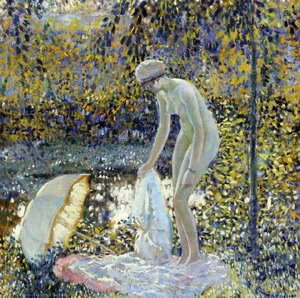
Summer by Frederick Carl Frieseke: A Glimpse of Tranquility
- Artist: Frederick Carl Frieseke
- Year: 1914
- Medium: Oil on Canvas
- Location: MOA Museum of Art, Japan
Frederick Carl Frieseke's "Summer" is a captivating example of American Impressionism, transporting viewers to a serene garden setting. The painting depicts two women immersed in a moment of peaceful intimacy, showcasing Frieseke’s mastery of light and color.
Composition and Artistic Style
"Summer" exemplifies Frieseke's signature style – a harmonious blend of Impressionistic techniques with elements of Realism. The composition centers around two figures: one woman reclining languidly on the ground, her head resting comfortably in the lap of another who is playing a musical instrument. Lush greenery and vibrant flowers form a backdrop, creating an atmosphere of tranquility and escape.
Frieseke’s use of broken brushstrokes and bold colors captures the fleeting effects of light, characteristic of Impressionism. The perspective is subtly flattened, prioritizing atmospheric depth over strict realism. This technique draws the viewer into the scene, evoking a sense of being present in that idyllic garden. Details like birds flitting through the foliage and a nearby chair add layers of visual interest.
Historical Context and Influences
Created in 1914, "Summer" reflects the artistic trends of the early 20th century. Frieseke spent much of his career living and working in France, particularly within the Giverny art colony – home to Claude Monet and other prominent artists. While he maintained a degree of independence from Monet's style, Frieseke was undoubtedly influenced by the broader Impressionist movement and admired artists like Renoir.
The painting’s subject matter—leisurely scenes featuring women in idyllic settings—was popular among American expatriate artists during this period. "Summer" embodies a desire to capture moments of beauty and relaxation, reflecting a shift towards more personal and intimate themes in art.
Symbolism and Emotional Impact
Beyond its aesthetic appeal, “Summer” carries subtle symbolic weight. The abundance of flowers represents nature's vitality and fertility, while the nude figure embodies classical ideals of beauty and grace. The act of playing music suggests harmony and emotional connection between the two women.
The overall effect is one of profound tranquility and sensuality. Frieseke’s skillful use of light and color creates a dreamy atmosphere that invites viewers to escape into a world of peace and serenity. "Summer" evokes feelings of warmth, relaxation, and appreciation for the simple pleasures in life—a timeless masterpiece that continues to resonate with audiences today.
Kérdések és válaszok
Milyen érzelmi hangulat kíséri a "Summer" alkotás Impressionism stílusát?
A "Summer" a Impressionism korszak Romantic érzelmi hangulatát tükrözi.
Elérhető diákok számára egy „Summer”, Frieseke Ferenc alkotása információs adatlap?
A „Summer”, Frieseke Ferenc alkotása alkotáshoz elérhető egy Útmutató oldal: ez egy kinyomtatható információs lap a műről, amelyet diákok számára és tantervhez készült használatra terveztek.
Mennyire tel愈t a "Summer" színpalettája?
A „Summer”, Frieseke Ferenc alkotása alkotás Muted telítettségű színekkel készült.
A művész életrajza
A Life Bathed in Sunlight: The Artistic Journey of Frederick Carl Frieseke
Frederick Carl Frieseke, a name synonymous with the luminous beauty of American Impressionism, was born on April 7, 1874, in the small Michigan town of Owosso. His early life, shaped by both rural roots and a burgeoning artistic sensibility, laid the foundation for his enduring legacy. Following his mother’s untimely passing, Frieseke spent formative years with his aunt and uncle, absorbing an appreciation for art and design that would profoundly influence his future work. This period instilled within him a deep sensitivity to light and form – a core element of his distinctive style. A pivotal moment arrived in 1893 when he visited the World’s Columbian Exposition in Chicago, an experience that ignited a fervent passion for painting and propelled him towards formal artistic training at the Art Institute of Chicago. However, it was his relocation to Paris in 1898 that truly cemented his artistic destiny, immersing him within the vibrant heart of European art and exposing him to the revolutionary ideas shaping the era.The Allure of Giverny and the Development of “Decorative Impressionism”
Paris became more than just a destination; it transformed into Frieseke’s adopted home, a sanctuary where he could hone his skills and cultivate his artistic vision. Early influences included James Abbott McNeill Whistler, whose masterful use of tonal harmonies left an indelible mark on Frieseke's palette and approach to composition. Yet, the true catalyst for his unique style was undoubtedly the proximity to Giverny – Claude Monet’s legendary garden and home. In 1906, Frieseke secured a modest house adjacent to Monet’s estate, becoming part of a thriving artistic community and absorbing the very essence of Impressionism firsthand. This intimate connection fostered what is often described as “decorative impressionism,” a style characterized by an exquisite elegance that distinguished it from the more spontaneous brushwork of some contemporaries. Unlike many Impressionists who focused on fleeting moments, Frieseke meticulously crafted scenes imbued with a sense of serene beauty and quiet contemplation. His paintings weren’t merely representations of reality; they were carefully constructed narratives designed to evoke feelings of tranquility and intimacy. He skillfully blended elements of Whistler's tonal harmonies with the bolder color palettes championed by Post-Impressionists like Paul Gauguin and Pierre Bonnard, creating a distinctive visual language that resonated deeply with audiences.Themes and Techniques: Capturing Light and Femininity
Frieseke’s artistic focus consistently revolved around two central themes: the captivating effects of light and the portrayal of women. He possessed an almost obsessive fascination with how sunlight transformed ordinary scenes into moments of ethereal beauty, meticulously capturing this interplay in his paintings. His female subjects – often depicted in idyllic gardens or intimate interiors – were not simply portraits but embodiments of grace, sensuality, and quiet contemplation. *Hélène*, painted in 1901, stands as a prime example of this approach—a captivating portrait that masterfully blends realism with Impressionistic beauty and intimate detail. Similarly, works like *The Garden at Giverny* demonstrate his ability to seamlessly integrate Impressionist techniques with Post-Impressionist color sensibilities, creating a harmonious blend of light, shadow, and form. Frieseke’s technique involved layering delicate brushstrokes – often applied in thin glazes – to achieve a shimmering effect that evoked the sensation of sunlight dancing on skin and foliage. He frequently incorporated geometric elements—parasols, patterned fabrics—to provide visual contrast and enhance the overall harmony of his compositions. This dedication to capturing these nuances earned him widespread recognition; *Before the Glass* (1904) was purchased by the French Government and displayed at the Luxembourg Gallery, a testament to his growing reputation within the art world.Recognition and Legacy: A Lasting Impression on American Art
Throughout his career, Frieseke garnered numerous accolades that reflected both his artistic talent and the esteem in which he was held by his peers. He received silver medals at the St. Louis Exposition in 1904, the Temple Gold Medal from the Pennsylvania Academy of Fine Arts in 1913, and the Grand Prize at the Panama-Pacific International Exposition in 1915. His painting *Torn Lingerie* (1920) achieved particular acclaim, winning two gold medals and the popular prize at the Chicago Art Institute—a remarkable achievement that solidified his position as a leading figure in American art. Despite his considerable success, Frieseke remained deeply committed to his expatriate lifestyle, preferring the artistic freedom he found in France. He passed away on August 24, 1939, leaving behind a legacy of luminous paintings that continue to captivate and inspire audiences worldwide. Frederick Carl Frieseke’s contribution to American Impressionism is significant not only for his technical skill but also for his ability to create scenes of enduring beauty and tranquility—a testament to the power of art to transport us to idyllic realms bathed in sunlight and filled with grace.Notable Works
- Portrait of a Girl (also known as Pensive Model): A stunning blend of realism and beauty capturing quiet contemplation.
- Hélène: Showcasing Impressionistic beauty and intimate detail, painted in 1901.
- Self-Portrait: Reveals the artist’s contemplative nature amidst his studio, showcasing masterful technique.
- The Garden at Giverny: A prime example of his blend of Impressionist and Post-Impressionist styles.
- Woman in a Garden: A quintessential representation of his decorative impressionism.
- Before the Glass (1904): Purchased by the French Government, displayed at the Luxembourg Gallery.
- Torn Lingerie (1920): Awarded two gold medals and the popular prize at the Chicago Art Institute.

Frieseke Ferenc
1874 - 1939 , Egyesült Államok
Rövid információk
- Artistic Movement Or Style: Amerikai impresszionista
- Artists Or Movements Influenced By This Artist: ['Amerikai impresszionista']
- Artists Who Influenced This Artist:
- Whistler
- Renoir
- Gauguin
- Date Of Birth: Ápril 7, 1874
- Date Of Death: Augusztus 24, 1939
- Full Name: Frederick Carl Frieseke
- Nationality: Amerikai
- Notable Artworks:
- A virágoskert Givernyben
- Egy nő a kertben
- Üveg előtt
- Place Of Birth: Owosso, USA
Kapcsolódó cikkek

Grant Wood & American Regionalism: Identity, Myth & the Rural Landscape
Explore the world of Grant Wood & American Regionalism with OriginalUniqueArt. Discover the symbolism behind 'American Gothic', recurring themes, and the movement's lasting impact on art history. High-quality reproductions available.
Capturing the Light: A Journey Through the Soul of American Impressionism and the Hudson River School
Explore the luminous beauty of American Impressionism and the Hudson River School. Discover a curated journey through light, landscape, and history, celebrating the enduring legacy of masters through exquisite, hand-painted oil reproductions for the discerning art lover.

Frederick Childe Hassam: American Impressionism's Chronicler of Light & Modern Life
Explore the captivating world of Frederick Childe Hassam, a pioneer of American Impressionism. Discover his iconic paintings capturing light, urban life & coastal beauty. Learn about his legacy and influence on American art history.
Cultivating Paradise: A Historical & Artistic Exploration of Gardens in Painting
Explore the rich history of gardens in painting! Discover masterpieces from Renaissance to Impressionism & beyond. Learn about symbolism, artists like Monet & Klimt, and find your perfect artwork at OriginalUniqueArt.
Capturing a Nation's Light: Exploring the American Impressionist Movement
Explore the captivating world of American Impressionism! Discover key artists, techniques & its lasting impact on art history. Find museum-quality reproductions and expert guidance at OriginalUniqueArt.