A szöveg mérete

() ·

Egy Önnek készült, kézzel festett alkotás

Triptikh

Kézzel készített olajfestmény reprodukció

Kézzel festett olajvastú vászon, az Ön által választott méretben és keretben, művészeink készítik meglévőre. ( Váltás nyomtatványra Áttérés digitális képre)

A gyűjtemény leírása

Fedezze fel Duccio di Buoninsegna 1305-ös Triptikhját – csodálatos reneszánsz mesterművet Krisztus szenvedése témájával. Kezdőbizasztikus hatásokról, aranylevélről és szimbólikus részletekről.

A művész életrajza

Fedezd fel a reneszánszt megelőző Sienai iskola egyik legkiemelkedőbb festőjét, Duccio di Buoninsegna (1255-1319)! Képei gazdag színekkel, érzelmi mélységemmel és bizánci hatással kápráztatják el.

előbb ·

1. fejezet

Mekkora méretű legyen?

Húzza a csúszkát a méret megváltoztatásához; a bal oldali kép a keret valós szélességét mutatja. Az eredeti arányok megmaradnak.

Standard méret
egyedi méretű
CM
INCH

Válasszon előre meghatározott méreteink közül, amelyek megfelelnek a műalkotás eredeti arányainak.

szélesség
magasság

Írja be a kívánt szélességet és magasságot, hogy illeszkedjen a keretéhez vagy a falához. Mivel ez kézzel festett alkotás, egy eltérő formájú méret esetén a művész akár festhet is valamivel többet a kép körül, vagy korolathat is belőle — az Ön döntésének megfelelően. A festés megkezdése előtt küldünk egy digitális tervezetet jóváhagyásra. Az oldalon látható kép nem tartalmazza a végeredményt — csak a tervezet mutatja meg a valódi eredményt.

2. fejezet

Hogyan érkezzen meg?

Válaszd ki a feszített vászon széleit

Válassza ki a keretet

Corner sample of the WhiteWrap canvas edge finish, stretched on tömörfa bars
Fehér Ft1
Corner sample of the BlurSideWrap canvas edge finish, stretched on tömörfa bars
Elmosódott szélek Ft1
Corner sample of the ExtendedWrap canvas edge finish, stretched on tömörfa bars
Kiterjesztett Ft1
Corner sample of the P118B picture frame: formázott polisztirol, 5 cm wide and 3 cm thick
P118B Ft10
Corner sample of the P118H picture frame: formázott polisztirol, 5 cm wide and 3 cm thick
P118H Ft10
Corner sample of the P118W picture frame: formázott polisztirol, 5 cm wide and 3 cm thick
P118W Ft10
Corner sample of the P438Z picture frame: formázott polisztirol, 5.5 cm wide and 3.5 cm thick
P438Z Ft10
Corner sample of the P508JH picture frame: formázott polisztirol, 7 cm wide and 3.5 cm thick
P508JH Ft12
Corner sample of the P508YH picture frame: formázott polisztirol, 7 cm wide and 3.5 cm thick
P508YH Ft12
Corner sample of the P805H picture frame: formázott polisztirol, 5 cm wide and 3.5 cm thick
P805H Ft10
Corner sample of the P805Z picture frame: formázott polisztirol, 5 cm wide and 3.5 cm thick
P805Z Ft10
Corner sample of the P919BZ picture frame: formázott polisztirol, 7 cm wide and 3.5 cm thick
P919BZ Ft10
Corner sample of the P919G picture frame: formázott polisztirol, 7 cm wide and 3.5 cm thick
P919G Ft10
Corner sample of the P919XJ picture frame: formázott polisztirol, 7 cm wide and 3.5 cm thick
P919XJ Ft10
Corner sample of the P959ZH picture frame: formázott polisztirol, 5 cm wide and 3 cm thick
P959ZH Ft10
Corner sample of the P968JZ picture frame: formázott polisztirol, 6 cm wide and 4 cm thick
P968JZ Ft12
Corner sample of the W106C picture frame: tömörfa, 5 cm wide and 3 cm thick
W106C Ft8
Corner sample of the W218G picture frame: tömörfa, 5 cm wide and 3 cm thick
W218G Ft10
Corner sample of the W218JH picture frame: tömörfa, 5 cm wide and 3 cm thick
W218JH Ft8
Corner sample of the W218Y picture frame: tömörfa, 5 cm wide and 3 cm thick
W218Y Ft10
Corner sample of the W307PJ picture frame: tömörfa, 6 cm wide and 3 cm thick
W307PJ Ft10
Corner sample of the W316G picture frame: tömörfa, 6 cm wide and 3 cm thick
W316G Ft10
Corner sample of the W316PJ picture frame: tömörfa, 6 cm wide and 3 cm thick
W316PJ Ft8
Corner sample of the W316Y picture frame: tömörfa, 6 cm wide and 3 cm thick
W316Y Ft10
Corner sample of the W398PJ picture frame: tömörfa, 5 cm wide and 3 cm thick
W398PJ Ft8
Corner sample of the W4111J picture frame: tömörfa, 6.5 cm wide and 3.5 cm thick
W4111J Ft10
Corner sample of the W500HY picture frame: tömörfa, 7 cm wide and 5 cm thick
W500HY Ft15
Corner sample of the W500JH picture frame: tömörfa, 7 cm wide and 5 cm thick
W500JH Ft15
Corner sample of the W692G picture frame: tömörfa, 8 cm wide and 4 cm thick
W692G Ft12
Corner sample of the W849H picture frame: tömörfa, 5 cm wide and 3 cm thick
W849H Ft8
Corner sample of the W940BG picture frame: tömörfa, 7.5 cm wide and 4.5 cm thick
W940BG Ft15
Corner sample of the W953PJ picture frame: tömörfa, 6 cm wide and 3.5 cm thick
W953PJ Ft8
Corner sample of the H24-GOLD picture frame: faragott fa gesszóval, 10 cm wide and 6 cm thick
H24-GOLD Ft30
Corner sample of the H24-SILVER picture frame: faragott fa gesszóval, 10 cm wide and 6 cm thick
H24-SILVER Ft30
Corner sample of the H36-GOLD picture frame: faragott fa gesszóval, 15 cm wide and 6.5 cm thick
H36-GOLD Ft45
Corner sample of the H36-SILVER picture frame: faragott fa gesszóval, 15 cm wide and 6.5 cm thick
H36-SILVER Ft45

Keretprofil: . A kerettel együtt vett teljes méret: .

3. fejezet

Ki festi, és változtatni kellene-e bármit?

Példák a módosíthatóságra: Az arc kicserélése a vásárló fotójára; háziállat hozzáadása (pl. macska kicserélése kutyára); rejtett üzenet elhelyezése a háttérben; a háttér tájéképének vagy elemeinek megváltoztatása.
A megrendelést követően a OriginalUniqueArt.com csapat e-mailt küld a vásárlónak az instrukciókkal, és biztosítja a tervezeti előnézetet

Világszerte elérhető szállítás () 3-4 hét alatt a szokásos 5 hét helyett. (5 november). A minőség nem kérdőjelezhető.

4. fejezet

Az utolsó finomhangolás

Egy felirat, mint egy múzeumban?

A gravírozott bronztábla részletei

This elegant plaque features the artist's name and the title of the artwork, finely engraved for a timeless presentation.

It is made from bronze with a refined, elegant finish. The text is precisely laser-engraved for a sharp and permanent result. Measuring 9x2 cm, the plaque is compact yet easy to read. It's built to be durable and scratch-resistant, offering a professional, museum-quality look. Mounting is simple thanks to the included adhesive backing.

Átlátszó akril tábla részletei

The plaque includes essential engraved details such as the artist's name, the title of the artwork, the date it was created, the type of media used-like oil on canvas or watercolor-a brief description of the piece, and a QR code that links to the complete artwork information.

It is crafted from clear acrylic, offering a sleek, modern appearance. The text is UV-engraved in black to ensure strong visual contrast. With a size of 10x15 cm, it ensures optimal readability. It comes equipped with two metal hooks for secure wall mounting. The plaque is designed to be weather-resistant, making it suitable for various environments, and it includes interactive features that work seamlessly with smartphone scanning.

Fekete akril tábla részletei

This elegant plaque includes engraved information such as the artist's name, the title of the artwork, the date it was created, the type of media used (like oil on canvas or watercolor), a short description of the artwork, and a QR code for quick access to more information.

The plaque itself is made from refined black acrylic with a premium finish. The text is laser-engraved in white for high contrast and readability. Its size is 10x15 cm, designed to be easy to read. It comes with two metal hooks for professional mounting. The design is sleek and fits any interior style. It is also weather-resistant and durable, with built-in digital integration for mobile compatibility.

Egy védőréteg?

Mikor lenne szüksége rá?

5. fejezet

Az Ön által megrendelt festmény

Triptikh

Reprodukciós technika

Reprodukció mérete

-

Kiváló mesterművész

Nagyobb részletesség, finomság és bővített gyártási idő

-

Reprodukció keretezése

-

-

A bármely oldalsó méretét túlszálaló 105 cm (kb. 41 hüvelyk) meghaladó műalkotások vagy reprodukciók esetében a keret összeszerelhető készletként, szétszerelve kerül szállításra. Ez a módszer biztosítja a biztonságos szállítást, és megakadályozza a szállítás során fellépő sérüléseket.

Szakmész összeszerelést igényel – ez nem DIY (önösszeszerelhető) termék.
A készletet egy tapasztalt keretező szakembernek kell összeszerelnie és a vásznat feszítenie kell, fa ragasztó (nem tartalmazza a csomag), vásznfeszítő fogó és szorítók használatával, amelyek a ragasztó száradásáig a keretrészeket egymáshoz vuôngjba tartják. A helytelen összeszerelés vagy a nem egyenletes vásznfeszítés maradandó károsíthatja a műalkotást, és ez nem része a garanciánknak.

  • A készlet tartalmazza az összes tömörfa rudat, pontosan méretre vágva.

  • A mellékelt csavarokkal, valamint a sarokszerekhez szükséges faütő ragasztóval kell összeszerelnie (ez nem tartalmazható a csomagban), így a keretrendezőnek külön kell beszereznie.

  • A csomag nem tartalmazza a szükséges professzionális eszközöket: egy vászonfeszítőt és klipseket a rácsok vízszintes tartásához a ragasztó megszáradásáig.

Fontos:
A sarokcsatlakozásokhoz fánylagra van szükség, a keretrudakat szorítókapcsokkal kell rögzíteni, amíg a rag teljesen meg nem szárad, a kész keretre feszített vászonhoz pedig vászonfeszítő fogat szükséges. Ezek egyike sem található meg a készletben. Kérjük, rendelés előtt győződjön meg róla, hogy rendelkezik tapasztalt keretező szakemberrel.

Névtábla

-

-

Védőréteg (Lakk)

Fényes lakk (intenzívabb színek, védelem a fény és a nedvesség hatása ellen)

-

Műalkotásom egyedi igényre szabása

Példák a módosíthatóságra: az arc kicserélése az ügyfél fotójára; háziállat hozzáadása (pl. macska helyett kutya); rejtett üzenet elhelyezése a háttérben; a háttér tájainak vagy elemeinek megváltoztatása.

-

Sürgős

Világszerte szóló szállítás () mindössze 3-4 hét alatt, a szokásos 5 hét helyett. (5 november). A minőség nem kérdőjelezhető.

-

Express szállítás

Világszerte elérhető szállítás területre 5 héten belül. (12 november).

A szállítás díja tartalmazza

Összesített ár

Ft 129880

Összesített ár Ft 129880

Az üvegkeretes opció csak 110 cm alatti méretben érhető el

Minden rendelés mellé tartalmazva

  • Ingyenes globális expressz szállítás
  • Prémium minőségű len vászon
  • Teljes körű szállítási biztosítás
  • Vámvisszatérítési Garancia
  • Hiteles színarányosság garancia
  • 100 napos visszaküldési lehetőség (csak hibás termékek esetén)
  • 100% pénzvisszatérítési garancia
  • Több darab vásárlásakor kedvezmény

A Tanú Csodálatos Szomorúság: Duccio Triptícha (1305)

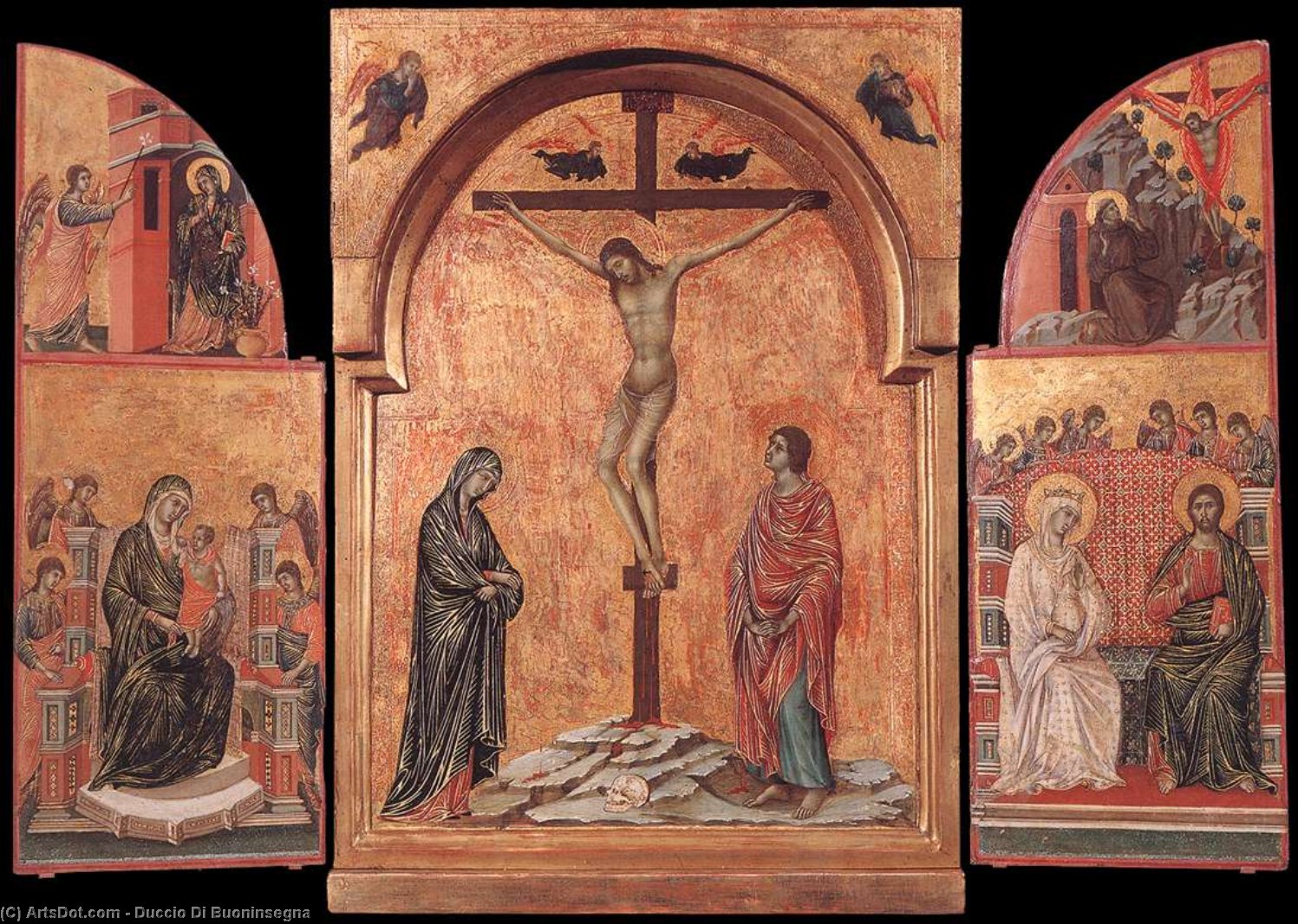
Ez az exquisites triptícha, amelyet 1305-ben készített a sienai mester, Duccio di Buoninsegna, egy mély gondolkodást kínál Krisztus Passiójáról. Méretei 44 x 31 cm, és ez a hűséges darab példája az egyházi bizantinos művészeti hagyományok átmenetének az Itália fejlődő Reneszánsz stílusához képest.

A Téma és a Narratíva

A triptícha vizuális narratívát fogalmaz meg három hajtogató faladon keresztül. A központi fókusz kétségkívül a Krisztus Keresztelése, amelyen Krisztust ábrázolja az édesanyja Mária és János apostolos szomorú társaságában. Bal oldalon egy angyal hordoz egy ilahi üzenetet – talán arra utalva Krisztus sorsára – stilisztikus építészeti háttér előtt. A jobb faladon pedig tanúskodik a Krisztus Királykozása a Paradicsomban, amely reménykedve visionálja a kivonulást és az örök győzelmet. Az összetétel gondosan irányítja a nézőt a megáldás és a megváltás kulcsfontosságú pillanatai mentén.

Stílus és Technika: Világok Összefürészkedése

Duccio stílusa lenyűgöző bizantinos formalitás és az éppen kibontakozó reneszánsz naturalizmus mesoját ötvözi. Bár megőrzi az ikonikus aranylevél háttérzeteket és a középkori művészetek jellemző lapos perspektívát, finom modellezéssel és delicált részletekkel gazdagítja ábrázatai érzelmi mélységét. A technika valószínűleg tempera vagy olaj festék faalapokon, ami lehetővé teszi a pontos vonalakat és a gazdag színek telítettségét. Figyelje meg az építészeti elemeket meghatározó, főként egyenes, geometrikus vonalakat – ez a korszak jellegzetessége.

Szimbolika és Ikonográfia

Ebben a triptícha minden elem szimbólikus súllyal bír. Az kereszt maga az ultimátum áldozatot és a kivonulást képviseli. Az *Mária* alakja a szomorúságot, az hitet és az anyai fájdalmat ötvözi. *János apostolos* tanúskodik Krisztus szenvedéseinek. A mennyei királykozás jelenete az ilahi győzelmet jelzi az halál felett. Az aranylevél kiterjedt használata nem csupán dekoratív; szimbolizálja a divinitást, a fényt és a spirituális transzcendenciát.

Történelmi Kontextus: Siena és a Trecento

Duccio di Buoninsegna (1255-1319) kulcsfontosságú figura volt a sienai festészetben az *Trecento* időszakában (a 14. század). Siena, mint független köztársaság és Firenze riválisa, saját egyedi művészeti stílusát fejlesztette ki. Duccio munkája testili támasztatsága – amely eleganciával, finom részletességgel és mély spirituális érzékességgel zeichányzik. Nagyon keresett volt az egész Itália területén a megrendelések miatt, ezzel azt emelve, hogy egyik legfontosabb művészei közé tartozik.

Érzelmi Hatás és Interpretáció

Ez a triptícha egy erőteljes hágonulást, szomorúságot és reményt kelt. A drámai világítás, különösen a központi keresztező jelenetre összpontosítva, intenzitást kölcsönöz az érzelmi hatásnak. Bár tartja magában az elrendített vallási ikonográfiát, Duccio emberi minőséggel tölti meg ábrázatai, ami empátiát és kontemplációt ösztönöz. Az műalkotás nem csupán bibliai események ábrázolása, hanem mélyen személyes hit és hűség kifejezése is.

Gyűjtemény és Belső Tervezés

E triptícha másolata lenyűgöző hozzáadék lenne bármilyen művészeti gyűjteményhez vagy belső térhez. Gazdag színei, bonyolult részletei és mély témája jól illeszkedik mind a hagyományos, mind a kontemporáns környezetbe. Gondolja meg, hogy egy hűséges helyen, könyvtárban, vagy akár szalon központi pontjánakként tárlja ki – az időtlen szépsége kétségkívül inspirálja a gondolkodást és a beszélgetést.

Kérdések és válaszok

Mikor és milyen anyagokból készült a "Triptikh"?

A „Triptikh”, Duccio di Buoninsegna alkotása technikája Akril festmény vászonon, a mű alkotási éve pedig 1305.

Hogyan szerezhető be „Triptikh”, Duccio di Buoninsegna alkotása digitális fájlja?

A „Triptikh”, Duccio di Buoninsegna alkotása digitális képét a következő oldalon vásárolhatja meg: Digitális alkotás: magas felbontású digitális kép letöltése.

Milyen stílusba tartozik a "Triptikh"?

A "Triptikh" a Kora Renessans egyik alkotása. A művészeti irány meghatározza azt a művészeti hagyományt, amelybe a mű beágyazódik.

Több információ erről a festményről

Megtekintés AR előnézet Váltás nyomtatványra Áttérés digitális képre Küldés
Részletek Útmutató Kedvencekhez ad Letöltés Hasonló darabok X-ray felvétel Diavetítés Kérdések és válaszok Statisztika

Számokban kifejezve

  • 1305a festés éve
  • 29választható keretek
  • standard méretek, saját arányokkal
  • 5hetek a festésre és a kézbesítésre
Duccio di Buoninsegna

Duccio di Buoninsegna

1255 - 1319, Olaszország

Gyors információk Duccio di Buoninsegna művészről

  • Artistic Movement Or Style: Góthikus, Sienai iskola
  • Artists Or Movements Influenced By This Artist:
    • Sienai iskola
    • Olasz gotika
  • Artists Who Influenced This Artist: ['Bizánci művészet']
  • Date Of Birth: c. 1255
  • Date Of Death: 1319
  • Full Name: Duccio di Buoninsegna
  • Nationality: Olasz
  • Notable Artworks:
    • Rucellai Madonna
    • Maestà
    • Polyptych No. 28
  • Place Of Birth: Siena, Olaszország

A művész életrajza

The Sienese Luminary: Duccio di Buoninsegna and the Dawn of a New Italian Vision

Duccio di Buoninsegna, born in Siena around 1255, stands as a pivotal figure bridging the stylistic chasm between the Byzantine world and the burgeoning artistic sensibilities of Italy. While biographical details remain frustratingly scarce—the man himself often obscured by the brilliance of his art—his impact on the Sienese School and the trajectory of Italian painting is undeniable. He emerged during a period where religious iconography was deeply entrenched, yet a yearning for greater naturalism and emotional resonance was beginning to stir within artistic circles. Duccio wasn’t merely a painter; he was an innovator who dared to infuse sacred narratives with human feeling, subtly shifting the focus from rigid formality towards a more intimate connection between the divine and the earthly realm. His early training remains somewhat mysterious, though speculation suggests possible influences ranging from Florentine masters to direct exposure to Byzantine artistry—perhaps even travels to Constantinople itself. Whatever his formative experiences, they coalesced into a unique style that would define an era.

A Synthesis of Tradition and Innovation

Duccio’s artistic development wasn't a sudden rupture with the past but rather a graceful evolution. His initial works were deeply rooted in Byzantine conventions: the lavish use of gold leaf to evoke celestial light, stylized figures possessing an ethereal quality, and a meticulous attention to religious symbolism. These elements, characteristic of Byzantine art, formed the foundation upon which he built his distinctive style. However, even within these established parameters, Duccio began to subtly introduce elements that foreshadowed his later innovations. He experimented with spatial arrangements, hinting at depth where flatness had previously reigned supreme. His color palettes, while still vibrant and rich—reflecting the opulence of Byzantine iconography—gained a newfound subtlety and harmony, moving beyond simple brilliance towards nuanced shades and delicate transitions. More importantly, he started imbuing his figures with a nascent sense of humanity—a gentle curve of the mouth suggesting a smile, a slight tilt of the head conveying contemplation. This wasn’t a rejection of Byzantine ideals but a refinement, an infusion of life into what had often been static representations. He skillfully blended tradition and innovation, creating a style that was both reverent and remarkably fresh.

Masterpieces of Faith and Artistry

Two works stand as testaments to Duccio’s genius: the *Rucellai Madonna* (1285) and, most famously, the *Maestà* (1308-1311). The *Rucellai Madonna*, commissioned for a chapel in Florence, marked a significant departure from conventional Byzantine iconography. While still adhering to traditional forms—the Virgin Mary presented with serene dignity, the Child Jesus nestled in her lap—its composition displayed a greater sense of spatial organization and a more naturalistic depiction of the figures. The faces were no longer purely stylized; they possessed a subtle realism that hinted at individual personalities. This work demonstrated Duccio’s growing command of perspective and his ability to create a believable, three-dimensional space. But it was the *Maestà*—a monumental altarpiece created for Siena Cathedral—that truly cemented Duccio’s legacy. This sprawling masterpiece comprises numerous panels depicting scenes from the life of the Virgin Mary and Christ, each one a miniature work of art in itself. The Maestà is not merely a collection of paintings; it's a visual narrative, unfolding with breathtaking detail and emotional depth. Duccio’s mastery of light and shadow—creating an ethereal glow around the figures—his ability to convey complex emotions through subtle gestures, and his innovative use of perspective all converge in this single, awe-inspiring work. The *Maestà* is considered one of the most important works of Italian Gothic art.

Influences and Artistic Development

Duccio’s artistic journey was shaped by a complex interplay of influences. His early training undoubtedly involved exposure to Byzantine artistry, particularly the rich iconography and meticulous detail characteristic of Sienese painting at the time. However, he also absorbed elements from Florentine masters, such as Cimabue, who had begun to introduce greater naturalism into his work. Some scholars speculate that Duccio may have even traveled to Constantinople itself, immersing himself in the artistic traditions of the Eastern Roman Empire. Regardless of the precise details of his training, Duccio synthesized these diverse influences into a unique style—one that was both deeply rooted in tradition and remarkably innovative. He didn’t simply copy Byzantine models; he adapted them to his own artistic vision, creating works that were distinctly Italian.

A Lasting Legacy: Shaping the Future of Italian Art

Duccio di Buoninsegna’s influence extended far beyond his lifetime. He revolutionized Italian painting, paving the way for the development of the Sienese School—a distinct artistic tradition characterized by its elegance, refinement, and emotional intensity. His emphasis on naturalism, spatial depth, and human emotion directly impacted subsequent generations of artists, influencing not only those within Siena but also painters in Florence and beyond. While Giotto is often credited with initiating the Renaissance style, Duccio’s contributions were equally crucial, laying the groundwork for the artistic innovations that would define the 14th century and beyond. His legacy continues to inspire artists today, demonstrating the enduring power of art to capture the beauty and complexity of the human experience. His works are celebrated in museums across Europe, offering a window into a pivotal moment in the history of Western art.

Gyors információk

  • year: 1305
  • style: Bizantín hatások keverékét a korai renéssanciai technikákkal
  • subject: Krisztus szenvedése (Keresztelés, Krisztus koronázása, Angyal egy épület előtt)
  • title: Triptikh
  • medium: Tempera vagy olaj faasztalon aranylevéllel

Művészeti kvíz

Minden kérdésre csak egy helyes válasz létezik.

Kérdés 1:
Mely művészeti időszakra és iskolára jellemző ez a triptikh?
Kérdés 2:
Milyen jelenet látható a triptikh fő panelén?
Kérdés 3:
Mely művészeti technika használatosan kiemelt módon hozzájárul egy ragyogó hatás létrehozásához a műalkotás minden részén?
Kérdés 4:
Mi jellemzi a triptikhben alkalmazott perspektívát, amely az időszakára utal?
Kérdés 5:
Milyen két művészeti hagyomány keverékét mutatja meg ez a műalkotás stílusa?