- Főoldal

- Olajfestmény reprodukció
- Duccio di Buoninsegna
- Születés Krisztusnak
 Nyomat vásárlása Kép letöltése
 Megosztás
 Megosztás
 Részletek
 Kedvencekhez ad

 Letöltés
 Hasonló alkotások
 X-ray felvétel
 Diavetítés
Születés Krisztusnak
 Akril vászonon
- Falfeldísz
- Sienese Gothic
 1308
1308 43.0 x 44.0 cm
 Nemzeti Galéria
 Tovább olvasom
Kézzel készített olajfestmény reprodukció
Kézzel festett olajvastú vászon, az Ön által választott méretben és keretben, művészeink készítik meglévőre.




P118B $10

P118H $10

P118W $10

P438Z $10

P508JH $12

P508YH $12

P805H $10

P805Z $10

P919BZ $10

P919G $10

P919XJ $10

P959ZH $10

P968JZ $12

W106C $8

W218G $10

W218JH $8

W218Y $10

W307PJ $10

W316G $10

W316PJ $8

W316Y $10

W398PJ $8

W4111J $10

W500HY $15

W500JH $15

W692G $12

W849H $8

W940BG $15

W953PJ $8




Válasszon előre meghatározott méreteink közül, amelyek megfelelnek a műalkotás eredeti arányainak.

Ön megadhat saját méreteket egy adott kerethez vagy térhez igazításhoz. Ha a kiválasztott méret nem egyezik az eredeti kép arányával, akkor a műalkotást levágjuk, vagy további kézzel festett elemekkel meghosszabbítjuk a festményt. A gyártás megkezdése előtt küldünk Önnek egy digitális előnézetet jóváhagyásra.
Kérjük, vegye figyelembe, hogy a képernyőn megjelenő előnézet nem tükrözi a tényleges vágást vagy kiterjesztést. Csak az előnézet fog pontosan mutatni a végső kompozíciót.
Bár egyedi méretek állnak rendelkezésre, javasoljuk, hogy válasszon egy méretet az előre meghatározott listából az eredeti arányok megőrzése érdekében.
A rendelést követően a OriginalUniqueArt.com csapata e-mailt küld az ügyfélnek az instrukciókért, és biztosít egy előnézeti képet (mockup).
Világszerte elérhető szállítás () 3-4 hét alatt a szokásos 5 hét helyett. (16 július). A minőség nem kérdőjelezhető.

Ingyenes globális expressz szállítás

Prémium minőségű len vászon

Teljes szállítási biztosítás

Vámvisszatérítési Garancia

Tökéletes színpontosság garancia

60 napos visszaküldési lehetőség (csak gyártási hibák esetén)

100%-os pénzvisszatérítési garancia

Kedvezmény több termény esetén
 Az üvegkeretes opció csak 110 cm alatti méretben érhető el

Születés Krisztusnak
Reprodukciós technika
A reprodukció mérete
-


Összesített ár
-
A műalkotás leírása
A Sienai Gyöngyszem: Duccio Di Buoninsegna "Születés" Képe (1308)
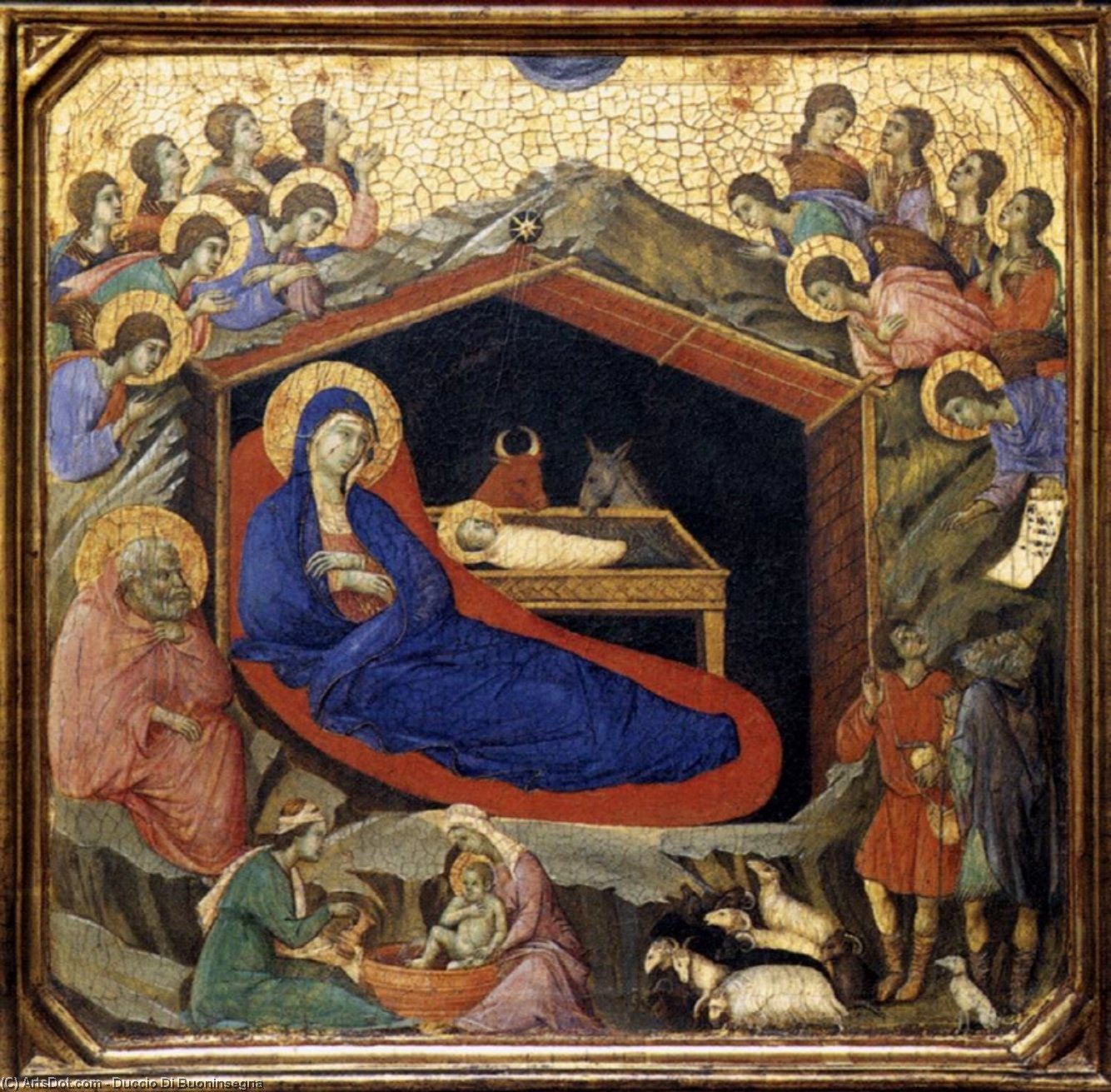
Duccio di Buoninsegna, a 13. századi Sienában született festő, a művész világába lépő egyedülálló figura volt. Nem csupán egy festő volt, hanem egy úttörő, aki a bizantine stílus szigorú szabályaitól elszakítva, az emberi érzelmek és a természetes megjelenés iránti vágyat fejezte ki alkotásain. Duccio nem csak képeket festett; történeteket mesélt, és a művészet erejét használta fel arra, hogy a szentek és a legenda hősöinek világát újragondolja. A "Születés" (Nativity) című alkotása, melyet 1308-ban festett, ennek a tökéletes bizonyítéka. Ez a darab nem csupán egy jelenetet ábrázolja, hanem egy szent történetet, amelyben a bizalom, a szeretet és a remény keverednek.A Sienai Stílus és Az Újító Erő
Duccio munkája a sienai művészeti iskola egyik legkiemelkedőbb képviselője, mely a bizantine hagyományoktól elszakítva egy új utat nyitott meg. Bár a képei még mindig gazdag aranyozással és szimmetrikus kompozíciókkal rendelkeznek – mint ahogy a bizantine művészetből örökölték –, Duccio a tér mélységét, a fény játékát és az alakok kifejező erejét ismernélő módon ábrázolja. A "Születés" esetében ez különösen érezhető: a táj nem csupán háttérként funkcionál, hanem aktívan részt vesz a jelenetben, a fény a bölcsasszonyra és a kis Jézusra világít, ezzel is kiemelve őket. Duccio innovatív megközelítése a perspektívával kapcsolatban – bár még nem a reneszánszbeli tökéletességhez közelítő – egy új dimenziót ad a képre, ami mélyebb érzést kelt bennünk.Szimbolizmus és A Szent Szellemek Beszédei
A "Születés" képe tele van rejtett jelentéssel, melyet csak a művész szívét értők képesek teljesen felfedezni. A bölcsasszony, aki a patkányban fekszik, nem csupán anyai szeretet és áldozatkészség szimbóluma, hanem a földi és az égiek világának összekötőjeként is funkcionál. József, mellette állva, türelmet és gondoskodást jelképez. A kis Jézus, a fényben úszó bölcsasszony mellett, reményt és megmentést szimbolizál. A képen megjelenő óriáskönyv, melyet angyalok tartanak, az Édenkert és az Isten teremtése említését hívogatta meg, a bölcsasszony pedig a "Szűz" címet kapta, ami azt jelenti, hogy ő volt az első női szimbólum, aki a földi világban a mennyei világot képviselhette. A képen megjelenő állatok – egy tehen és egy kecske – a melegességt, a bőség és a szeretet szimbólumaiként funkcionálnak. A csillag, ami fölött az angyalok táncolnak, a bölcsasszony és a kis Jézus útját jelzi.Egy Érzelmes Művész Utódségei
Duccio "Születése" egy igazi művészi teljesítmény, mely a bizantine hagyományoktól elszakítva az emberi érzelmeket és a természetes megjelenést helyezi előtérbe. A képe a reneszánsz előtt álló művészet egyik legfontosabb alkotása, mely a későbbi festők számára is nagy hatással volt. Duccio munkája a szentek és a legenda hősökinek a megértéséhez egy új perspektívát nyújt, és a művész szívét értők képesek teljesen felfedezni. A képen megjelenő részletek – a ruhák drapériájának finom kidolgozása, az arcok kifejező ereje, a táj mélysége – mind azt mutatják, hogy Duccio egy igazi mester volt, aki a művészet erejét használta fel arra, hogy a szent történeteket újragondolja.- Művész: Duccio di Buoninsegna
- Festmény Címe: Születés
- Múzeum: National Gallery of Art
- Technika: Tempera a páncélon
- Dátum: 1308
- Méretek: 43 x 44 cm
The Sienai Luminary: Duccio di Buoninsegna and the Dawn of a New Italian Vision
Duccio di Buoninsegna, born in Siena around 1255, stands as a pivotal figure bridging the stylistic chasm between the Byzantine world and the burgeoning artistic sensibilities of Italy. While biographical details remain frustratingly scarce—the man himself often obscured by the brilliance of his art—his impact on the Sienese School and the trajectory of Italian painting is undeniable. He emerged during a period where religious iconography was deeply entrenched, yet a yearning for greater naturalism and emotional resonance was beginning to stir within artistic circles. Duccio wasn’t merely a painter; he was an innovator who dared to infuse sacred narratives with human feeling, subtly shifting the focus from rigid formality towards a more intimate connection between the divine and the earthly realm. His early training remains somewhat mysterious, though speculation suggests possibA művész életrajza
The Sienese Luminary: Duccio di Buoninsegna and the Dawn of a New Italian Vision
Duccio di Buoninsegna, born in Siena around 1255, stands as a pivotal figure bridging the stylistic chasm between the Byzantine world and the burgeoning artistic sensibilities of Italy. While biographical details remain frustratingly scarce—the man himself often obscured by the brilliance of his art—his impact on the Sienese School and the trajectory of Italian painting is undeniable. He emerged during a period where religious iconography was deeply entrenched, yet a yearning for greater naturalism and emotional resonance was beginning to stir within artistic circles. Duccio wasn’t merely a painter; he was an innovator who dared to infuse sacred narratives with human feeling, subtly shifting the focus from rigid formality towards a more intimate connection between the divine and the earthly realm. His early training remains somewhat mysterious, though speculation suggests possible influences ranging from Florentine masters to direct exposure to Byzantine artistry—perhaps even travels to Constantinople itself. Whatever his formative experiences, they coalesced into a unique style that would define an era.
A Synthesis of Tradition and Innovation
Duccio’s artistic development wasn't a sudden rupture with the past but rather a graceful evolution. His initial works were deeply rooted in Byzantine conventions: the lavish use of gold leaf to evoke celestial light, stylized figures possessing an ethereal quality, and a meticulous attention to religious symbolism. These elements, characteristic of Byzantine art, formed the foundation upon which he built his distinctive style. However, even within these established parameters, Duccio began to subtly introduce elements that foreshadowed his later innovations. He experimented with spatial arrangements, hinting at depth where flatness had previously reigned supreme. His color palettes, while still vibrant and rich—reflecting the opulence of Byzantine iconography—gained a newfound subtlety and harmony, moving beyond simple brilliance towards nuanced shades and delicate transitions. More importantly, he started imbuing his figures with a nascent sense of humanity—a gentle curve of the mouth suggesting a smile, a slight tilt of the head conveying contemplation. This wasn’t a rejection of Byzantine ideals but a refinement, an infusion of life into what had often been static representations. He skillfully blended tradition and innovation, creating a style that was both reverent and remarkably fresh.
Masterpieces of Faith and Artistry
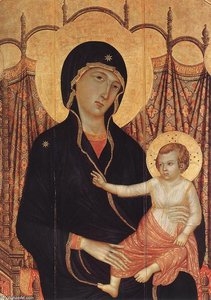
Two works stand as testaments to Duccio’s genius: the *Rucellai Madonna* (1285) and, most famously, the *Maestà* (1308-1311). The *Rucellai Madonna*, commissioned for a chapel in Florence, marked a significant departure from conventional Byzantine iconography. While still adhering to traditional forms—the Virgin Mary presented with serene dignity, the Child Jesus nestled in her lap—its composition displayed a greater sense of spatial organization and a more naturalistic depiction of the figures. The faces were no longer purely stylized; they possessed a subtle realism that hinted at individual personalities. This work demonstrated Duccio’s growing command of perspective and his ability to create a believable, three-dimensional space. But it was the *Maestà*—a monumental altarpiece created for Siena Cathedral—that truly cemented Duccio’s legacy. This sprawling masterpiece comprises numerous panels depicting scenes from the life of the Virgin Mary and Christ, each one a miniature work of art in itself. The Maestà is not merely a collection of paintings; it's a visual narrative, unfolding with breathtaking detail and emotional depth. Duccio’s mastery of light and shadow—creating an ethereal glow around the figures—his ability to convey complex emotions through subtle gestures, and his innovative use of perspective all converge in this single, awe-inspiring work. The *Maestà* is considered one of the most important works of Italian Gothic art.
Influences and Artistic Development
Duccio’s artistic journey was shaped by a complex interplay of influences. His early training undoubtedly involved exposure to Byzantine artistry, particularly the rich iconography and meticulous detail characteristic of Sienese painting at the time. However, he also absorbed elements from Florentine masters, such as Cimabue, who had begun to introduce greater naturalism into his work. Some scholars speculate that Duccio may have even traveled to Constantinople itself, immersing himself in the artistic traditions of the Eastern Roman Empire. Regardless of the precise details of his training, Duccio synthesized these diverse influences into a unique style—one that was both deeply rooted in tradition and remarkably innovative. He didn’t simply copy Byzantine models; he adapted them to his own artistic vision, creating works that were distinctly Italian.
A Lasting Legacy: Shaping the Future of Italian Art
Duccio di Buoninsegna’s influence extended far beyond his lifetime. He revolutionized Italian painting, paving the way for the development of the Sienese School—a distinct artistic tradition characterized by its elegance, refinement, and emotional intensity. His emphasis on naturalism, spatial depth, and human emotion directly impacted subsequent generations of artists, influencing not only those within Siena but also painters in Florence and beyond. While Giotto is often credited with initiating the Renaissance style, Duccio’s contributions were equally crucial, laying the groundwork for the artistic innovations that would define the 14th century and beyond. His legacy continues to inspire artists today, demonstrating the enduring power of art to capture the beauty and complexity of the human experience. His works are celebrated in museums across Europe, offering a window into a pivotal moment in the history of Western art.

Duccio di Buoninsegna
1255 - 1319 , Olaszország
Rövid tények
- Artistic Movement Or Style: Góthikus, Sienai iskola
- Artists Or Movements Influenced By This Artist:
- Sienai iskola
- Olasz gotika
- Artists Who Influenced This Artist: ['Bizánci művészet']
- Date Of Birth: c. 1255
- Date Of Death: 1319
- Full Name: Duccio di Buoninsegna
- Nationality: Olasz
- Notable Artworks:
- Rucellai Madonna
- Maestà
- Polyptych No. 28
- Place Of Birth: Siena, Olaszország
Kapcsolódó cikkek
Fra Angelico Mesterek: A 25 Legszebb Műalkotás a Lelki Békeért – OriginalUniqueArt.com
Fedezze fel Fra Angelico 25 legszebb műalkotását! Reneszánsz festmények, angyalok és spirituális ikonfestészet a firenzei iskola mesterétől. Vásároljon exkluzív olajfestmény reprodukciókat otthonába a OriginalUniqueArt.com-on. Explore the full collection online!
A Reneszánsz Korai Gyöngyszemei: 10 Mestermű, Ami Megváltoztatta a Világot
Fedezze fel a korai reneszánsz 10 legikonikusabb műalkotását! Leonardo, Michelangelo és Botticelli remekművei elmesélnek egy új korszak történetét. Vászonképek, faliképek – inspirálódjon OriginalUniqueArt.com-on!
Illuminating History: A Comprehensive Exploration of Tempera Painting Techniques & Artistic Legacy
Explore the rich history & techniques of tempera painting! Discover Renaissance masters like Botticelli & Fra Angelico, conservation insights, and the enduring legacy of this captivating art form.

The Shadow of Faith: Exploring Gothic Art's Spiritual Intensity & Architectural Innovation
Explore the spiritual intensity & architectural innovation of Gothic art! Discover the symbolism behind cathedrals, stained glass & master artists like Giotto and Monet. A deep dive into medieval history & artistic expression.
Illuminating Faith & Power: A Journey Through Medieval Art (c. 500 – c. 1500)
Explore the rich history of Medieval Art (c. 500 – c. 1500) with OriginalUniqueArt. Discover Byzantine mosaics, Gothic cathedrals & Renaissance masterpieces. Expert insights & museum-quality reproductions.