
 Megtekintés
 Küldés
 Megosztás
 Részletek
 Útmutató

 Letöltés
 Hasonló darabok
 X-ray felvétel
 Diavetítés
 Kérdések és válaszok
 Statisztika
Három nő

- 180.0 x 132.0 cm


 Összes részlet megjelenítése
Szerezzen be nyomtatásra kész fájlt, amely messze túlmutat a webes előnézeten. Minden általunk értékesített digitális kép az adatbázisunkban található nagy felbontású mesterfájlból származik – általában 5 000 és 15 000 pixel szélességű –, így magabiztosan nyomtathat nagy méretben, sokat vághat a képen, vagy reprodukálhatja a legfinomabb részleteket is.
Stúdiómból egyetlen fájl sem távozik feltartózkodás nélkül. Egy digitális szakértő az eredeti festménnyel összehasonlítja a színeket, és szükség esetén korrigálja azokat, majd professzionális retusználó eszközökkel javítja a tisztaságot és a részletgazdagságot — miközben mindig hű marad a művész vonalvezetéséhez és stílusához. Az eredmény egy olyan kép, amely úgy néz ki, mint egy festmény, és nem úgy, mint egy szűrőzött szkenn.
A végső munka befejezése előtt jóvá kell hagynia a képet: szakértőnk 72 órán belül elküldi azt e-mailben ellenőrzésre. Nem tetszett? Kérhet javításokat vagy korrekciókat, illetve visszatérítést kérhet, amennyiben a minőség nem felel meg az elvárásoknak.
Ez az a minőség, amelyre a kiadók, a design stúdiók, a galériák és a nyomdaték megbízhatnak.
Digitális kép
Töltsön le nagy felbontású fájlt személyes kiállításokhoz, nyomtatáshoz és kreatív projektekhez. ( Váltás nyomtatványra Kézzel festett másolat rendelése)
Minden digitális kép rendeléséhez tartozó extrák
Szakértői digitális kézbesítés, garantáltan
Amikor a OriginalUniqueArt.com szolgáltatást választja, nem csupán egy képet kap – professzionálisan felmagasított digitális műalkotást kap, amely precizitással készült, és amelyet megelégsedési gwarancia tesz biztoslássá. Az alábbiakban automatikusan minden benne 】

Gyors e-mail teslimítés
A nagy felbontású digitális képmásolatát a megrendelést követő 72 órán belül e-mailben elküldjük Önnek – azonnal használható formátumban.

MI-alapú digitális fájljavítás
Műve professzionális módon kerül optimalizálásra fejlett mesterséges intelligencia eszközök és manuális szerkesztés segítségével, biztosítva a maximális részletességet, tisztaságot és színpontosságot.

Örök életű ingyenes újradelivery
Véletlenül törölted vagy elvesztetted a fájlodat? Ne aggódj – bármikor ingyen újra megküldjük neked.

Nincs importköltség – soha
Élvezze műalkotásait azonnal, vám, illeték vagy szállítási költség nélkül – a digitális letöltések mindig adamentesek.

Színpontosság garantálása
Professzionális eszközök és színkezelés segítségével garantáljuk, hogy digitális képe a lehető legpontosabban tükrözze az eredeti színeket.

100 napos elégedettségi garancia
Ha nemມີ elégedett a digitális képével, 100 napon belül felülvizsgáljuk vagy 100% visszatérítjük az amountot – kérdés बिना.

100% Pénzvisszatérítési garancia
Nem tetszett a vásárlás? 100 napon belül teljes visszatérítést garantálunk a digitális fájl megvételétől számítva – kérdés nélkül.

Tömegrendelési kedvezmények
Vásároljon 3 képet, spóroljon 10%-et - Vásároljon 5-öt, spóroljon 15%-et - Vásároljon 10+ képet, spóroljon 20%-at. Kiváló kreatív projektekhez, galériákhoz és ügynökségekhez.
Three Women by Umberto Boccioni – A Symphony of Divisionist Light
Umberto Boccioni’s “Three Women,” completed in 1910, stands as a cornerstone of Italian Futurism and a poignant exploration of familial intimacy. This captivating artwork resides within a private collection and embodies the artist's masterful fusion of Divisionist technique with the dynamism inherent in the burgeoning modernist movement. Measuring 180 x 132 cm, it’s more than just pigment on canvas; it’s an invitation into a realm of quiet contemplation and subtle emotional resonance.- Subject Matter: The painting depicts three women – Cecilia, Boccioni's mother; Amelia, his sister; and Ines, his lover – seated together in serene repose. Their expressions convey a profound sense of melancholy yet tranquility, capturing a moment frozen in time.
- Style: “Three Women” exemplifies the stylistic evolution of Futurism from Divisionism. While Divisionist painters meticulously separated brushstrokes to achieve luminous color palettes and textural richness, Boccioni embraced Futurism’s rebellious spirit through visible strokes and compositional dynamism.
Divisionist Technique – Fractured Light and Color
Boccioni skillfully employed the Divisionist method—developed by artists like Giovanni Segantini—to imbue “Three Women” with an ethereal glow. Instead of blending colors seamlessly, he applied individual brushstrokes that retained their distinct hues, creating a fragmented yet harmonious visual experience. This technique brilliantly captures the interplay of light and shadow, highlighting the contours of the figures and drapery while fostering a dreamlike atmosphere. The muted color palette—dominated by soft blues, creams, and pale yellows—contributes to this contemplative mood.Futurist Influence – Embracing Movement and Dynamism
Despite its tranquil subject matter, “Three Women” pulsates with Futurist energy. Visible brushstrokes disrupt the smooth surface of the canvas, mirroring the movement and dynamism championed by Marinetti’s manifesto. This stylistic choice reflects Boccioni's desire to transcend traditional artistic conventions and capture the essence of modernity—the rapid pace of industrialization and urban life—albeit filtered through a lens of familial connection. The triangular composition subtly reinforces this sense of stability amidst motion, symbolizing unity and interconnectedness.Symbolism – Reflections on Memory and Intimacy
The painting’s symbolism delves deeper than its surface beauty. The arrangement of the women suggests a meditation on memory, heritage, and familial bonds—themes central to Boccioni's artistic vision. Cecilia’s presence embodies wisdom and experience, Amelia represents youthful vitality, and Ines embodies passionate love. The diffused lighting enveloping the figures enhances their warmth and intimacy, inviting viewers to contemplate the complexities of human relationships and the passage of time. “Three Women” remains a testament to Boccioni’s ability to convey profound emotion through understated visual language—a masterpiece that continues to inspire awe and contemplation decades after its creation.Kérdések és válaszok
Melyik történelmi korszakból származik a „Három nő”, Boccioni Umberto alkotása?
A „Három nő”, Boccioni Umberto alkotása a Modern kor korszakból származik. Ez az időszak adja meg a mű történelmi kontextusát.
Melyik szakaszába tartozik Boccioni Umberto pályájának a "Három nő" (1910)?
A 1910 évszám a "Három nő" alkotást Boccioni Umberto fejlődésének Futurist Transition szakaszába helyezi.
Elérhető diaporáma a(z) „Három nő”, Boccioni Umberto alkotása alkotáshoz?
Elérhető egy diaváltó: a Diaváltás oldala a(z) „Három nő”, Boccioni Umberto alkotása alkotáshoz.
Művész életrajza
Early Life and Artistic Training
To understand the kinetic energy of Umberto Boccioni, one must look at the disciplined, almost scientific foundation he built before the chaos of Futurism took hold. Born in Reggio Calabria, Italy, on October 19, 1882, his early development was defined by a rigorous technical education. He did not simply stumble into art; he built his skill through a structured progression that began in the studio of Giacomo Balla. Between 1898 and 1902, Boccioni operated within this specific environment, absorbing the Divisionist technique. This period was crucial. He learned to apply color in the manner of the pointillists, a method that prioritized the separation of individual strokes to create a sense of light and vibration. This technical precision would later provide the structural logic needed to deconstruct form.
His move to Rome in 1899 marked a significant shift toward formal academic training. By attending the Scuola Libera del Nudo and the Accademia di Belle Arti di Roma, Boccioni moved beyond the private studio setting into the heart of Italian artistic institutions. This dual education—the specialized, technique-heavy instruction under Balla and the broader academic rigor of the Roman academies—created a tension in his work. He possessed the ability to handle traditional subjects while simultaneously developing the tools to dismantle them. His early training was not about capturing a static moment, but about mastering the mechanics of light and color that would eventually allow him to represent the very sensation of movement.
The Rise of Italian Futurism
Boccioni did not merely participate in Italian Futurism; he defined its visual logic. His encounter with the poet F. T. Marinetti in Milan in 1907 provided the spark for this transformation. While Marinetti provided the literary fire, Boccioni translated those aggressive, anti-traditionalist ideas into a concrete visual language. He became the movement's leading theoretician, moving beyond simple painting to establish the philosophical framework for an entire era of modernism.
The movement gained its first formal footing in 1910. That year, Boccioni and a group of fellow painters published the Manifesto of the Futurist Painters. This document was a direct assault on the weight of tradition. It demanded an art that embraced the violence, speed, and power of the machine age. Boccioni’s contribution was the successful adaptation of these literary provocations into a rigorous aesthetic system. He moved the conversation from mere words to the actual mechanics of how a canvas or a sculpture could represent the frantic energy of modern life.
Technique and Artistic Style
Boccioni’s approach to the canvas was a calculated assault on the static nature of traditional representation. In his early Futurist period, he utilized Divisionist techniques, applying strokes of color to build up the surface. This method allowed him to move beyond mere depiction toward the representation of psychological states and the chaotic energy of urban scenes. He was not interested in the surface-level appearance of a city, but in the internal tension it generated. His work sought to capture the experience of flux and the inter-penetration of objects, where boundaries between a subject and its environment begin to dissolve.
The artist’s evolution was driven by a rejection of the rational, descriptive methods found in Cubism. Instead, he leaned into the philosophies of Henri Bergson, prioritizing intuition and the subjective experience of reality. This focus on the "interior force" of objects meant that his compositions often felt fragmented and explosive. He integrated influences from Symbolism and Expressionism to ensure that his depictions of modern life were not merely visual records, but expressions of a restless, moving reality. He moved away from the "cinematographic" approach of dividing motion into sequential stages, opting instead to depict the continuity of movement itself.
In sculpture, Boccioni’s theories were even more disruptive. He pushed for a total break from traditional bronze and marble, advocating for the use of nontraditional materials like glass, wood, cement, cloth, and even electric lights. He wanted sculpture to mold and enclose the space around it, rather than simply occupying it. This was a direct attempt to create a sculptural environment that mirrored the dynamism of the modern age.
Key Works and Masterpieces
Looking back from the modern era, Boccioni’s output reveals a relentless drive to translate speed into physical form. His 1909 work, Riot in the Gallery, remains a critical point of transition; it clings to pointillist techniques while adopting a dynamic composition that signals the arrival of Futurist energy. By the time he produced The City Rises (1910–11), the shift was complete. This painting is widely recognized as the first truly Futurist work, using a massive scale to capture the chaotic, swirling movement of urban labor and light.
His ability to deconstruct reality reached its peak through the integration of diverse European influences. The Street Enters the House demonstrates a clear debt to both Expressionism and Cubism, using geometric distortion to simulate the sensory overload of a city rushing into a domestic space. He also explored psychological states through his series of paintings, beginning with States of Mind I: The Farewells, which sought to map internal emotions onto the external world.
In the realm of three-dimensional form, 1913 produced a definitive shift in how space is occupied. Unique Forms of Continuity in Space functions as a primary example of early modern sculpture, moving beyond static representation to depict a figure in a state of constant, fluid motion. This work does not merely represent a body; it represents the movement of a body through space.
- Riot in the Gallery (1909)
- The City Rises (1910–11)
- States of Mind I: The Farewells (1911)
- The Street Enters the House (1911)
- Unique Forms of Continuity in Space (1913)
Later Years and Untimely Death
The trajectory of Boccioni’s career was abruptly severed by the onset of World War I. He enlisted in the army, moving from the theoretical debates of the studio to the physical realities of military service. This transition from the intellectual construction of motion to the literal violence of modern warfare marked the final chapter of his life. He died in Verona on August 16, 1916, following a fall from a horse during cavalry exercises. He was only thirty-three years old.
This sudden end occurred just as his theories on sculpture were reaching their most radical application. The physical accident was a stark, unpoetic conclusion to a life spent attempting to capture the fluid essence of movement. His death effectively signaled the conclusion of the most intense period of the Futurist movement. The energy he sought to represent in bronze and oil was cut short by a singular, accidental moment of impact.
Legacy and Lasting Impact
Boccioni’s death in 1916 effectively signaled the end of the Futurist movement. His absence left a void that the movement struggled to fill, yet his theoretical and visual breakthroughs continued to exert pressure on the trajectory of modern art. He did not merely depict movement; he provided a framework for how art could interact with the speed of the machine age. This shift from static representation to the depiction of flux changed the fundamental goals of many subsequent creators.
His influence extends far beyond the initial Futurist circle. The fragmentation of form and the emphasis on dynamism helped shape the foundations of Constructivism and later informed the developments of Abstract Expressionism. By deconstructing the physical object to reveal its internal energy, he forced a confrontation between the viewer and the perceived reality of motion. This approach moved art away from the descriptive and toward the experiential.
The lasting weight of his work is found in the way it challenged the necessity of a fixed perspective. His experiments with non-traditional materials and the integration of space into three-dimensional forms anticipated much of the sculptural evolution in the twentieth century. He remains a central figure for anyone studying the transition from traditional representation to the radical abstraction of the modern era.
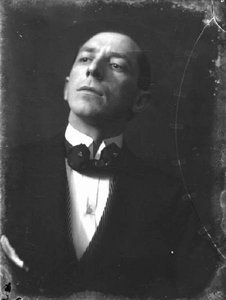
Boccioni Umberto
1882 - 1916 , Olaszország
Érmeradatok
- Artistic Movement Or Style: Futurizmus
- Artists Or Movements Influenced By This Artist:
- Konstruktivizmus
- Képzeletművészet
- Artists Who Influenced This Artist:
- Giacomo Balla
- Divizionizmus
- Kubizmus
- Date Of Birth: 1882-10-19
- Date Of Death: 1916-08-17
- Full Name: Umberto Boccioni
- Nationality: Olasz
- Notable Artworks:
- A Humán Test Dinamizmusa
- Egyedi Formák Folytathatóságában
- A Város Emelkedik
- Place Of Birth: Reggio Calabria, Olaszország