

 Megtekintés
 Küldés
 Megosztás
 Részletek
 Útmutató

 Letöltés
 Hasonló darabok
 X-ray felvétel
 Diavetítés
 Q&A
Q&A Statisztika
Ravine Culvert


 Összes részlet megjelenítése
Giclée / Műnyomat
Múzeumi minőségű giclée vagy vászonnyomat, gyors gyártással és rugalmas finomítási lehetőségekkel. ( Kézzel festett másolat rendelése Áttérés digitális képre)




P118B Ft10

P118H Ft10

P118W Ft10

P438Z Ft10

P508JH Ft12

P508YH Ft12

P805H Ft10

P805Z Ft10

P919BZ Ft10

P919G Ft10

P919XJ Ft10

P959ZH Ft10

P968JZ Ft12

W106C Ft8

W218G Ft10

W218JH Ft8

W218Y Ft10

W307PJ Ft10

W316G Ft10

W316PJ Ft8

W316Y Ft10

W398PJ Ft8

W4111J Ft10

W500HY Ft15

W500JH Ft15

W692G Ft12

W849H Ft8

W940BG Ft15

W953PJ Ft8




Válasszon előre meghatározott méreteink közül, amelyek megfelelnek a műalkotás eredeti arányainak.

Írja be a keretének vagy a falának megfelelő szélességet és magasságot. A nyomatot csak le lehet vágni, soha nem tehető nagyobbá, mint az eredeti kép, így egy eltérő alakú méretnél a kép egy része elveszik. Mielőtt bármit kinyatintanánk, küldünk egy digitális próbamodellt jóváhagyásra. Az oldalon látható kép nem tartalmazza a valós levágást — ezt csak a próbamodell mutatja meg.
Világszerte történő kiszállítás területére mindössze 2 hét alatt, a szokásos 4-5 hét helyett. (28 október)

Ingyenes globális expressz szállítás

Prémium minőségű len vászon

Teljes körű szállítási biztosítás

Vámvisszatérítési Garancia

Hiteles színarányosság garancia

100 napos visszaküldési lehetőség (csak hibás termékek esetén)

100% pénzvisszatérítési garancia

Több darab vásárlásakor kedvezmény
 Az üvegkeretes opció csak 110 cm alatti méretben érhető el

Ravine Culvert
Giclée / Műnyomat
Reprodukció mérete
-


Összesített ár
Ft 25881
A Portal to Tranquility: The Luminous World of Ravine Culvert
In the quiet depths of 1938, Bertram Richard Brooker captured a moment of profound stillness in his evocative oil painting, Ravine Culvert. This work serves as a breathtaking window into a stylized landscape, where the boundaries between reality and an impressionistic dreamscape begin to blur. The composition draws the viewer’s eye toward a mysterious tunnel entrance nestled within a verdant hillside, creating an immediate sense of intrigue. Dominated by a harmonious palette of deep forest greens and warm, glowing oranges, the painting evokes the fleeting magic of a sunset filtering through a dense canopy. It is not merely a depiction of a woodland scene; it is an invitation to step away from the chaos of the modern world and into a sanctuary of natural repose.
The technique employed in Ravine Culvert reveals Brooker’s mastery over texture and light, showcasing the tactile beauty of oil on canvas. Eschewing the rigid precision of academic realism, the artist utilizes loose, expressive brushstrokes that lend the foliage a rhythmic, organic vitality. There is a palpable sense of movement within the stationary trees, as if the wind itself were captured in the thick application of paint. Through the clever use of overlapping forms and varying tonal values—transitioning from the shadowy, dark recesses of the culvert to the luminous, sun-drenched treetops—Brooker achieves a sophisticated sense of atmospheric depth. This flattened perspective emphasizes the decorative and emotional qualities of the landscape over mere topographical accuracy.
Symbolism and Emotional Resonance
Beyond its visual splendor, the painting carries a weight of symbolic mystery. The dark, yawning mouth of the culvert acts as a focal point for contemplation, representing the unknown or perhaps a threshold between the conscious world and the subconscious. This element of mystery is balanced by the warmth of the sky, which bathes the scene in a comforting, nostalgic glow. For the discerning collector or interior designer, Ravine Culvert offers more than just aesthetic appeal; it provides an emotional anchor for a room. Its earthy tones and serene subject matter make it an ideal centerpiece for spaces designed for reflection, adding a layer of sophisticated organic warmth to any curated collection or high-end residential setting.
As a pioneer of Canadian abstraction, Brooker’s ability to blend the primitive with the impressionistic makes this piece a vital historical artifact. To possess a reproduction of Ravine Culvert is to hold a fragment of art history that celebrates the enduring beauty of the natural world. It remains a testament to an artist who could find the extraordinary within the ordinary, turning a simple woodland culvert into an eternal landscape of peace and wonder.
Kérdések és válaszok
Milyen domináns alapszín jellemzi „Ravine Culvert”, Bertram Richard Brooker alkotása alkotást?
A „Ravine Culvert”, Bertram Richard Brooker alkotása domináns színe a Ochre to Sepia. Ez a szín a paletta alapvető tónusa.
A „Ravine Culvert” 1938-es dátuma Bertram Richard Brooker pályájának mely szakaszára tekintthető?
A "Ravine Culvert", amely 1938 évben készült, Bertram Richard Brooker pályájának Mature Period szakaszába tartozik.
Milyen érzelmi hangulat kíséri a "Ravine Culvert" alkotás Impressionism stílusát?
A Impressionism irányzat részeként a "Ravine Culvert" egy Tranquil hangulatban készült.
A művész életrajza
A Polymath of the Prairie: The Life and Vision of Bertram Richard Brooker
The story of Bertram Richard Brooker is not merely a biography of a painter, but a chronicle of a restless, multi-faceted intellect that refused to be confined by the boundaries of a single medium. Born in Croydon, England, in 1888, Brooker’s early years were shaped by the traditions of his birthplace, yet it was his relocation to Portage la Prairie, Manitoba, at the age of seventeen that would fundamentally alter the trajectory of his creative soul. This transition from the structured landscapes of the United Kingdom to the vast, untamed expanses of the Canadian prairies provided the essential raw material for a lifetime of exploration. Brooker emerged as a singular figure in Canadian art history—a man who moved with equal grace between the worlds of fine art, literature, and graphic design, weaving a tapestry of modernism that would eventually redefine the aesthetic landscape of a nation.
As his artistic consciousness matured, Brooker began to look beyond the traditional confines of Impressionism and Cubism, seeking a visual language that could capture the primal essence of existence. He became a pioneer of abstract art in Canada, yet his path to abstraction was paved with a profound appreciation for naivety and primitivism. Rather than adhering to the rigid academic conventions of his era, he embraced simplified forms and flattened perspectives, creating works that felt both ancient and avant-garde. This stylistic choice was more than a mere aesthetic preference; it was a deliberate attempt to strip away the superficial layers of reality to reveal the underlying geometric truths and emotional resonances of the natural world.
The Convergence of Form and Narrative
Brooker’s brilliance lay in his ability to synthesize disparate disciplines into a unified creative vision. His paintings, such as the striking “Abstract Still Life,” demonstrate a masterful command of technique, utilizing a black and white pointillist approach to create depth through light and shadow alone. In other works like “Ravine Culvert,” he transitioned toward an impressionistic warmth, capturing the fleeting, golden light of the Canadian landscape with a sensitivity that felt deeply rooted in the earth. His eye for composition was further refined through his career as an advertising executive and graphic designer, where the bold use of color and form became a tool for communication, influencing the visual culture of his time.
Yet, to view Brooker solely through the lens of a painter would be to overlook the profound depth of his literary contributions. He was a storyteller of remarkable versatility, a novelist and poet whose prose possessed a psychological acuity that mirrored the complexity of his canvases. His achievements in literature were nothing short of extraordinary, most notably earning the Governor General’s Award for Fiction. Through his novels, he explored themes of identity, memory, and the human condition, imbuing his narratives with a poetic sensibility that resonated far beyond the borders of Canada. Whether through the stroke of a brush or the tip of a pen, Brooker remained obsessed with the fundamental essence of being.
Legacy and Historical Significance
The historical significance of Bertram Richard Brooker rests in his role as a bridge between the traditional and the modern. He acted as a catalyst for change, introducing the radical concepts of abstraction to a Canadian audience that was still largely tethered to representational realism. His ability to blend the primitive with the modernist allowed him to create a unique aesthetic that felt both culturally grounded and internationally relevant.
His enduring legacy can be summarized through several key pillars of his career:
- Pioneering Abstraction: He was instrumental in bringing the language of modern abstraction to the Canadian art scene, breaking away from academic realism.
- Interdisciplinary Mastery: His rare ability to achieve excellence as a painter, novelist, playwright, and graphic designer set a precedent for the "total artist."
- Literary Distinction: His recognition by the Governor General’s Award solidified his place as a titan of Canadian letters.
- Aesthetic Innovation: Through his use of Naive art and Primitivism, he offered a new way to perceive the beauty of the wilderness and the structure of the natural world.
Today, Brooker is remembered not just as an artist of a specific movement, but as a visionary who saw no borders between the visual and the verbal. His life remains a testament to the power of boundless curiosity and the enduring impact of a creative spirit that seeks to find the universal within the particular.
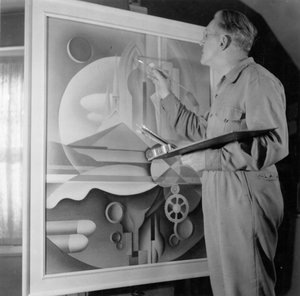
Bertram Richard Brooker
1888 - 1955 , United Kingdom
Rövid információk
- Full Name: Bertram Richard Brooker
- Nationality: English-Canadian
- Date Of Birth: 1888
- Date Of Death: 1955
- Place Of Birth: Croydon, United Kingdom
- Notable Artworks:
- Abstract Still Life
- Ravine Culvert
- Artistic Movement Or Style: Naive Art/Primitivism; Graphic Design; Advertising Executive
Kapcsolódó cikkek

A 10 legikonikus impresszionista tájkép: művészeti remekművek otthonába | OriginalUniqueArt.com
Fedezze fel a 10 legikonikus impresszionista tájkép festményt! Monet, Renoir, Degas és más művészek remekművei. Vászonképek, faliképek otthonába – inspirálódjon OriginalUniqueArt.com-on! Explore the full collection online.
Capturing Light: A Masterclass in the Ethereal Beauty of Impressionistic Landscapes
Explore the ethereal beauty of Impressionist landscapes. Discover how masters like Monet captured fleeting light through color and texture, and learn to curate these timeless, luminous masterpieces for your home collection.

A 10 legikonikus impresszionista tájkép: Művészeti remekművek otthonába – OriginalUniqueArt.com
Fedezze fel a 10 legikonikus impresszionista tájkép festményt! Monet, Renoir és más mesterek alkotásainak története. Olajfestmények, vászonképek otthonába – OriginalUniqueArt.com kínálatából. Explore the full collection online!

Evocations of Place: A Historical Journey Through Landscape Art
Explore the rich history of landscape art with OriginalUniqueArt. Discover renowned artists, movements like Impressionism & Romanticism, and expert guidance for collecting timeless pieces. Find your perfect serene escape today!
Golden Hour Magic: Capturing the Ethereal Beauty of Sunset Landscapes in Fine Art
Embark on a visual journey through the golden hour. Discover how master painters capture the ethereal glow of sunsets, from Monet's Impressionism to the Hudson River School. Explore timeless techniques and bring the magic of twilight into your home with exquisite fine art reproductions.