

 Megtekintés
 Küldés
 Megosztás
 Részletek
 Útmutató

 Letöltés
 Hasonló darabok
 X-ray felvétel
 Diavetítés
 Q&A
Q&A Statisztika
People by the Lake


 Összes részlet megjelenítése
Giclée / Műnyomat
Múzeumi minőségű giclée vagy vászonnyomat, gyors gyártással és rugalmas finomítási lehetőségekkel. ( Kézzel festett másolat rendelése Áttérés digitális képre)




P118B Ft10

P118H Ft10

P118W Ft10

P438Z Ft10

P508JH Ft12

P508YH Ft12

P805H Ft10

P805Z Ft10

P919BZ Ft10

P919G Ft10

P919XJ Ft10

P959ZH Ft10

P968JZ Ft12

W106C Ft8

W218G Ft10

W218JH Ft8

W218Y Ft10

W307PJ Ft10

W316G Ft10

W316PJ Ft8

W316Y Ft10

W398PJ Ft8

W4111J Ft10

W500HY Ft15

W500JH Ft15

W692G Ft12

W849H Ft8

W940BG Ft15

W953PJ Ft8




Válasszon előre meghatározott méreteink közül, amelyek megfelelnek a műalkotás eredeti arányainak.

Írja be a keretének vagy a falának megfelelő szélességet és magasságot. A nyomatot csak le lehet vágni, soha nem tehető nagyobbá, mint az eredeti kép, így egy eltérő alakú méretnél a kép egy része elveszik. Mielőtt bármit kinyatintanánk, küldünk egy digitális próbamodellt jóváhagyásra. Az oldalon látható kép nem tartalmazza a valós levágást — ezt csak a próbamodell mutatja meg.
Világszerte történő kiszállítás területére mindössze 2 hét alatt, a szokásos 4-5 hét helyett. (30 október)

Ingyenes globális expressz szállítás

Prémium minőségű len vászon

Teljes körű szállítási biztosítás

Vámvisszatérítési Garancia

Hiteles színarányosság garancia

100 napos visszaküldési lehetőség (csak hibás termékek esetén)

100% pénzvisszatérítési garancia

Több darab vásárlásakor kedvezmény
 Az üvegkeretes opció csak 110 cm alatti méretben érhető el

People by the Lake
Giclée / Műnyomat
Reprodukció mérete
-


Összesített ár
Ft 26157
People by the Lake – An Expressionist Echo of Summer’s Embrace
The painting “People by the Lake,” created in 1913 by August Macke, isn't merely a depiction of a tranquil lakeside scene; it’s a visceral embodiment of Expressionism’s core tenets—a fervent distillation of emotion and experience rendered with audacious color and fractured form. Situated at the Staatliche Kunsthalle Karlsruhe, this oil on canvas masterpiece captures a moment suspended in time, inviting viewers to contemplate not just what they see but how it feels. Macke's stylistic trajectory was marked by an initial fascination with Impressionism’s shimmering light effects, evident in his early landscapes. However, he swiftly abandoned these conventions for the revolutionary language of Expressionism, championed by artists like Ernst Ludwig Kirchner and Emil Nolde. This decisive shift reflected a broader cultural preoccupation with confronting anxieties surrounding modernity—the rapid industrialization, urbanization, and social upheaval that characterized Europe at the turn of the century. Macke sought to bypass rational representation altogether, prioritizing instead the conveyance of inner psychological states. The painting’s technique exemplifies this ambition brilliantly. Macke employs thick impasto – applying paint in heavy layers – creating a palpable textural surface that pulsates with energy. Bold brushstrokes dominate the composition, disrupting any semblance of smooth gradation and conveying a sense of restless movement. The palette is dominated by hues of blue and green—the colors of water and foliage—but these tones are intensified and distorted through chromatic modulation, injecting them with an unsettling vibrancy. Notice how Macke doesn’t strive for photographic accuracy; instead, he manipulates color to heighten emotional impact. Beyond its formal qualities, “People by the Lake” resonates deeply with symbolic meaning. The three figures positioned before the tree represent humanity grappling with the complexities of existence—a quiet contemplation punctuated by animated conversation. The tree itself symbolizes resilience and connection to nature, offering a counterpoint to the anxieties of urban life. Macke’s deliberate simplification of forms contributes to this overarching theme, stripping away extraneous detail to focus on essential gestures and expressions. Ultimately, “People by the Lake” transcends its visual description; it communicates an emotional landscape—a feeling of warmth, camaraderie, and fleeting beauty amidst a turbulent world. It's a painting that lingers in the mind long after viewing, prompting reflection on themes of human connection and the enduring power of artistic intuition. Its influence continues to inspire artists today who strive to capture the immediacy of experience with uncompromising honesty.- Artist: August Macke
- Year Created: 1913
- Medium: Oil on Canvas
- Location: Staatliche Kunsthalle Karlsruhe
Kérdések és válaszok
Milyen módon kapcsolódik a "People by the Lake" stílusa alkotójának korához?
A „People by the Lake”, August Macke alkotása a Expressionism irányzat alkotása, mely alkotójának Modern kor korszakából származik.
„People by the Lake”, August Macke alkotása színei élénkek vagy fakók?
A "People by the Lake" színe Clear Color Presence telítettségű és Vivid intenzitású.
Szabadon reprodukálható-e a/az „People by the Lake”, August Macke alkotása képe?
A szerzői jogokkal kapcsolatban a "People by the Lake" mű közösségi tulajdon – a szerzői jog lejártt.
A művész életrajza
A Life Cut Short: The Vibrant World of August Macke
August Robert Ludwig Macke, a name inextricably linked to the brief but brilliant flowering of German Expressionism, lived a life tragically curtailed by the horrors of the First World War. Born in 1887 in Meschede, a small town nestled within the Westphalian countryside, his artistic journey was one of rapid evolution and fervent exploration – a relentless pursuit of capturing not just what he *saw*, but how he *felt* about it. Macke’s early years were marked by a restless spirit and an insatiable curiosity, leading him to move with his family to Bonn, where he began to nurture the nascent talent that would eventually define his legacy. While formally trained at the Düsseldorf Art Academy from 1904-1906 under Adolf Maennchen, it was through independent study, travel, and a profound engagement with the artistic currents of the time that Macke truly forged his own distinctive voice. These formative years were characterized by an absorption of Impressionist and Post-Impressionist techniques – not merely as imitation, but as a foundation upon which to build something entirely new. He supplemented his income through stage design work, honing his compositional skills and developing a keen eye for color and light, essential tools in the creation of his future masterpieces.Influences and Artistic Development
Macke’s artistic trajectory was profoundly shaped by encounters with key figures and movements that swept across Europe at the beginning of the 20th century. A pivotal moment arrived in Paris in 1912, where he met Robert Delaunay, a leading proponent of Orphism – a branch of Cubism focused on pure abstraction and vibrant color harmonies. This encounter proved transformative, introducing Macke to the concept of simultaneous contrast and influencing his work towards a more dynamic and non-representational approach. He began experimenting with broken planes of color and abstracted forms, seeking to convey not just what he saw, but how he *felt* about what he saw – a core principle that would permeate much of his later work. Simultaneously, his close friendship with Franz Marc, a fellow artist and member of the influential group Der Blaue Reiter (The Blue Rider), drew him into the orbit of Wassily Kandinsky and other avant-garde thinkers. While Macke’s style remained distinct from Kandinsky's more purely abstract explorations, he embraced the group’s spirit of artistic freedom and spiritual inquiry, incorporating elements of their shared interest in symbolism and the emotional power of color. His early works often reflected a romantic sensibility, imbued with a deep connection to nature – the shape of a tree, the movement of waves in the water, the harmony between humans and their environment. These scenes were rendered not as literal depictions, but as expressions of mood and feeling, foreshadowing the emotional intensity that would characterize his later paintings.The Blue Rider and Beyond: A Unique Expressionist Vision
As an integral member of Der Blaue Reiter, Macke contributed significantly to the group’s exhibitions and publications, helping to disseminate its radical ideas about art and spirituality. However, he wasn't simply a follower; he forged his own unique path within the movement. Unlike some of his colleagues who leaned towards darker, more angst-ridden themes – often reflecting the anxieties of the time – Macke consistently sought to portray beauty and harmony in the world around him. His paintings, such as Bathing Girls with Town in the Background, exemplify this approach – vibrant colors, simplified forms, and a sense of idyllic tranquility characterize his work. He masterfully blended elements of Fauvism, Cubism, and Futurism into a distinctly personal style, creating compositions that are both visually striking and emotionally resonant. Woman in a Green Jacket, painted in 1913, is another prime example – a portrait radiating warmth and vitality through its bold color palette and confident brushwork. His later works, like Türkisches Café, demonstrate his luminist approach, capturing the play of light and shadow with remarkable sensitivity, evoking a sense of intimate atmosphere and quiet contemplation.Major Achievements and Artistic Style
Macke’s artistic style was characterized by its bold use of color, dynamic compositions, and a unique ability to capture the emotional essence of everyday life. He moved away from traditional academic techniques, embracing instead a more intuitive approach – prioritizing feeling over strict representation. His paintings often feature simplified forms, flattened perspectives, and an emphasis on color as a primary means of expression. He was particularly adept at capturing the fleeting effects of light and shadow, creating a sense of atmosphere and mood that resonated deeply with viewers. Macke’s work can be seen as a bridge between Impressionism, Fauvism, and early Expressionism – a synthesis of diverse influences into a wholly original style. His ability to imbue ordinary subjects – landscapes, portraits, interiors – with an extraordinary emotional intensity is what truly sets his art apart. His paintings are not merely depictions of reality; they are expressions of the artist’s inner world, filtered through the lens of his unique sensibility.A Tragic End and Lasting Legacy
The outbreak of World War I brought a sudden and devastating end to Macke’s promising career. Driven by patriotic fervor, he volunteered for military service in 1914, tragically losing his life just weeks later on September 26th, near the front lines in Champagne, France, at the young age of 27. His final painting, Farewell, poignantly captures the somber mood that descended upon Europe as war engulfed the continent – a testament to the artist’s untimely demise. Despite his tragically short life, August Macke left behind a body of work that continues to captivate and inspire. He remains a significant figure in the history of Expressionism, celebrated for his vibrant colors, dynamic compositions, and optimistic vision. His paintings offer a glimpse into a world on the cusp of change, imbued with a sense of beauty and hope amidst growing uncertainty. Exploring Macke’s world today, through museums like the Staatsgalerie Moderner Kunst in Munich and the Kunstmuseum Bonn, allows us to appreciate the enduring power of his art – a testament to the brilliance of an artist whose life was tragically cut short but whose legacy continues to shine brightly.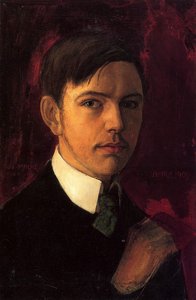
August Macke
1887 - 1914 , Németország
Rövid információk
- Artistic Movement Or Style: Expressionista
- Artists Or Movements Influenced By This Artist: ['Der Blaue Reiter']
- Artists Who Influenced This Artist:
- Robert Delaunay
- Franz Marc
- Date Of Birth: 1887. jan 3.
- Date Of Death: 1914. szep 26.
- Full Name: August Robert Ludwig Macke
- Nationality: Német
- Notable Artworks:
- Szokobosz es varos
- Bathing Girls with Town
- Türkisches Cafe
- Gartentor
- Farewell
- Place Of Birth: Meschede, Németország
Kapcsolódó cikkek
The Raw Emotion of Expressionism: A Deep Dive into its History, Characteristics & Enduring Influence
Explore the raw emotion of Expressionism with OriginalUniqueArt. Discover its history, key artists like Kirchner & Munch, and lasting influence on modern art. Expert insights for collectors & enthusiasts.
A kifejezésművészet 10 legikonikusabb remekműve – festmények otthonra a OriginalUniqueArt-tól
Fedezze fel a kifejezésművészet 10 legmeghatározóbb remekművét! Munch, Kirchner és Kandinsky alkotásainak története. Vászonképek otthonra – magas minőségű műalkotások a OriginalUniqueArt-tól. Explore the full collection online!
August Macke: Expressionist Visions of Harmony & Modern Life
Explore the vibrant Expressionist paintings of August Macke (1887-1914). Discover his key role in Der Blaue Reiter, Fauvist influences, and captivating depictions of modern life. A comprehensive guide for art enthusiasts & collectors.
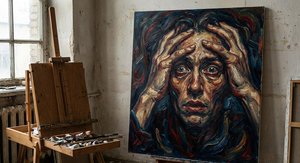
Figurative Expressionism: Emotional Intensity & Subjective Reality in 20th-Century Art
Explore the powerful world of Figurative Expressionism with OriginalUniqueArt. Discover key artists like Kirchner & Beckmann, understand its emotional depth, and learn how to collect this influential 20th-century art movement.

Renoir Mesterek: A 25 Leglenyűgözőbb Kép a Francia Impresszionizmus Gyöngyszemeiből | OriginalUniqueArt
Fedezze fel Pierre-Auguste Renoir 25 legszebb művét! Ismerje meg az impresszionizmus gyöngyszemeit, a színek és fény játékát. Vásároljon exkluzív Renoir reprodukciókat otthonába a OriginalUniqueArt.com kínálatából – minőségi faliképek és inspiráló dekoráció.


