- Početna stranica

- Digitalna umjetnina
- Georges Braque
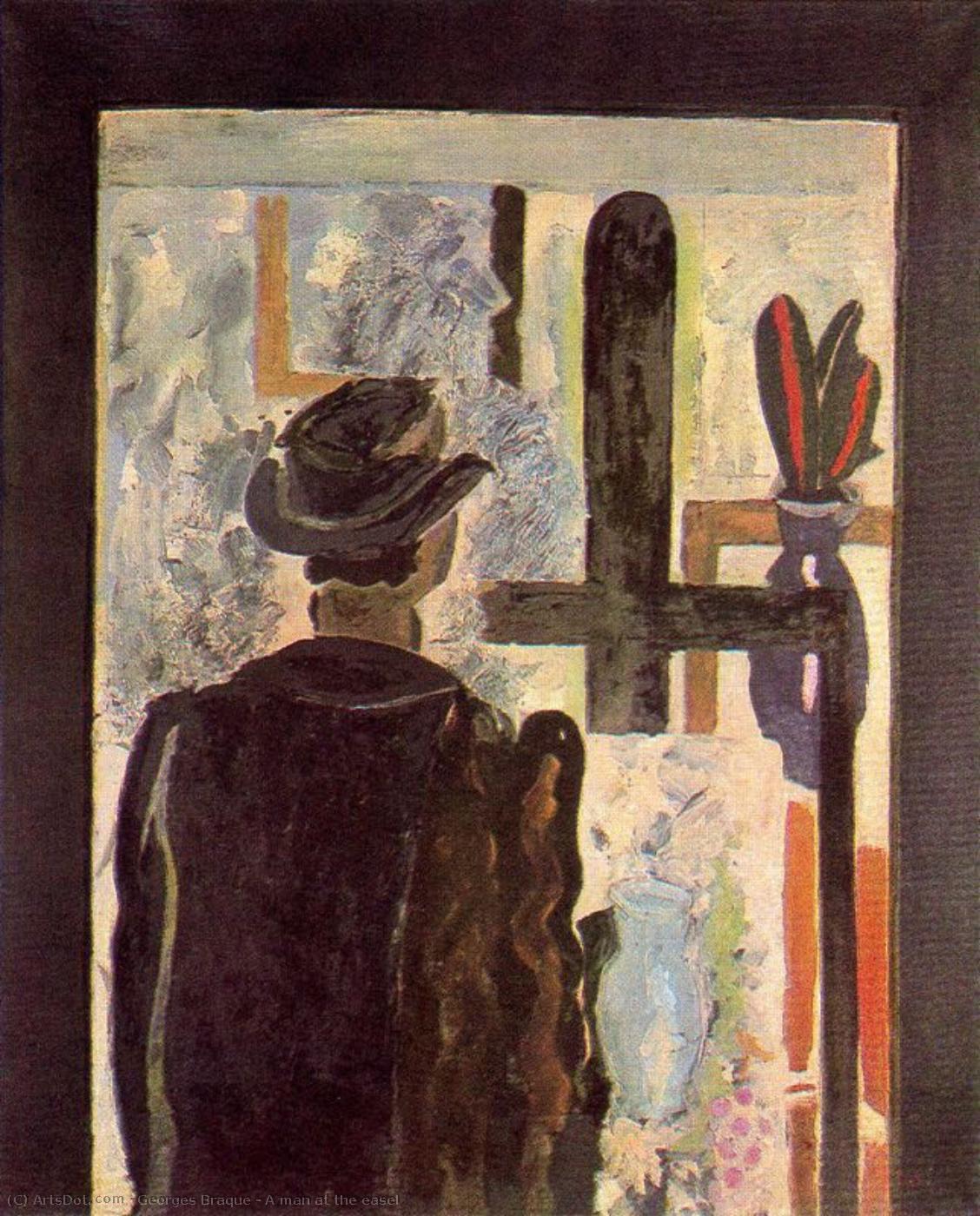
- A man at the easel
 Kupi otisak Naručite reprodukciju
 Pošalji
 Podijeli
 Detalji o umjetničkom djelu
 Dodaj u omiljene

 Preuzmi
 Slični predmeti
 Rentgenska snimka
 Automatska prezentacija
A man at the easel


 Prikaži više
Kupite digitalnu sliku visoke rezolucije i poboljšane kvalitete, koja je znatno superiornija od online prikaza.
Svaka datoteka pedantno je pripremljena od strane naših internih stručnjaka koristeći napredne alate i vještinsku ručnu retušu. Osiguravamo da svaka slika ima iznimnu jasnoću, preciznu točnost boja i visoku razinu detalja.
Konačna datoteka dostavlja se putem e-pošte u roku od 72 sata, optimizirana za neposrednu upotrebu u profesionalnim, uredničkim i tiskarskim okruženjima. To je ista kvaliteta kojoj vjeruju vrhunski studiji dizajna, izdavači i galerije.
Digitalna slika
Preuzmite datoteku visoke rezolucije za osobnu izložbu, tisak i kreativne projekte.
Uključeno uz svaku narudžbu digitalne slike
Profesionalna digitalna dostava, zajamčena
Odabirom OriginalUniqueArt.com ne dobivate samo sliku – dobivate profesionalno unapređeno digitalno umjetničko djelo, izrađeno s najvećom preciznošću uz jamstvo zadovoljstva. Evo svega što automatski dolazi uz vašu narudžbu:

Brza dostava e-poštom
Vaša digitalna slika visoke rezolucije bit će vam poslana e-mailom u roku od 72 sata od narudžbe – spremna za neposrednu upotrebu.

Digitalna datoteka poboljšana AI-om
Vaše umjetničko djelo profesionalno je optimizirano pomoću naprednih AI alata i ručnog uređivanja, čime se osigurava maksimalna razina detalja, oštrine i točnosti boja.

Besplatna ponovna dostava doživotno
Slučajno ste obrisali ili izgubili svoju datoteku? Ne brinite – ponovno ćemo vam je poslati u bilo kojem trenutku, potpuno besplatno.

Bez uvoznih carina – ikada
Uživajte u svojim umjetničkim djelima trenutno, bez carina, pristojbi ili troškova dostave – digitalne datoteke uvijek su oslobođene poreza.

Jamstvo točnosti boja
Uz pomoć profesionalnih alata i upravljanja bojama, osiguravamo da vaša digitalna slika što vjernije odražava izvorne boje.

Jamstvo zadovoljstva u trajanju od 60 dana
Ako niste zadovoljni svojom digitalnom slikom, revidirat ćemo je ili vratiti 100% novca u roku od 60 dana – bez ikakvih pitanja.

100% Jamstvo povrata novca
Niste zadovoljni? Osigurajte puni povrat novca u roku od 60 dana od primitka vaše digitalne datoteke – bez suvišnih pitanja.

Popusti na velike narudžbe
Kupite 3 slike, uštedite 10% - Kupite 5 slika, uštedite 15% - Kupite 10+ slika, uštedite 20%. Odlično za kreativne projekte, galerije i agencije.
Opis kolekcionarskog djela
Georges Braque’s “A Man at the Easel”: A Window Into Cubism's Quiet Contemplation
The painting "A Man at the Easel," executed by Georges Braque in 1942, stands as a testament to the enduring power of quiet observation within the revolutionary fervor of Cubist art. More than just a depiction of an artist’s workspace—it’s a carefully constructed visual puzzle that invites viewers to delve into the complexities of perception and representation during a pivotal moment in artistic history. Braque's masterful use of oil on board captures not merely what is seen, but how it *feels* to see it, reflecting the core tenets of Cubism’s intellectual exploration.The Anatomy of Fragmentation: Style and Technique
Braque’s stylistic approach firmly establishes him within the vanguard of Cubism alongside Pablo Picasso. Unlike Impressionists who sought to capture fleeting moments of light and color, Braque prioritized geometric abstraction—breaking down objects into fragmented planes that simultaneously exist in multiple viewpoints. This technique isn't merely about visual novelty; it’s a deliberate attempt to dismantle traditional illusionistic space, mirroring the artist’s own process of intellectual dissection. The painting exemplifies this brilliantly: the easel itself is fractured into interlocking shapes, suggesting not just its physical form but also the multifaceted nature of artistic creation. Notice how Braque utilizes subtle tonal variations—primarily muted browns and greens—to unify these disparate planes, creating a harmonious balance despite the inherent instability of the composition.A Reflection of Uncertainty: Historical Context
Created during World War II, “A Man at the Easel” embodies the anxieties and introspection characteristic of the era. The looming shadow of conflict underscores the painting’s contemplative mood—a stark contrast to the dynamism often associated with Cubism's earlier years. However, Braque wasn’t simply reacting to external pressures; he was actively grappling with fundamental questions about art’s role in confronting reality. The artist himself famously stated that he wished to “destroy” perspective and representation, aiming instead for a more profound engagement with the subject matter. This ambition aligns perfectly with the broader philosophical currents of Surrealism and Expressionism, which were influencing artists across Europe at the time.Symbolic Layers: Plants, Vase, and Window
Beyond its formal concerns, "A Man at the Easel" is laden with symbolic significance. The potted plant—a recurring motif in Braque’s oeuvre—represents growth, resilience, and perhaps even a yearning for beauty amidst hardship. Its placement on the right side of the canvas draws the eye outwards, suggesting an aspiration beyond the confines of the studio. Similarly, the vase contributes to the overall sense of stillness and contemplation. The window itself is particularly noteworthy; its geometric shape—a stylized cross—introduces an element of architectural detail that simultaneously symbolizes faith and spiritual reflection. It’s as if Braque invites us to consider not just what we see but also what lies beyond our immediate perception.Emotional Resonance: Quiet Intensity
Ultimately, “A Man at the Easel” succeeds in conveying a remarkable emotional depth despite its apparent simplicity. The muted palette and fragmented composition evoke a feeling of quiet intensity—a sense that Braque is capturing not just an image but also a state of mind. It’s a painting that speaks to the artist's own inner world, mirroring his ongoing engagement with artistic innovation while simultaneously acknowledging the pervasive influence of historical circumstance. Reproductions offer a chance to experience this subtle yet powerful aesthetic – a glimpse into the heart of Cubist contemplation.Biografija umjetnika
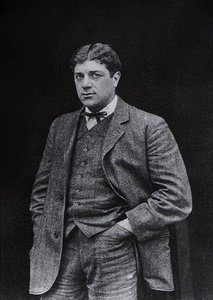
Georges Braque
Georges Braque was at the forefront of the revolutionary art movement of Cubism. His work throughout his life focused on still lifes and means of viewing objects from various perspectives through color, line, and texture. While his collaboration with Pablo Picasso and their Cubist works are best known, Braque had a long painting career that continued well beyond that period.Though Braque started out as a member of the Fauves—a group that included Henri Matisse and André Derain among others—he began developing a Cubist style after meeting Pablo Picasso. While their paintings shared many similarities in palette, style and subject matter, Braque stated that unlike Picasso, his work was “devoid of iconological commentary,” and was concerned purely with pictorial space and composition.
Braque’s early works were impressionistic, but after seeing the work exhibited by the Fauves in 1905, Braque adopted a Fauvist style. The Fauves, a group that included Henri Matisse and André Derain among others, used brilliant colors and loose structures of forms to capture the most intense emotional response.
He conducted an intensive study of the effects of light and perspective and the technical means that painters use to represent these effects, time dovodeći u pitanje najstandardnije umjetničke konvencije. In his village scenes, for example, Braque redovito smanjivao arhitektonsku strukturu do geometrijske forme slične kocki, no predočio je njezinu sjenu tako da ona izgleda i ravna i trodimenzionalna.
A decisive moment in its development occurred during the summer of 1907, when Georges Braque and Pablo Picasso painted side by side in Céret, in the French Pyrenees, each artist producing paintings that are difficult—sometimes virtually impossible—to distinguish from those of the other.
Together, Braque and Picasso developed Analytical Cubism, dissecting objects into fragmented geometric shapes and presenting multiple viewpoints simultaneously. Works like Houses at L'Estaque demonstrate this early phase, showcasing a radical departure from conventional perspective and a focus on the underlying structure of forms.
Their palette became deliberately muted, emphasizing form over color, as they sought to represent the totality of an object’s presence rather than merely its appearance.
The invention of Cubism was a joint effort between Picasso and Braque, then residents of Montmartre, Paris. These artists were the movement’s main innovators.
Georges Braque
1882 - 1963 , Francuska
Kratke činjenice
- Artistic Movement Or Style: Kubizam i Fovizam
- Artists Who Influenced This Artist:
- Henri Matisse
- André Derain
- Paul Cézanne
- Date Of Birth: 13. svibnja 1882.
- Date Of Death: 31. kolovoza 1963.
- Full Name: Georges Braque
- Nationality: Francuski
- Notable Artworks:
- Kuće L'Estaque
- Strpljenje
- Violina i Paletu
- Place Of Birth: Argenteuil, Francuska

