Pregledaj u realnoj veličini
 Pošalji
 Podijeli
 Detalji o umjetničkom djelu
 Vodič
Vodič

 Preuzmi umjetničko djelo
 Slični predmeti
 Rentgenska snimka
 Slide show
 Q&A
Q&A Statistika
Encounter


 Prikaži više
Djelo prikazano na ovoj stranici zaštićeno je autorskim pravima, što znači da zakonski ne možemo izraditi niti prodati identičnu reprodukciju. Ova se zaštita provodi u skladu s međunarodnim sporazumima kao što su Bernska konvencija i nacionalnim zakonima, uključujući i one koji su utvrđeni u Američki zakon o autorskom pravu – Title 17.
Ova metoda u potpunosti je usklađena s autorskim pravima jer ne uključuje kopiranje ili dupliciranje zaštićenih umjetničkih djela. Umjesto toga, riječ je o kreativnoj reinterpretaciji – novoj slici koja je dobila utjecaj na izvornik, ali nije identična njemu.
Giclée / Umjetnički otisak
Giclée tisak muzejske kvalitete ili otisak na platnu uz brzu izradu i raznolike opcije završne obrade. ( Kupi ručno oslikano djelo Prebacite na digitalnu sliku)




P118B €10

P118H €10

P118W €10

P438Z €10

P508JH €12

P508YH €12

P805H €10

P805Z €10

P919BZ €10

P919G €10

P919XJ €10

P959ZH €10

P968JZ €12

W106C €8

W218G €10

W218JH €8

W218Y €10

W307PJ €10

W316G €10

W316PJ €8

W316Y €10

W398PJ €8

W4111J €10

W500HY €15

W500JH €15

W692G €12

W849H €8

W940BG €15

W953PJ €8




Odaberite jednu od naših unaprijed definiranih veličina koje odgovaraju izvornim proporcijama umjetničkog djela.

Unesite potrebnu širinu i visinu kako bi odgovarali vašem okviru ili zidu. Print se može samo izrezati, nikada ne može biti veći od slike, stoga format s drugačijim omjerom stranica uzrokuje gubitak dijela slike. Prije bilo kakve štampe šaljemo vam digitalni prikaz (mockup) na odobrenje. Slika prikazana na ovoj stranici ne prikazuje stvarni rez — to prikazuje isključivo digitalni prikaz.
Dostava širom svijeta () u roku od 2 tjedna umjesto standardnih 4/5 tjedana. (31 Listopad)

Besplatna ekspresna dostava širom svijeta

Visokokvalitetno laneno platno

Potpuno osiguranje dostave

Jamstvo povrata carine i uvoznih poreza

Jamstvo vjernosti boja

Politika povrata u roku od 100 dana (samo u slučaju nedostataka)

Jamstvo povrata 100% novca

Popust na više proizvoda
 Opcija stakla dostupna je samo za dimenzije manje od 110 cm

Encounter
Giclée / Umjetnički otisak
Veličina reprodukcije
-


Ukupna cijena
€ 71
Alfred Freddy Krupa’s “Encounter”: A Study in Monochrome Emotion
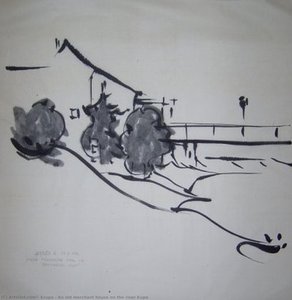
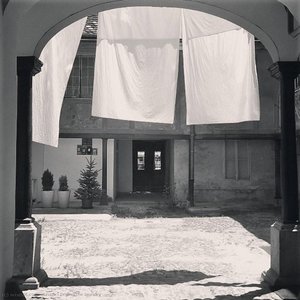
Alfred Freddy Krupa (1971-Living), born in Karlovac, Croatia, stands as a singular figure within the burgeoning Western New Ink Art movement—a testament to his unwavering dedication to translating profound human experience into visual form through masterful manipulation of grayscale. His artistic journey began with formal studies at Zagreb Academy of Fine Arts in 1995, equipping him with an unparalleled understanding of art history and technique – knowledge that informs every brushstroke and imbues his work with a distinctive resonance. Krupa’s exploration transcends mere stylistic imitation; it's driven by a desire to capture the essence of existence itself, rendered with breathtaking subtlety and emotional depth.- Subject Matter: “Encounter” depicts a quiet tableau—a feline form centered within the frame alongside a partial human figure positioned at the bottom left corner. The composition utilizes a diagonal perspective, guiding the viewer’s gaze from the lower left to the upper right, fostering a sense of dynamism despite the predominantly muted palette.
- Style & Technique: Krupa's approach aligns closely with impressionistic photography, prioritizing atmosphere and feeling over photographic precision. Notably, the image exhibits intentional blurring—a technique deliberately employed to heighten emotional impact and evoke contemplation. This deliberate obfuscation contributes significantly to the artwork’s surrealist undertones.
- Color Palette & Lighting: The absence of color is paramount; “Encounter” exists entirely within shades of black, white, and gray. This monochromatic scheme amplifies the piece's solemn mood and underscores themes of solitude and introspection—a stylistic choice mirroring Krupa’s broader artistic philosophy. Diffused lighting reinforces this flatness, creating an ethereal quality that invites viewers to delve into its emotional core.
- Composition & Texture: The asymmetrical arrangement draws attention to the feline subject, while subtle lines trace architectural elements and delineate the cat's contours. The blurring effect eliminates surface textures entirely, resulting in a smooth, dreamlike aesthetic—a deliberate tactic designed to bypass literal representation and tap into subconscious associations.
- Symbolic Significance: “Encounter”’s title encapsulates its central preoccupation: a significant meeting or connection between two beings. The blurred imagery symbolizes uncertainty and vulnerability, mirroring the complexities of human relationships and prompting reflection on moments of profound observation. Krupa's work resonates with echoes of existentialism, inviting viewers to contemplate the mysteries of perception and experience.
Historical Context & Influences
Krupa’s artistic vision draws inspiration from the legacy of European Expressionism—particularly artists like Edvard Munch and Ernst Ludwig Kirchner—whose explorations of psychological landscapes paved the way for Krupa's own distinctive stylistic idiom. The influence of photographic techniques pioneered by Alfred Stieglitz, championing tonal printing as a means of conveying emotion and capturing fleeting impressions, further solidified Krupa’s commitment to artistic innovation.Exploring Krupa’s Artistic Legacy
Reproductions of “Encounter” offer an exceptional opportunity to experience Krupa's masterful technique firsthand—a chance to bring his evocative vision into your home or studio. OriginalUniqueArt presents museum-quality prints crafted with archival inks on premium canvas, ensuring that this poignant artwork retains its beauty and emotional power for generations to come. Discover the transformative potential of owning a piece of contemporary art history.Resources & Further Exploration
For more information about Alfred Freddy Krupa and his artistic oeuvre, please visit Alfred Krupa’s Artist Database or explore related artworks at “Encounter” Reproduction Gallery.Pitanja i odgovori
O kakvom se umjetničkom djelu radi kod "Encounter"?
U katalogu je djelo "Encounter" autora Alfred Freddy Krupa klasificirano kao WallArt. Ova kategorija pomaže u pronalaženju sličnih radova.
Kako se "Encounter" uklapa u teme i stil umjetnika Alfred Freddy Krupa?
U cjelokupnom stvaralaštvu umjetnika Alfred Freddy Krupa, djelo "Encounter" pripada stilu Surrealist Photography, uz teme koje prožimaju impressionistic photography style, croatian surrealist expressionism, human-animal observation, symbolic encounter narrative, exploring emotional depth.
Preporučena veličina ispisa za "Encounter" je?
Za "Encounter" autora Alfred Freddy Krupa preporučuje se reprodukcija dimenzija Large. Veličina se može prilagoditi uz zadržavanje proporcija.
Biografija umjetnika
Alfred Freddy Krupa – Grokipedia
Alfred Freddy Krupa (Krūppa) (14 June 1971, Karlovac, Yugoslavia) is a Croatian contemporary artist (painter, master draughtsman, book artist, art photographer). He is considered one of the most prolific artists in Croatia.Early Life and Family
Alfred Freddy Krupa was born in Karlovac, Croatia, on June 14, 1971, to Mladen Krupa, a civil engineer and former military officer, and Ana Krupa, who holds a doctorate in psychology. His father’s involvement in the Croatian War of Independence played a significant role in shaping his formative years. Krupa's artistic lineage extends back to Jan Krupa, his paternal grandfather, who perished during an uprising in Galicia around 1919. Alfred Joseph Krupa (Alfred Krūppa stariji), Krupa’s great-grandfather, was an academic painter, athlete, and inventor—a figure who served as Krupa's first mentor. Alfred Joseph Krupa’s artistic debut took place in Croatia on the occasion of the First Croatian Cultural Workers Congress held in Topusko from June 25 to 27, 1944, during which he showcased his paintings alongside fellow artists involved in the Partisan movement. Krupa's family history is documented as victims of Nazi persecution by the Archive Arolsen – International Center for Documentation of Jewish Victims of Nazi Persecution.Education and Artistic Training
Krupa’s artistic education began at Karlovac Gymnasium, where he excelled academically. He pursued his passion for painting with unwavering dedication, graduating from Zagreb Academy of Fine Arts in 1995 under the tutelage of Zlatko Kauzlarić Atača, specializing in watercolor. During this period, Krupa gained invaluable insight into art history and technique—knowledge that would later inform his distinctive artistic approach. In 1992, he received a scholarship from the City of Karlovac, furthering his studies and expanding his horizons. Krupa continued his academic journey at Tokyo Gakugei University’s Research Institute for Fine Arts in Tokyo in 1998, immersing himself in Japanese ink painting traditions and solidifying his understanding of their historical context. He earned a doctorate in art history from Zagreb University in 2005, demonstrating a profound intellectual curiosity alongside his artistic talent.The Birth of New Ink Art
Alfred Freddy Krupa’s most influential contribution to the art world arrived with the publication of his “New Ink Art” manifesto in 1996. This wasn't merely a declaration of style; it was a philosophical statement challenging conventional methods of ink painting—a bold assertion that aimed to redefine artistic expression. Krupa argued for abandoning imitation and embracing the expressive potential of monochrome, delving into themes previously unexplored within this medium. He positioned himself as a leading voice in a burgeoning movement that sought to harmonize Eastern traditions—particularly Japanese Sumi-e—with Western influences like Expressionism and Surrealism. Following the manifesto’s release, Krupa undertook postgraduate research at Tokyo Gakugei University, deepening his comprehension of ink techniques and reinforcing his artistic vision. This period was crucial in shaping Krupa's distinctive style, allowing him to synthesize diverse inspirations into a singular aesthetic.Notable Artwork and Artistic Style
Krupa’s oeuvre encompasses over 40 solo exhibitions across Croatia and internationally—a testament to his prolific creativity and unwavering commitment to his craft. His paintings frequently explore themes of mortality, memory, vulnerability, and psychological depth—subjects rendered with remarkable precision and emotional intensity through masterful control of black ink on paper or canvas. Recurring motifs include landscapes—particularly depictions of trees and rivers—often imbued with symbolic significance and evoking feelings of solitude and introspection. Krupa’s artistic style is characterized by minimalist aesthetics combined with expressive brushwork, drawing inspiration from Sumi-e while simultaneously incorporating elements of Expressionism and Surrealism. His graphite drawings demonstrate exceptional skill in form and realistic representation alongside his more abstract explorations. Pieces like “Birches” exemplify Krupa's ability to convey profound emotion through deceptively simple compositions—a hallmark of his artistic legacy.Recognition and Legacy
Alfred Freddy Krupa’s impact on Croatian art has been recognized through numerous awards, including the Order of Danica Hrvatska with Distinction for Exceptional Merit in Culture and the City of Karlovac Award—honors acknowledging his significant contributions to Croatian culture. His work gained international acclaim when it was featured in exhibitions such as the London Art Biennale and entered into the collection of MoMA. Krupa’s artistic significance lies not only in his creative achievements but also in his willingness to disrupt conventions and forge a new path for ink painting—a legacy that continues to inspire artists today. He stands as a pioneer of New Ink Art, demonstrating that this traditionally restrained medium could be utilized to express complex emotions and contemplate fundamental philosophical questions. Krupa’s enduring influence serves as a reminder of art's capacity to illuminate the human experience and grapple with life's most profound mysteries—solidifying his place as one of Croatia’s foremost contemporary artists.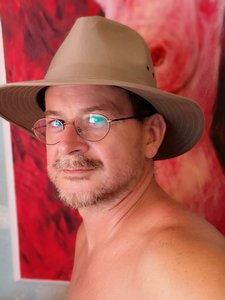
Alfred Freddy Krupa
1971 - , Hrvatska
Osnovne informacije
- Artistic Movement Or Style: New Ink Art
- Artists Who Influenced This Artist:
- Sumi-e
- Expressionism
- Surrealism
- Date Of Birth: 14. lipnja 1971.
- Full Name: Alfred Freddy Krupa
- Nationality: Hrvatski
- Notable Artworks:
- After I die…
- Dubovac
- My Hand
- Broken Nude
- Place Of Birth: Karlovac, Hrvatska
Srodni članci
Krupa's Artistic Vision: Exploring Technique, Themes & Historical Context
Discover the evocative world of Alfred Freddy Krupa, a pioneering Croatian artist redefining 'New Ink Art.' Explore his themes of mortality, memory & nature – and find museum-quality reproductions at OriginalUniqueArt.

Monochrome Visions: Exploring the Aesthetic & Historical Significance of Black & White Photography
Explore the rich history & artistic power of black and white photography. From early techniques to iconic masters like Ansel Adams, discover why monochrome continues to captivate art lovers today. Expert insights for collectors.

Masterpieces of the English Countryside: Top 25 Sir Alfred James Munnings Artworks
Explore 25 iconic Sir Alfred James Munnings masterpieces. Discover timeless equine art on OriginalUniqueArt.com.

Beyond the Lens: Photography's Enduring Influence on Modern & Contemporary Art
Explore photography's pivotal role in shaping modern & contemporary art. Discover key movements, influential artists like Stieglitz, and expert collecting advice from OriginalUniqueArt.

Ephemeral Expressions: Exploring the Nuances of Ink on Paper Through History & Contemporary Art
Explore the captivating world of ink wash painting – from its ancient origins to contemporary masters. Discover techniques, symbolism & conservation insights with OriginalUniqueArt.com.