
() ·
Slika izrađena ručno, baš za vas
Ručno rađena uljana reprodukcija
Ručno oslikano uljanim bojama na platnu u dimenzijama i okviru po vašem izboru, izrađeno po narudžbi od strane naših umjetnika. ( Prebacite na printove Prebacite na digitalnu sliku)
Opis kolekcionarskog predmeta
Admire "Grazing Cows" by Alexei Stepanov – a captivating Russian landscape painting reflecting Impressionist influence. A serene rural scene of cows & herder, perfect for art collectors.
Biografija umjetnika
Explore the genre paintings of Alexei Stepanov, a Russian artist associated with the Peredvizhniki. Known for landscapes & scenes of rural life, his work reflects Impressionist influence.
 Prikaži više
od ·
Poglavlje 1
Koje bi dimenzije trebalo imati?
Povucite kako biste promijenili dimenziju; slika s lijeve strane prikazuje okvir u njegovoj stvarnoj širini. Zadržane su proporcije originala.
Odaberite jednu od naših unaprijed definiranih veličina koje odgovaraju izvornim proporcijama umjetničkog djela.

Unesite potrebnu širinu i visinu kako bi dimenzije odgovarale vašem okviru ili zidu. Budući da je riječ o ručno oslikanom djelu, umjetnik može malo proširiti rubove slike ili ih skratiti kako bi postigao drugačiji oblik — izbor je vaš. Prije početka slikanja poslat ćemo vam digitalni prikaz (mockup) radi potvrde. Slika prikazana na ovoj stranici ne predstavlja stvarni rezultat — samo digitalni prikaz to čini.
Poglavlje 2
U kakvom bi stanju trebalo stići?
Odaberite rubove platna
Odaberite svoj okvir

Bijela rubna traka €1

Zamućeni rubovi €1

Prošireno €1

P118B €10

P118H €10

P118W €10

P438Z €10

P508JH €12

P508YH €12

P805H €10

P805Z €10

P919BZ €10

P919G €10

P919XJ €10

P959ZH €10

P968JZ €12

W106C €8

W218G €10

W218JH €8

W218Y €10

W307PJ €10

W316G €10

W316PJ €8

W316Y €10

W398PJ €8

W4111J €10

W500HY €15

W500JH €15

W692G €12

W849H €8

W940BG €15

W953PJ €8

H24-GOLD €30

H24-SILVER €30

H36-GOLD €45

H36-SILVER €45
Uokvireno
Profil: . Ukupna veličina s okvirom: .
Poglavlje 3
Tko to slika i treba li išta promijeniti?
Nakon narudžbe, tim OriginalUniqueArt.com kontaktirat će klijenta putem e-pošte radi uputa te dostaviti pregledni prikaz (mockup)
Isporuka širom svijeta () u roku od 3-4 tjedna umjesto standardnih 5 tjedana. (11 Studeni). Bez kompromisa u kvaliteti.
Poglavlje 4
Završni dodir
Pločica s natpisom, kao u muzeju?
Detalji gravirane brončane pločice
This elegant plaque features the artist's name and the title of the artwork, finely engraved for a timeless presentation.
It is made from bronze with a refined, elegant finish. The text is precisely laser-engraved for a sharp and permanent result. Measuring 9x2 cm, the plaque is compact yet easy to read. It's built to be durable and scratch-resistant, offering a professional, museum-quality look. Mounting is simple thanks to the included adhesive backing.
Detalji prozirne akrilne pločice
The plaque includes essential engraved details such as the artist's name, the title of the artwork, the date it was created, the type of media used-like oil on canvas or watercolor-a brief description of the piece, and a QR code that links to the complete artwork information.
It is crafted from clear acrylic, offering a sleek, modern appearance. The text is UV-engraved in black to ensure strong visual contrast. With a size of 10x15 cm, it ensures optimal readability. It comes equipped with two metal hooks for secure wall mounting. The plaque is designed to be weather-resistant, making it suitable for various environments, and it includes interactive features that work seamlessly with smartphone scanning.
Detalji crne akrilne pločice
This elegant plaque includes engraved information such as the artist's name, the title of the artwork, the date it was created, the type of media used (like oil on canvas or watercolor), a short description of the artwork, and a QR code for quick access to more information.
The plaque itself is made from refined black acrylic with a premium finish. The text is laser-engraved in white for high contrast and readability. Its size is 10x15 cm, designed to be easy to read. It comes with two metal hooks for professional mounting. The design is sleek and fits any interior style. It is also weather-resistant and durable, with built-in digital integration for mobile compatibility.
Zaštitni lak?
Kada vam je potrebno?
Poglavlje 5
Vaša slika, prema vašoj narudžbi

Grazing Cows
Tehnika reprodukcije
Veličina reprodukcije
-

Odabrani vrhunski umjetnik
Više detalja, profinjenosti i dodatnog vremena za izradu
-

Okvir za reprodukciju
-
-
Za umjetnička djela ili reprodukcije veće od 105 cm (približno 41 inč) na bilo kojoj strani, okvir će biti isporučen u obliku rastavljenog seta za montažu. Ovaj način osigurava sigurnu dostavu i sprječava oštećenja tijekom transporta.
Potrebna je profesionalna montaža – ovo nije proizvod za samostalnu izradu.
Set mora sastaviti i platno zategnuti iskusni profesionalni uokvirivač, koristeći drvno ljepilo (nije uključeno u set), kljeste za zatezanje platna i stege kako bi se održao pravilan kut letvica dok se ljepilo suši. Nepravilna montaža ili neravnomjerno zategnuto platno mogu trajno oštetiti umjetničko djelo, a takva oštećenja nisu pokrivena našim jamstvom.
 Za umjetnička djela ili reprodukcije veće od 105 cm (približno 41 inč) na bilo kojoj strani, okvir će biti isporučen u obliku rastavljenog seta za montažu. Ovaj način osigurava sigurnu dostavu i sprječava oštećenja tijekom transporta.
Sve letvice od punog drveta su uključene, precizno izrezane po mjeri.
Montira se pomoću priloženih vijaka, uz dodatak ljepila za drvo za spojeve u kutovima, koje nije uključeno u set i koje vaš okviraš mora vlastito nabaviti.
Potrebni su profesionalni alati koji nisu uključeni: škripc za zatezanje platna (zatezač) i stezaljke za održavanje pravokonačnosti letvica tijekom sušenja ljepila.
Važno:
Za spojeve u kutovima potrebno je ljepilo za drvo, letvice se moraju pričvrstiti stezgama dok se ljepilo potpuno ne osuši, a za zatezanje platna na sastavljenom okviru potreban je alat za zatezanje platna. Nijedan od ovih alata nije uključen u set. Molimo vas da prije narudžbe ove veličine osigurate uslugu iskusnog profesionalnog uokvirivača.

Natpisna pločica
-
-

Zaštitni lak
Sjajni lak (pojačava intenzitet boja, štiti od svjetlosti i vlage)
-

Prilagodite svoje umjetničko djelo
Primjeri mogućnosti prilagodbe: Zamijenite lice fotografijom kupca; Dodajte ljubimca (npr. zamijenite mačku psom); Uključite skrivenu poruku u pozadinu; Promijenite pejzaž ili elemente pozadine.
-

Hitna dostava
Globalna dostava () u roku od 3-4 tjedna umjesto standardnih 5 tjedana. (11 Studeni). Bez kompromisa u kvaliteti.
-
Brza dostava
Dostava širom svijeta () u roku od 5 tjedana. (18 Studeni).
Uključeno u cijenu
Ukupna cijena
€ 268
Opcija stakla dostupna je samo za dimenzije manje od 110 cm
Uključeno uz svaku narudžbu
- Besplatna ekspresna dostava širom svijeta
- Visokokvalitetno laneno platno
- Potpuno osiguranje dostave
- Jamstvo povrata carine i uvoznih poreza
- Jamstvo vjernosti boja
- Politika povrata u roku od 100 dana (samo u slučaju nedostataka)
- Jamstvo povrata 100% novca
- Popust na više proizvoda


 Pregledaj u realnoj veličini
 Pošalji
 Podijeli
 Detalji o umjetničkom djelu
 Vodič
Vodič

 Preuzmi umjetničko djelo
 Slični predmeti
 Rentgenska snimka
 Slide show
 Pitanja i odgovori
 Statistika
U brojkama
- 29okviri koji možete odabrati
- standardne dimenzije, u vlastitim proporcijama
- 5tjedana za slikanje i dostavu
O izvornom djelu


Aleksey Stepanov
1858 - 1923, Ukraine
Brzi pregled o Aleksey Stepanov
- Artistic Movement Or Style: Peredvizhniki; Impressionism
- Artists Or Movements Influenced By This Artist: ['Impressionists']
- Artists Who Influenced This Artist:
- Illarion Pryanishnikov
- Evgraf Sorokin
- Date Of Birth: 1858
- Date Of Death: 1923
- Full Name: Alexei Stepanovich Stepanov
- Nationality: Russian
- Notable Artworks:
- Moose herd
- Morning greeti
- Place Of Birth: Moscow, Russia
Biografija umjetnika
Early Life and Family Background
Aleksey Stepanov was born on 6 May 1858 in Simferopol. His lineage was tied to the military aristocracy; his father belonged to a noble family and served as an officer during the Crimean War. This background provided a specific social standing, yet his early years were defined by sudden instability. His mother died shortly after his birth, leaving the family unit fractured before it had truly established itself.
The loss of his father in 1863 removed the final pillar of his domestic life. At only six years old, Aleksey Stepanov was sent to the Moscow Orphanage for Children from Military Families. This institution, situated on an estate formerly owned by Count Alexey Razumovsky, provided the structure that his biological family could no longer offer. This transition from a noble household to a specialized orphanage shaped the early reality of his existence.
Academic Training and Early Career
Stepanov’s technical foundation was built on precision rather than pure aesthetics. Before committing to fine arts, he entered the Konstantin Surveying Institute, graduating as an official surveyor in 1879. This background in surveying provided a disciplined, observational framework that would later define his approach to the landscape. He moved from technical drafting to formal art training between 1880 and 1883, when he studied at the Moscow School of Painting, Sculpture and Architecture. Under the instruction of Illarion Pryanishnikov and Evgraf Sorokin, he transitioned from the rigid lines of a surveyor to the nuanced demands of academic painting.
His early professional identity was shaped by significant social and editorial connections. During his time at the Moscow School, he met Leonid Sabaneyev, a connection that proved essential for his visibility in the Russian art scene. Between 1883 and 1895, Stepanov provided over a hundred drawings for the magazine Природа и охота. This period of prolific illustration allowed him to experiment with various styles while establishing a presence in the public eye. His work during these years was not merely decorative; it was a rigorous exercise in capturing the natural world through a lens of realism.
Association with the Peredvizhniki
Stepanov’s entry into the Peredvizhniki in 1888 marked a definitive shift toward the realist movement. This group functioned by organizing traveling exhibitions across Russia, a strategy designed to bring art directly to the public rather than confining it to elite academic circles. His presence within this circle aligned him with a specific mission: depicting Russian life through a lens of unflinching realism. His ability to capture the natural world through careful observation earned him immediate recognition, including the acquisition of his work by Pavel Tretyakov shortly after he joined the group.
The trajectory of his career eventually diverged from the Peredvizhniki's core structure. In 1903, Stepanov was part of the group that defected from the movement to establish the Union of Russian Artists. This was not a mere transition but a foundational act, as he became a founder of this new organization. This move signaled a shift in the internal dynamics of Russian art, moving away from the established Peredvizhniki framework toward new collective identities.
- Moose Herd (1888)
Technique and Artistic Style
Stepanov’s mature style is defined by a successful synthesis of realism and Impressionist aesthetics. His 1903 trip to Europe, where he encountered the works of Claude Monet and Pierre-Auguste Renoir, fundamentally altered his approach to light and color. He moved away from rigid academicism toward a method that emphasized luminous palettes and the capture of fleeting atmospheric moments. This shift allowed him to depict the Russian landscape not as a static backdrop, but as a living, changing environment. His canvases often blend lyricism with a grounded realism, avoiding sentimentality in favor of a direct, observational truth.
The artist possessed a particular technical command over animal subjects and rural topography. He was especially noted for his skill in painting horses, capturing their form and movement with a precision that satisfied the realist tradition while utilizing Impressionist brushwork. This ability to balance anatomical accuracy with atmospheric texture is evident in his depictions of the countryside. Rather than focusing on grand historical narratives, he concentrated on the quiet dignity of everyday life and the natural world. His work remains significant because it avoids the heavy-handedness of some of his contemporaries, opting instead for a clarity of vision that emphasizes the subtle interplay of light and shadow in rural settings.
Teaching and Academic Career
Stepanov’s influence extended far beyond the canvas and into the institutional structures of Russian art education. His transition from practitioner to educator began when he accepted a position as a lecturer at the School of Fine Arts, an institution operated by Anatoly Gunst. This period established his reputation as a formal instructor capable of translating technical observation into pedagogical method. His ability to communicate the nuances of landscape and genre painting eventually led to a significant appointment at the Moscow School of Painting, following an invitation from Valentin Serov.
His tenure at the Moscow School of Painting was marked by a rise in academic status, culminating in his appointment as a Professor. He held this academic position until 1918, maintaining a consistent presence in the classroom through decades of shifting political and social landscapes. This long-term commitment to the academy ensured that his specific approach to light and rural realism was passed down to a subsequent generation of painters. His students included several notable figures who would go on to define the next era of Russian art, such as Sergey Gerasimov, Boris Ioganson, Pavel Korin, and Leonard Turzhansky.
Where to See His Works Today
Stepanov’s physical legacy is distributed across several significant regional collections, making his presence felt in various corners of the former Russian Empire. In the Stavropol Art Museum, one can find his 1910 work Maslenitsa. The Vladikavkaz Art Museum maintains a notable presence of his output, holding both An Inn from 1912 and Elks from 1919. These works represent the tangible remains of his commitment to capturing specific moments of rural life and natural observation.
The geographic reach of his influence extends further into the Irkutsk Regional Art Museum, which houses Hunter with Dogs and In the Boat. His depictions of pastoral movement and animal subjects are also preserved in the Dagestan Fine Arts Museum in Makhachkala, where A Flock of Sheep and The Horse Sleigh are held. These collections provide the necessary evidence of his technical development and his ability to translate the atmosphere of the countryside into permanent oil paintings.
Srodni članci

Beyond the Horizon: A Curated Guide to Integrating Post-Impressionist Landscapes into Modern Interiors
Transform your home with the emotive power of Post-Impressionist landscapes. Discover expert tips on selecting hand-painted oil reproductions to create a soulful, vibrant interior that reflects your unique style and connection to nature.

John Constable: 25 Remek-djela Engleskog Majstora Krajolika | OriginalUniqueArt
Uronite u svijet John Constabla! Otkrijte 25 remek-djela engleskog romantizma i pejzaža. Ekskluzivne reprodukcije slika, zidna dekoracija & inspiracija za dizajn interijera na OriginalUniqueArt.com. Istražite cijelu kolekciju online!

Top 10 Impresionističkih Krajolika: Majstorski Otisci U Umjetnosti i Dekoraciji
Otkrijte 10 remek-djela impresionizma koja su definirala krajolik! Uronite u svijet Moneta, Renoira i Pissarra. Inspirirajte se umjetnošću i pronađite savršenu reprodukciju za svoj interijer na OriginalUniqueArt.com.
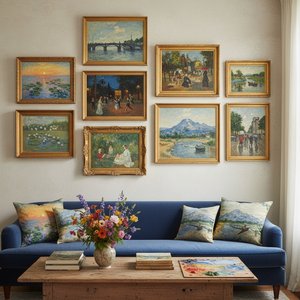
Impressionistic Landscapes: 10 Masterpieces That Changed Art & Decor
Journey into the heart of Impressionism! Explore 10 masterpieces by Monet, Renoir & Degas that revolutionized landscape art. Discover their stories, techniques & find museum-quality reproductions to elevate your home decor on OriginalUniqueArt.com.