There's a calendar on the wall of a drying room I keep thinking about, dates crossed out in blue, then in black, then finally in a red that means something has gone wrong twice already. The room itself does nothing, which is the whole point of it. Ca...
To understand an oil painting is to understand a slow, invisible transformation. Unlike water-based media that vanish into the fibers of paper through evaporation, oil paint undergoes a much more profound chemical evolution. It cures through oxidative polymerization, a process where the drying oil—typically linseed, walnut, or poppy seed oil—absorently oxygen from the atmosphere to cross-link its molecules into a solid, durable film. This is not merely a change in moisture, but a fundamental restructuring of matter.
In the quiet of an atelier, this process dictates the rhythm of creation. A painter cannot simply rush the chemistry; the canvas must endure weeks, sometimes months, of silent work. We see the echoes of this patience in the works of contemporary artists like Mary E. Maxwell, whose dedication to the materiality of her medium reflects a deep respect for these natural timelines. While modern alkyd mediums, derived from heated resins, can accelerate this drying time for those working under tight deadlines, the fundamental principle remains: the paint is alive with change long after the brush has been cleaned.
The duration of this cure is why a commissioned portrait requires careful scheduling. A painting may feel dry to the touch within days, yet the internal chemistry continues for months. To apply a final varnish too early is to trap solvents beneath a surface, risking the integrity of the work. True permanence is found only when the oxidation has reached its necessary stability.
Elemental Stability: The Science of Inorganic and Organic Pigments
A pigment is a chemical compound that gives a substance or organism color, or is used by humans to add or alter color or change visual appearance. Pigments are nearly or completely insoluble and chemically unreactive in water or another medium; in co...
The colors we perceive on a canvas are the result of light interacting with specific chemical compounds. A pigment is an insoluble particle that absorbs certain wavelengths of light while reflecting others back to our eyes. This interaction defines the character of every hue, from the deep, earthy tones of prehistoric ochre to the brilliant, modern brightness of titanium white.
The history of art is, in many ways, a history of pigment discovery. We find traces of this elemental struggle in the distinction between inorganic and organic substances. Inorganic pigments, often derived from minerals like lapis lazuli or iron oxides, possess an inherent ruggedness. They are chemically unreactive and resistant to the sun's rays. In contrast, organic pigments can offer a more intense brilliance but may be prone to fading, a phenomenon known as fugitiveness. We see this in Alizarin Crimson, which requires careful handling to prevent its loss of intensity over time.
This tension between the permanent and the transient is what gives an Impressionist work its vitality. When we look at the works of Claude Monet or Pierre-encoded Renoir, we are witnessing a deliberate selection of materials designed to capture light. The use of stable minerals provides the structural foundation, while more delicate hues provide the emotional pulse. Even in modern contexts, such as the way Banksy might utilize traditional landscape aesthetics in Corrupted oil jerry crude oil, the underlying science of how these pigments hold their color remains the constant thread connecting the street artist to the Old Masters.
Structural Integrity: The 'Fat Over Lean' Principle and Layering
Oil painting is a painting method involving the procedure of painting with pigments combined with a drying oil as the binder. It has been the most common technique for artistic painting on canvas, wood panel, or copper for several centuries. The adva...
A successful oil painting is a feat of engineering as much as an expression of art. To prevent the surface from cracking or peeling, a painter must adhere to the fundamental rule of "fat over lean." This principle dictates that each successive layer of paint should contain a higher proportion of drying oil than the one beneath it. A "lean" layer, thinned with turpentine or mineral spirits, dries quickly and forms a brittle film. A "fat" layer, enriched with linseed or walnut oil, remains more flexible.
If this order is reversed, the top layer will dry faster than the foundation, leading to structural failure as the layers expand and contract at different rates. This discipline is visible in the meticulous construction of Early Netherlandish works, where artists built depth through carefully controlled applications. We see a modern continuation of this technical rigor in the way professional ateliers approach custom commissions, ensuring that every layer of a portrait is prepared to withstand the centuries.
This layering process is also what allows for the creation of complex textures. By varying the oil content, an artist can move from thin, transparent washes to thick, heavy applications. This structural logic ensures that whether one is looking at a delicate floral arrangement like Renoir’s Bouquet in front of a Mirror or a heavy, textured landscape, the physical bond between the pigment and the canvas remains unbroken.
Optical Depth: Glazing, Scumbling, and the Manipulation of Light
The true magic of oil painting lies in its ability to manipulate light through transparency. Unlike acrylics, which tend to sit on the surface as opaque films, oil allows for techniques like glazing and scumbling that invite light to travel *through* the paint. Glazing involves applying thin, transparent layers of pigment over a dried underpainting. As light passes through these translucent veils, it reflects off the lower layers, creating a luminous depth that cannot be replicated by simple mixing on a palette.
Scumbling offers a different optical effect, involving the application of a thin, opaque layer of light-colored paint over a darker area using a dry brush. This creates a soft, broken texture that mimics the diffusion of light through mist or atmosphere. These techniques are central to the Impressionist approach, where the goal was not to paint objects, but to paint the light reflecting off them. In works like White House by Renoir, the interplay of these methods allows for a sense of warmth and atmospheric glow.
This manipulation of light is what distinguishes a hand-painted oil reproduction from a simple print. A print is a flat, digital capture of color; it lacks the physical depth created by the refractive index of real oil glazes. When an artist works with true oil, they are building a three-dimensional optical experience, one where the viewer's eye can penetrate the surface to find hidden tones and subtle shifts in value.
The Architecture of Texture: From Sfumato to Impasto
Captivating Subject and Vibrant Composition This exquisite still life captures a lively bouquet of anemones, rendered with an expressive and dynamic approach. The arrangement bursts with color and movement, inviting viewers into a moment of fleeting ...
Texture is the physical language of the brushstroke. An artist uses the body of the paint to direct the viewer's eye and convey emotion. At one end of the spectrum is sfumato, a technique of incredibly fine tonal blending that eliminates hard edges, creating a smoky, seamless transition between light and shadow. This method requires immense patience and a delicate touch, famously utilized to create the ethereal atmosphere in Renaissance portraiture.
At the opposite extreme lies impasto, where paint is applied so thickly that it stands out from the canvas in relief. This technique captures the energy of the artist's movement and creates actual shadows on the painting's surface. We see this dramatic use of texture in the swirling, heavy strokes of Vincent van Gogh or the energetic, textured applications in Renoir’s Spray of Anemones. The thickness of the paint allows the artwork to interact with the ambient light of the room, changing as the viewer moves.
Whether an artist employs the smooth, controlled marks of a classical portrait or the rugged, tactile surfaces of a landscape, the brushwork serves as a personal signature. It is the physical record of the artist's presence. In our workshop, we ensure that every reproduction maintains this essential quality, preserving the visible, rhythmic strokes that give an oil painting its soul and its weight.
Preservation and Protection: The Role of Varnish in Longevity
The Alchemy of Pigment: Inorganic Stability vs. Organic Evanescence Pigment A pigment is a chemical compound that gives a substance or organism color, or is used by humans to add or alter color or change visual appearance. Pigments are nearly or comp...
The final act in the life of a painting is the application of varnish. Once a work has fully cured—a process that can take many months—a protective layer of resin, such as Damar, is applied to the surface. This layer serves several vital purposes: it protects the pigment from atmospheric pollutants and dust, it saturates the colors to restore their depth, and it provides a uniform sheen to the work.
Varnish also acts as a sacrificial barrier. Over decades or centuries, the varnish may yellow or accumulate grime, but because it sits atop the paint film, it can be carefully removed and replaced without disturbing the original artwork. This is why many historical works appear much more brilliant after a professional cleaning and re-varnishing than they have in years.
However, the application of varnish requires strict adherence to the chemistry of the painting. Applying varnish over an uncured layer can trap solvents and cause permanent damage. It is this commitment to long-term preservation that defines the difference between a temporary decoration and a lasting investment. By respecting the science of protection, we ensure that the light and color captured by the artist remain as potent for future generations as they were the moment the brush left the canvas.
Autor: Uredništvo OriginalUniqueArt.com
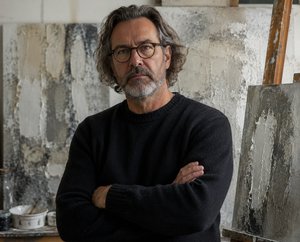
Ekskluzivni umjetnikDavid Moreau
b. 1967 · Lyon, France
Discover the exquisite textured works of Moreau. WahooArt offers exclusive access to his master-style plaster and texture art reproductions.
Discover the exclusive collection of Noiret at WahooArt. Explore premium abstract reproductions featuring modern non-representational art and profound chromatic depth.
Discover the profound beauty of texture and light in abstract art. Explore how impasto techniques and sculptural layers create a living, breathing landscape of emotion, perfect for the discerning Impressionist lover seeking depth and soul in every brushstroke.
Discover why true masterpieces require time. Explore the intricate chemistry of oil curing, the meticulous layering of hand-painted commissions, and the expert craftsmanship required to create enduring, museum-quality fine art for discerning collectors.
Explore the science of art longevity. Learn how inorganic pigments, lightfastness, and professional oil techniques ensure fine art reproductions endure for centuries. An expert guide on the chemical stability and archival quality essential for high-end interior design.
Explore the rich history & enduring techniques of oil painting with OriginalUniqueArt. Discover masterpieces, learn about art collecting, and find authentic handmade reproductions crafted by skilled artists.
Discover the fascinating science behind enduring masterpieces. Explore how lightfast pigments, drying oils, and expert layering techniques preserve the luminous beauty of Impressionist art for centuries. An elegant deep dive into the chemistry of artistic permanence.


 Waiting for the Paint to Cure: How Long a Commissioned Oil Painting Really Takes
 Pigment
 Oil painting
 Spray of Anemones
 The Chemistry of Permanence: Why Masterpiece Colors Survive the Centuries