

 Aperçu en situation
 Partager
 Partager
 Détails
 Guide imprimable

 Télécharger
 Articles similaires
 Radiographie
 Voir le diaporama
 Statistiques
Forest Interior


 Afficher la suite
Giclées et impressions d'art
Impressions giclées ou sur toile de qualité musée, avec une production rapide et des finitions au choix. ( Acheter la peinture faite à la main Passer au format image numérique)




P118B €10

P118H €10

P118W €10

P438Z €10

P508JH €12

P508YH €12

P805H €10

P805Z €10

P919BZ €10

P919G €10

P919XJ €10

P959ZH €10

P968JZ €12

W106C €8

W218G €10

W218JH €8

W218Y €10

W307PJ €10

W316G €10

W316PJ €8

W316Y €10

W398PJ €8

W4111J €10

W500HY €15

W500JH €15

W692G €12

W849H €8

W940BG €15

W953PJ €8




Choisissez parmi nos formats prédéfinis qui respectent les proportions originales de l’œuvre.

Saisissez la largeur et la hauteur souhaitées pour qu'elles s'adaptent à votre cadre ou à votre mur. Une impression ne peut être que découpée, elle ne peut jamais être agrandie au-delà de l'image originale ; ainsi, un format de forme différente entraînera la perte d'une partie de l'image. Nous vous envoyons une maquette numérique pour approbation avant toute impression. L'image présentée sur cette page ne montre pas le recadrage réel — seule la maquette le permet.
Livraison dans le monde entier () en 2 semaines au lieu des 4/5 semaines habituelles. (21 octobre)

Livraison express gratuite dans le monde entier

Toile de lin de haute qualité

Assurance transport complète

Garantie de remboursement des droits de douane

Garantie de fidélité des couleurs

Garantie de retour de 100 jours (uniquement en cas de défaut)

Garantie de remboursement à 100%

Tarifs dégressifs sur quantité
 L'option verre n'est disponible que pour les dimensions inférieures à 110 cm.

Forest Interior
Giclées et impressions d'art
Format de la reproduction
-


Prix total final
€ 70
A Symphony of Crimson and Light
In the quiet depths of Forest Interior, painted in 1865, the viewer is invited into a sanctuary of light and color that transcends the boundaries of a mere landscape. William Trost Richards, a master of American realism, captures a moment of profound stillness within the heart of the woods. The scene is dominated by a breathtaking palette of vibrant reds and warm ochres, as if the very air is infused with the glow of an eternal autumn afternoon. This is not merely a depiction of trees; it is an immersive experience where the delicate interplay of light filtering through the canopy creates a sense of warmth that radiates from the canvas, offering a serene escape from the complexities of the modern world.
The composition is masterfully layered to create an extraordinary sense of depth and texture. Richards employs a technique that draws the eye from the immediate foreground—where a solitary bird rests, adding a pulse of life and movement to the stillness—into the receding layers of the forest. The meticulous attention to detail in the foliage allows each leaf to appear almost tangible, while the soft blending of distant shadows provides a misty, atmospheric quality. This careful balance between sharp, photographic precision and painterly softness is what makes this piece so captivating for those looking to add a sense of organic elegance to a curated interior.
The Legacy of the Hudson River School
To understand the soul of Forest Interior, one must look toward the historical currents of the mid-19th century. As a contemporary of the great Hudson River School, Richards shared their reverence for the American wilderness, yet he brought a unique, almost scientific devotion to the truth of nature. While others sought the dramatic and the sublime, Richards found divinity in the minute: the way light hits a vein in a leaf or how shadows pool at the base of an ancient trunk. His work serves as a bridge between romanticism and realism, capturing the majesty of the natural world with a precision that honors the environment's inherent complexity.
For the discerning collector or interior designer, this painting offers more than just aesthetic beauty; it provides a focal point of emotional resonance. The inclusion of life within the landscape—the subtle presence of fauna amidst the flora—symbolizes the interconnectedness of all living things, evoking themes of peace, preservation, and wonder. Whether placed in a sunlit gallery or as a centerpiece in a sophisticated living space, this reproduction of Richards' masterpiece brings with it a timeless dignity, reminding us of the quiet splendor that exists when we pause to truly observe the world around us.
Questions et réponses
Quel espace est suggéré pour «Forest Interior» de William Trost Richards ?
L'espace recommandé pour «Forest Interior» de William Trost Richards est un Living Room. Cette suggestion peut bien entendu être adaptée à votre intérieur.
Puis-je commander une reproduction à l'huile de « Forest Interior » ?
Les reproductions peintes à la main de «Forest Interior» de William Trost Richards sont vendues sur ce site web : une reproduction à l'huile peinte à la main sur toile de lin, via sa page Reproduction peinte à la main.
Pourquoi le statut du droit d'auteur de « Forest Interior » est-il tel qu'il est ?
«Forest Interior» de William Trost Richards est dans le dans le domaine public - ses droits d'auteur ont expiré. La durée du droit d'auteur court à partir du décès de l'artiste, survenu en 1905.
Biographie de l'artiste
Premières années et formation
William Trost Richards, un artiste américain de paysages renommé, est né le 14 novembre 1833 à Philadelphie, en Pennsylvanie. Entre 1850 et 1855, il a étudié à temps partiel avec l'artiste allemand Paul Weber tout en travaillant comme concepteur et illustrateur de ferronnerie ornementale.Carrière artistique
Sa première exposition publique a eu lieu lors d’une exposition à New Bedford, dans le Massachusetts, organisée par l’artiste Albert Bierstadt en 1858. En 1862, il fut élu membre honoraire de la National Academy of Design et académicien en 1871. Richards passa six étés sur la côte est après son retour d'un voyage d'un an en Europe en 1866.Œuvres notables et style
Richards a produit de nombreuses vues aquarellées acclamées des White Mountains, dont plusieurs se trouvent aujourd’hui dans la collection du Metropolitan Museum of Art. Ses œuvres sont aujourd'hui présentées dans de nombreux musées américains importants, notamment la National Gallery, le Saint Louis Art Museum et le Smithsonian American Art Museum. Le style de Richards se caractérise par des rendus factuels méticuleux, rejetant l'approche romancée d'autres peintres de l’Hudson River School. Ses vues des White Mountains sont presque photographiques dans leur réalisme.Héritage
La fille de William Trost Richards, Anna Richards Brewster, est également devenue peintre. Les œuvres de Richards se trouvent dans divers musées, notamment ceux mentionnés ci-dessus et le musée Thyssen-Bornemisza ainsi que le Crystal Bridges Museum of American Art.- Voir la peinture de Richards "Lago Avernus" sur OriginalUniqueArt.com
- Découvrez d'autres œuvres de William Trost Richards sur OriginalUniqueArt.com
- En savoir plus sur William Trost Richards sur Wikipédia
- 14 novembre 1833 : né à Philadelphie, Pennsylvanie
- 1862 : élu membre honoraire de la National Academy of Design
- 1871 : élu académicien
- 8 novembre 1905 : décédé à Newport, Rhode Island
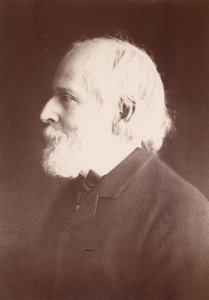
William Trost Richards
1833 - 1905 , États-Unis d'Amérique
En bref
- Artistes Influents:
- Paul Weber
- Albert Bierstadt
- Date De Décès: 8 novembre 1905
- Date De Naissance: 14 novembre 1833
- Lieu De Naissance: Philadelphie, États-Unis
- Mouvement Artistique: Hudson River School
- Nationalité: Américaine
- Nom Complet: William Trost Richards
- Style Artistique: Réalisme méticuleux
- Œuvres Notables: ['Lago Avernus']
Articles connexes
Capturing the Light: A Journey Through the Soul of American Impressionism and the Hudson River School
Explore the luminous beauty of American Impressionism and the Hudson River School. Discover a curated journey through light, landscape, and history, celebrating the enduring legacy of masters through exquisite, hand-painted oil reproductions for the discerning art lover.
Capturing the American Spirit: A Journey Through Iconic Landscapes and the Legacy of the Hudson River School
Explore the profound beauty of American art history. From the Hudson River School to iconic landscapes, discover a curated journey through the masterpieces that defined a nation's spirit and the enduring legacy of American Romanticism.

Wild & Untamed: The High-Impact Energy of American Romanticism and the Hudson River School
Experience the raw power of American Romanticism. Explore the high-impact energy of the Hudson River School through premium, hand-painted oil reproductions that capture the sublime beauty and untamed spirit of the American wilderness for discerning collectors.

L'École du fleuve Hudson : Romantisme américain et exploration d'un paysage national
Explorez l'École du fleuve Hudson : un mouvement artistique américain majeur célébrant la nature et le sublime. Découvrez ses peintres emblématiques, son histoire et son héritage durable avec OriginalUniqueArt.
L'École du fleuve Hudson : 10 chefs-d'œuvre incontournables pour sublimer votre intérieur
Plongez dans l'univers grandiose de l'École du fleuve Hudson ! Découvrez 10 chefs-d'œuvre emblématiques de Thomas Cole, Frederic Church et Albert Bierstadt. Inspirez votre décoration intérieure avec ces paysages américains romantiques. Explorez la collection complète sur OriginalUniqueArt.com.
