Aperçu en situation

 Envoyer
 Partager
 Détails de l'œuvre
 Guide


 Télécharger l'image
 Articles similaires
 Radiographie
 Diaporama
 Questions et réponses
 Statistiques
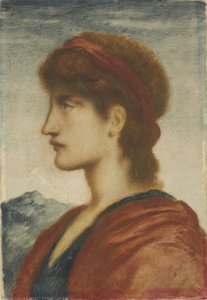
Autoportrait

- 17.0 x 15.0 cm


 Lire la suite
Giclées et impressions d'art
Impressions giclées ou sur toile de qualité musée, avec une production rapide et des finitions au choix. ( Commander la reproduction peinte à la main Passer au format numérique)




P118B €10

P118H €10

P118W €10

P438Z €10

P508JH €12

P508YH €12

P805H €10

P805Z €10

P919BZ €10

P919G €10

P919XJ €10

P959ZH €10

P968JZ €12

W106C €8

W218G €10

W218JH €8

W218Y €10

W307PJ €10

W316G €10

W316PJ €8

W316Y €10

W398PJ €8

W4111J €10

W500HY €15

W500JH €15

W692G €12

W849H €8

W940BG €15

W953PJ €8




Choisissez parmi nos formats prédéfinis qui respectent les proportions originales de l’œuvre.

Saisissez la largeur et la hauteur souhaitées pour qu'elles s'adaptent à votre cadre ou à votre mur. Une impression peut être recadrée, mais jamais agrandie au-delà de l'image originale ; ainsi, un format de forme différente entraînera la perte d'une partie de l'image. Nous vous envoyons une maquette numérique pour approbation avant toute impression. L'image présentée sur cette page ne montre pas le recadrage réel — seule la maquette le permet.
Livraison dans le monde entier () en 2 semaines au lieu des 4/5 semaines habituelles. (20 novembre)

Livraison express gratuite dans le monde entier

Toile de lin de qualité supérieure

Assurance transport complète

Garantie de remboursement des droits de douane

Garantie de fidélité des couleurs

Politique de retour de 100 jours (uniquement en cas de défaut)

Garantie de remboursement à 100%

Offre de tarifs dégressifs
 L'option verre n'est disponible que pour les dimensions inférieures à 110 cm.

Autoportrait
Giclées et impressions d'art
Format de la reproduction
-


Prix total
€ 72
Un aperçu de l'âme : le monde introspectif de Simeon Solomon
Dans les profondeurs calmes et monochromes de l'Autoportrait de 1859 de Simeon Solomon, nous rencontrons bien plus qu'une simple ressemblance ; nous sommes témoins d'un moment profond de vulnérabilité psychologique. Ce dessin délicat, exécuté avec la touche sensible caractéristique de l'ère préraphaélite naissante, capture une figure perdue dans une profonde contemplation. Le sujet, doté de longs cheveux élégamment coiffés et d'un regard pensif qui s'égare vers un horizon invisible, sert de fenêtre sur le paysage intérieur de l'artiste. À travers l'utilisation magistrale de l'ombre et de la lumière dans ce médium en noir et blanc, Solomon invite le spectateur à partager un moment d'introspection privé, où les frontières entre le créateur et la création commencent à s'estomper.
La composition est enrichie par un subtil sens du lieu, présentant une fenêtre qui cadre le sujet sur un arrière-plan contenant un tableau suspendu. Cette superposition d'imagerie — un portrait dans le portrait — ajoute une profondeur sophistiquée à l'œuvre, suggérant les strates d'identité que Solomon lui-même a traversées tout au long de sa vie complexe. L'interaction entre le cadre physique et le poids émotionnel de l'expression crée une tension à la fois envoûtante et magnifique, faisant de cette pièce un exemple exquis de la manière dont les artistes victoriens utilisaient l'intimité domestique pour explorer des thèmes universels bien plus vastes, tels que le désir et la découverte de soi.
Symbolisme et esprit préraphaélite
Pour comprendre cette œuvre, il faut la regarder à travers le prisme du mouvement préraphaélite, une période définie par un dévouement intense au détail et une fascination pour la vérité symbolique. Alors que les œuvres ultérieures de Solomon sont devenues célèbres pour leurs explorations de l'identité juive et de la mythologie classique, cet autoportrait précoce révèle les semences fondamentales de sa préoccupation artistique : l'exploration du « moi intérieur ». Les textures douces des cheveux et les drapés fluides de la robe ne sont pas purement décoratifs ; ils représentent une connexion tactile avec le monde physique qui contraste radicalement avec le regard éthéré et lointain du sujet.
Pour le collectionneur averti ou le designer d'intérieur, cette pièce offre une opportunité unique d'introduire un sentiment de gravité historique et de mélancolie poétique dans un espace. L'œuvre fonctionne comme un point focal de quiétude, parfait pour un bureau, une bibliothèque ou un mur de galerie où la conversation et la réflexion sont encouragées. Sa palette monochrome garantit une élégance intemporelle, lui permettant de s'intégrer harmonieusement dans des décors aussi bien classiques que contemporains, apportant une touche sophistiquée de romantisme victorien qui transcende les modes passagères du design moderne.
Un héritage intemporel pour le collectionneur moderne
Posséder une reproduction d'une pièce aussi significative est un acte de préservation d'un fragment de l'histoire de l'art. La vie de Solomon, marquée à la fois par un immense éclat et une profonde tragédie, imprègne son travail d'une résonance émotionnelle qui demeure palpable plus d'un siècle plus tard. Cet Autoportrait s'érige comme un témoignage de la puissance du trait et de la profondeur de l'esprit humain. C'est une œuvre qui ne se contente pas de décorer une pièce, mais qui lui insuffle la vie, offrant un dialogue continu entre l'artiste du XIXe siècle et l'observateur moderne.
Que vous soyez attiré par la précision technique du dessin ou par l'atmosphère évocatrice de l'ère victorienne, cette œuvre constitue une source d'inspiration durable. Elle invite quiconque la regarde à marquer une pause, à regarder en soi et à trouver la beauté dans les moments les plus silencieux de l'existence.
Questions et réponses
Comment puis-je obtenir une version numérique de «Autoportrait» de Simeon Solomon ?
Une version numérique de «Autoportrait» de Simeon Solomon est disponible à l'achat sur sa page Image numérique haute résolution : téléchargement d'une image numérique haute résolution.
L'œuvre «Autoportrait» de Simeon Solomon est-elle plutôt claire ou sombre ?
Dans l'ensemble, « Autoportrait » présente une luminosité de éclatant. La luminosité perçue décrit si l'œuvre paraît claire ou sombre.
Quelle est la teinte dominante de « Autoportrait » ?
La teinte dominante de «Autoportrait» de Simeon Solomon est Gamme de jaunes dorés. Cette nuance constitue la tonalité de fond de la palette.
Biographie de l'artiste
A Life Shrouded in Beauty and Scandal: The World of Simeon Solomon
Simeon Solomon, a name whispered with both reverence and regret within the annals of Victorian art, occupies a unique and often tragic position amongst the Pre-Raphaelites. Born in London in 1840 into a prominent Jewish family – the eighth and final child of merchant Michael (Meyer) Solomon and artist Catherine (Kate) Levy – his life was one of remarkable artistic promise tragically curtailed by societal prejudice and personal demons. He wasn’t merely a painter; he was a cultural mirror reflecting the complexities of Victorian England, grappling with faith, desire, and identity in a rapidly changing world.Early Influences and Artistic Development
Solomon’s artistic education began within his own family circle. His mother possessed an amateur talent for miniature painting, while his elder siblings, Abraham and Rebecca Solomon, were both established artists exhibiting at the Royal Academy. It was from them, particularly his brother Abraham, that Simeon received his initial training, learning the fundamentals of draftsmanship and composition. He formally studied at Carey’s Art Academy in 1852 before entering the prestigious Royal Academy Schools in 1856. This period proved pivotal, as it introduced him to the burgeoning Pre-Raphaelite Brotherhood through Dante Gabriel Rossetti. The encounter with Rossetti, along with friendships forged with Edward Burne-Jones and Algernon Charles Swinburne, profoundly shaped Solomon’s artistic sensibilities. He embraced their commitment to detailed realism, vibrant color palettes, and a fascination with literature, mythology, and religious narratives. Early works like *Isaac Offered* (1858) demonstrate this initial influence, showcasing a meticulous attention to detail and a dramatic narrative style characteristic of the Pre-Raphaelites. However, Solomon quickly began to forge his own path, infusing his paintings with a distinctly personal vision.Themes of Faith, Desire, and Identity
Solomon’s artistic output was remarkably diverse, encompassing biblical scenes, classical mythology, and genre paintings depicting Jewish life and rituals. He found particular inspiration in the Hebrew Bible, creating works such as *Moses* (1860) and *Shadrach, Meshach, and Abednego* (1863), which resonated with his own cultural heritage. Yet, it was his exploration of classical themes that truly set him apart. Paintings like *In the Temple of Venus* (1863) and *Bacchus* (1867) reveal a fascination with sensuality and beauty, often imbued with an undercurrent of melancholy and longing. These works also hint at Solomon’s growing interest in same-sex desire, a theme he would explore more explicitly – and dangerously – throughout his career. His association with Algernon Charles Swinburne, whose poetry celebrated unconventional love and challenged Victorian morality, undoubtedly fueled this exploration. He was one of the first artists to openly depict homoerotic themes, albeit often veiled in classical allegory or biblical narrative.Scandal, Decline, and Lasting Legacy
The year 1873 marked a devastating turning point in Solomon’s life. His arrest in a public urinal for attempting to commit sodomy brought swift and brutal consequences. Though he received a relatively light fine, the scandal shattered his reputation and effectively ended his career as a publicly exhibited artist. A subsequent arrest in Paris in 1874 led to a three-month prison sentence. Shunned by much of the art establishment, Solomon descended into alcoholism and poverty. However, despite his ostracization, he continued to create art, albeit often under difficult circumstances. He found support from a small circle of admirers – including Oscar Wilde, John Addington Symonds, and Walter Pater – who recognized his talent and collected his works in private. He spent time in the St Giles Workhouse, continuing to paint even amidst hardship. His death in 1905, resulting from complications related to alcoholism, went largely unnoticed by the wider public. In recent decades, however, there has been a growing reassessment of Solomon’s work and life. Retrospectives at the Birmingham Museum & Art Gallery (2005-6) and the Ben Uri Gallery in London (2006) have brought his art to a new audience, recognizing him as a significant figure within the Pre-Raphaelite movement and a pioneering artist who dared to challenge Victorian conventions. His paintings now reside in prominent collections such as the Victoria and Albert Museum, Wightwick Manor, and Leighton House, ensuring that his unique vision continues to inspire and provoke thought for generations to come. His story serves as a poignant reminder of the fragility of artistic freedom and the enduring power of art to transcend societal boundaries.
Simeon Solomon
1840 - 1905 , Royaume-Uni
L'essentiel de l'artiste
- Artistic Movement Or Style: Préraphaelites
- Artists Or Movements Influenced By This Artist: ['Les Préraphaelites']
- Artists Who Influenced This Artist:
- Rossetti
- Burne-Jones
- Date Of Birth: 1840
- Date Of Death: 1905
- Full Name: Simeon Solomon
- Nationality: Britannique
- Notable Artworks:
- Babylon hath been...
- Socrates et Agathodème
- Ruth et Naïomi
- Shadrach, Méshach...
- Dans le temple de Vénus
- Place Of Birth: Londres, Royaume-Uni
Articles connexes

Les 25 chefs-d'œuvre d'Egon Schiele : l'émotion brute de l'expressionnisme
Plongez dans l'expressionnisme d'Egon Schiele à travers ses 25 chefs-d'œuvre. Explorez la collection complète sur OriginalUniqueArt.com.

Ombres et Symbolisme : L'Intensité Dramatique du Romantisme Préraphaélite
Plongez dans l'intensité dramatique du mouvement préraphaélite. Découvrez l'héritage de Rossetti et Millais dès maintenant.

L'Écho de Soi : La Réflexivité comme Thème Central dans l'Histoire de l'Art et la Pratique Contemporaine
Explorez l'évolution de la réflexivité dans l'art, des portraits romains à la performance contemporaine. Analyse approfondie pour collectionneurs avertis et passionnés d'histoire de l'art. Découvrez les chefs-d'œuvre et leur signification.

Les 25 chefs-d'œuvre d'Amedeo Modigliani : l'âme du portrait moderne
Explorez les 25 chefs-d'œuvre d'Amedeo Modigliani et l'élégance de l'expressionnisme. Découvrez la collection sur OriginalUniqueArt.com.

The Sublime Silence: Exploring the Soulful Beauty and Introspective Grace of Solitary Figure Artworks
Explore the profound serenity of solitary figure art. From Romanticism to modern classics, discover our exquisite hand-painted oil reproductions and custom commissions. Bring museum-quality depth and soulful beauty into your home with OriginalUniqueArt.com’s expert artistry.