Aperçu en situation
 Envoyer
 Partager
 Détails de l'œuvre
 Guide
Guide

 Télécharger l'image
 Articles similaires
 Radiographie
 Diaporama
 Q&A
Q&A Statistiques
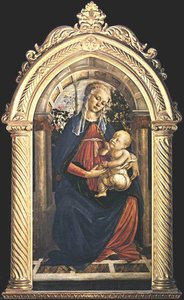
La Madonnina con Bambino


 Lire la suite
Giclées et impressions d'art
Impressions giclées ou sur toile de qualité musée, avec une production rapide et des finitions au choix. ( Commander la reproduction peinte à la main Passer au format numérique)




P118B €10

P118H €10

P118W €10

P438Z €10

P508JH €12

P508YH €12

P805H €10

P805Z €10

P919BZ €10

P919G €10

P919XJ €10

P959ZH €10

P968JZ €12

W106C €8

W218G €10

W218JH €8

W218Y €10

W307PJ €10

W316G €10

W316PJ €8

W316Y €10

W398PJ €8

W4111J €10

W500HY €15

W500JH €15

W692G €12

W849H €8

W940BG €15

W953PJ €8




Choisissez parmi nos formats prédéfinis qui respectent les proportions originales de l’œuvre.

Saisissez la largeur et la hauteur souhaitées pour qu'elles s'adaptent à votre cadre ou à votre mur. Une impression peut être recadrée, mais jamais agrandie au-delà de l'image originale ; ainsi, un format de forme différente entraînera la perte d'une partie de l'image. Nous vous envoyons une maquette numérique pour approbation avant toute impression. L'image présentée sur cette page ne montre pas le recadrage réel — seule la maquette le permet.
Livraison dans le monde entier () en 2 semaines au lieu des 4/5 semaines habituelles. (1 novembre)

Livraison express gratuite dans le monde entier

Toile de lin de qualité supérieure

Assurance transport complète

Garantie de remboursement des droits de douane

Garantie de fidélité des couleurs

Politique de retour de 100 jours (uniquement en cas de défaut)

Garantie de remboursement à 100%

Offre de tarifs dégressifs
 L'option verre n'est disponible que pour les dimensions inférieures à 110 cm.

La Madonnina con Bambino
Giclées et impressions d'art
Format de la reproduction
-


Prix total
€ 71
A Renaissance Vision of Maternal Guidance: Sandro Botticelli’s Untitled Madonna and Child
Sandro Botticelli (1445-1510), born Alessandro di Mariano di Vanni Filipepi in Florence, Italy, stands as a cornerstone of the Early Renaissance—a period characterized by an unprecedented revival of classical ideals and artistic innovation. His life unfolded within the vibrant cultural landscape of Florence, where he honed his craft under the tutelage of Fra Filippo Lippi, establishing connections with influential patrons like the Medici family that would propel him to international acclaim.
Botticelli’s artistic journey began modestly; initially apprenticed as a goldsmith, he swiftly transitioned to painting, embracing the stylistic currents shaping Florentine art. This formative period instilled in him a meticulous attention to detail and an appreciation for elegant linearity—qualities that would permeate his oeuvre and define his distinctive visual language.
Subject & Composition
The centerpiece of Botticelli’s “Untitled Madonna and Child” is undoubtedly Mary, depicted with serene dignity as she cradles the infant Jesus. This iconic portrayal embodies the humanist spirit of the Renaissance, reflecting a renewed interest in human anatomy and emotion. Notably, Botticelli eschewed strict realism—opting instead for a stylized representation that prioritized clarity of form and symbolic significance.
Surrounding Mary and Jesus are several angelic figures, their poses dynamic and expressive. Some gaze downwards with reverence, conveying the profound spiritual devotion prevalent during the era; others extend their arms in gestures of adoration and support, reinforcing the painting’s overarching theme of divine protection. The circular format itself—a deliberate choice—mirrors the halo commonly adorning holy saints, symbolizing Mary's sanctity and elevating the scene to a realm of celestial beauty.
Style & Technique
Botticelli’s style represents a harmonious blend between Late Gothic traditions and the burgeoning Early Renaissance. His masterful technique is immediately apparent: smooth brushstrokes create surfaces that appear effortless, capturing subtle gradations of light and shadow—a hallmark of Renaissance painting. The artist skillfully employed oil paint, allowing for rich color saturation and nuanced tonal variations.
Furthermore, Botticelli’s characteristic *elegant linearity*—flowing contours defining the figures and drapery—contributes to the painting's refined aesthetic appeal. He meticulously rendered details with precision, reflecting the humanist emphasis on observation and anatomical accuracy. Despite eschewing strict perspective, Botticelli prioritized conveying emotion and spiritual contemplation through expressive gestures and idealized forms.
Historical Context & Influences
Botticelli flourished during Florence’s golden age—a time of intellectual ferment fueled by rediscovered classical texts and humanist scholarship. He moved within a circle of artists and thinkers who championed human reason and artistic excellence, absorbing influences from masters like Fra Filippo Lippi and Leonardo da Vinci.
The Medici family—particularly Lorenzo de' Medici—served as Botticelli’s principal patron, providing him with financial support and fostering an environment conducive to creative experimentation. This patronage enabled Botticelli to produce monumental works such as “Primavera” and “The Birth of Venus,” cementing his legacy as one of the most celebrated artists of the Renaissance.
Symbolism & Meaning
"Untitled (5768)" overflows with symbolic resonance—a testament to Botticelli’s profound understanding of humanist ideals. Mary's crown signifies her divine status and regal authority, reflecting Christian theology’s reverence for the Virgin Mother. The open book held by Jesus symbolizes knowledge, wisdom, and the scriptures—foreshadowing Christ’s role as the ultimate teacher.
The angelic figures embody heavenly messengers, connecting the earthly realm to the divine realm. Their gestures of adoration express unwavering faith and devotion—capturing the spiritual essence of Renaissance piety. Even the hazy landscape in the background contributes to the painting's contemplative atmosphere, symbolizing Paradise and reinforcing its overarching message of hope and transcendence.
Emotional Impact & Aesthetic Appeal
Botticelli’s “Untitled Madonna and Child” evokes a palpable sense of peace, reverence, and maternal love—qualities that continue to resonate with audiences today. The tender interaction between Mary and Jesus—expressed through serene expressions and graceful postures—captures the sublime beauty of human compassion.
The painting's vibrant palette—dominated by rich blues, reds, and golds—enhances its visual splendor and conveys a feeling of opulent grandeur. Its circular format lends itself beautifully to interior design settings, creating focal points that inspire contemplation and evoke memories of Renaissance elegance. For discerning collectors seeking exceptional reproductions, Botticelli’s masterpiece remains an enduring symbol of artistic achievement.
Questions et réponses
Quel type d'œuvre est "La Madonnina con Bambino" ?
« La Madonnina con Bambino » est une œuvre de type Décoration murale.
Où puis-je trouver un guide pour « La Madonnina con Bambino » ?
La page Fiche pédagogique de «La Madonnina con Bambino» de Sandro Botticelli propose une fiche pédagogique imprimable en deux volets : l'œuvre accompagnée de sa fiche d'identité, une frise chronologique la situant dans la vie de l'artiste, d'autres œuvres de l'artiste, la palette de couleurs mesurée, ainsi que des citations prêtes à être copiées en quatre styles différents.
Quelle technique a été utilisée pour «La Madonnina con Bambino» de Sandro Botticelli ?
«La Madonnina con Bambino» de Sandro Botticelli est réalisé en Huile sur panneau. Les reproductions visent à restituer l'aspect de cette technique.
Biographie de l'artiste
jeune vie et formation
Sandro Botticelli, né Alessandro di Mariano di Vanni Filipepi vers 1445, est une figure clé de la Renaissance italienne précoce. Initialement relégué à l'arrière-plan après sa mort, l'œuvre de Botticelli a été revitalisée au XIXe siècle par les préréfables, conduisant à une réévaluation de ses contributions artistiques. Botticelli est né à Florence, en Italie, et y a vécu toute sa vie dans le même quartier. Sa famille, dont son père Mariano di Vanni d'Amadeo Filipepi, était impliquée dans diverses professions, ce qui leur a permis de se rencontrer avec des artistes. Giorgio Vasari rapportait que Botticelli avait initialement été formé comme orfèvre.style artistique et œuvres notables
L'œuvre de Botticelli est caractérisée par une élégante linéarité, reliant le gothique italien tardif à la Renaissance précoce. Ses œuvres les plus célèbres, La Naissance de Vénus et *Primavera*, sont exposées à la Galerie des Offices à Florence, qui abrite une importante collection de ses œuvres. * La Naissance de Vénus (voir sur OriginalUniqueArt) * *Primavera* (explorer l'art de Sandro Botticelli sur OriginalUniqueArt) * Nativité mystique (National Gallery, Londres), datée 1501, est la seule œuvre de Botticelli avec une date claire.héritage et influence
Le style de Botticelli a évolué vers une approche plus personnelle dans les années 1490, s'écartant des contemporains comme Léonard de Vinci et du style de la Renaissance haute émergente. Son œuvre a été reconnue comme une contribution significative au mouvement artistique de la Renaissance italienne. * le mouvement artistique de la Renaissance italienne * Sandro Botticelli sur Wikipédia- Des artistes notables de la Renaissance italienne comprennent Sandro Botticelli, Léonard de Vinci, Michel-Ange et Titien.
- La Galerie des Offices à Florence abrite une importante collection d'œuvres de Botticelli.
- L'œuvre de Botticelli a été reconnue comme une figure clé de la Renaissance italienne précoce.
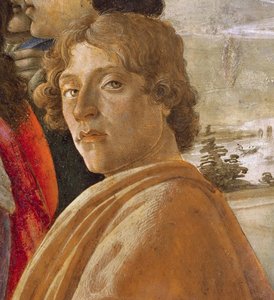
Sandro Botticelli
1445 - 1510 , Italie
L'essentiel de l'artiste
- Artistes Influents:
- Fra Angelico
- Paolo Uccello
- Date De Décès: 1510
- Date De Naissance: c. 1445
- Lieu De Naissance: Florence, Italie
- Mouvement Artistique: Renaissance italienne
- Nationalité: Italienne
- Nom Complet: Sandro Botticelli
- Oeuvres Notables:
- La Naissance de Vénus
- Primavera
- Nativité mystique
Articles connexes
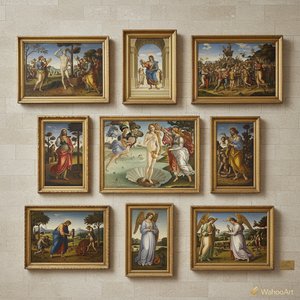
Les 10 Chefs-d'œuvre de la Renaissance Précoce : Artistes et Décor Intemporels
Plongez au cœur de la Renaissance italienne ! Découvrez les 10 chefs-d'œuvre de Botticelli, Léonard de Vinci et Raphaël. Histoire, techniques & inspiration déco. Reproductions tableaux sur
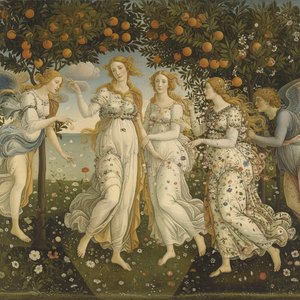
The Ethereal Beauty of Botticelli: A Journey Through the Grace and Symbolism of Italian Renaissance Masterpieces
Explore the ethereal beauty of Sandro Botticelli's masterpieces. Delve into the profound symbolism, mythological grace, and technical mastery that define the Italian Renaissance through an expert art-historical lens.

Les 25 chefs-d'œuvre incontournables de la Galerie des Offices à Florence
Explorez les 25 chefs-d'œuvre des Offices, de Botticelli à De Vinci. Trouvez l'art des musées sur OriginalUniqueArt.com.

L'Art de l'Équilibre : Les 25 Plus Grands Chefs-d'œuvre de Raphaël
Explorez les 25 chefs-d'œuvre de Raphaël et l'harmonie de la Renaissance. Découvrez ces trésors sur OriginalUniqueArt.com.

Les 25 chefs-d'œuvre de Sandro Botticelli : Guide ultime du maître de la Renaissance
Explorez les 25 chefs-d'œuvre de Botticelli et l'éclat de la Renaissance. Découvrez toute la collection sur OriginalUniqueArt.com.