Envoyer
 Partager
 Détails de l'œuvre

 Télécharger
 Articles similaires
 Diaporama
The Loggia of Psych


 Lire la suite
Reproduction à l'huile faite à la main
Huile sur toile peinte à la main, avec cadre et dimensions personnalisés, réalisée sur commande par nos artistes. ( Commander l'impression Acheter l'image haute résolution)




































Choisissez parmi nos formats prédéfinis qui respectent les proportions originales de l’œuvre.

Vous pouvez saisir vos propres dimensions pour l'adapter à un cadre ou à un espace spécifique. Si la taille sélectionnée ne correspond pas aux proportions de l'image d'origine, nous recadrerons l'œuvre ou prolongerons la peinture avec des éléments peints à la main supplémentaires. Une maquette numérique vous sera envoyée pour approbation avant le début de la production.
Veuillez noter que l'aperçu à l'écran ne reflète pas le recadrage ou l'extension réels. Seule la maquette montrera fidèlement la composition finale.
Bien que des tailles personnalisées soient disponibles, nous vous recommandons de sélectionner une dimension dans la liste prédéfinie afin de préserver les proportions d'origine.
Après la commande, l’équipe OriginalUniqueArt.com contactera le client par e-mail pour recueillir ses instructions et lui fournira une maquette d’aperçu
Livraison dans le monde entier () en 3 à 4 semaines au lieu des 5 semaines habituelles. (28 août). Aucun compromis sur la qualité.

Livraison express gratuite dans le monde entier

Toile de lin de qualité supérieure

Assurance transport complète

Garantie de remboursement des droits de douane

Garantie de fidélité des couleurs

Politique de retour de 60 jours (uniquement en cas de défaut)

Garantie de remboursement à 100%

Offre de tarifs dégressifs
 L'option verre n'est disponible que pour les dimensions inférieures à 110 cm.

The Loggia of Psych
Technique de reproduction
Format de la reproduction
-


Prix total
$ 300
A Renaissance Sanctuary: The Soul of the Loggia
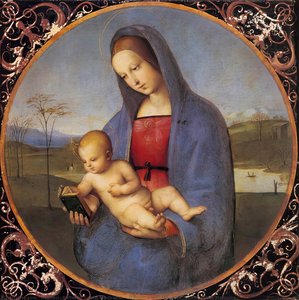
To step before The Loggia of Psych is to enter a world where time itself seems to pause, suspended in the golden, amber glow of the Italian Renaissance. Attributed to the incomparable Raphael, this breathtaking fresco serves as more than a mere window into the past; it is an invitation to a lost era of intellectual grace and serene beauty. The scene unfolds within the architectural embrace of a spacious loggia—a covered courtyard that breathes with the light of Urbino. Here, fourteen figures are woven into a tapestry of social harmony, their bodies captured in mid-gesture, engaged in a dance of conversation that feels remarkably intimate even centuries later. There is a palpable sense of life in their movement, a fluidity that suggests we are not merely observing a painting, but eavesdropping on a private moment of human connection.
Adding a layer of whimsical complexity to this social gathering is an array of thirteen birds, strategically placed throughout the composition. These avian visitors act as silent witnesses to the human drama, their presence lending a sense of natural vitality and depth to the scene. As your eyes wander from the foreground figures to the distant architectural details, you are drawn into an illusionistic space that feels both expansive and profoundly grounded. For the collector or the designer, this artwork offers a rare equilibrium: it possesses the grandeur required for a focal point in a sophisticated interior, yet maintains a delicate, airy quality that prevents it from overwhelming its surroundings.
Mastery of Light and Humanist Spirit
The technical brilliance of this work lies in Raphael’s ability to marry classical idealism with a tender, human observation. Utilizing the sfumato technique—a method of softening contours to create subtle gradations of light and shadow—the artist imbues the figures with an ethereal, almost dreamlike quality. The use of tempera paint on plaster allows for a luminous finish, where the light seems to emanate from within the very walls of the fresco. Every brushstroke is a testament to his meticulous attention to detail, capturing not only the anatomical precision characteristic of the High Renaissance but also the nuanced psychological depth found in each subject's expression.
This mastery was nurtured in the fertile cultural soil of Urbino under the patronage of Federico da Montefeltro. The artwork is a profound embodiment of the humanist ideals that defined the age—a period where curiosity, scholarship, and aesthetic refinement were held in the highest esteem. The composition reflects a deep reverence for balance and proportion, mirroring the Neoplatonic pursuit of perfection. When decorating a space with a reproduction of this masterpiece, one brings more than just color; one introduces an atmosphere of contemplative beauty and intellectual prestige, making it an ideal choice for those who seek to surround themselves with art that inspires both thought and tranquility.
Biographie de l'artiste
**Jeunesse et formation**
Raphaël (Raffaello Sanzio da Urbino), un peintre et architecte italien renommé, est né entre le 28 mars et le 6 avril 1483, dans la petite mais culturellement significative ville d'Urbino. Son père, Giovanni Santi, était peintre de cour du duc, lui offrant une exposition précoce au monde artistique. Après le décès de son père à l’âge de onze ans, Raphaël a vraisemblablement géré l’atelier familial, consolidant ainsi sa base artistique.**Carrière artistique et influences**
Le parcours artistique de Raphaël peut être divisé en trois phases distinctes, chacune marquée par un style unique :- Premières années à Umbrie : caractérisée par l'influence de son père et l'ambiance culturelle d’Urbino.
- Période florentine (1504-1508) : absorbant les traditions artistiques de Florence, qui a considérablement façonné son style.
- Période romaine (1508-1520) : travaillant pour deux papes et leurs associés, produisant certaines de ses œuvres les plus célèbres, notamment l’école des Athènes dans la stanza della segnatura du Vatican.
**Œuvres notables et héritage**
Certaines des œuvres notables de Raphaël comprennent :- Le jugement de Salomon (voir sur OriginalUniqueArt)
- La madone d’Esterházy (voir sur OriginalUniqueArt)
- Les Stanze Vaticanes - Vue de la stanza della segnatura (voir sur OriginalUniqueArt)
- Saint Sébastien (voir sur OriginalUniqueArt)
- La femme voilée (voir sur OriginalUniqueArt)
**Influence et héritage**
L'influence de Raphaël sur l'art est profonde, avec son œuvre constituant un pilier du grand Siècle. Son style serein et harmonieux a servi de modèle à la peinture néoclassique, comme le note l’historien d’art Johann Joachim Winckelmann. Malgré l'influence ultérieure du style de Michel-Ange, Raphaël reste l'un des artistes les plus vénérés de l'histoire. Voir le profil de Raphaël sur OriginalUniqueArt
Raphaël
1483 - 1520 , Italie
L'essentiel de l'artiste
- Artistes Influents:
- Giovanni Santi
- Pietro Perugino
- Date De Décès: 6 avril 1520
- Date De Naissance: 28 mars 1483
- Influences Artistiques: Peinture néoclassique
- Lieu De Naissance: Urbino, Italie
- Mouvement Artistique: Haute Renaissance
- Nationalité: Italienne
- Nom Complet: Raphaël (Raffaello Sanzio)
- Œuvres Notables:
- L'École d'Athènes
- Madone Esterházy
- La Transfiguration
- Les Stanze Vaticanes
Articles connexes
Raphaël : Les 25 Chefs-d'œuvre Incontournables pour une Décoration d'Exception
Plongez dans l'univers de Raphaël avec les 25 œuvres incontournables du maître italien. Découvrez l'histoire, la technique et la beauté intemporelle de ses chefs-d'œuvre Renaissance. Reproductions de qualité muséale sur OriginalUniqueArt.com.

La Fresque Familiale : Un Héritage Peint sur les Murs –
Créez une fresque familiale unique et intemporelle ! Découvrez comment immortaliser votre histoire sur vos murs avec . Expertise, qualité & personnalisation garanties.
Les 10 Fresques Légendaires Qui Ont Révolutionné l'Art – OriginalUniqueArt
Plongez dans l'univers des 10 fresques les plus légendaires de l'histoire de l'art ! Découvrez Michel-Ange, Raphaël et Botticelli. Inspirez votre décoration intérieure avec OriginalUniqueArt : reproductions de qualité muséale en ligne.

The Enduring Legacy of Fresco: Technique, History & Artistic Expression Across Cultures
Explore the rich history & enduring legacy of fresco painting! Discover ancient techniques, Giotto's masterpieces, and modern applications. Expert insights for art lovers & professionals.

The Enduring Legacy of Fresco Painting: Techniques, History & Contemporary Relevance
Explore the rich history & enduring artistry of fresco painting – from Giotto to Michelangelo! Discover techniques, conservation efforts, & modern applications. Learn how OriginalUniqueArt brings this timeless art form to your home.