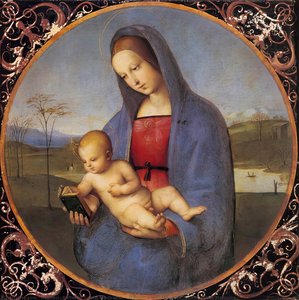
Aperçu en situation
 Envoyer
 Partager
 Détails de l'œuvre
 Guide
Guide

 Télécharger l'image
 Articles similaires
 Radiographie
 Diaporama
 Q&A
Q&A Statistiques
Portrait d'Agnolo Doni
 Huile sur panneau
- Décoration murale
- Renaissance
 1506
1506- Renaissance
 63.0 x 45.0 cm
 Palazzo Pitti
 Lire la suite
Reproduction à l'huile faite à la main
Huile sur toile peinte à la main, avec cadre et dimensions personnalisés, réalisée sur commande par nos artistes. ( Passer au format impression Passer au format numérique)




P118B €10

P118H €10

P118W €10

P438Z €10

P508JH €12

P508YH €12

P805H €10

P805Z €10

P919BZ €10

P919G €10

P919XJ €10

P959ZH €10

P968JZ €12

W106C €8

W218G €10

W218JH €8

W218Y €10

W307PJ €10

W316G €10

W316PJ €8

W316Y €10

W398PJ €8

W4111J €10

W500HY €15

W500JH €15

W692G €12

W849H €8

W940BG €15

W953PJ €8




Choisissez parmi nos formats prédéfinis qui respectent les proportions originales de l’œuvre.

Saisissez la largeur et la hauteur souhaitées, pour s'adapter à votre cadre ou à votre mur. Cette œuvre est peinte à la main ; ainsi, pour un format de forme différente, l'artiste peut peindre un peu plus autour du tableau ou réduire légèrement les bords — c'est vous qui choisissez. Nous vous envoyons une maquette numérique pour approbation avant que la peinture ne commence. L'image présentée sur cette page ne reflète pas le résultat réel — seule la maquette le fait.
Après la commande, l’équipe OriginalUniqueArt.com contactera le client par e-mail pour recueillir ses instructions et lui fournira une maquette d’aperçu
Livraison dans le monde entier () en 3 à 4 semaines au lieu des 5 semaines habituelles. (29 octobre). Aucun compromis sur la qualité.

Livraison express gratuite dans le monde entier

Toile de lin de qualité supérieure

Assurance transport complète

Garantie de remboursement des droits de douane

Garantie de fidélité des couleurs

Politique de retour de 100 jours (uniquement en cas de défaut)

Garantie de remboursement à 100%

Offre de tarifs dégressifs
 L'option verre n'est disponible que pour les dimensions inférieures à 110 cm.

Portrait d'Agnolo Doni
Technique de reproduction
Format de la reproduction
-


Prix total
€ 264
Portrait of Agnolo Doni
Raphael’s *Portrait of Agnolo Doni*, painted in 1506, is not merely a likeness but a profound statement about Florentine identity and the burgeoning humanist ideals of the High Renaissance. This captivating oil on panel, currently housed within the esteemed Pitti Palace Museum in Florence, offers a compelling glimpse into the world of a wealthy merchant and reflects Raphael’s mastery of portraiture during his formative years.
Subject & Style: A Man of His Time
Agnolo Doni, depicted with striking directness, is presented as a man of substance and quiet confidence. He isn't adorned with ostentatious displays of wealth; instead, his status is conveyed through the quality of his garments – a dark hat and a vibrant red jacket – and his assured gaze. Raphael eschews the elaborate backgrounds common in earlier portraiture, opting for a subtly rendered landscape that doesn’t distract from the sitter but rather complements his presence. The painting exemplifies the High Renaissance style: characterized by harmonious composition, balanced forms, and an idealized yet realistic portrayal of the human figure. Raphael's ability to capture both physical likeness *and* psychological depth is remarkable.
Technique & Artistic Influences
The execution of this portrait showcases Raphael’s exceptional technical skill. The smooth blending of oil paints creates a luminous quality, particularly noticeable in the rendering of Doni’s skin tones and the rich texture of his clothing. Raphael was deeply influenced by both Leonardo da Vinci and Michelangelo during his time in Florence. From Leonardo, he absorbed techniques for *sfumato* – the subtle blurring of lines to create a soft, atmospheric effect – while from Michelangelo, he gained an appreciation for anatomical accuracy and dynamic poses (though Doni’s pose is deliberately restrained). However, Raphael synthesized these influences into a style uniquely his own—one marked by grace, clarity, and harmonious balance.
Historical Context: Florence in 1506
Florence in 1506 was a vibrant hub of artistic innovation and political intrigue. The city-state, recently experiencing shifts in power, was undergoing a cultural flourishing fueled by wealthy patrons like Agnolo Doni himself. Doni belonged to an established Florentine family involved in commerce and banking. Commissioning this portrait wasn’t simply about vanity; it was a statement of social standing and civic pride. The Pitti Palace Museum, originally built for the Pitti family and later acquired by the Medici, provides a fitting home for this testament to Florentine history.
Symbolism & Emotional Impact
While seemingly straightforward, the portrait contains subtle symbolic elements. The ring on Doni’s finger suggests marital status or perhaps engagement, hinting at his familial responsibilities and social connections. More importantly, the directness of his gaze invites a connection with the viewer – a sense of intimacy rarely found in portraits of this period. The painting evokes a feeling of quiet dignity and intellectual curiosity. It's not an overtly emotional work, but rather one that conveys a sense of inner strength and self-possession.
For art collectors: Raphael’s *Portrait of Agnolo Doni* represents a significant investment in a cornerstone of Renaissance art history. Its provenance, artistic merit, and historical importance make it a highly sought-after piece.
For interior designers: The painting's sophisticated color palette—the deep blacks, rich reds, and subtle earth tones—lends itself beautifully to both traditional and contemporary interiors. It adds a touch of timeless elegance and intellectual gravitas to any space.
Experience the enduring beauty of Renaissance art. A high-quality reproduction allows you to bring the sophistication and historical richness of Raphael’s masterpiece into your home or office.
Photo Description: --Overall Impression-- The artwork is a portrait of a young man in the style of Renaissance painting. It’s a close-up depiction with a focus on his face and hands, set against a softly rendered landscape background. The composition is balanced, with the subject centrally positioned and occupying most of the frame. The use of lines is primarily linear, defining the contours of the figure's face, hair, clothing, and the horizon line in the background. Shapes are predominantly organic – the curves of his face, hair, and hands contrast with the geometric forms of the hat and clothing folds. The texture appears smooth and refined, characteristic of oil painting technique, particularly evident in the skin tones and fabric details. Lighting is soft and diffused, creating subtle gradations of tone and highlighting key features like the eyes and hand. Perspective is relatively shallow, focusing on a frontal view with minimal atmospheric perspective to create depth.
Size: 63 x 45 cm
Date: 1506
Questions et réponses
Dans quelle pièce est-il suggéré d'exposer « Portrait d'Agnolo Doni », compte tenu de sa palette ?
Grâce à sa palette de couleurs Nuances neutres, l'œuvre « Portrait d'Agnolo Doni » s'intègre parfaitement dans une Salon.
À quel mouvement artistique appartient « Portrait d'Agnolo Doni » ?
Le mouvement associé à «Portrait d'Agnolo Doni» de Raphaël est Renaissance. Cette classification situe l'œuvre parmi des artistes et des œuvres d'art apparentés.
Quelle est la technique et la date de création de «Portrait d'Agnolo Doni» de Raphaël ?
«Portrait d'Agnolo Doni» a été réalisé en 1506, en Huile sur panneau.
Biographie de l'artiste
**Jeunesse et formation**
Raphaël (Raffaello Sanzio da Urbino), un peintre et architecte italien renommé, est né entre le 28 mars et le 6 avril 1483, dans la petite mais culturellement significative ville d'Urbino. Son père, Giovanni Santi, était peintre de cour du duc, lui offrant une exposition précoce au monde artistique. Après le décès de son père à l’âge de onze ans, Raphaël a vraisemblablement géré l’atelier familial, consolidant ainsi sa base artistique.**Carrière artistique et influences**
Le parcours artistique de Raphaël peut être divisé en trois phases distinctes, chacune marquée par un style unique :- Premières années à Umbrie : caractérisée par l'influence de son père et l'ambiance culturelle d’Urbino.
- Période florentine (1504-1508) : absorbant les traditions artistiques de Florence, qui a considérablement façonné son style.
- Période romaine (1508-1520) : travaillant pour deux papes et leurs associés, produisant certaines de ses œuvres les plus célèbres, notamment l’école des Athènes dans la stanza della segnatura du Vatican.
**Œuvres notables et héritage**
Certaines des œuvres notables de Raphaël comprennent :- Le jugement de Salomon (voir sur OriginalUniqueArt)
- La madone d’Esterházy (voir sur OriginalUniqueArt)
- Les Stanze Vaticanes - Vue de la stanza della segnatura (voir sur OriginalUniqueArt)
- Saint Sébastien (voir sur OriginalUniqueArt)
- La femme voilée (voir sur OriginalUniqueArt)
**Influence et héritage**
L'influence de Raphaël sur l'art est profonde, avec son œuvre constituant un pilier du grand Siècle. Son style serein et harmonieux a servi de modèle à la peinture néoclassique, comme le note l’historien d’art Johann Joachim Winckelmann. Malgré l'influence ultérieure du style de Michel-Ange, Raphaël reste l'un des artistes les plus vénérés de l'histoire. Voir le profil de Raphaël sur OriginalUniqueArt
Raphaël
1483 - 1520 , Italie
L'essentiel de l'artiste
- Artistes Influents:
- Giovanni Santi
- Pietro Perugino
- Date De Décès: 6 avril 1520
- Date De Naissance: 28 mars 1483
- Influences Artistiques: Peinture néoclassique
- Lieu De Naissance: Urbino, Italie
- Mouvement Artistique: Haute Renaissance
- Nationalité: Italienne
- Nom Complet: Raphaël (Raffaello Sanzio)
- Œuvres Notables:
- L'École d'Athènes
- Madone Esterházy
- La Transfiguration
- Les Stanze Vaticanes
Articles connexes

L'Huile sur Toile : Exploration Historique et Technique d'un Médium Artistique Intemporel
Explorez l'histoire fascinante de la peinture à l'huile, des techniques ancestrales aux maîtres flamands comme Van Eyck. Découvrez les secrets des pigments, liants et glacis pour comprendre cet art intemporel.
Les 10 Chefs-d'œuvre de la Haute Renaissance : Artistes et Décor d'Exception
Plongez au cœur de la Haute Renaissance avec les 10 chefs-d'œuvre incontournables de Léonard de Vinci, Michel-Ange et Raphaël. Découvrez l'histoire fascinante de ces tableaux emblématiques et trouvez l'inspiration pour une décoration intérieure d'exception sur .

The Enduring Legacy of Oil on Canvas: Technique, History & Aesthetic Impact
Explore the rich history & techniques of oil painting – from Renaissance masters to Impressionism. Discover pigments, layering methods, and why this timeless medium endures. Expert insights for artists & art enthusiasts.
Raphaël : Les 25 Chefs-d'œuvre Incontournables pour une Décoration d'Exception
Plongez dans l'univers de Raphaël avec les 25 œuvres incontournables du maître italien. Découvrez l'histoire, la technique et la beauté intemporelle de ses chefs-d'œuvre Renaissance. Reproductions de qualité muséale sur OriginalUniqueArt.com.
Oil on Panel: The Ultimate Guide to Bold, High-Impact Texture & Depth
Master the art of impact with our expert guide to oil on panel. Discover how impasto textures and heavy-body pigments create 3D depth and bold visual energy for modern interiors. Elevate your space with high-impact, hand-painted masterpieces designed for maximum aesthetic punch.