Aperçu en situation
 Envoyer
 Partager
 Détails de l'œuvre

 Télécharger
 Articles similaires
 Radiographie
 Diaporama
 Statistiques
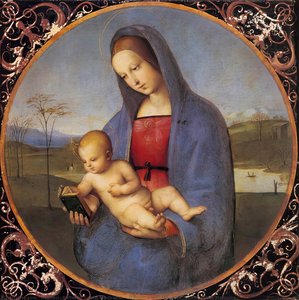
La Madone de Diotallevi


 Lire la suite
Giclées et impressions d'art
Impressions giclées ou sur toile de qualité musée, avec une production rapide et des finitions au choix. ( Commander la reproduction peinte à la main Passer à l'image numérique)




P118B $10

P118H $10

P118W $10

P438Z $10

P508JH $12

P508YH $12

P805H $10

P805Z $10

P919BZ $10

P919G $10

P919XJ $10

P959ZH $10

P968JZ $12

W106C $8

W218G $10

W218JH $8

W218Y $10

W307PJ $10

W316G $10

W316PJ $8

W316Y $10

W398PJ $8

W4111J $10

W500HY $15

W500JH $15

W692G $12

W849H $8

W940BG $15

W953PJ $8




Choisissez parmi nos formats prédéfinis qui respectent les proportions originales de l’œuvre.

Vous pouvez saisir vos propres dimensions pour vous adapter à un cadre ou à un espace spécifique. Si la taille sélectionnée ne correspond pas aux proportions de l'image originale, nous recadrerons l'œuvre ou étendrons l'image avec une bordure en miroir ou une couleur unie. Une maquette numérique vous sera envoyée pour approbation avant le début de la production.
Veuillez noter que l'aperçu à l'écran ne reflète pas le recadrage ou l'extension réelle. Seule la maquette montrera avec précision la composition finale.
Bien que des tailles personnalisées soient disponibles, nous vous recommandons de choisir une dimension dans la liste prédéfinie afin de préserver les proportions originales.
Livraison dans le monde entier () en 2 semaines au lieu des 4/5 semaines habituelles. (10 septembre)

Livraison express gratuite dans le monde entier

Toile de lin de haute qualité

Assurance transport complète

Garantie de remboursement des droits de douane

Garantie de fidélité des couleurs

Garantie de retour de 100 jours (uniquement en cas de défaut)

Garantie de remboursement à 100%

Tarifs dégressifs sur quantité
 L'option verre n'est disponible que pour les dimensions inférieures à 110 cm.

La Madone de Diotallevi
Giclées et impressions d'art
Format de la reproduction
-


Prix total final
$ 80
Introduction to Raphael and his Artistic Style
Raphael Sanzio da Urbino (1483-1520), an Italian painter and architect of the High Renaissance, stands as one of the titans of Western art. Revered for his harmonious compositions, crystalline clarity of form, and effortless grace in execution, Raphael’s oeuvre embodies the ideals of beauty and balance championed by classical antiquity. His artworks are characterized by idealized figures—often serene and noble—infused with a profound sense of spiritual contemplation. Unlike Michelangelo's dramatic intensity or Leonardo da Vinci's scientific precision, Raphael pursued an aesthetic rooted in humanist principles, prioritizing elegance and harmonious proportion. He skillfully blended influences from Umbrian tradition with Florentine innovation, establishing himself as the quintessential artist of his era.The Diotalevi Madonna: A Masterpiece of Raphael’s Early Career
The Diotallevi Madonna (1504-1505), painted during Raphael's formative years in Florence, exemplifies this artistic philosophy perfectly. Commissioned by Florentine banker Giovanni di Pietro Ghirlandaio, the painting depicts Mary cradling the infant Jesus Christ alongside Saint John the Baptist as a child—a composition that immediately draws upon established iconography and reflects the prevailing devotional fervor of the time. Raphael’s masterful handling of perspective and drapery contributes to an unparalleled sense of spatial depth and textural richness. The pyramidal structure of the scene—with Mary at its apex—creates stability and visual harmony, mirroring the architectural grandeur of Roman temples. Soft, luminous colors—primarily blues and reds—evoke warmth and tenderness, conveying a profound emotional resonance that transcends mere representation.- Composition: Raphael’s innovative pyramidal arrangement distinguishes it from other Madonna paintings of the period.
- Color Palette: The dominant hues – azure blue and crimson red – convey serenity and majesty.
- Technique: Raphael employed glazing techniques, layering thin translucent washes of pigment to achieve remarkable luminosity and depth.
The Influence of the Diotalevi Madonna on Renaissance Art
The Diotallevi Madonna exerted a considerable impact on subsequent artistic endeavors throughout Europe. Its refined aesthetic—characterized by balanced proportions and idealized beauty—served as a benchmark for artists striving to emulate Raphael’s stylistic achievements. Artists like Titian and Correggio adopted similar compositional strategies and color palettes, demonstrating the enduring legacy of this seminal work. Furthermore, Raphael's meticulous attention to detail—evident in the drapery folds and facial expressions—inspired painters to prioritize realism while maintaining an overarching sense of grace and elegance.The Legacy of Raphael and the Diotalevi Madonna
Today, the Diotallevi Madonna is universally recognized as one of Raphael’s crowning glories—a testament to his artistic genius and a cornerstone of Renaissance art history. Its presence in the Bode Museum in Berlin ensures that its beauty continues to inspire generations of viewers. A reproduction from OriginalUniqueArt offers an opportunity to experience this iconic masterpiece firsthand, bringing its timeless elegance into any home or workspace. Explore our extensive collection today and immerse yourself in the splendor of classical artistic heritage. Raphael (Raffaello Sanzio Da Urbino):Diotalevi Madonna is available for purchase on OriginalUniqueArt's website. Discover the exquisite craftsmanship and artistic inspiration of this unforgettable artwork.Biographie de l'artiste
**Jeunesse et formation**
Raphaël (Raffaello Sanzio da Urbino), un peintre et architecte italien renommé, est né entre le 28 mars et le 6 avril 1483, dans la petite mais culturellement significative ville d'Urbino. Son père, Giovanni Santi, était peintre de cour du duc, lui offrant une exposition précoce au monde artistique. Après le décès de son père à l’âge de onze ans, Raphaël a vraisemblablement géré l’atelier familial, consolidant ainsi sa base artistique.**Carrière artistique et influences**
Le parcours artistique de Raphaël peut être divisé en trois phases distinctes, chacune marquée par un style unique :- Premières années à Umbrie : caractérisée par l'influence de son père et l'ambiance culturelle d’Urbino.
- Période florentine (1504-1508) : absorbant les traditions artistiques de Florence, qui a considérablement façonné son style.
- Période romaine (1508-1520) : travaillant pour deux papes et leurs associés, produisant certaines de ses œuvres les plus célèbres, notamment l’école des Athènes dans la stanza della segnatura du Vatican.
**Œuvres notables et héritage**
Certaines des œuvres notables de Raphaël comprennent :- Le jugement de Salomon (voir sur OriginalUniqueArt)
- La madone d’Esterházy (voir sur OriginalUniqueArt)
- Les Stanze Vaticanes - Vue de la stanza della segnatura (voir sur OriginalUniqueArt)
- Saint Sébastien (voir sur OriginalUniqueArt)
- La femme voilée (voir sur OriginalUniqueArt)
**Influence et héritage**
L'influence de Raphaël sur l'art est profonde, avec son œuvre constituant un pilier du grand Siècle. Son style serein et harmonieux a servi de modèle à la peinture néoclassique, comme le note l’historien d’art Johann Joachim Winckelmann. Malgré l'influence ultérieure du style de Michel-Ange, Raphaël reste l'un des artistes les plus vénérés de l'histoire. Voir le profil de Raphaël sur OriginalUniqueArt
Raphaël
1483 - 1520 , Italie
En bref
- Artistes Influents:
- Giovanni Santi
- Pietro Perugino
- Date De Décès: 6 avril 1520
- Date De Naissance: 28 mars 1483
- Influences Artistiques: Peinture néoclassique
- Lieu De Naissance: Urbino, Italie
- Mouvement Artistique: Haute Renaissance
- Nationalité: Italienne
- Nom Complet: Raphaël (Raffaello Sanzio)
- Œuvres Notables:
- L'École d'Athènes
- Madone Esterházy
- La Transfiguration
- Les Stanze Vaticanes
Articles similaires

Les 10 Chefs-d'œuvre du Néoclassicisme : Artistes et Décor Intemporels
Plongez au cœur du Néoclassicisme avec les 10 chefs-d'œuvre incontournables de David, Ingres et autres maîtres. Découvrez l'histoire fascinante de ces tableaux célèbres et trouvez l'inspiration déco classique sur !
Renoir : 25 Chefs-d'œuvre Incontournables – L’Art de la Lumière
Plongez au cœur de l'univers vibrant de Pierre-Auguste Renoir ! Découvrez 25 chefs-d’œuvre emblématiques, explorant la lumière, les couleurs et la joie de vivre. Reproductions d'art de qualité musée sur OriginalUniqueArt.com.
Raphaël : Les 25 Chefs-d'œuvre Incontournables pour une Décoration d'Exception
Plongez dans l'univers de Raphaël avec les 25 œuvres incontournables du maître italien. Découvrez l'histoire, la technique et la beauté intemporelle de ses chefs-d'œuvre Renaissance. Reproductions de qualité muséale sur OriginalUniqueArt.com.
Les 25 Chefs-d'Œuvre du Musée Hermitage : Art, Histoire & Décor d'Intérieur
Plongez au cœur du Musée Hermitage : découvrez les 25 œuvres incontournables de Rembrandt, Léonard de Vinci et autres maîtres. Histoire, technique & inspiration déco. Reproductions tableaux de qualité sur OriginalUniqueArt.com !
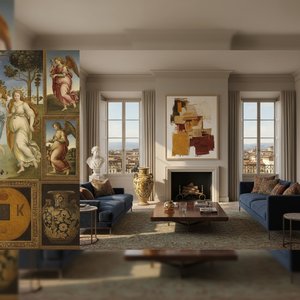
Uffizi : Les 25 Chefs-d'Œuvre Incontournables pour Embellir Votre Intérieur
Plongez au cœur de la Galerie des Offices à Florence ! Découvrez les 25 chefs-d'œuvre incontournables de Botticelli, Léonard de Vinci et autres maîtres italiens. Inspirez votre décoration avec l'art Renaissance : reproductions de qualité muséale sur OriginalUniqueArt.com