Aperçu en situation
 Envoyer
 Partager
 Détails de l'œuvre

 Télécharger
 Articles similaires
 Radiographie
 Diaporama
 Statistiques
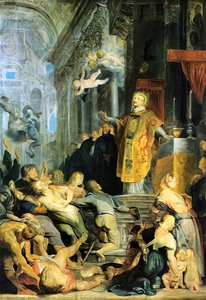
Saint Georges et un dragon
 Huile sur toile
- Art mural
- Baroque
 1610
1610- L'époque moderne
 305.0 x 256.0 cm
 Lire la suite
Giclées et impressions d'art
Impressions giclées ou sur toile de qualité musée, avec une production rapide et des finitions au choix. ( Commander la reproduction peinte à la main Passer à l'image numérique)




P118B $10

P118H $10

P118W $10

P438Z $10

P508JH $12

P508YH $12

P805H $10

P805Z $10

P919BZ $10

P919G $10

P919XJ $10

P959ZH $10

P968JZ $12

W106C $8

W218G $10

W218JH $8

W218Y $10

W307PJ $10

W316G $10

W316PJ $8

W316Y $10

W398PJ $8

W4111J $10

W500HY $15

W500JH $15

W692G $12

W849H $8

W940BG $15

W953PJ $8




Choisissez parmi nos formats prédéfinis qui respectent les proportions originales de l’œuvre.

Vous pouvez saisir vos propres dimensions pour vous adapter à un cadre ou à un espace spécifique. Si la taille sélectionnée ne correspond pas aux proportions de l'image originale, nous recadrerons l'œuvre ou étendrons l'image avec une bordure en miroir ou une couleur unie. Une maquette numérique vous sera envoyée pour approbation avant le début de la production.
Veuillez noter que l'aperçu à l'écran ne reflète pas le recadrage ou l'extension réelle. Seule la maquette montrera avec précision la composition finale.
Bien que des tailles personnalisées soient disponibles, nous vous recommandons de choisir une dimension dans la liste prédéfinie afin de préserver les proportions originales.
Livraison dans le monde entier () en 2 semaines au lieu des 4/5 semaines habituelles. (10 septembre)

Livraison express gratuite dans le monde entier

Toile de lin de haute qualité

Assurance transport complète

Garantie de remboursement des droits de douane

Garantie de fidélité des couleurs

Garantie de retour de 100 jours (uniquement en cas de défaut)

Garantie de remboursement à 100%

Tarifs dégressifs sur quantité
 L'option verre n'est disponible que pour les dimensions inférieures à 110 cm.

Saint Georges et un dragon
Giclées et impressions d'art
Format de la reproduction
-


Prix total final
$ 80
Saint George and the Dragon: A Baroque Triumph of Courage
“St. George and the Dragon” by Peter Paul Rubens stands as an undeniable emblem of the Baroque artistic movement, embodying its characteristic dynamism, dramatic intensity, and masterful manipulation of light and color. Created in 1610 during Rubens’s prolific period in Antwerp—a city pulsating with artistic fervor under Habsburg rule—this monumental oil painting on canvas transcends mere depiction; it narrates a pivotal biblical tale imbued with profound symbolism.
The artwork portrays Saint George, mounted atop a noble steed, confronting the fearsome dragon that terrorizes a region near Beirut. Rubens’s genius lies in capturing not just the physical struggle but also the psychological drama unfolding within the scene. The saint’s outstretched hand gripping his sword—a symbol of righteous defense—contrasts sharply with the dragon's menacing posture and gaping maw, overflowing with venomous fire.
Rubens skillfully employs *chiaroscuro*, a technique perfected during this era, to sculpt the composition with dramatic effect. Deep shadows envelop the dragon’s body and cave walls, highlighting George’s luminous figure and emphasizing the tension between good and evil. The vibrant hues—particularly reds and golds—further amplify the grandeur of the scene, reflecting the opulent patronage of Rubens’s aristocratic clientele.
Beyond its visual splendor, “St. George and the Dragon” resonates with layers of religious symbolism. Saint George represents courage, faith, and chivalry – virtues championed by Christendom during a time of turbulent religious conflict. The dragon embodies pagan evil and chaos—a formidable adversary vanquished through divine grace. The princess, positioned in the background, symbolizes purity and redemption—the reward for unwavering devotion.
Commissioned by a Genoese church, Rubens’s masterpiece reflects his fascination with classical mythology alongside Christian narratives. It exemplifies the Baroque's ambition to inspire awe and convey moral lessons. As part of Rubens’s extensive oeuvre—which includes monumental altarpieces and portraits alike— “St. George and the Dragon” cemented his reputation as one of the foremost artists of his time, influencing generations of painters who sought to emulate his expressive style.
A reproduction of this iconic artwork would bring a captivating Baroque spirit into any interior space, capturing the grandeur and drama of Rubens’s vision—a testament to artistic excellence and enduring inspiration. Explore more masterpieces at OriginalUniqueArt!
Biographie de l'artiste
A Life Forged in Baroque Splendor
Sir Peter Paul Rubens, a name synonymous with the very essence of Baroque dynamism, was far more than simply a painter; he was a diplomat, a scholar, and a cultural architect who fundamentally reshaped the artistic landscape of 17th-century Europe. Born in Siegen, Germany, in 1577, his early life was marked by displacement—a formative experience that subtly permeated his later work with an undercurrent of drama and emotional depth. His father, Jan Rubens, a lawyer fleeing religious persecution for his Calvinist beliefs, uprooted the family from their native Antwerp, then under Spanish rule. This initial exile instilled in young Peter Paul a profound sense of resilience and adaptability—qualities that would serve him remarkably well throughout his multifaceted career. Following his father’s death in 1587, the family returned to Antwerp, where he received a humanist education before embarking on his artistic training around 1590, apprenticing under Tobias Verhaecht and Adam van Noort, honing foundational skills in drawing and painting techniques. However, it was his time with Otto van Veen that proved pivotal, exposing him to the rich legacy of Italian Renaissance art—a world he would soon embrace wholeheartedly. This early exposure to the works of Michelangelo, Raphael, and Titian laid the groundwork for his distinctive style, a synthesis of classical ideals and vibrant Baroque expression.The Italian Awakening and Artistic Synthesis
In 1600, Rubens embarked on a transformative journey to Italy—a pilgrimage that irrevocably shaped his artistic vision. For eight years, he immersed himself in the masterpieces of Michelangelo, Raphael, and Titian, absorbing their mastery of form, color, and composition with an almost obsessive dedication. The influence of these Renaissance giants is readily apparent in his early Italian works, characterized by classical themes—mythological narratives, allegorical scenes—and idealized figures rendered with a breathtaking sense of beauty and grace. Yet, Rubens didn’t merely imitate; he synthesized these influences with his own innate talent, developing a distinctive style marked by vibrant hues, dynamic compositions, and a sensuous depiction of the human form. He studied anatomy meticulously, resulting in figures that possessed both physical realism and emotional power—robust bodies imbued with life and movement. His palette exploded with color – deep reds, rich blues, and luminous yellows creating an intense visual experience. He wasn’t simply copying; he was translating the spirit of the Renaissance into a distinctly Flemish idiom. This period wasn't solely about artistic development; it was a profound intellectual awakening, fostering a deep appreciation for classical mythology and literature which would become recurring motifs throughout his oeuvre. Upon returning to Antwerp in 1608, Rubens swiftly established himself as the leading artist of his time, receiving a flood of commissions that testified to his burgeoning reputation and solidifying his position at the forefront of Flemish art.A Master of Many Forms: Painting Beyond Boundaries
Rubens’s artistic output was astonishingly diverse and prolific. He didn't confine himself to a single genre; instead, he excelled in history paintings—grand narratives depicting significant events from classical antiquity and biblical stories—mythological scenes brimming with fantastical creatures and dramatic action, portraits capturing the elegance and power of nobility, landscapes offering breathtaking vistas, and religious works imbued with profound spiritual meaning. His large-scale canvases, often intended for churches, palaces, and public spaces, were breathtaking displays of technical virtuosity and dramatic storytelling. The Descent from the Cross (c. 1616-1617), a monumental triptych housed in the Alte Pinakothek in Munich, exemplifies his masterful use of light and shadow to create a scene of profound emotional intensity—the grief and despair of Mary Magdalene contrasted with the stoic acceptance of Christ. The Raising of the Cross (1610-1611), with its swirling figures and dynamic composition, showcases his ability to convey movement and energy—a hallmark of his Baroque style. Even in seemingly static subjects like The Judgement of Paris (c. 1636), Rubens infused a sense of life and vitality through his vibrant color palette and sensual depiction of the human form. His technique was equally remarkable – a masterful command of oil painting, employing impasto to create texture and depth, alongside delicate glazing techniques to achieve luminous effects. He frequently employed allegorical figures and symbolic imagery, layering narratives with complex meanings that invited contemplation and interpretation.Diplomacy, Legacy, and Enduring Influence
Rubens’s influence extended far beyond the realm of art. His diplomatic skills were highly sought after by the Southern Netherlands (modern-day Belgium), and he undertook numerous missions to England, France, and Spain, negotiating treaties and fostering political alliances—a unique dual role that afforded him a nuanced perspective on European affairs and further enhanced his reputation as a man of intellect and influence. He was known for his charisma, his generosity, and his ability to navigate the complex world of courtly politics. In 1630, he married Hélène Fourment, who became both his muse and frequent subject in his paintings – her youthful beauty gracing many of his later works, embodying the sensuality and vitality that characterized his style. He continued to paint prolifically until his death in Antwerp in 1640, leaving behind a vast legacy that continues to inspire awe and admiration. His impact on subsequent generations of artists is immeasurable; painters like Anthony van Dyck, Jacob Jordaens, and Eugène Delacroix all drew inspiration from his dynamic compositions, vibrant colors, and sensuous figures. Rubens didn’t just define the Baroque style—he elevated painting to a new level of prestige and influence, solidifying Antwerp as a major center of artistic production during the 17th century. He remains, centuries later, a towering figure in the history of art, a testament to the power of human creativity and the enduring allure of Baroque splendor.Key Characteristics of Rubens’s Style
- Dynamic Composition: Rubens' paintings are known for their energetic and dramatic arrangements of figures.
- Vibrant Color Palette: He employed a rich, warm color scheme that brought his canvases to life.
- Sensuous Figures: His depictions of the human form were characterized by fullness, vitality, and often, overt sensuality.
- Masterful Use of Light and Shadow: Rubens skillfully manipulated light and shadow to create depth, drama, and emotional impact.
- Allegorical Symbolism: His works frequently incorporated allegorical figures and symbolic imagery, adding layers of meaning and complexity.

Pierre Paul Rubens
1577 - 1640 , Allemagne
En bref
- Artistic Movement Or Style: Baroque
- Artists Or Movements Influenced By This Artist: ['Anthony van Dyck']
- Artists Who Influenced This Artist:
- Michelangelo
- Titian
- Date Of Birth: 1577
- Date Of Death: 1640
- Full Name: Sir Peter Paul Rubens
- Nationality: Flemish
- Notable Artworks:
- La Descente de la Croix
- Massacre des Innocents
- Place Of Birth: Siegen, Allemagne
Articles similaires

Georges Braque : Les 25 Œuvres Maîtresses du Cubisme et de la Modernité | OriginalUniqueArt
Plongez dans l'univers de Georges Braque avec les 25 œuvres incontournables du cubisme. Découvrez l'histoire, les techniques et l'impact de ce maître de l'art moderne. Reproductions d'art exceptionnelles sur OriginalUniqueArt.com.

Mastering Drama and Light: A Definitive Guide to the Flemish Baroque Art Movement
Explore the dramatic brilliance of the Flemish Baroque movement. Discover how masters like Peter Paul Rubens utilized chiaroscuro and dynamic composition to redefine art history through light, shadow, and unparalleled emotion.

Georges Seurat : Les 25 Œuvres Maîtresses du Pointillisme | OriginalUniqueArt
Plongez dans l'univers lumineux de Georges Seurat ! Découvrez les 25 œuvres majeures du pointillisme, de 'Un dimanche après-midi à l'Île de la Grande Jatte' aux 'Poseuses'. Reproductions d'art exceptionnelles et inspiration déco sur OriginalUniqueArt.com.

The Dramatic Flourish: Exploring the Baroque Movement's Enduring Legacy in Art History
Explore the dramatic world of Baroque art! Discover iconic artists like Caravaggio & Rubens, defining techniques, and its lasting impact on art history. Expert insights for collectors & enthusiasts at OriginalUniqueArt.

Pierre Paul Rubens : Vie, Œuvre et Influence Durable du Maître Baroque
Découvrez la vie et l'œuvre de Pierre Paul Rubens, maître du baroque flamand. Explorez son style unique, ses chefs-d'œuvre emblématiques et son influence durable sur l'art européen. Analyse approfondie et informations clés.