Aperçu en situation
 Partager
 Partager
 Détails
 Guide imprimable

 Télécharger
 Articles similaires
 Radiographie
 Voir le diaporama
 Statistiques
Artemisia
 Huile
Huile- Art mural
- Splendeur Baroque
 1615
1615- L'époque moderne
 98.0 x 105.0 cm
 Galerie de peinture Sanssouci
 Afficher la suite
Reproduction à l'huile faite à la main
Huile sur toile peinte à la main, avec cadre et dimensions personnalisés, réalisée sur commande par nos artistes. ( Passer au format impression Passer au format image numérique)




P118B €10

P118H €10

P118W €10

P438Z €10

P508JH €12

P508YH €12

P805H €10

P805Z €10

P919BZ €10

P919G €10

P919XJ €10

P959ZH €10

P968JZ €12

W106C €8

W218G €10

W218JH €8

W218Y €10

W307PJ €10

W316G €10

W316PJ €8

W316Y €10

W398PJ €8

W4111J €10

W500HY €15

W500JH €15

W692G €12

W849H €8

W940BG €15

W953PJ €8




Choisissez parmi nos formats prédéfinis qui respectent les proportions originales de l’œuvre.

Saisissez la largeur et la hauteur souhaitées, pour s'adapter à votre cadre ou à votre mur. Cette œuvre est peinte à la main ; ainsi, pour un format de forme différente, l'artiste peut peindre un peu plus autour du tableau ou réduire légèrement les bords — c'est vous qui choisissez. Nous vous envoyons une maquette numérique pour approbation avant que la peinture ne commence. L'image présentée sur cette page ne reflète pas le résultat réel — seule la maquette le fait.
Après la commande, l’équipe OriginalUniqueArt.com contactera le client par e-mail pour recueillir ses instructions et lui fournira une maquette d’aperçu
Livraison dans le monde entier () en 3 à 4 semaines au lieu des 5 semaines habituelles. (21 octobre). Aucun compromis sur la qualité.

Livraison express gratuite dans le monde entier

Toile de lin de haute qualité

Assurance transport complète

Garantie de remboursement des droits de douane

Garantie de fidélité des couleurs

Garantie de retour de 100 jours (uniquement en cas de défaut)

Garantie de remboursement à 100%

Tarifs dégressifs sur quantité
 L'option verre n'est disponible que pour les dimensions inférieures à 110 cm.

Artemisia
Technique de reproduction
Format de la reproduction
-


Prix total final
€ 262
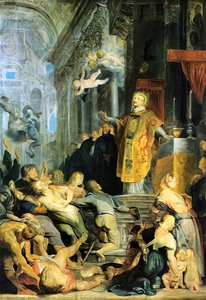
Une vision de résilience : le chef-d'œuvre d'Artemisia par Rubens
Dans la grande tapisserie de l'ère baroque, peu de portraits captivent le regard avec une profondeur psychologique aussi intense que le chef-d'œuvre de 1615 de Pierre Paul Rubens, Artemisia. Il ne s'agit pas d'une simple représentation d'une femme de la noblesse ; c'est une rencontre évocatrice avec une âme forgée dans l'épreuve. Par la maîtrise de son pinceau, Rubens capture le visage d'Artemisia Gentileschi, une femme dont la vie fut marquée tant par d'immenses triomphes artistiques que par de déchirants combats personnels. Le tableau sert de pont saisissant entre le monde physique et le paysage intérieur de l'endurance humaine, ce qui en fait une pièce maîtresse d'une gravité émotionnelle inégalée pour tout collectionneur averti.
La composition est une leçon magistrale de clair-obscur, où le jeu dramatique entre l'ombre et la lumière insuffle la vie à chaque pli de tissu et à chaque nuance d'expression. Rubens emploie une palette riche et vibrante qui souligne la théâtralité de la scène, attirant l'œil vers la figure centrale dont le regard demeure fixe et inflexible. Tandis que la lumière se déverse sur la toile, elle illumine la couronne royale posée sur sa tête — symbole délibéré de sa souveraineté intellectuelle et de son statut durement acquis au sein d'un paysage artistique dominé par les hommes. Le rendu méticuleux des textures, du lustre lourd des étoffes luxueuses à la chaleur subtile des carnations, crée une profondeur illusionniste qui invite le spectateur à s'immerger directement dans ce moment historique.
Symbolisme et esprit baroque
Au-delà de sa brillance technique, l'œuvre est imprégnée de l'atmosphère socio-religieuse complexe de la Contre-Réforme. Créé à une époque de ferveur religieuse intense et de mutations des hiérarchies sociales, ce portrait fonctionne comme une allégorie de la force. La présence des figures environnantes, engagées dans ce qui semble être un moment de concentration partagée ou de discussion érudite, apporte un sentiment de gravité collective qui contraste avec la puissance singulière et introspective d'Artemisia elle-même. Chaque élément, de la façon dont la lumière accroche le bol placé devant elle aux ombres subtiles masquant les visages de ses admirateurs, contribue à un récit de dignité maintenue au milieu du chaos.
Pour ceux qui cherchent à intégrer une telle pièce dans un intérieur soigneusement décoré, Artemisia offre bien plus qu'une simple beauté esthétique ; elle constitue un sujet de conversation qui évoque les thèmes de l'autonomie et de la résilience. La capacité du tableau à ancrer une pièce par sa présence sombre mais magnifique en fait un choix idéal pour les espaces sophistiqués — qu'il s'agisse d'un cabinet de travail formel, d'une grande salle à manger ou d'un cadre de galerie contemporaine. C'est une œuvre qui ne se contente pas de décorer un mur, mais qui enrichit l'atmosphère même d'une demeure, offrant une fenêtre intemporelle sur le triomphe de l'esprit humain à travers le prisme de la splendeur baroque.
Questions et réponses
Est-ce que Pierre Paul Rubens, créateur de « Artemisia », est connu sous d'autres noms ?
D'autres noms répertoriés pour Pierre Paul Rubens, créateur de « Artemisia », incluent Peter Paul Rubens, Rubens.
Puis-je voir «Artemisia» de Pierre Paul Rubens sur mon propre mur avant de l'acheter ?
Vous pouvez prévisualiser «Artemisia» de Pierre Paul Rubens sur votre propre mur grâce à la page Aperçu RA de l'œuvre, en utilisant la réalité augmentée sur un appareil compatible.
Quelle taille est suggérée pour "Artemisia" dans un(e) Espaces de vie ?
Dans une Espaces de vie, nous suggérons un format d'impression de Grand format pour « Artemisia ».
Biographie de l'artiste
A Life Forged in Baroque Splendor
Sir Peter Paul Rubens, a name synonymous with the very essence of Baroque dynamism, was far more than simply a painter; he was a diplomat, a scholar, and a cultural architect who fundamentally reshaped the artistic landscape of 17th-century Europe. Born in Siegen, Germany, in 1577, his early life was marked by displacement—a formative experience that subtly permeated his later work with an undercurrent of drama and emotional depth. His father, Jan Rubens, a lawyer fleeing religious persecution for his Calvinist beliefs, uprooted the family from their native Antwerp, then under Spanish rule. This initial exile instilled in young Peter Paul a profound sense of resilience and adaptability—qualities that would serve him remarkably well throughout his multifaceted career. Following his father’s death in 1587, the family returned to Antwerp, where he received a humanist education before embarking on his artistic training around 1590, apprenticing under Tobias Verhaecht and Adam van Noort, honing foundational skills in drawing and painting techniques. However, it was his time with Otto van Veen that proved pivotal, exposing him to the rich legacy of Italian Renaissance art—a world he would soon embrace wholeheartedly. This early exposure to the works of Michelangelo, Raphael, and Titian laid the groundwork for his distinctive style, a synthesis of classical ideals and vibrant Baroque expression.The Italian Awakening and Artistic Synthesis
In 1600, Rubens embarked on a transformative journey to Italy—a pilgrimage that irrevocably shaped his artistic vision. For eight years, he immersed himself in the masterpieces of Michelangelo, Raphael, and Titian, absorbing their mastery of form, color, and composition with an almost obsessive dedication. The influence of these Renaissance giants is readily apparent in his early Italian works, characterized by classical themes—mythological narratives, allegorical scenes—and idealized figures rendered with a breathtaking sense of beauty and grace. Yet, Rubens didn’t merely imitate; he synthesized these influences with his own innate talent, developing a distinctive style marked by vibrant hues, dynamic compositions, and a sensuous depiction of the human form. He studied anatomy meticulously, resulting in figures that possessed both physical realism and emotional power—robust bodies imbued with life and movement. His palette exploded with color – deep reds, rich blues, and luminous yellows creating an intense visual experience. He wasn’t simply copying; he was translating the spirit of the Renaissance into a distinctly Flemish idiom. This period wasn't solely about artistic development; it was a profound intellectual awakening, fostering a deep appreciation for classical mythology and literature which would become recurring motifs throughout his oeuvre. Upon returning to Antwerp in 1608, Rubens swiftly established himself as the leading artist of his time, receiving a flood of commissions that testified to his burgeoning reputation and solidifying his position at the forefront of Flemish art.A Master of Many Forms: Painting Beyond Boundaries
Rubens’s artistic output was astonishingly diverse and prolific. He didn't confine himself to a single genre; instead, he excelled in history paintings—grand narratives depicting significant events from classical antiquity and biblical stories—mythological scenes brimming with fantastical creatures and dramatic action, portraits capturing the elegance and power of nobility, landscapes offering breathtaking vistas, and religious works imbued with profound spiritual meaning. His large-scale canvases, often intended for churches, palaces, and public spaces, were breathtaking displays of technical virtuosity and dramatic storytelling. The Descent from the Cross (c. 1616-1617), a monumental triptych housed in the Alte Pinakothek in Munich, exemplifies his masterful use of light and shadow to create a scene of profound emotional intensity—the grief and despair of Mary Magdalene contrasted with the stoic acceptance of Christ. The Raising of the Cross (1610-1611), with its swirling figures and dynamic composition, showcases his ability to convey movement and energy—a hallmark of his Baroque style. Even in seemingly static subjects like The Judgement of Paris (c. 1636), Rubens infused a sense of life and vitality through his vibrant color palette and sensual depiction of the human form. His technique was equally remarkable – a masterful command of oil painting, employing impasto to create texture and depth, alongside delicate glazing techniques to achieve luminous effects. He frequently employed allegorical figures and symbolic imagery, layering narratives with complex meanings that invited contemplation and interpretation.Diplomacy, Legacy, and Enduring Influence
Rubens’s influence extended far beyond the realm of art. His diplomatic skills were highly sought after by the Southern Netherlands (modern-day Belgium), and he undertook numerous missions to England, France, and Spain, negotiating treaties and fostering political alliances—a unique dual role that afforded him a nuanced perspective on European affairs and further enhanced his reputation as a man of intellect and influence. He was known for his charisma, his generosity, and his ability to navigate the complex world of courtly politics. In 1630, he married Hélène Fourment, who became both his muse and frequent subject in his paintings – her youthful beauty gracing many of his later works, embodying the sensuality and vitality that characterized his style. He continued to paint prolifically until his death in Antwerp in 1640, leaving behind a vast legacy that continues to inspire awe and admiration. His impact on subsequent generations of artists is immeasurable; painters like Anthony van Dyck, Jacob Jordaens, and Eugène Delacroix all drew inspiration from his dynamic compositions, vibrant colors, and sensuous figures. Rubens didn’t just define the Baroque style—he elevated painting to a new level of prestige and influence, solidifying Antwerp as a major center of artistic production during the 17th century. He remains, centuries later, a towering figure in the history of art, a testament to the power of human creativity and the enduring allure of Baroque splendor.Key Characteristics of Rubens’s Style
- Dynamic Composition: Rubens' paintings are known for their energetic and dramatic arrangements of figures.
- Vibrant Color Palette: He employed a rich, warm color scheme that brought his canvases to life.
- Sensuous Figures: His depictions of the human form were characterized by fullness, vitality, and often, overt sensuality.
- Masterful Use of Light and Shadow: Rubens skillfully manipulated light and shadow to create depth, drama, and emotional impact.
- Allegorical Symbolism: His works frequently incorporated allegorical figures and symbolic imagery, adding layers of meaning and complexity.

Pierre Paul Rubens
1577 - 1640 , Allemagne
En bref
- Artistic Movement Or Style: Baroque
- Artists Or Movements Influenced By This Artist: ['Anthony van Dyck']
- Artists Who Influenced This Artist:
- Michelangelo
- Titian
- Date Of Birth: 1577
- Date Of Death: 1640
- Full Name: Sir Peter Paul Rubens
- Nationality: Flemish
- Notable Artworks:
- La Descente de la Croix
- Massacre des Innocents
- Place Of Birth: Siegen, Allemagne
Articles connexes

Les 10 Chefs-d'œuvre Baroques qui ont Révolutionné l'Art |
Plongez au cœur du baroque avec les 10 chefs-d'œuvre de Caravaggio, Rembrandt et Rubens. Découvrez l'histoire fascinante de ces artistes et leurs tableaux célèbres. Reproductions d'art de qualité muséale sur – Explorez la collection !
The Grandeur of Baroque Portraiture: Power, Emotion & Artistic Innovation
Explore the grandeur of Baroque portraiture! Discover Rubens, Van Dyck & the masters of 17th-century art. Uncover symbolism, techniques & lasting influence. Expert insights for collectors and enthusiasts.

Pierre Paul Rubens : Vie, Œuvre et Influence Durable du Maître Baroque
Découvrez la vie et l'œuvre de Pierre Paul Rubens, maître du baroque flamand. Explorez son style unique, ses chefs-d'œuvre emblématiques et son influence durable sur l'art européen. Analyse approfondie et informations clés.

Mastering Drama and Light: A Definitive Guide to the Flemish Baroque Art Movement
Explore the dramatic brilliance of the Flemish Baroque movement. Discover how masters like Peter Paul Rubens utilized chiaroscuro and dynamic composition to redefine art history through light, shadow, and unparalleled emotion.

The Dramatic Flourish: Exploring the Baroque Movement's Enduring Legacy in Art History
Explore the dramatic world of Baroque art! Discover iconic artists like Caravaggio & Rubens, defining techniques, and its lasting impact on art history. Expert insights for collectors & enthusiasts at OriginalUniqueArt.