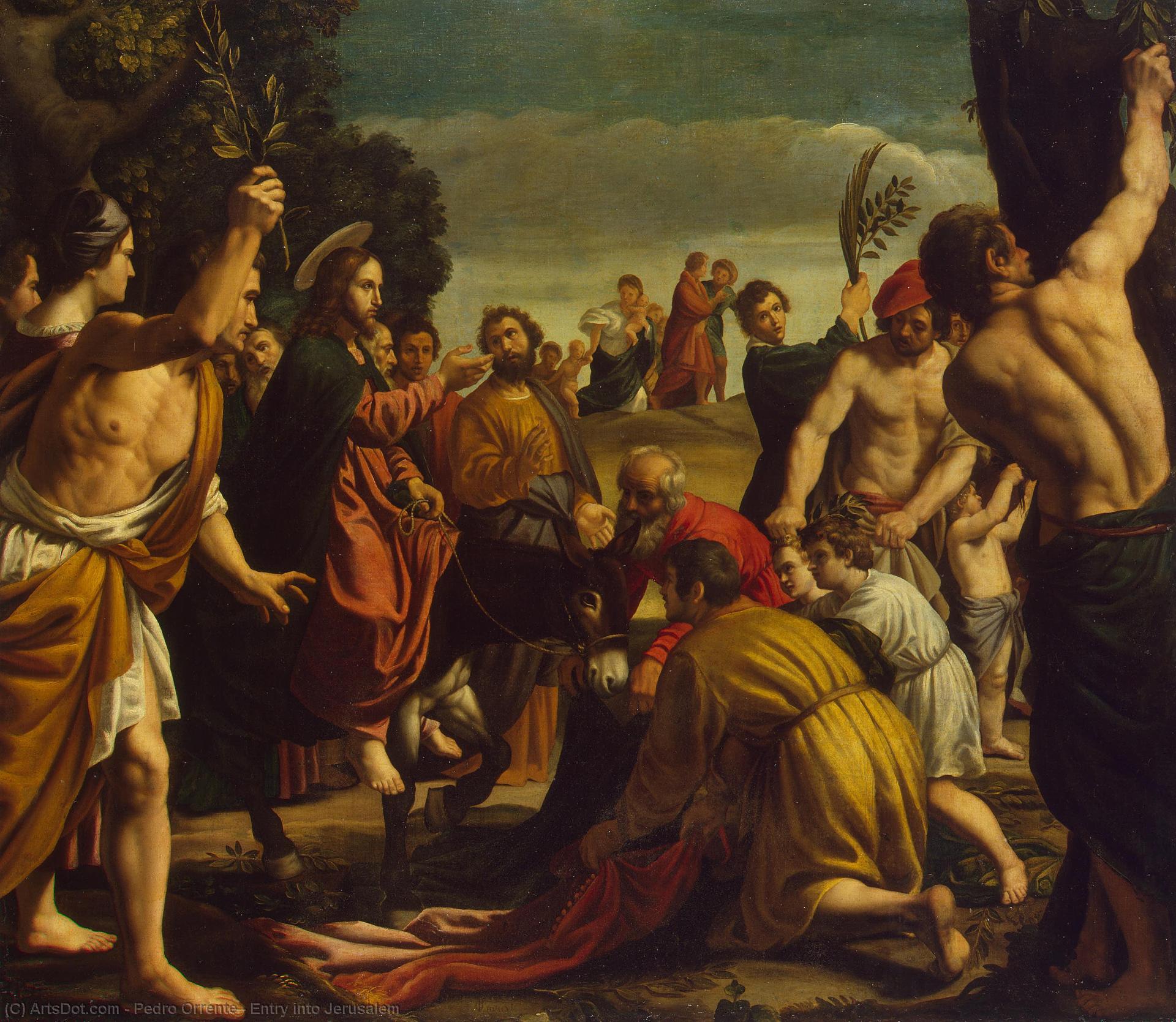
Entrée à Jérusalem
Peinture à l'huile
Décoration murale
Spanish Baroque
1620
112.0 x 127.0 cm
Musée de l'Ermitage
Reproduction à l'huile faite à la main
Huile sur toile peinte à la main, avec cadre et dimensions personnalisés, réalisée sur commande par nos artistes.
P118B $10
P118H $10
P118W $10
P438Z $10
P508JH $12
P508YH $12
P805H $10
P805Z $10
P919BZ $10
P919G $10
P919XJ $10
P959ZH $10
P968JZ $12
W106C $8
W218G $10
W218JH $8
W218Y $10
W307PJ $10
W316G $10
W316PJ $8
W316Y $10
W398PJ $8
W4111J $10
W500HY $15
W500JH $15
W692G $12
W849H $8
W940BG $15
W953PJ $8
Choisissez parmi nos formats prédéfinis qui respectent les proportions originales de l’œuvre.
Vous pouvez saisir vos propres dimensions pour l'adapter à un cadre ou à un espace spécifique. Si la taille sélectionnée ne correspond pas aux proportions de l'image d'origine, nous recadrerons l'œuvre ou prolongerons la peinture avec des éléments peints à la main supplémentaires. Une maquette numérique vous sera envoyée pour approbation avant le début de la production.
Veuillez noter que l'aperçu à l'écran ne reflète pas le recadrage ou l'extension réels. Seule la maquette montrera fidèlement la composition finale.
Bien que des tailles personnalisées soient disponibles, nous vous recommandons de sélectionner une dimension dans la liste prédéfinie afin de préserver les proportions d'origine.
Après la commande, l’équipe OriginalUniqueArt.com contactera le client par e-mail pour obtenir ses instructions et lui fournira une maquette d’aperçu.
Livraison dans le monde entier () en 3 à 4 semaines au lieu des 5 semaines habituelles. (23 juillet). Aucune concession sur la qualité.
Livraison express gratuite dans le monde entier
Toile de lin de haute qualité
Assurance transport complète
Garantie de remboursement des frais de douane
Garantie de fidélité des couleurs
Politique de retour de 60 jours (uniquement en cas de défaut)
Garantie de remboursement à 100%
Réduction sur les achats groupés
Entrée à Jérusalem
Technique de reproduction
Format de reproduction
-
Prix total final
-
Description de l'œuvre
L'Entrée triomphale à Jérusalem : Un Tableau de Foi et d’Espérance
Pedro Orrente, un artiste souvent méconnu du grand public, nous offre avec "L'Entrée triomphale à Jérusalem" (circa 1620) une scène emblématique qui transcende le temps. Ce tableau, conservé au Musée des Beaux-Arts de Valence, est bien plus qu’une simple représentation historique ; il s’agit d’une méditation visuelle sur la foi, l'espoir et l’arrivée du Messie. Orrente, un peintre audacieux de la période baroque espagnole, se distingue par son approche naturaliste, une rupture novatrice pour son époque qui lui permet d’injecter une réelle vitalité et une profondeur émotionnelle dans ses œuvres.
Le tableau dépeint l'instant crucial où Jésus monte sur un âne, accueilli par la foule de Jérusalem. L'artiste maîtrise parfaitement la composition, guidant le regard du spectateur vers le centre de la scène : Jésus au milieu, entouré d’une multitude de personnages. Les visages sont rendus avec une attention particulière aux détails, révélant une gamme d’émotions – l’adoration, l’enthousiasme, la dévotion – qui transmettent l'intensité du moment. L'utilisation de la lumière est également remarquable, créant des volumes et des contrastes qui donnent vie à la scène. Orrente ne se contente pas de reproduire une scène historique ; il capture l'essence même de l’événement, sa signification spirituelle et émotionnelle.
Le Naturalisme Baroque : Une Innovation Artistique
Pedro Orrente est un artiste clé dans la transition du style baroque espagnol. Alors que d’autres peintres de son temps privilégiaient les effets dramatiques et les compositions complexes, Orrente s'est distingué par sa volonté de représenter la réalité avec le plus grand réalisme possible. Cette approche naturaliste, influencée par les tendances artistiques italiennes de l'époque, lui permet d’injecter une nouvelle dimension dans son œuvre. Il ne cherche pas à embellir ou à idéaliser la scène, mais à la rendre aussi fidèle que possible à ce qu'il aurait pu observer.
L'attention portée aux détails, comme les vêtements des personnages, les expressions de leurs visages et la texture des matériaux, témoigne du talent d’Orrente. Il utilise une palette de couleurs riche et variée, avec des nuances subtiles qui contribuent à créer une atmosphère réaliste et immersive. Cette technique, combinée à sa maîtrise de l'anatomie humaine, lui permet de créer des figures expressives et convaincantes.
Symbolisme et Résonance Historique
L’œuvre est riche en symboles. L’âne sur lequel monte Jésus représente la modestie et l’humilité du Messie. Les palmes brandies par la foule sont un symbole de victoire et d'allégeance, rappelant les triomphes des rois. Le "Hosanna" (louange à Dieu) prononcé par la foule exprime l'adoration et la reconnaissance envers Jésus comme le Sauveur. L’ensemble du tableau est donc une célébration de l’arrivée du Messie et de son message d’amour et de rédemption.
L'événement représenté, l'entrée triomphale à Jérusalem, est un moment central de la Bible, le point culminant de la mission de Jésus. Orrente, en capturant ce moment clé, invite le spectateur à réfléchir sur les thèmes de la foi, de l’espoir et du sacrifice. Le tableau est donc une œuvre d'art profondément chargée de sens, qui continue de résonner avec les fidèles aujourd'hui.

Une Reproduction Exceptionnelle : Revivre l'Art d'Orrente
OriginalUniqueArt propose des reproductions de haute qualité de "L'Entrée triomphale à Jérusalem" réalisées par nos peintres experts, dans le respect scrupuleux des techniques originales. Nous utilisons uniquement des pigments et des matériaux de la plus haute qualité pour garantir une reproduction fidèle et durable. Chaque reproduction est une œuvre d’art unique, qui vous permettra de profiter pleinement de la beauté et de la richesse de ce tableau emblématique.
Que vous soyez un collectionneur d'art passionné, un amateur d'histoire ou simplement à la recherche d'une pièce décorative exceptionnelle, notre reproduction de "L'Entrée triomphale à Jérusalem" est le choix idéal. Elle apportera une touche d’élégance et de spiritualité à votre intérieur, tout en vous permettant de posséder une œuvre d'art d'un artiste méconnu mais talentueux comme Pedro Orrente.
Biographie de l'artiste
Pedro Orrente: Bridging the Baroque and Naturalism in Spanish Painting
Pedro de Orrente, né à Murcie en 1580 et décédé à Valence en 1645, se dresse comme une figure essentielle dans la transition picturale espagnole du tard XVIe et début XVIIe siècle. Souvent éclipsé par les figures plus flamboyantes telles que El Greco, l'héritage de Orrente réside dans son adoption audacieuse du naturalisme au sein du cadre baroque – un mouvement qui le positionne parmi les premiers artistes en Espagne à privilégier la représentation réaliste tout en conservant une composition dramatique et une intensité émotionnelle. Son parcours, marqué par des déplacements constants à travers l’Espagne et de brèves résidences en Italie, reflète non seulement les courants artistiques de son temps mais aussi les circonstances personnelles qui ont façonné sa vision unique. Orrente’s early life remains somewhat shrouded in mystery, though it's believed he received his initial training from Juan de Arizmendi, a local Murcia painter. By 1600, he was already demonstrating considerable skill in Toledo, undertaking an altarpiece commission for the village of Guadarrama. This period witnessed a formative encounter with El Greco’s son, Jorge Manuel Theotocópuli, who became a close friend and likely influenced Orrente's artistic sensibilities. The influence of the Bassano family – particularly Jacopo Bassano – is undeniable; Orrente spent considerable time in Venice between 1602 and 1605, immersing himself in their innovative approach to religious painting. He adopted their penchant for depicting biblical scenes as dynamic genre paintings, populated with numerous figures arranged within richly detailed landscapes—a departure from the more formal, idealized representations prevalent at the time. This Venetian influence is evident in works like “Saint Leocadia” (Toledo Cathedral) and "Martyrdom of Saint James the Younger" (Museo de Bellas Artes de Valencia San Pío V), where figures move with a captivating grace through expansive, meticulously rendered settings. Orrente’s career unfolded across several key Spanish cities – Murcia, Toledo, Cuenca, Valencia, Madrid, and Seville. Each location contributed to his artistic development, exposing him to diverse styles and patrons. In Valencia, he became the chief decorator for the Cathedral, undertaking monumental works such as the “Martyrdom of Saint Sebastian.” His time in Madrid involved supplying paintings to the Royal Collections and the Buen Retiro Palace, demonstrating a keen awareness of courtly tastes and a willingness to adapt his style to meet specific demands. His association with Francisco Pacheco, another prominent painter in Seville, further broadened his artistic horizons. This itinerant lifestyle, while demanding, allowed Orrente to synthesize influences from various schools and develop a uniquely personal approach to painting. Orrente’s oeuvre is remarkably diverse, encompassing history paintings, religious scenes, animal studies, and landscapes—each infused with a palpable sense of realism. His “Sacrifice of Isaac” (part of the Museo del Prado's collection) exemplifies his ability to capture human emotion and dramatic action within a meticulously constructed composition. His depictions of animals are particularly noteworthy, showcasing an intimate understanding of their anatomy and behavior – a testament to his keen observational skills. The integration of detailed landscapes into his narratives further emphasizes this commitment to naturalism, creating immersive scenes that transport the viewer into the heart of the depicted events. Notably, he was one of the first Spanish painters to embrace Caravaggesque techniques, incorporating dramatic lighting and tenebrism into his work, as evidenced in pieces like “Saint John the Evangelist in Patmos.” Despite his considerable success during his lifetime, Orrente’s artistic legacy wasn't fully recognized until relatively recently. His workshop produced a significant number of works, some attributed to him and others created by assistants, making it challenging to definitively assess the scope of his individual contribution. However, his pioneering embrace of naturalism, combined with his masterful command of composition and dramatic lighting, firmly establishes Pedro Orrente as a crucial link between the late Renaissance and the Baroque periods in Spanish art—a testament to an artist who dared to break from tradition and forge his own distinctive path.Key Influences and Artistic Development
Orrente’s artistic journey was shaped by a confluence of influences, both local and international. His early training under Juan de Arizmendi provided him with the foundational skills necessary for developing his craft. However, it was his encounter with El Greco's son, Jorge Manuel Theotocópuli, in Toledo that proved particularly formative. The close friendship fostered a shared artistic sensibility, likely contributing to Orrente’s own exploration of dramatic composition and emotional intensity – traits that would become hallmarks of his style. The period spent in Venice between 1602 and 1605 was arguably the most transformative phase of his career. Immersed in the vibrant art scene of the Venetian Republic, Orrente absorbed the innovative techniques and compositional strategies employed by the Bassano family – particularly Jacopo Bassano. The Bassanos’ penchant for depicting biblical narratives as dynamic genre paintings, populated with numerous figures within richly detailed landscapes, profoundly influenced Orrente's own approach to subject matter and composition. He adopted their preference for a low viewpoint, creating scenes that felt both intimate and expansive. Furthermore, Orrente’s exposure to the works of Titian, Tintoretto, and Veronese during his time in Venice undoubtedly shaped his artistic style. The influence of these masters is evident in his later paintings, particularly “Saint Leocadia” and "Martyrdom of Saint James the Younger," where he skillfully employed dramatic lighting, complex compositions, and a heightened sense of realism – characteristics that distinguished him from earlier generations of Spanish painters. The adoption of Caravaggesque techniques—particularly the use of tenebrism to create strong contrasts between light and shadow—further solidified his position as a pioneer of modern painting in Spain.Major Works and Artistic Themes
Pedro Orrente’s artistic output spanned a diverse range of subjects, reflecting his versatility and adaptability as an artist. Among his most celebrated works are: * **Saint Leocadia (Toledo Cathedral):** A prime example of Orrente's Venetian-influenced style, characterized by dynamic composition, dramatic lighting, and meticulous detail. * **Martyrdom of Saint Sebastian (Valencia Cathedral):** A monumental fresco that showcases Orrente’s mastery of color, perspective, and narrative storytelling. * **Sacrifice of Isaac:** This painting exemplifies Orrente's ability to capture human emotion and dramatic action within a meticulously constructed composition. * **Saint John the Evangelist in Patmos:** Demonstrates his adoption of Caravaggesque techniques, utilizing dramatic lighting and tenebrism to create a sense of mystery and spirituality. Beyond these individual works, Orrente’s oeuvre encompasses numerous religious scenes, history paintings, and animal studies – each imbued with a palpable sense of realism and emotional depth. His depictions of animals are particularly noteworthy, showcasing an intimate understanding of their anatomy and behavior.Historical Significance and Legacy
Despite his considerable success during his lifetime, Pedro Orrente's artistic legacy wasn’t fully recognized until relatively recently. He was often overshadowed by more flamboyant contemporaries like El Greco, yet he played a crucial role in bridging the gap between the late Renaissance and the Baroque periods in Spanish painting. His pioneering embrace of naturalism—a departure from the idealized representations prevalent at the time—established him as one of the first artists in Spain to prioritize realistic representation alongside dramatic composition and emotional intensity. Orrente’s influence extended beyond his own artistic output, as he mentored several young painters, including Esteban March and García Salmerón, contributing to the development of Spanish painting for generations to come. His workshop produced a significant number of works, some attributed to him and others created by assistants, making it challenging to definitively assess the scope of his individual contribution. However, his pioneering embrace of naturalism, combined with his masterful command of composition and dramatic lighting, firmly establishes Pedro Orrente as a crucial link between the late Renaissance and the Baroque periods in Spanish art—a testament to an artist who dared to break from tradition and forge his own distinctive path.Pedro Orrente
1580 - 1645 , Espagne
En bref
- Artistic Movement Or Style: Baroque
- Artists Or Movements Influenced By This Artist: ['Esteban March']
- Artists Who Influenced This Artist: ['El Greco']
- Date Of Birth: Avril 1580
- Date Of Death: Janvier 1645
- Full Name: Pedro de Orrente
- Nationality: Espagnol
- Notable Artworks:
- Sacrifice Isaac
- Baptême Crist
- Place Of Birth: Murcie, Espagne

L'option verre n'est disponible que pour les dimensions inférieures à 110 cm.





































