
 Aperçu en situation
 Envoyer
 Partager
 Détails de l'œuvre

 Télécharger
 Articles similaires
 Radiographie
 Diaporama
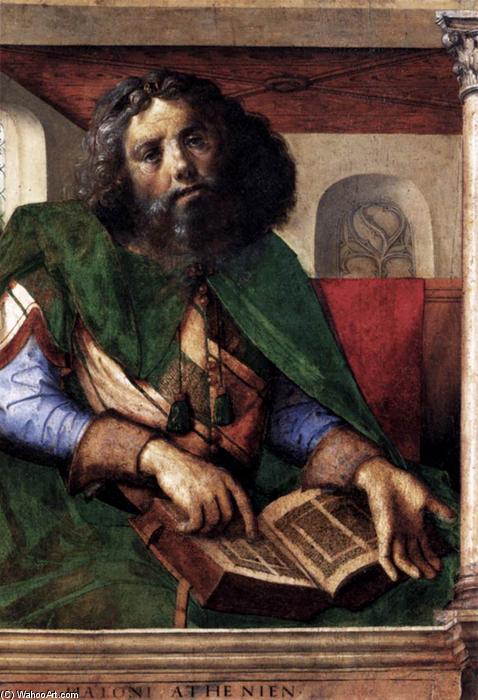
Plato
 Oil On Panel
- Renaissance Humanism
 1477
1477- Renaissance
 101.0 x 69.0 cm
 Musée du Louvre
 Lire la suite
Acquérez une image numérique haute résolution et optimisée, d'une qualité bien supérieure à l'aperçu en ligne.
Chaque fichier est méticuleusement préparé par nos spécialistes internes à l'aide d'outils avancés et d'une retouche manuelle experte. Nous garantissons que chaque image possède une clarté exceptionnelle, une précision des couleurs irréprochable et un niveau de détail fin.
Le fichier final est livré par e-mail sous 72 heures, optimisé pour une utilisation immédiate dans des contextes professionnels, éditoriaux et d'impression. Il offre la même qualité de confiance que celle utilisée par les plus grands studios de création, éditeurs et galeries.
Image numérique
Téléchargez un fichier haute résolution pour votre usage personnel, l'impression et vos projets créatifs. ( Commander l'impression Commander la reproduction peinte à la main)
Inclus avec chaque commande d'image numérique
Livraison numérique experte, garantie.
En choisissant OriginalUniqueArt.com, vous n'obtenez pas seulement une simple image : vous recevez une œuvre numérique sublimée avec professionnalisme, conçue avec précision et accompagnée d'une garantie de satisfaction. Voici tout ce qui accompagne automatiquement votre commande :

Envoi rapide par e-mail
Votre fichier d'image numérique haute résolution vous sera envoyé par e-mail sous 72 heures après votre commande — prêt à un usage immédiat.

Fichier numérique optimisé par l'IA
Votre œuvre d'art bénéficie d'une optimisation professionnelle grâce à des outils d'IA avancés et une retouche manuelle, garantissant un niveau maximal de détail, de clarté et de fidélité chromatique.

Réexpédition gratuite à vie
Vous avez accidentellement supprimé ou perdu votre fichier ? Pas d'inquiétude — nous vous le renverrons gratuitement, quand vous le souhaitez.

Aucun frais de douane - À jamais
Profitez de votre œuvre d'art instantanément sans frais de douane ni de livraison — les téléchargements numériques sont toujours exonérés de taxes.

Garantie de fidélité des couleurs
Nous garantissons que votre image numérique reproduit les couleurs de l'original aussi fidèlement que possible grâce à des outils professionnels et une gestion rigoureuse des couleurs.

Garantie satisfaction 60 jours
Si vous n'êtes pas satisfait de votre image numérique, nous la retoucherons ou vous rembourserons 100% sous 60 jours — sans poser de questions.

Garantie de remboursement à 100%
Pas satisfait ? Obtenez un remboursement intégral dans les 60 jours suivant la réception de votre fichier numérique — sans aucune question posée.

Remises sur les commandes groupées
Achetez 3 images, économisez 10% - Achetez 5, économisez 15% - Achetez 10+, économisez 20%. Idéal pour les projets créatifs, les galeries et les agences.
Description de la collection
A Renaissance Portrait of Wisdom: Pedro Berruguete’s Plato
The painting “Plato” by Pedro Berruguete stands as an emblem of the artistic fervor that characterized the burgeoning Italian Renaissance, firmly rooted in the solemn traditions of Gothic art yet propelled forward by humanist ideals and a newfound appreciation for naturalism. Created in 1477, this monumental oil on wood masterpiece resides within the hallowed halls of the Musée du Louvre in Paris, France—a testament to its enduring artistic merit and historical significance.- Subject Matter: At its core lies a portrait of Plato, the revered Athenian philosopher credited with establishing the Academy and shaping Western thought. Berruguete skillfully captures not merely Plato’s physical likeness but also his intellectual aura—a gaze imbued with contemplation and an expression reflecting profound philosophical inquiry.
- Style & Technique: Berruguete deftly blends Gothic stylistic elements with Renaissance innovations. The painting adheres to the meticulous detail demanded by Gothic art, particularly evident in the intricate folds of Plato’s robe and the textured surface of the wood panel—a technique honed during his formative years amidst the Gothic workshops of Castile.
- Historical Context: “Plato” emerged during a period of transformative cultural change across Europe—the Renaissance—fueled by rediscovered classical texts and a renewed interest in humanism. Berruguete’s work reflects this intellectual climate, mirroring the humanist emphasis on reason and observation that supplanted medieval dogma.
- Symbolism: The inclusion of an open book symbolizes Plato's unwavering commitment to knowledge and philosophical discourse—a cornerstone of his legacy. Similarly, the draped robe represents dignity and erudition, reinforcing Plato’s intellectual stature within the artistic narrative.
Biographie de l'artiste
Pedro Berruguete: Bridging Gothic Legacy and Renaissance Dawn
Pedro Berruguete (c. 1450 – 1504) stands as a pivotal figure in Spanish art history, marking the crucial transition between the solemn grandeur of Gothic painting and the burgeoning optimism of the Italian Renaissance. Born in Paredes de Nava, Castile, his exact birth year remains elusive, shrouded in the vagueness characteristic of artists whose lives were documented sparsely during their time. His lineage traced back to noble families, providing him with a foundation for artistic pursuits that would ultimately reshape the visual landscape of Spain. Despite the lack of definitive biographical details—a frustrating impediment for art historians—Berruguete’s oeuvre speaks volumes about his profound understanding and masterful execution of stylistic innovations. He emerged from the shadow of Gothic tradition, absorbing its expressive fervor and meticulous detail, yet simultaneously embracing the humanist ideals and geometric precision championed by Florentine masters like Brunelleschi and Donatello. This duality is palpable in his paintings, where stylized figures coexist with carefully rendered drapery and architectural elements—a hallmark of the emerging Renaissance aesthetic. Consider “David,” a monumental sculpture embodying both Gothic reverence for biblical narratives and Renaissance anatomical accuracy; it exemplifies Berruguete’s ability to synthesize disparate influences into a singular artistic vision. His artistic journey gained momentum during a period marked by religious upheaval; Berruguete’s most celebrated works depict scenes from the early Inquisition, capturing the anxieties and moral dilemmas of the era with unflinching realism. These depictions aren't merely representations of historical events but profound meditations on faith, guilt, and redemption—a testament to his psychological depth and artistic sensitivity. The dramatic lighting and expressive gestures found in paintings like “Ezekiel” underscore Berruguete’s mastery of chiaroscuro, a technique perfected during the Renaissance and skillfully adapted by him to convey emotional intensity. The speculation surrounding Berruguete’s travels to Italy in 1480 is particularly intriguing. Evidence suggests he spent time at Federico III da Montefeltro's court in Urbino, immersing himself in the vibrant artistic environment fostered by Lorenzo de Medici’s patronage. While attribution remains debated—with Justus van Gent also active in Urbino during that period—the influence of Italian Renaissance artists undoubtedly permeated Berruguete’s thinking and technique. He returned to Spain in 1482, establishing studios in Toledo and Ávila, where he continued to refine his style and produce monumental artworks. This formative experience solidified his commitment to humanist principles and propelled him toward a more ambitious artistic program. Perhaps most importantly, Berruguete is recognized as the father of Alonso Berruguete (c. 1475–1561), arguably Spain’s greatest sculptor during the Renaissance. This familial connection further elevates Berruguete's significance—his son’s sculptural achievements served as a testament to his artistic legacy and established a powerful tradition within Spanish art. The stylistic similarities between their works—characterized by monumental scale, expressive dynamism, and meticulous detail—speak to a shared intellectual heritage and an unwavering dedication to artistic excellence. Berruguete’s contribution to Spanish art is undeniable—he stands as a beacon of artistic transition, embodying the spirit of a nation embracing new horizons while honoring its venerable past. His legacy continues to inspire artists today, reminding us that true innovation arises from a deep understanding of tradition and a courageous willingness to forge ahead into uncharted territory.
Pedro Berruguete
1450 - 1504 , Espagne
En bref
- Artistic Movement Or Style: Transition entre le gothique et le Renaissance
- Artists Or Movements Influenced By This Artist: ['Renaissance italienne']
- Artists Who Influenced This Artist: ['Justus van Gent']
- Date Of Birth: c. 1450
- Date Of Death: 1504
- Full Name: Pedro Berruguete
- Nationality: Espagnol
- Notable Artworks:
- David
- Ézéchiel
- Salomon
- Place Of Birth: Paredes de Nava, Espagne

