
 Aperçu en situation
 Envoyer
 Partager
 Détails de l'œuvre

 Télécharger
 Articles similaires
 Radiographie
 Diaporama
Plato
 Oil On Panel
- Renaissance Humanism
 1477
1477- Renaissance
 101.0 x 69.0 cm
 Musée du Louvre
 Lire la suite
Reproduction à l'huile faite à la main
Huile sur toile peinte à la main, avec cadre et dimensions personnalisés, réalisée sur commande par nos artistes. ( Commander l'impression Télécharger l'image haute résolution)




P118B $10

P118H $10

P118W $10

P438Z $10

P508JH $12

P508YH $12

P805H $10

P805Z $10

P919BZ $10

P919G $10

P919XJ $10

P959ZH $10

P968JZ $12

W106C $8

W218G $10

W218JH $8

W218Y $10

W307PJ $10

W316G $10

W316PJ $8

W316Y $10

W398PJ $8

W4111J $10

W500HY $15

W500JH $15

W692G $12

W849H $8

W940BG $15

W953PJ $8




Choisissez parmi nos formats prédéfinis qui respectent les proportions originales de l’œuvre.

Vous pouvez saisir vos propres dimensions pour l'adapter à un cadre ou à un espace spécifique. Si la taille sélectionnée ne correspond pas aux proportions de l'image d'origine, nous recadrerons l'œuvre ou prolongerons la peinture avec des éléments peints à la main supplémentaires. Une maquette numérique vous sera envoyée pour approbation avant le début de la production.
Veuillez noter que l'aperçu à l'écran ne reflète pas le recadrage ou l'extension réels. Seule la maquette montrera fidèlement la composition finale.
Bien que des tailles personnalisées soient disponibles, nous vous recommandons de sélectionner une dimension dans la liste prédéfinie afin de préserver les proportions d'origine.
Après la commande, l’équipe OriginalUniqueArt.com contactera le client par e-mail pour recueillir ses instructions et lui fournira une maquette d’aperçu
Livraison dans le monde entier () en 3 à 4 semaines au lieu des 5 semaines habituelles. (16 août). Aucun compromis sur la qualité.

Livraison express gratuite dans le monde entier

Toile de lin de qualité supérieure

Assurance transport complète

Garantie de remboursement des droits de douane

Garantie de fidélité des couleurs

Politique de retour de 60 jours (uniquement en cas de défaut)

Garantie de remboursement à 100%

Offre de tarifs dégressifs
 L'option verre n'est disponible que pour les dimensions inférieures à 110 cm.

Plato
Technique de reproduction
Format de la reproduction
-


Prix total
$ 300
Description de l'œuvre
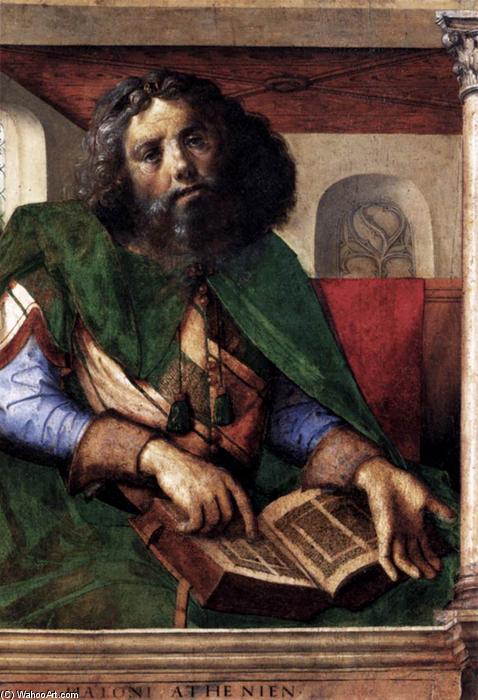
A Renaissance Portrait of Wisdom: Pedro Berruguete’s Plato
The painting “Plato” by Pedro Berruguete stands as an emblem of the artistic fervor that characterized the burgeoning Italian Renaissance, firmly rooted in the solemn traditions of Gothic art yet propelled forward by humanist ideals and a newfound appreciation for naturalism. Created in 1477, this monumental oil on wood masterpiece resides within the hallowed halls of the Musée du Louvre in Paris, France—a testament to its enduring artistic merit and historical significance.- Subject Matter: At its core lies a portrait of Plato, the revered Athenian philosopher credited with establishing the Academy and shaping Western thought. Berruguete skillfully captures not merely Plato’s physical likeness but also his intellectual aura—a gaze imbued with contemplation and an expression reflecting profound philosophical inquiry.
- Style & Technique: Berruguete deftly blends Gothic stylistic elements with Renaissance innovations. The painting adheres to the meticulous detail demanded by Gothic art, particularly evident in the intricate folds of Plato’s robe and the textured surface of the wood panel—a technique honed during his formative years amidst the Gothic workshops of Castile.
- Historical Context: “Plato” emerged during a period of transformative cultural change across Europe—the Renaissance—fueled by rediscovered classical texts and a renewed interest in humanism. Berruguete’s work reflects this intellectual climate, mirroring the humanist emphasis on reason and observation that supplanted medieval dogma.
- Symbolism: The inclusion of an open book symbolizes Plato's unwavering commitment to knowledge and philosophical discourse—a cornerstone of his legacy. Similarly, the draped robe represents dignity and erudition, reinforcing Plato’s intellectual stature within the artistic narrative.
Biographie de l'artiste
Pedro Berruguete: Bridging Gothic Legacy and Renaissance Dawn
Pedro Berruguete (c. 1450 – 1504) stands as a pivotal figure in Spanish art history, marking the crucial transition between the solemn grandeur of Gothic painting and the burgeoning optimism of the Italian Renaissance. Born in Paredes de Nava, Castile, his exact birth year remains elusive, shrouded in the vagueness characteristic of artists whose lives were documented sparsely during their time. His lineage traced back to noble families, providing him with a foundation for artistic pursuits that would ultimately reshape the visual landscape of Spain. Despite the lack of definitive biographical details—a frustrating impediment for art historians—Berruguete’s oeuvre speaks volumes about his profound understanding and masterful execution of stylistic innovations. He emerged from the shadow of Gothic tradition, absorbing its expressive fervor and meticulous detail, yet simultaneously embracing the humanist ideals and geometric precision championed by Florentine masters like Brunelleschi and Donatello. This duality is palpable in his paintings, where stylized figures coexist with carefully rendered drapery and architectural elements—a hallmark of the emerging Renaissance aesthetic. Consider “David,” a monumental sculpture embodying both Gothic reverence for biblical narratives and Renaissance anatomical accuracy; it exemplifies Berruguete’s ability to synthesize disparate influences into a singular artistic vision. His artistic journey gained momentum during a period marked by religious upheaval; Berruguete’s most celebrated works depict scenes from the early Inquisition, capturing the anxieties and moral dilemmas of the era with unflinching realism. These depictions aren't merely representations of historical events but profound meditations on faith, guilt, and redemption—a testament to his psychological depth and artistic sensitivity. The dramatic lighting and expressive gestures found in paintings like “Ezekiel” underscore Berruguete’s mastery of chiaroscuro, a technique perfected during the Renaissance and skillfully adapted by him to convey emotional intensity. The speculation surrounding Berruguete’s travels to Italy in 1480 is particularly intriguing. Evidence suggests he spent time at Federico III da Montefeltro's court in Urbino, immersing himself in the vibrant artistic environment fostered by Lorenzo de Medici’s patronage. While attribution remains debated—with Justus van Gent also active in Urbino during that period—the influence of Italian Renaissance artists undoubtedly permeated Berruguete’s thinking and technique. He returned to Spain in 1482, establishing studios in Toledo and Ávila, where he continued to refine his style and produce monumental artworks. This formative experience solidified his commitment to humanist principles and propelled him toward a more ambitious artistic program. Perhaps most importantly, Berruguete is recognized as the father of Alonso Berruguete (c. 1475–1561), arguably Spain’s greatest sculptor during the Renaissance. This familial connection further elevates Berruguete's significance—his son’s sculptural achievements served as a testament to his artistic legacy and established a powerful tradition within Spanish art. The stylistic similarities between their works—characterized by monumental scale, expressive dynamism, and meticulous detail—speak to a shared intellectual heritage and an unwavering dedication to artistic excellence. Berruguete’s contribution to Spanish art is undeniable—he stands as a beacon of artistic transition, embodying the spirit of a nation embracing new horizons while honoring its venerable past. His legacy continues to inspire artists today, reminding us that true innovation arises from a deep understanding of tradition and a courageous willingness to forge ahead into uncharted territory.
Pedro Berruguete
1450 - 1504 , Espagne
L'essentiel de l'artiste
- Artistic Movement Or Style: Transition entre le gothique et le Renaissance
- Artists Or Movements Influenced By This Artist: ['Renaissance italienne']
- Artists Who Influenced This Artist: ['Justus van Gent']
- Date Of Birth: c. 1450
- Date Of Death: 1504
- Full Name: Pedro Berruguete
- Nationality: Espagnol
- Notable Artworks:
- David
- Ézéchiel
- Salomon
- Place Of Birth: Paredes de Nava, Espagne
Articles connexes
Giclée Prints: Archival Quality & Aesthetic Nuances for the Discerning Collector
Explore the world of giclée prints with OriginalUniqueArt. Learn about archival quality, aesthetic nuances & investment potential. Expert guidance for discerning art collectors seeking museum-quality reproductions and lasting value.

The Enduring Legacy of Fine Art Prints: Technique, History & Aesthetic Impact
Explore the rich history & techniques of fine art prints. Discover investment potential, assess authenticity, and learn how to preserve your collection with expert guidance. Trusted insights for discerning collectors.

Gothic Vibes: From Dark Shadows to Bold Modern Edge | The Ultimate Trend Forecast
Explore the evolution of Gothic vibes, from historical shadows to bold modern edge. Discover how dark aesthetics, noir interiors, and contemporary subcultures are redefining modern design through a high-impact, trend-focused lens.

Echoes of Time: Exploring the Enduring Appeal & Historical Context of Vintage Art Prints
Explore the captivating world of vintage art prints! Discover their history, collecting tips & enduring appeal. Expert insights on chromolithography and building a legacy collection with OriginalUniqueArt.
Shadows & Splendor: A Journey Through the Soul of Gothic Art and Architectural Grandeur
Embark on a profound journey through the spiritual intensity of Gothic art. Explore the architectural marvels, luminous stained glass, and sacred sculptures that define this era of grandeur and human devotion.


