
 Aperçu en situation
 Envoyer
 Partager
 Détails de l'œuvre
 Guide
Guide

 Télécharger l'image
 Articles similaires
 Radiographie
 Diaporama
 Questions et réponses
 Statistiques
Vasant


 Lire la suite
L’œuvre d'art présentée sur cette page est protégée par le droit d'auteur, ce qui signifie que nous ne pouvons légalement créer ou vendre de reproduction identique. Cette protection est appliquée en vertu d'accords internationaux tels que la Convention de Berne et par les lois nationales, notamment celles énoncées par le Loi américaine sur le droit d'auteur - Titre 17.
Cette méthode est pleinement conforme aux réglementations sur le droit d'auteur car elle ne repose pas sur la copie ou la duplication de l'œuvre protégée. Il s'agit plutôt d'une réinterprétation créative — une nouvelle peinture qui s'inspire de l'original sans pour autant lui être identique.
Giclées et impressions d'art
Impressions giclées ou sur toile de qualité musée, avec une production rapide et des finitions au choix. ( Commander la reproduction peinte à la main Passer au format numérique)




P118B €10

P118H €10

P118W €10

P438Z €10

P508JH €12

P508YH €12

P805H €10

P805Z €10

P919BZ €10

P919G €10

P919XJ €10

P959ZH €10

P968JZ €12

W106C €8

W218G €10

W218JH €8

W218Y €10

W307PJ €10

W316G €10

W316PJ €8

W316Y €10

W398PJ €8

W4111J €10

W500HY €15

W500JH €15

W692G €12

W849H €8

W940BG €15

W953PJ €8




Choisissez parmi nos formats prédéfinis qui respectent les proportions originales de l’œuvre.

Saisissez la largeur et la hauteur souhaitées pour qu'elles s'adaptent à votre cadre ou à votre mur. Une impression peut être recadrée, mais jamais agrandie au-delà de l'image originale ; ainsi, un format de forme différente entraînera la perte d'une partie de l'image. Nous vous envoyons une maquette numérique pour approbation avant toute impression. L'image présentée sur cette page ne montre pas le recadrage réel — seule la maquette le permet.
Livraison dans le monde entier () en 2 semaines au lieu des 4/5 semaines habituelles. (4 novembre)

Livraison express gratuite dans le monde entier

Toile de lin de qualité supérieure

Assurance transport complète

Garantie de remboursement des droits de douane

Garantie de fidélité des couleurs

Politique de retour de 100 jours (uniquement en cas de défaut)

Garantie de remboursement à 100%

Offre de tarifs dégressifs
 L'option verre n'est disponible que pour les dimensions inférieures à 110 cm.

Vasant
Giclées et impressions d'art
Format de la reproduction
-


Prix total
€ 72
Biographie de l'artiste
Early Life and Career
Nandalal Bose, a luminary of Indian art, was born on December 3rd, 1882, in Kharagpur, Munger District, Bihar—a humble beginning for an artist destined to reshape the visual landscape of his nation. His familial roots lay in a middle-class Bengali household where Kshetramonidevi and Purnachandra Bose nurtured him alongside his four siblings. Unlike many artists of his time, Bose faced initial resistance from his family regarding his artistic aspirations—a testament to the unwavering conviction he held in his passion for creation. Despite these challenges, Bose embarked on his artistic journey by enrolling at Calcutta School of Art, profoundly influenced by the monumental murals adorning Ajanta Caves. This formative experience ignited within him a fascination for storytelling through visual mediums and cemented his commitment to preserving India’s rich cultural heritage. He quickly became part of an international circle of artists and writers who championed the revival of classical Indian aesthetics—a movement that would propel him toward groundbreaking innovations in artistic expression. A pivotal moment arrived in 1930 when Bose captured the essence of Mahatma Gandhi's unwavering spirit through a striking linocut print, symbolizing his dedication to nonviolent resistance. This artwork not only solidified his reputation as a socially conscious artist but also demonstrated his mastery of printmaking techniques—a skill he honed with meticulous precision.Artistic Style and Contributions
Bose’s artistic style—often termed “Indian Style”—represented a harmonious fusion between traditional Indian iconography and Persian influences. He skillfully blended elements from Hindu mythology, portraying figures like Rama and Sita with grace and dignity, alongside depictions of rural life brimming with vibrant colors and textures. His canvases resonated with the spirit of his era, reflecting both spiritual contemplation and humanist empathy. Bose’s artistic prowess earned him recognition as one of the pioneers of modern Indian art—a distinction that underscores his enduring legacy within the realm of visual culture. Notable among his creations are “A Lion” (59 x 63 cm), housed in the National Gallery of Modern Art, New Delhi, and “Dhol Wala” (59 x 63 cm), also residing at NGMA—both masterpieces executed in tempera paint—which exemplify Bose’s meticulous attention to detail and his ability to convey emotion through color palettes. Furthermore, "Pranam" (50 x 55 cm) stands as a testament to his artistic vision and technical skill.Influences and Mentorship
Bose's artistic development was irrevocably shaped by the mentorship of Abanindranath Tagore—a relationship that fostered experimentation with European techniques while simultaneously grounding him in the traditions of Indian art. Tagore’s encouragement instilled in Bose a belief in continuous learning and refinement—qualities that would characterize his entire career. He diligently studied the works of masters like Raphael, absorbing their stylistic nuances and adapting them to his own artistic sensibilities. This dedication to observation and emulation ensured that Bose remained at the forefront of artistic innovation throughout his lifetime.Recognition and Legacy
Nandalal Bose’s contribution to Indian art is immeasurable—a legacy enshrined in the annals of cultural history. He was entrusted with illustrating the Constitution of India, a monumental undertaking that showcased his artistic versatility and commitment to civic responsibility. In 1976, he received the Padma Vibhushan—India's highest honor for artistic achievement—acknowledging his profound impact on the nation’s artistic landscape. Today, the National Gallery of Modern Art in Delhi proudly displays over 7,000 of Bose’s artworks—a tangible reminder of his enduring influence on generations of artists and a beacon of inspiration for aspiring creatives everywhere.
Nandlal Bose
1882 - 1966 , Inde
L'essentiel de l'artiste
- Artistic Movement Or Style: Style Indien
- Artists Who Influenced This Artist: ['Abanindranath Tagore']
- Date Of Birth: Décembre 3, 1882
- Date Of Death: Avril 16, 1966
- Full Name: Nandalal Bose
- Nationality: Indien
- Notable Artworks:
- A Lion
- Dhol Wala
- Pranam
- Place Of Birth: Kharagpur, Inde
Articles connexes
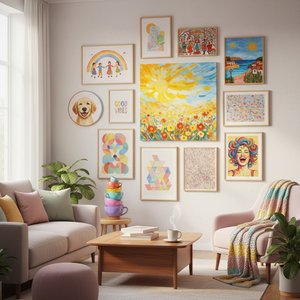
Top 10 Œuvres d'Art Évoquant la Joie Intense : Artistes et Décoration
Plongez dans un univers de joie intense avec notre sélection des 10 œuvres d'art les plus emblématiques. Découvrez l'histoire de Van Gogh, Monet et Renoir, et trouvez l'inspiration pour une décoration intérieure vibrante et positive. Reproductions de qualité musée sur OriginalUniqueArt.com

Raja Ravi Varma: Bridging Tradition & Modernity in 19th-Century Indian Art
Explore the life & art of Raja Ravi Varma, a pioneer who fused European techniques with Indian iconography. Discover his iconic paintings, lasting legacy, and influence on modern Indian art at OriginalUniqueArt.
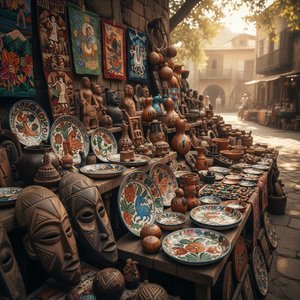
The Soul of Tradition: Exploring the Vibrant Heritage and Naive Mastery of Global Folk Art
Discover the profound beauty of folk art through a cultural lens. Explore how naive masterpieces and vibrant global traditions preserve heritage, offering timeless inspiration for collectors and art enthusiasts seeking authenticity and soul in every brushstroke.
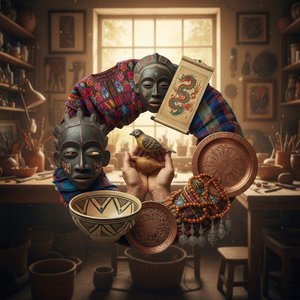
The Soul of Tradition: A Connoisseur’s Guide to Discovering and Collecting Global Folk Art
Embark on a sophisticated journey through the world of folk art. Our expert guide offers connoisseurs deep insights into discovering, identifying, and collecting meaningful cultural masterpieces that preserve the soul of global traditions.
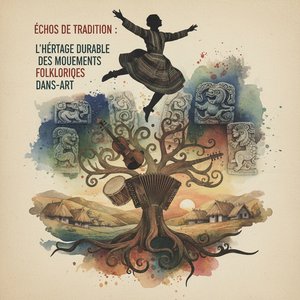
Échos de Tradition : L'Héritage Durable des Mouvements Folkloriques dans l'Art
Explorez l'héritage durable des mouvements folkloriques dans l'art ! Découvrez les traditions populaires à travers le monde, les techniques artisanales et les musées qui préservent ce patrimoine unique. Un voyage culturel enrichissant.
