Aperçu en situation
 Partager
 Partager
 Détails

 Télécharger
 Articles similaires
 Radiographie
 Voir le diaporama
 Statistiques
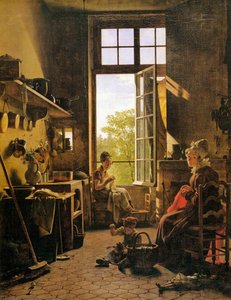
Interior of a Kitchen
 Oil On Canvas
- WallArt
- Neoclassical Art
 1815
1815- 19th Century
 65.0 x 81.0 cm
 Musée du Louvre
 Afficher la suite
Giclées et impressions d'art
Impressions giclées ou sur toile de qualité musée, avec une production rapide et des finitions au choix. ( Acheter la peinture faite à la main Passer au format image numérique)




P118B $10

P118H $10

P118W $10

P438Z $10

P508JH $12

P508YH $12

P805H $10

P805Z $10

P919BZ $10

P919G $10

P919XJ $10

P959ZH $10

P968JZ $12

W106C $8

W218G $10

W218JH $8

W218Y $10

W307PJ $10

W316G $10

W316PJ $8

W316Y $10

W398PJ $8

W4111J $10

W500HY $15

W500JH $15

W692G $12

W849H $8

W940BG $15

W953PJ $8




Choisissez parmi nos formats prédéfinis qui respectent les proportions originales de l’œuvre.

Vous pouvez saisir vos propres dimensions pour vous adapter à un cadre ou à un espace spécifique. Si la taille sélectionnée ne correspond pas aux proportions de l'image originale, nous recadrerons l'œuvre ou étendrons l'image avec une bordure en miroir ou une couleur unie. Une maquette numérique vous sera envoyée pour approbation avant le début de la production.
Veuillez noter que l'aperçu à l'écran ne reflète pas le recadrage ou l'extension réelle. Seule la maquette montrera avec précision la composition finale.
Bien que des tailles personnalisées soient disponibles, nous vous recommandons de choisir une dimension dans la liste prédéfinie afin de préserver les proportions originales.
Livraison dans le monde entier () en 2 semaines au lieu des 4/5 semaines habituelles. (16 septembre)

Livraison express gratuite dans le monde entier

Toile de lin de haute qualité

Assurance transport complète

Garantie de remboursement des droits de douane

Garantie de fidélité des couleurs

Garantie de retour de 100 jours (uniquement en cas de défaut)

Garantie de remboursement à 100%

Tarifs dégressifs sur quantité
 L'option verre n'est disponible que pour les dimensions inférieures à 110 cm.

Interior of a Kitchen
Giclées et impressions d'art
Format de la reproduction
-


Prix total final
$ 80
A Window into Parisian Domesticity
In the quiet corners of art history, certain works possess the unique ability to transcend their era, acting as temporal portals that invite us into a lost world. Michel Martin Drolling’s "Interior of a Kitchen," painted in 1815, is precisely such a masterpiece. It is far more than a mere documentation of a household routine; it is an intimate invitation into the heart of French domestic life during a period of profound transition. As Paris breathed with renewed vigor following the Napolelyonic Wars, Drolling captured a moment of profound serenity, elevating the mundane activities of a kitchen to a level of monumental grace. The scene unfolds as a carefully orchestrated tableau, where the boundaries between the everyday and the artistic blur, offering a sanctuary of understated elegance and palpable warmth.
The composition centers around a sturdy dining table, acting as an anchor for a group of figures engaged in what appears to be a quiet, communal moment. Through his masterful command of Neoclassical principles, Drolling presents a scene where the light seems to dance softly across the surfaces of ceramic bowls and glass bottles, lending a luminous quality to the room. The presence of everyday objects—the scattered bottles, the delicate cups, and even a touch of greenery from a potted plant—serves to ground the painting in reality while simultaneously contributing to a sense of organized beauty. There is a rhythmic balance to the placement of the figures and furniture, creating a visual harmony that guides the eye through the domestic landscape with ease and tranquility.
The Precision of Neoclassical Elegance
Drolling’s artistic journey, shaped by the rigorous training under the legendary Jacques-Louis David, is evident in every meticulous brushstroke of this work. Eschewing the turbulent emotionalism that would later define the Romantic movement, Drolling embraced a style characterized by remarkable precision and a deliberate restraint. His technique involves smooth, controlled applications of paint that achieve textures reminiscent of fine marble sculpture. This precision allows for an exquisite rendering of form, where the weight of the wooden furniture and the delicate translucency of glassware are rendered with breathtaking clarity.
The artist’s palette is a masterclass in subtle sophistication, leaning heavily on muted tones such as ochres, creams, and pale blues. These colors do not shout for attention; instead, they create an atmosphere of soft, diffused light that evokes a sense of timelessness. For the discerning collector or interior designer, this restrained color palette offers incredible versatility. A high-quality reproduction of this piece brings a sophisticated, calming energy to any space, acting as a focal point that commands respect through its subtlety rather than through overt spectacle. It is an artwork that rewards prolonged contemplation, revealing new layers of detail and light with every glance.
An Enduring Legacy for the Modern Collector
To possess a work inspired by Drolling is to hold a piece of the French Neoclassical soul. The emotional impact of "Interior of a Kitchen" lies in its ability to evoke nostalgia for a period of structured beauty and quiet intimacy. It speaks to the universal human desire for connection, community, and the sanctity of the home. In an era often characterized by chaos and rapid change, Drolling’s vision of a stable, serene domesticity remains deeply resonant.
For those seeking to curate an environment of historical depth and artistic refinement, this painting serves as an incomparable inspiration. Whether placed in a grand dining room to echo its subject matter or in a contemporary study to provide a classical counterpoint, the work transcends mere decoration. It becomes a conversation piece, a window into 1815 Paris, and a testament to the enduring power of Neoclassical grace. Investing in a hand-painted reproduction of this masterpiece allows the beauty of Drolling’s precision and the warmth of his vision to become a permanent part of your personal aesthetic legacy.
Biographie de l'artiste
Michel Martin Drolling : Une Vie dans l'Art Néoclassique
Jeunesse et Éducation
Michel Martin Drolling est né le 7 mars 1786 à Paris, en France. Il venait d’une famille artistique ; son père, Martin Drolling, était également peintre. Cette influence familiale a suscité l'intérêt de jeune Michel pour l'art et il a commencé sa formation sous la supervision de son père. En 1806, il a poursuivi ses études en étudiant avec l’artiste néoclassique renommé Jacques-Louis David, un moment décisif qui a façonné sa trajectoire artistique.Le Prix de Rome et Débuts Professionnels
Le talent de Drolling est rapidement devenu évident, culminant avec sa victoire au prestigieux Prix de Rome en 1810. Cette récompense lui a accordé une bourse pour étudier à l’Académie française à Rome. Sa soumission gagnante était “La Colère d'Achille”, démontrant sa maîtrise des thèmes et techniques classiques. Après avoir achevé ses études à Rome, il est retourné à Paris et a commencé à s'établir comme peintre.Style Artistique et Œuvres Majeures
Les peintures de Drolling sont caractérisées par les marques de fabrique du néoclassicisme : théâtralité, couleurs vives, contrastes dramatiques de lumière et d’ombre, et attention méticuleuse aux détails. Il excellait à la fois dans la peinture historique et le portrait. Certaines de ses œuvres les plus importantes comprennent :- “La Mort d'Abel” (1817) – Ce travail lui a valu une reconnaissance considérable après son exposition au Salon.
- “Le Seigneur Descend sur Terre pour Établir son Empire et Étendre ses Bienfaits” – Une peinture de plafond à grande échelle pour la Salle des Hommes Illustres du Louvre.
- “Les États-Généraux de Tours” (1836) et “La Convention d’Alexandrie” (1837) – Les deux commandées pour le Musée de l'Histoire au Palais de Versailles.
- “Jésus Parmi les Docteurs” (1840) – Créée pour l’Église de Notre-Dame-de-Lorette à Paris.
Reconnaissance et Influence
Le talent de Drolling a été largement reconnu, ce qui a conduit à son élection comme membre de l’Académie des Beaux-Arts en 1837. Il a ensuite été nommé professeur à l’École Nationale Supérieure des Beaux-Arts, où il a partagé ses connaissances et son expertise avec les jeunes artistes. Ses étudiants comprenaient des figures notables telles que Paul Baudry, Jules Breton, Roger Fenton et bien d'autres.Signification Historique et Héritage
Michel Martin Drolling représente une figure clé dans la transition du néoclassicisme aux styles artistiques du 19e siècle. Bien qu’il soit fermement enraciné dans les principes classiques, son œuvre annonce également certains des éclats dramatiques qui caractériseront le romantisme. Ses grandes peintures historiques ont contribué de manière significative au récit visuel de l'histoire et de l'identité nationale françaises pendant une période de changements politiques et sociaux. Il est décédé à Paris le 9 janvier 1851, laissant derrière lui un héritage d’œuvres d’art habilement exécutées et historiquement significatives.
Michel Martin Drolling
1786 - 1851 , France
En bref
- Artistic Movement Or Style: Néoclassicisme
- Artists Or Movements Influenced By This Artist: ['Paul Baudry']
- Artists Who Influenced This Artist: ['Jacques-Louis David']
- Date Of Birth: 7 mars 1786
- Date Of Death: 9 janvier 1851
- Full Name: Michel Martin Drolling
- Nationality: Francais
- Notable Artworks:
- La Colère d'Achille
- Mort Abel
- Seigneur descend terre
- États Généraux Tours
- Convention Alexandrie
- Place Of Birth: Paris, France
Articles similaires

Fresques Murales : L'Élévation de la Cuisine et Salle de Bain en Havres Artistiques
Découvrez comment intégrer des fresques murales pour sublimer votre cuisine et salle de bain. Conseils d'experts, tendances & inspirations pour un intérieur unique. : l'art à portée de tous.

Neoclassical Art: The Timeless Elegance of Order, Virtue, and Classical Grace
Explore the profound elegance of Neoclassical art. Discover the principles of order, symmetry, and virtue through the works of masters like David and Mengs. Immerse yourself in a journey of classical grace and timeless aesthetic perfection.
L'Équilibre Audacieux : Intégrer l'Art Contemporain dans les Intérieurs Classiques pour une Modernité Éternelle
Intégrez l'art contemporain dans votre intérieur classique avec succès ! Conseils d'experts, inspiration et reproductions de qualité musée par OriginalUniqueArt. Trouvez l'équilibre parfait.
The Timeless Elegance of Academic Classicism: A Journey Through Order, Precision, and the Pursuit of Perfection
Explore the profound beauty of Academic Classicism. Discover how masters used order, precision, and classical ideals to achieve timeless perfection in art history, from Neoclassical portraits to the pursuit of ideal beauty.
Les 10 Chefs-d'œuvre du Néoclassicisme : Artistes et Décor Intemporels
Plongez au cœur du Néoclassicisme avec les 10 chefs-d'œuvre incontournables de David, Ingres et autres maîtres. Découvrez l'histoire fascinante de ces tableaux célèbres et trouvez l'inspiration déco classique sur !