

 Aperçu en situation
 Partager
 Partager
 Détails
 Guide imprimable

 Télécharger
 Articles similaires
 Radiographie
 Voir le diaporama
 Statistiques
Famille bigoudène en deuil


 Afficher la suite
Giclées et impressions d'art
Impressions giclées ou sur toile de qualité musée, avec une production rapide et des finitions au choix. ( Acheter la peinture faite à la main Passer au format image numérique)




P118B $10

P118H $10

P118W $10

P438Z $10

P508JH $12

P508YH $12

P805H $10

P805Z $10

P919BZ $10

P919G $10

P919XJ $10

P959ZH $10

P968JZ $12

W106C $8

W218G $10

W218JH $8

W218Y $10

W307PJ $10

W316G $10

W316PJ $8

W316Y $10

W398PJ $8

W4111J $10

W500HY $15

W500JH $15

W692G $12

W849H $8

W940BG $15

W953PJ $8




Choisissez parmi nos formats prédéfinis qui respectent les proportions originales de l’œuvre.

Vous pouvez saisir vos propres dimensions pour vous adapter à un cadre ou à un espace spécifique. Si la taille sélectionnée ne correspond pas aux proportions de l'image originale, nous recadrerons l'œuvre ou étendrons l'image avec une bordure en miroir ou une couleur unie. Une maquette numérique vous sera envoyée pour approbation avant le début de la production.
Veuillez noter que l'aperçu à l'écran ne reflète pas le recadrage ou l'extension réelle. Seule la maquette montrera avec précision la composition finale.
Bien que des tailles personnalisées soient disponibles, nous vous recommandons de choisir une dimension dans la liste prédéfinie afin de préserver les proportions originales.
Livraison dans le monde entier () en 2 semaines au lieu des 4/5 semaines habituelles. (26 septembre)

Livraison express gratuite dans le monde entier

Toile de lin de haute qualité

Assurance transport complète

Garantie de remboursement des droits de douane

Garantie de fidélité des couleurs

Garantie de retour de 100 jours (uniquement en cas de défaut)

Garantie de remboursement à 100%

Tarifs dégressifs sur quantité
 L'option verre n'est disponible que pour les dimensions inférieures à 110 cm.

Famille bigoudène en deuil
Giclées et impressions d'art
Format de la reproduction
-


Prix total final
$ 80
A Somber Elegance: The Soul of Brittany in Lucien Simon’s Masterpiece
In the quiet, heavy atmosphere of Famille bigoudène en deuil, we are invited into a moment of profound intimacy and shared sorrow. Painted in 1910 by the master of Breton realism, Lucien Simon, this work transcends a mere family portrait to become a poignant meditation on grief, resilience, and the enduring bonds of kinship. The scene captures a Bigouden family in mourning, a subject deeply rooted in the cultural fabric of Brittany. At the heart of the composition, a woman sits with a stoic grace, cradling two children in her arms. Her black attire, emblematic of her bereavement, anchors the painting, while the surrounding figures—a man standing vigil and others seated in quiet contemplation—create a tapestry of collective loss. The presence of a simple vase in the periphery adds a touch of domestic stillness, grounding this heavy emotional moment in the reality of everyday life.
Lucien Simon was not merely a chronicler of faces; he was a poet of light and shadow. Moving away from the bright, fleeting impressions of his contemporaries, Simon embraced a darker, more grounded palette that allowed him to explore the "Dark Impressionism" of rural France. In this piece, his technique is masterful, utilizing subtle tonal shifts to define the textures of fabric, the warmth of skin, and the somber weight of the atmosphere. The brushwork, while disciplined, possesses an organic fluidity that breathes life into the mourning figures, making the stillness of the room feel palpable. For the discerning collector or interior designer, this painting offers a sophisticated depth; its muted tones and rich textures provide a focal point that commands attention without overwhelming a space, lending an air of historical gravity and intellectual depth to any curated collection.
Beyond its aesthetic brilliance, Famille bigoudène en deuil serves as a window into the folklore and social customs of early 20th-century Brittany. The Bigouden identity, known for its distinct traditions and strong communal ties, is rendered here with immense respect and ethnographic precision. There is a profound symbolism in the way the figures are grouped; they form a protective circle around the bereaved, suggesting that while death may fracture the individual, the community remains an unbreakable shield. This interplay between personal tragedy and communal strength creates an emotional resonance that is both haunting and comforting. To possess a reproduction of this work is to bring into one's home not just a beautiful object of art, but a piece of human history—a timeless reminder of the dignity found within our most vulnerable moments.
Biographie de l'artiste
Lucien Simon: A Dark Impressionist Vision of Brittany
Lucien Joseph Simon (1861-1945) was a French painter and teacher whose artistic journey unfolded against the backdrop of late 19th and early 20th century France, leaving an indelible mark on Impressionism and Breton landscape painting. Born in Paris, he possessed a keen eye for capturing the subtleties of light and atmosphere—a hallmark of his stylistic approach—yet distinguished himself from many of his contemporaries by embracing darker tonal palettes and exploring themes rooted in rural life and folklore.Early Life and Artistic Training
Simon’s formative years were marked by rigorous academic training. After graduating from lycée louis-le-grand, he pursued painting at the studio of Jules Didier, honing his skills before enrolling at l’académie julian in 1880–83. This foundational education instilled in him a disciplined technique and an understanding of classical composition—elements that would subtly inform his later works. His exposure to Didier's teachings proved pivotal in shaping his artistic sensibilities. Didier’s influence is evident in Simon’s careful attention to detail and balanced compositions, reflecting the Beaux-Arts tradition.The Bande Noire and Impressionistic Exploration
Simon’s artistic trajectory took a significant turn when he encountered Charles Cottet and joined the bande noire, or “nubians,” alongside Dauchez, Prinet, Aman-jean, and Ménard. This influential group championed Impressionism but deliberately rejected its brighter hues, favoring muted tones that conveyed mood and emotion with remarkable depth. They sought to depict scenes of Breton landscapes—particularly coastal areas—with a palpable sense of melancholy and mystery—a stylistic choice reflecting Simon’s fascination with the region's traditions and myths. The bande noire’s rejection of conventional color palettes distinguished them from their peers, prioritizing tonal modulation to express emotion and atmosphere.Teaching and Artistic Legacy
Simon’s dedication extended beyond his own artistic pursuits; he became a respected educator, establishing Académie de la Grande Chaumière in 1902 alongside Alice Dannenberg and fostering the development of young artists. He also taught at École nationale des beaux-ar ts and was elected to its académie des beaux-arts in 1929, holding this position for thirteen years—a testament to his influence within the Parisian art world. His legacy resides not only in his paintings but also in nurturing talent and shaping artistic discourse. Notably, Paul Simon (his son), a sculptor specializing in animal figures, continued his father’s artistic lineage.Notable Works and Recognition
Simon's oeuvre encompasses numerous landscapes imbued with Breton spirit—such as “Fin de repas à Kergaït,” “Soirée à l’atelier,” “A Self-Portrait,” “Le Ramassage du Goémon,” and "A Gust of Wind." His painting “The Fair” exemplifies his masterful use of tonal modulation to convey emotion, while “Procession au Pardon de Sainte-Anne-la-Paludan” captures the solemn beauty of Breton religious rituals. He achieved considerable acclaim during his lifetime, culminating in first prize at “L’exposition universelle de Paris” in 1937 for his contribution to the Luxembourg Pavilion—a recognition of his artistic prowess and enduring vision. His portrait by Charles Cottet remains a treasured piece within the Musée d'Orsay, offering insight into Simon's character and artistic spirit.
Lucien Simon
1861 - 1945 , France
En bref
- Artistic Movement Or Style: Impressionism
- Artists Or Movements Influenced By This Artist: ['Cubism']
- Artists Who Influenced This Artist: ['Jules Didier']
- Date Of Birth: 1861
- Date Of Death: 1945
- Full Name: Lucien Joseph Simon
- Nationality: French
- Notable Artworks:
- Fin de repas à kergaït
- Soirée à l'atelier
- A Self-Portrait
- Le Ramassage du Goémon
- Place Of Birth: Paris, France
Articles similaires

L'Impressionnisme et le Post-Impressionnisme : Une Évolution Artistique Française
Explorez l'évolution de l'impressionnisme et du post-impressionnisme : histoire, artistes clés (Monet, Van Gogh…), techniques et héritage. Un guide expert pour les passionnés d'art.
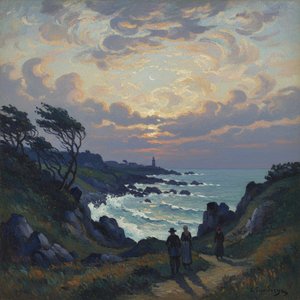
Ferdinand du Puigaudeau: Bridging Impressionism & Symbolism in Breton Landscapes
Discover Ferdinand du Puigaudeau's captivating Breton landscapes – a bridge between Impressionism & Symbolism. Explore his life, unique style, and enduring legacy with OriginalUniqueArt.

Évolutions des portraits : l'art personnalisé comme chronique de la vie familiale à travers les générations
Explorez l'évolution du portrait familial à travers les générations. Découvrez comment personnaliser votre héritage avec des reproductions d'art de qualité et des portraits sur mesure par des artistes experts. Offrez un cadeau unique et émotionnel !

Paul Cézanne : Les 25 Œuvres Maîtresses d'un Génie Révolutionnaire | OriginalUniqueArt
Plongez dans l'univers de Paul Cézanne avec les 25 œuvres incontournables du maître post-impressionniste. Découvrez l'histoire, la technique et l'émotion derrière ses tableaux iconiques comme 'Les Baigneuses' ou 'Mont Sainte-Victoire'. Reproductions d'art haute qualité sur OriginalUniqueArt.com.

Impressionnisme : Top 10 des Œuvres Incontournables pour une Décoration Raffinée
Plongez dans l'univers vibrant de l'impressionnisme avec notre sélection des 10 œuvres les plus emblématiques : Monet, Renoir, Degas… Découvrez l'histoire et la magie de ces chefs-d'œuvre. Reproductions d'art de qualité muséale sur OriginalUniqueArt.com