Un Joyau Breton : À la Découverte du Musée des Beaux-Arts de Quimper
Niché au cœur de la Bretagne, en France, le Musée des Beaux-Arts de Quimper s'érige comme un témoignage vibrant de l'héritage artistique et de la grâce architecturale. Face à la flèche majestueuse de la cathédrale de Quimper et adjacent à l'Hôtel de Ville, ce musée n'est pas qu'un simple conservatoire d'art ; c'est un voyage immersif à travers des siècles de créativité européenne. L'histoire de sa fondation est en soi remarquable, née de la vision extraordinaire et de la générosité du comte Jean-Marie de Silguy, dont le legs en 1864 — comprenant plus de 1 200 peintures, 2 000 dessins et 12 000 estampes — a constitué le cœur même des collections initiales. La condition unique de Silguy, à savoir que Quimper construise un écrin digne de sa collection, a impulsé la création d'une institution qui allait devenir l'une des principales destinations artistiques de l'ouest de la France. Le bâtiment lui-même, conçu par Joseph Bigot et achevé en 1867, est un monument remarquable, dont la façade élégante fait écho à la grandeur spirituelle de la cathédrale qu'il contemple. Une rénovation majeure entreprise en 1993 par l'architecte Jean-Paul Philippon a adopté la transparence comme principe directeur, afin d'enrichir l'expérience de contemplation tout en préservant le charme historique de l'édifice.
-
Une Collection de Distinction :
Le Musée des Beaux-Arts de Quimper s'enorgueillit d'une collection d'une diversité impressionnante, se spécialisant dans la peinture du XIVe au XXe siècle, avec une force particulière pour les arts français, italiens, flamands et hollandais. Déambuler dans ses galeries revient à traverser un paysage de mouvements et de styles artistiques.
-
Les Maîtres du Drame Baroque :
L'œil du visiteur est immédiatement captivé par le monumental
Le Martyre de sainte Lucie
de Pierre Paul Rubens, une représentation magistrale de la ferveur baroque — un jeu dramatique d'ombre et de lumière qui souligne la foi inébranlable de la sainte face à la souffrance. Aux côtés de Rubens, les œuvres de Jacob Jordaens, Pieter Bruegel le Jeune et Frans Floris illuminent l'esprit vibrant de la peinture flamande.
-
Élégance Italienne et Récits Mythologiques :
Les fonds italiens du musée révèlent une sensibilité raffinée — les toiles de Francesco Bassano et de Nicolò dell’Abode murmurent des récits de grandeur mythologique, exécutés avec un détail méticuleux et baignés de couleurs lumineuses. Ces artistes mêlent avec brio les narrations classiques à l'innovation artistique.
-
L'Esprit Romantique de la France :
Les figures illustres françaises telles que François Boucher, Jean-Honoré Fragonard, Claude Joseph Vernet et Hubert Robert capturent l'essence du XVIIIe siècle — une période définie par des décors opulents et une adhésion fervente aux idéaux romantiques. Leurs peintures transportent le spectateur vers des paysages idéalisés et des salons aristocratiques.
-
Au-delà de la Peinture : Sculpture et Dessin :
Outre ses peintures célèbres, la collection du Musée des Beaux-Arts de Quimper englobe une sélection complète de sculptures issues des écoles françaises des XVIIe et XVIIIe siècles — véritable témoignage du savoir-faire artistique. De plus, des milliers de dessins et d'estampes offrent des aperçus intimes du processus créatif lui-même.
Un Héritage Enraciné dans l'Identité Bretonne et l'Innovation Artistique
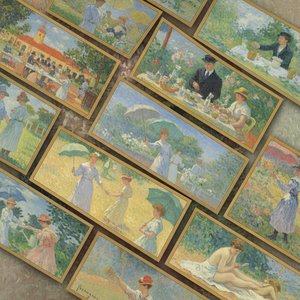
Tout en embrassant une perspective européenne étendue, le Musée des Beaux-Arts de Quimper ne néglige pas son patrimoine régional. Le musée détient une collection significative de peintures inspirées par la Bretagne elle-même — un reflet vibrant du paysage et de la culture de cette région côtière. La représentation de l'École de Pont-Aven est particulièrement remarquable — ce mouvement artistique de la fin du XIXe siècle qui s'épanouit dans le Pont-Aven voisin, attirant des figures telles que Paul Gauguin, Émile Bernard et Maurice Denis. Leurs toiles — caractérisées par des couleurs audacieuses et des formes simplifiées — expriment un lien profond avec la nature bretonne et un esprit d'expérimentation.
Expositions Notables et Engagement Continu
L'engagement du Musée des Beaux-Arts de Quimper à mettre en valeur ce patrimoine régional aux côtés de sa collection internationale favorise un dialogue constant entre les tendances artistiques et les traditions locales. Les expositions temporaires introduisent régulièrement de nouvelles perspectives, stimulant la curiosité intellectuelle et enrichissant l'expérience du visiteur. Actuellement en pleine rénovation majeure dont l'achèvement est prévu pour le printemps 2026 — avec une meilleure efficacité énergétique, des installations modernisées et une mise en scène réinventée de ses trésors — le musée promet une rencontre encore plus intense avec l'histoire de l'art.
Bien Plus que de l'Art : Un Carrefour Culturel
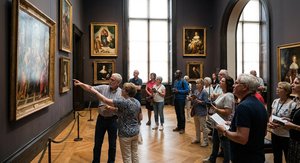
Le Musée des Beaux-Arts de Quimper est bien plus qu'un lieu d'admiration de chefs-d'œuvre ; c'est un carrefour culturel dynamique pour la ville de Quimper et ses environs. Les visites guidées offrent des éclairages précieux sur les collections, dévoilant les histoires cachées derrière les œuvres et apportant un contexte à leur importance historique. L'auditorium du musée accueille des conférences, des concerts et d'autres événements qui enrichissent le parcours du visiteur. Enfin, une librairie richement dotée permet de plonger plus profondément dans l'univers de l'histoire de l'art et de découvrir de nouveaux artistes.