Aperçu en situation
 Partager
 Partager
 Détails
 Guide imprimable

 Télécharger
 Articles similaires
 Radiographie
 Voir le diaporama
 Statistiques
The Trinity


 Afficher la suite
Giclées et impressions d'art
Impressions giclées ou sur toile de qualité musée, avec une production rapide et des finitions au choix. ( Acheter la peinture faite à la main Passer au format image numérique)




P118B €10

P118H €10

P118W €10

P438Z €10

P508JH €12

P508YH €12

P805H €10

P805Z €10

P919BZ €10

P919G €10

P919XJ €10

P959ZH €10

P968JZ €12

W106C €8

W218G €10

W218JH €8

W218Y €10

W307PJ €10

W316G €10

W316PJ €8

W316Y €10

W398PJ €8

W4111J €10

W500HY €15

W500JH €15

W692G €12

W849H €8

W940BG €15

W953PJ €8




Choisissez parmi nos formats prédéfinis qui respectent les proportions originales de l’œuvre.

Saisissez la largeur et la hauteur souhaitées pour qu'elles s'adaptent à votre cadre ou à votre mur. Une impression ne peut être que découpée, elle ne peut jamais être agrandie au-delà de l'image originale ; ainsi, un format de forme différente entraînera la perte d'une partie de l'image. Nous vous envoyons une maquette numérique pour approbation avant toute impression. L'image présentée sur cette page ne montre pas le recadrage réel — seule la maquette le permet.
Livraison dans le monde entier () en 2 semaines au lieu des 4/5 semaines habituelles. (24 octobre)

Livraison express gratuite dans le monde entier

Toile de lin de haute qualité

Assurance transport complète

Garantie de remboursement des droits de douane

Garantie de fidélité des couleurs

Garantie de retour de 100 jours (uniquement en cas de défaut)

Garantie de remboursement à 100%

Tarifs dégressifs sur quantité
 L'option verre n'est disponible que pour les dimensions inférieures à 110 cm.

The Trinity
Giclées et impressions d'art
Format de la reproduction
-


Prix total final
€ 70
A Divine Encounter: The Soul of Lucas Cranach’s Trinity
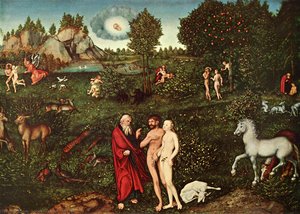
To stand before Lucas Cranach the Elder’s The Trinity is to step across the threshold of time and into the very heart of Christian theology rendered in breathtaking pigment. Painted around 1515, this monumental work serves as a cornerstone of the Northern Renaissance, acting as much more than a mere depiction of biblical scripture. It is a profound meditation on divinity, sacrifice, and eternal life. Through his masterful command of oil on panel, Cranach invites the viewer into a complex interplay of light and shadow, where the celestial and the earthly converge in a singular, breathtaking moment of spiritual revelation.
The composition is a masterclass in Renaissance precision, yet it breathes with an unexpected emotional depth. At its center, the figure of Jesus on the cross anchors the scene, surrounded by a celestial assembly of angels and divine figures that seem to pulse with life. Cranach’s technique allows for a rich color saturation and subtle gradations of tone that create an illusionistic depth, drawing the eye inward toward the central mystery of faith. The presence of numerous birds scattered throughout the scene—some soaring through the heavens, others perched quietly amidst the holy figures—adds a sense of movement and vitality to the otherwise solemn religious tableau, reminding us of the living, breathing nature of the divine presence.
The Intersection of Faith and History
Created during one of the most turbulent eras in European history, The Trinity is deeply embedded in the intellectual fervor of the burgeoning Protestant Reformation. As a court painter to the Electors of Saxony, Cranach was uniquely positioned at the crossroads of political power and religious upheaval. His close friendship with Martin Luther and his role in shaping the visual language of the Reformation are palpable within this work. While the painting adheres to the High Renaissance tradition of clarity and meticulous detail, it also captures the psychological nuance and the spiritual anxieties of a world in transition.
The symbolism within the piece is as layered as the pigments themselves. The Holy Trinity—God the Father, Christ, and the Holy Spirit—is presented not just as a theological concept, but as a palpable reality. For collectors and lovers of fine art, the painting offers a window into a period where art served as a vital vehicle for ideological messages. Every gesture, from the mourning angels to the watchful eyes of the heavenly host, is designed to evoke a sense of awe and reverence, making it an ideal centerpiece for those seeking to bring a sense of historical gravity and contemplative peace into a sophisticated interior space.
A Timeless Addition to the Collector's Gallery
For the discerning art enthusiast or interior designer, a high-quality reproduction of The Trinity offers more than just aesthetic beauty; it provides an opportunity to anchor a room with a sense of profound history and spiritual weight. The painting’s ability to command attention through its monumental scale and intricate detail makes it a versatile choice for grand halls, libraries, or private studies where art is intended to provoke thought and inspire quiet reflection.
Whether you are drawn to the technical brilliance of Cranach’s Northern Renaissance style or the evocative narrative of the Reformation era, this work remains eternally relevant. It stands as a testament to the enduring power of art to capture the intangible—the essence of faith, the weight of sacrifice, and the beauty of the divine. Owning a piece of this legacy allows one to surround themselves with the masterful craftsmanship of a true Renaissance master, ensuring that the conversation between the viewer and the artwork continues for generations to come.
Questions et réponses
L'œuvre « The Trinity » est-elle restée dans le pays d'origine de son artiste ?
Oui - l'œuvre est conservée dans le pays d'origine de l'artiste. Lucas Cranach l'Ancien est né(e) en Allemagne, et l'original de « The Trinity » est conservé dans un musée en Allemagne.
Comment « The Trinity » s'inscrit-il dans les thèmes et le style de Lucas Cranach l'Ancien ?
«The Trinity» appartient à l'œuvre Northern Renaissance de Lucas Cranach l'Ancien, dont les thèmes récurrents incluent german renaissance style, lutheran reformation era, saxon court patronage, christian narrative tradition, iconic religious imagery.
Qui est l'auteur de « The Trinity », et dans quel mouvement ?
« The Trinity » a été créé par Lucas Cranach l'Ancien dans le style Northern Renaissance. L'artiste et le mouvement définissent la tradition de l'œuvre.
Biographie de l'artiste
Première vie et formation
Lucas Cranach l’Ancien, peintre et graveur allemand de la Renaissance, est né vers 1472 à Kronach, en Franconie supérieure. Sa date exacte de naissance reste inconnue. Il apprit l’art du dessin auprès de son père, Hans Maler, et développa ses compétences sous l'influence des maîtres allemands du sud.Carrière et réalisations
Lucas Cranach l’Ancien attira l’attention de Friedrich III, électeur de Saxe, également connu sous le nom de Frédéric le Sage. En 1504, il devint peintre de cour des électeurs de Saxe à Wittenberg, fonction qu'il occupa pendant la majeure partie de sa carrière.- Il est surtout connu pour ses portraits de princes allemands et des figures clés de la Réforme protestante, dont Martin Luther.
- Cranach peignit également des sujets religieux, initialement dans la tradition catholique, puis explorant de nouvelles façons d'exprimer les préoccupations religieuses luthériennes à travers son art.
- Son atelier produisit de nombreuses œuvres, dont des versions continuées par son fils Lucas Cranach le Jeune et d'autres artistes, même après sa mort.
Œuvres notables et collaborations
Parmi les œuvres les plus importantes de Lucas Cranach l’Ancien figurent :- La chasse à l’orignal, portrait de l’électeur Friedrich le Sage (1529), un chef-d'œuvre illustrant son talent pour capturer l'essence du style de la Renaissance du Nord.
- Autoportrait, une représentation saisissante de l'artiste lui-même, mettant en valeur sa maîtrise de la lumière et de l’ombre.
- L’annonciation à Joachim (1516-18), une scène empreinte d’une joie spirituelle, actuellement au musée des beaux-arts de Budapest.
Influence et héritage
Lucas Cranach l’Ancien a laissé un héritage marquant grâce à ses contributions significatives au mouvement artistique de la Renaissance allemande. En tant que figure emblématique de la Renaissance du Nord, son œuvre continue d'inspirer les artistes et les amateurs d'art aujourd'hui. Note importante : Pour plus d’informations sur la vie et l’œuvre de Lucas Cranach l’Ancien, visitez [https://OriginalUniqueArt.com](https://OriginalUniqueArt.com) ou consultez la page Wikipédia consacrée à Maximilien Ier, empereur du Saint-Empire romain germanique, qui mentionne brièvement ses interactions avec Cranach.
Lucas Cranach l'Ancien
1472 - 1553 , Allemagne
En bref
- Artistic Movement Or Style: Renaissance allemande
- Date Of Birth: 1472
- Date Of Death: 1553
- Full Name: Lucas Cranach l'Ancien
- Nationality: Allemand
- Notable Artworks:
- Christian II du Danemark
- Adam et Ève
- Place Of Birth (City And Country): Kronach, Allemagne
Articles connexes
Oil on Panel: A Historical Survey of Technique, Support & Aesthetic Evolution
Explore the rich history of oil on panel painting! Discover Renaissance techniques, support structures & aesthetic evolution. Expert insights for art collectors and enthusiasts.

Mastering the Surface: The Timeless Elegance and Technical Brilliance of Oil on Panel Painting
Discover the enduring allure of oil on panel painting. Explore the technical mastery, historical significance, and luminous depth that define this prestigious medium, from Renaissance masters to modern fine art reproductions for discerning collectors.
Mastering the Surface: A Historical and Technical Guide to the Art of Oil on Panel Painting
Explore the profound history and technical brilliance of oil on panel painting. From Renaissance masters to modern techniques, discover why this rigid support offers unparalleled precision and permanence for fine art lovers and collectors.
The Timeless Charm of Oil on Board: Reimagining Texture and Light through the Impressionist Lens
Discover the profound intimacy of oil on panel. Explore how Impressionist masters used rigid supports to capture light, texture, and impasto depth through exquisite, handmade oil reproductions for discerning collectors.
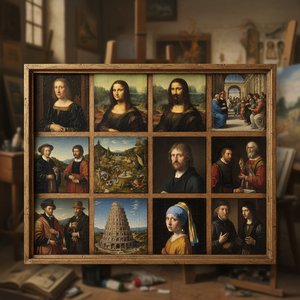
Les 10 Chefs-d'œuvre à l'Huile sur Panneau qui ont Révolutionné l'Art |
Plongez dans l'histoire des 10 chefs-d'œuvre à l'huile sur panneau qui ont marqué l'art pour toujours. Découvrez Jan van Eyck, Botticelli et les maîtres flamands. Inspirez votre décoration intérieure avec – reproductions d'art de qualité musée.