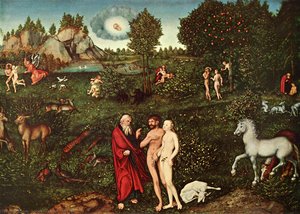
Aperçu en situation
 Partager
 Partager
 Détails
 Guide
Guide

 Télécharger
 Articles similaires
 Radiographie
 Voir le diaporama
 Statistiques
Portrait of a Young Woman
 Oil On Panel
- WallArt
- Northern Renaissance
 1530
1530- Renaissance
 37.0 x 25.0 cm
 Afficher la suite
Reproduction à l'huile faite à la main
Huile sur toile peinte à la main, avec cadre et dimensions personnalisés, réalisée sur commande par nos artistes. ( Passer au format impression Passer au format image numérique)




P118B $10

P118H $10

P118W $10

P438Z $10

P508JH $12

P508YH $12

P805H $10

P805Z $10

P919BZ $10

P919G $10

P919XJ $10

P959ZH $10

P968JZ $12

W106C $8

W218G $10

W218JH $8

W218Y $10

W307PJ $10

W316G $10

W316PJ $8

W316Y $10

W398PJ $8

W4111J $10

W500HY $15

W500JH $15

W692G $12

W849H $8

W940BG $15

W953PJ $8




Choisissez parmi nos formats prédéfinis qui respectent les proportions originales de l’œuvre.

Vous pouvez saisir vos propres dimensions pour l'adapter à un cadre ou à un espace spécifique. Si la taille sélectionnée ne correspond pas aux proportions de l'image d'origine, nous recadrerons l'œuvre ou prolongerons la peinture avec des éléments peints à la main supplémentaires. Une maquette numérique vous sera envoyée pour approbation avant le début de la production.
Veuillez noter que l'aperçu à l'écran ne reflète pas le recadrage ou l'extension réels. Seule la maquette montrera fidèlement la composition finale.
Bien que des tailles personnalisées soient disponibles, nous vous recommandons de sélectionner une dimension dans la liste prédéfinie afin de préserver les proportions d'origine.
Après la commande, l’équipe OriginalUniqueArt.com contactera le client par e-mail pour recueillir ses instructions et lui fournira une maquette d’aperçu
Livraison dans le monde entier () en 3 à 4 semaines au lieu des 5 semaines habituelles. (20 septembre). Aucun compromis sur la qualité.

Livraison express gratuite dans le monde entier

Toile de lin de haute qualité

Assurance transport complète

Garantie de remboursement des droits de douane

Garantie de fidélité des couleurs

Garantie de retour de 100 jours (uniquement en cas de défaut)

Garantie de remboursement à 100%

Tarifs dégressifs sur quantité
 L'option verre n'est disponible que pour les dimensions inférieures à 110 cm.

Portrait of a Young Woman
Technique de reproduction
Format de la reproduction
-


Prix total final
$ 300
A Window into the Northern Renaissance
In the quiet, evocative depths of Lucas Cranach the Elder’s Portrait of a Young Woman, we encounter more than just a likeness; we step into the very soul of the German Renaissance. Completed in 1530, this exquisite oil on panel serves as a profound testament to an era defined by both immense spiritual upheaval and unparalleled artistic refinement. As one gazes upon the subject, there is an immediate sense of intimacy, as if the veil of centuries has been momentarily lifted to reveal a moment of private grace. The sitter, captured with a delicate downward gaze, invites the viewer into a contemplative space, embodying the poise and aristocratic elegance that characterized the Saxon court during the height of the Reformation.
The painting is a masterclass in the Northern Renaissance ideal, where the pursuit of realism is harmoniously balanced with a heightened sense of symbolic beauty. Unlike the sweeping, idealized grandeur often found in Italian contemporaries, Cranach focuses his meticulous gaze on the tangible textures of life. Every element—from the soft, luminous skin of the young woman to the heavy, luxurious folds of her attire—is rendered with a precision that commands attention. The artist employs chiaroscuro not merely for dramatic effect, but to sculpt the subject out of the darkness, imbuing her form with a palpable, breathing presence that feels remarkably modern in its psychological depth.
Symbolism and the Art of Detail
To look closely at this portrait is to read a silent language of status and devotion. Cranach, working from his prolific workshop in Dresden, was a master storyteller who used ornamentation to convey meaning. The flamboyant hat, adorned with delicate feathers, acts as a brilliant focal point, signaling the sitter's high social standing and the burgeoning fashion of the 16th-century nobility. Similarly, the intricate details of her necklace and the structured elegance of her corset reflect the meticulous craftsmanship of the era, where clothing was an extension of one's identity and power.
Beyond the material wealth displayed, there is a subtle spiritual undertone woven into the composition. The interplay of light and shadow suggests a world of introspection, mirroring the religious tensions of the Reformation era. As a close associate of Martin Luther, Cranach’s work often navigated the delicate boundary between the earthly and the divine. In this portrait, the subject's modest posture and reflective expression suggest a soul attuned to the quiet virtues of faith and grace, making the piece an enduring icon of Northern European sensibility.
An Enduring Legacy for the Discerning Collector
For the art lover, the collector, or the interior designer, a reproduction of this masterpiece offers much more than mere decoration; it provides a focal point of historical gravity and aesthetic sophistication. The muted, classical palette and the balanced composition allow the work to integrate seamlessly into diverse environments, from the grand halls of traditional estates to the curated minimalism of modern galleries. It brings with it an atmosphere of timelessness, acting as a conversation piece that celebrates the intersection of human beauty and historical narrative.
Owning a high-quality hand-painted reproduction of Cranach’s work is an opportunity to preserve the legacy of the German Renaissance within a contemporary setting. The texture of the oil on panel, the depth of the shadows, and the luminous highlights all serve to evoke the same emotional resonance that has captivated viewers in the Galleria degli Uffizi for centuries. It is an investment in culture, a tribute to the mastery of the Old Masters, and a way to infuse any space with the quiet, commanding elegance of a bygone golden age.
Biographie de l'artiste
Première vie et formation
Lucas Cranach l’Ancien, peintre et graveur allemand de la Renaissance, est né vers 1472 à Kronach, en Franconie supérieure. Sa date exacte de naissance reste inconnue. Il apprit l’art du dessin auprès de son père, Hans Maler, et développa ses compétences sous l'influence des maîtres allemands du sud.Carrière et réalisations
Lucas Cranach l’Ancien attira l’attention de Friedrich III, électeur de Saxe, également connu sous le nom de Frédéric le Sage. En 1504, il devint peintre de cour des électeurs de Saxe à Wittenberg, fonction qu'il occupa pendant la majeure partie de sa carrière.- Il est surtout connu pour ses portraits de princes allemands et des figures clés de la Réforme protestante, dont Martin Luther.
- Cranach peignit également des sujets religieux, initialement dans la tradition catholique, puis explorant de nouvelles façons d'exprimer les préoccupations religieuses luthériennes à travers son art.
- Son atelier produisit de nombreuses œuvres, dont des versions continuées par son fils Lucas Cranach le Jeune et d'autres artistes, même après sa mort.
Œuvres notables et collaborations
Parmi les œuvres les plus importantes de Lucas Cranach l’Ancien figurent :- La chasse à l’orignal, portrait de l’électeur Friedrich le Sage (1529), un chef-d'œuvre illustrant son talent pour capturer l'essence du style de la Renaissance du Nord.
- Autoportrait, une représentation saisissante de l'artiste lui-même, mettant en valeur sa maîtrise de la lumière et de l’ombre.
- L’annonciation à Joachim (1516-18), une scène empreinte d’une joie spirituelle, actuellement au musée des beaux-arts de Budapest.
Influence et héritage
Lucas Cranach l’Ancien a laissé un héritage marquant grâce à ses contributions significatives au mouvement artistique de la Renaissance allemande. En tant que figure emblématique de la Renaissance du Nord, son œuvre continue d'inspirer les artistes et les amateurs d'art aujourd'hui. Note importante : Pour plus d’informations sur la vie et l’œuvre de Lucas Cranach l’Ancien, visitez [https://OriginalUniqueArt.com](https://OriginalUniqueArt.com) ou consultez la page Wikipédia consacrée à Maximilien Ier, empereur du Saint-Empire romain germanique, qui mentionne brièvement ses interactions avec Cranach.
Lucas Cranach l'Ancien
1472 - 1553 , Allemagne
En bref
- Artistic Movement Or Style: Renaissance allemande
- Date Of Birth: 1472
- Date Of Death: 1553
- Full Name: Lucas Cranach l'Ancien
- Nationality: Allemand
- Notable Artworks:
- Christian II du Danemark
- Adam et Ève
- Place Of Birth (City And Country): Kronach, Allemagne
Articles similaires
Les 10 Chefs-d'œuvre à l'Huile sur Bois qui ont Révolutionné l'Art | OriginalUniqueArt
Plongez dans l'univers des 10 chefs-d'œuvre à l'huile sur bois qui ont marqué l'histoire de l'art. Découvrez les secrets des maîtres flamands, leurs techniques et couleurs uniques. Retrouvez ces tableaux célèbres en reproductions haute qualité sur OriginalUniqueArt.com !

L'héritage durable de la peinture à l'huile : technique, histoire et pratique contemporaine
Explorez l'histoire fascinante de la peinture à l'huile, des techniques ancestrales aux pratiques contemporaines. Découvrez les maîtres, apprenez et trouvez votre œuvre d'art idéale chez .

The Enduring Legacy of Oil on Canvas: Technique, History & Aesthetic Impact
Explore the rich history & techniques of oil painting – from Renaissance masters to Impressionism. Discover pigments, layering methods, and why this timeless medium endures. Expert insights for artists & art enthusiasts.

The Enduring Power of Painting: A Historical & Contemporary Exploration of Form and Emotion
Explore the rich history & enduring techniques of oil painting with OriginalUniqueArt. Discover masterpieces, learn about art collecting, and find authentic handmade reproductions crafted by skilled artists.

L'Huile sur Toile : Exploration Historique et Technique d'un Médium Artistique Intemporel
Explorez l'histoire fascinante de la peinture à l'huile, des techniques ancestrales aux maîtres flamands comme Van Eyck. Découvrez les secrets des pigments, liants et glacis pour comprendre cet art intemporel.