Aperçu en situation
 Envoyer
 Partager
 Détails de l'œuvre

 Télécharger
 Articles similaires
 Radiographie
 Diaporama
Katharina von Bora


 Lire la suite
Giclées et impressions d'art
Impressions giclées ou sur toile de qualité musée, avec une production rapide et des finitions au choix. ( Commander la reproduction peinte à la main Télécharger l'image haute résolution)




P118B $10

P118H $10

P118W $10

P438Z $10

P508JH $12

P508YH $12

P805H $10

P805Z $10

P919BZ $10

P919G $10

P919XJ $10

P959ZH $10

P968JZ $12

W106C $8

W218G $10

W218JH $8

W218Y $10

W307PJ $10

W316G $10

W316PJ $8

W316Y $10

W398PJ $8

W4111J $10

W500HY $15

W500JH $15

W692G $12

W849H $8

W940BG $15

W953PJ $8




Choisissez parmi nos formats prédéfinis qui respectent les proportions originales de l’œuvre.

Vous pouvez saisir vos propres dimensions pour vous adapter à un cadre ou à un espace spécifique. Si la taille sélectionnée ne correspond pas aux proportions de l'image originale, nous recadrerons l'œuvre ou étendrons l'image avec une bordure en miroir ou une couleur unie. Une maquette numérique vous sera envoyée pour approbation avant le début de la production.
Veuillez noter que l'aperçu à l'écran ne reflète pas le recadrage ou l'extension réelle. Seule la maquette montrera avec précision la composition finale.
Bien que des tailles personnalisées soient disponibles, nous vous recommandons de choisir une dimension dans la liste prédéfinie afin de préserver les proportions originales.
Livraison dans le monde entier () en 2 semaines au lieu des 4/5 semaines habituelles. (22 août)

Livraison express gratuite dans le monde entier

Toile de lin de qualité supérieure

Assurance transport complète

Garantie de remboursement des droits de douane

Garantie de fidélité des couleurs

Politique de retour de 60 jours (uniquement en cas de défaut)

Garantie de remboursement à 100%

Offre de tarifs dégressifs
 L'option verre n'est disponible que pour les dimensions inférieures à 110 cm.

Katharina von Bora
Giclées et impressions d'art
Format de la reproduction
-


Prix total
$ 80
Description de la pièce
Katharina von Bora: A Portrait of Faith Amidst Reformation Turbulence
The Katharina von Bora painting by Lucas Cranach The Elder stands as a testament to the artistic fervor and spiritual complexities of the Northern Renaissance, specifically capturing a pivotal moment in European history – the Protestant Reformation. Created in 1525, this oil on panel portrait transcends mere representation; it embodies the enduring legacy of Martin Luther’s marriage to Katharina von Bora, symbolizing resilience, piety, and the transformative power of faith during a period of profound societal upheaval.The Artist's Vision: Lucas Cranach The Elder – A Synthesis of Gothic and Renaissance Influences
Lucas Cranach The Elder (1472-1553) was more than just a painter; he was a cultural icon of Saxony, shaping the artistic landscape of his time with an unparalleled blend of Gothic and Renaissance sensibilities. Trained initially by his father, Hans Maler, Cranach swiftly ascended to prominence thanks to his ability to infuse classical elegance with emotional depth – qualities that would solidify his reputation as one of the foremost portraitists of his era. His distinctive style favored meticulous detail combined with luminous color palettes, mirroring the humanist ideals championed during the Renaissance while retaining traces of Gothic solemnity. The Katharina von Bora portrait exemplifies this masterful fusion, demonstrating Cranach’s profound understanding of human psychology and artistic technique.A Detailed Examination: Composition and Symbolism
The painting's composition is deliberately balanced, reflecting the harmonious union envisioned by Luther and Katharina. Her gaze directs towards the viewer with quiet confidence, conveying a sense of dignity and inner strength—a deliberate contrast to the turbulent religious debates raging across Europe at the time. Cranach’s masterful use of light and shadow sculpts her face, highlighting her cheekbones and emphasizing her serene expression. The white collar she wears symbolizes purity and piety, reinforcing the spiritual significance of their marriage. Furthermore, the subtle smile on Katharina's lips hints at inner contentment—a poignant reminder that amidst the turmoil of reformation, love and faith could flourish. The crown-like hairstyle subtly references Luther’s theological authority, underscoring the importance of leadership in shaping religious belief.Technique and Materials: Mastering Oil Paint on Panel
Cranach's technique is characterized by painstaking layering of thin glazes—a hallmark of Renaissance oil painting—allowing for unparalleled luminosity and depth. He meticulously blended pigments to achieve subtle gradations of color, capturing the nuances of skin tone and fabric texture with remarkable accuracy. The panel substrate provided stability and allowed for a rich surface finish, enhancing the visual impact of the artwork. Cranach’s dedication to craftsmanship ensured that Katharina von Bora would endure as an exemplar of artistic excellence—a timeless portrait reflecting both beauty and intellectual contemplation.Historical Context: Reformation's Reflection in Art
The Katharina von Bora painting emerged during a period defined by religious reformation, where Luther’s challenge to papal authority sparked dramatic changes across Christendom. Cranach skillfully captured this atmosphere of uncertainty and conviction, presenting Katharina as a beacon of faith amidst the storm. The portrait served not only as a commemoration of their marriage but also as an emblem of Lutheran ideals—humility, piety, and devotion to God—values that resonated deeply within the burgeoning Protestant movement. Its enduring appeal speaks to the universal desire for beauty and contemplation in times of change.Where to Find More Information & Reproductions
For more information on Lucas Cranach The Elder and his remarkable oeuvre, visit https://OriginalUniqueArt.com/. Explore other iconic works by Cranach: “The Venus standing in a landscape painting,” created in 1529, is housed in the Musée du Louvre in Paris, France. You can find it here: /art/list/?Filter=8CABU5-Lucas-Cranach-The-Elder-Venus-standing-in-a-landscape. Discover exquisite handmade oil paintings reproductions of Katharina von Bora and countless other masterpieces at https://OriginalUniqueArt.com/.Biographie de l'artiste
Première vie et formation
Lucas Cranach l’Ancien, peintre et graveur allemand de la Renaissance, est né vers 1472 à Kronach, en Franconie supérieure. Sa date exacte de naissance reste inconnue. Il apprit l’art du dessin auprès de son père, Hans Maler, et développa ses compétences sous l'influence des maîtres allemands du sud.Carrière et réalisations
Lucas Cranach l’Ancien attira l’attention de Friedrich III, électeur de Saxe, également connu sous le nom de Frédéric le Sage. En 1504, il devint peintre de cour des électeurs de Saxe à Wittenberg, fonction qu'il occupa pendant la majeure partie de sa carrière.- Il est surtout connu pour ses portraits de princes allemands et des figures clés de la Réforme protestante, dont Martin Luther.
- Cranach peignit également des sujets religieux, initialement dans la tradition catholique, puis explorant de nouvelles façons d'exprimer les préoccupations religieuses luthériennes à travers son art.
- Son atelier produisit de nombreuses œuvres, dont des versions continuées par son fils Lucas Cranach le Jeune et d'autres artistes, même après sa mort.
Œuvres notables et collaborations
Parmi les œuvres les plus importantes de Lucas Cranach l’Ancien figurent :- La chasse à l’orignal, portrait de l’électeur Friedrich le Sage (1529), un chef-d'œuvre illustrant son talent pour capturer l'essence du style de la Renaissance du Nord.
- Autoportrait, une représentation saisissante de l'artiste lui-même, mettant en valeur sa maîtrise de la lumière et de l’ombre.
- L’annonciation à Joachim (1516-18), une scène empreinte d’une joie spirituelle, actuellement au musée des beaux-arts de Budapest.
Influence et héritage
Lucas Cranach l’Ancien a laissé un héritage marquant grâce à ses contributions significatives au mouvement artistique de la Renaissance allemande. En tant que figure emblématique de la Renaissance du Nord, son œuvre continue d'inspirer les artistes et les amateurs d'art aujourd'hui. Note importante : Pour plus d’informations sur la vie et l’œuvre de Lucas Cranach l’Ancien, visitez [https://OriginalUniqueArt.com](https://OriginalUniqueArt.com) ou consultez la page Wikipédia consacrée à Maximilien Ier, empereur du Saint-Empire romain germanique, qui mentionne brièvement ses interactions avec Cranach.
Lucas Cranach l'Ancien
1472 - 1553 , Allemagne
L'essentiel de l'artiste
- Artistic Movement Or Style: Renaissance allemande
- Date Of Birth: 1472
- Date Of Death: 1553
- Full Name: Lucas Cranach l'Ancien
- Nationality: Allemand
- Notable Artworks:
- Christian II du Danemark
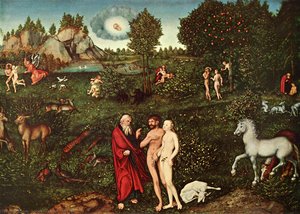
- Adam et Ève
- Place Of Birth (City And Country): Kronach, Allemagne
Articles connexes
Renaissance du Nord : 10 Chefs-d'œuvre Incontournables pour Décorer avec Art et Histoire
Plongez au cœur de la Renaissance du Nord ! Découvrez 10 chefs-d'œuvre emblématiques de Jan van Eyck à Bruegel, leurs histoires et techniques. Trouvez l'inspiration déco & achetez des reproductions de tableaux exceptionnels sur .

Lucas van Leyden: Innovation & Intimacy in Early Netherlandish Printmaking
Explore the groundbreaking prints of Lucas van Leyden, a Dutch master bridging Gothic detail & Renaissance innovation. Discover his rare works, investment potential, and legacy for discerning collectors.
Henri Martin: A Synthesis of Impressionism & Symbolism in the French Landscape Tradition
Explore the captivating world of Henri Martin, a French Post-Impressionist bridging Impressionism & Symbolism. Discover his unique style, influential landscapes, and lasting legacy with OriginalUniqueArt.

La Renaissance Septentrionale : Éclosion du Réalisme et de l'Innovation Artistique
Explorez la Renaissance septentrionale et l'éclosion du réalisme flamand avec OriginalUniqueArt. Découvrez Jan van Eyck, Robert Campin et les techniques révolutionnaires de cette période artistique majeure.
Eugen von Blaas: Capturing Alpine Life & Sentiment in 19th-Century Austrian Painting
Discover the captivating world of Eugen von Blaas! Explore his exquisite 19th-century paintings capturing Venetian life & Alpine beauty. Learn about his Academic Classicism style and find museum-quality reproductions at OriginalUniqueArt.