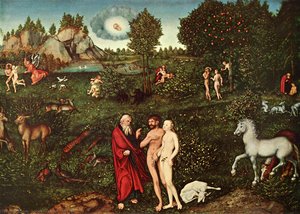
Aperçu en situation
 Partager
 Partager
 Détails
 Guide imprimable

 Télécharger
 Articles similaires
 Radiographie
 Voir le diaporama
 Statistiques
Judith Victorious
 Oil On Panel
- Northern Renaissance
 1530
1530 75.0 x 56.0 cm
 Afficher la suite
Reproduction à l'huile faite à la main
Huile sur toile peinte à la main, avec cadre et dimensions personnalisés, réalisée sur commande par nos artistes. ( Passer au format impression Passer au format image numérique)




P118B €10

P118H €10

P118W €10

P438Z €10

P508JH €12

P508YH €12

P805H €10

P805Z €10

P919BZ €10

P919G €10

P919XJ €10

P959ZH €10

P968JZ €12

W106C €8

W218G €10

W218JH €8

W218Y €10

W307PJ €10

W316G €10

W316PJ €8

W316Y €10

W398PJ €8

W4111J €10

W500HY €15

W500JH €15

W692G €12

W849H €8

W940BG €15

W953PJ €8




Choisissez parmi nos formats prédéfinis qui respectent les proportions originales de l’œuvre.

Saisissez la largeur et la hauteur souhaitées, pour s'adapter à votre cadre ou à votre mur. Cette œuvre est peinte à la main ; ainsi, pour un format de forme différente, l'artiste peut peindre un peu plus autour du tableau ou réduire légèrement les bords — c'est vous qui choisissez. Nous vous envoyons une maquette numérique pour approbation avant que la peinture ne commence. L'image présentée sur cette page ne reflète pas le résultat réel — seule la maquette le fait.
Après la commande, l’équipe OriginalUniqueArt.com contactera le client par e-mail pour recueillir ses instructions et lui fournira une maquette d’aperçu
Livraison dans le monde entier () en 3 à 4 semaines au lieu des 5 semaines habituelles. (25 octobre). Aucun compromis sur la qualité.

Livraison express gratuite dans le monde entier

Toile de lin de haute qualité

Assurance transport complète

Garantie de remboursement des droits de douane

Garantie de fidélité des couleurs

Garantie de retour de 100 jours (uniquement en cas de défaut)

Garantie de remboursement à 100%

Tarifs dégressifs sur quantité
 L'option verre n'est disponible que pour les dimensions inférieures à 110 cm.

Judith Victorious
Technique de reproduction
Format de la reproduction
-


Prix total final
€ 263
Lucas Cranach the Elder’s *Judith Victorious*: A Renaissance Triumph of Courage and Ambiguity
Lucas Cranach the Elder's 1530 painting, *Judith Victorious*, is more than a depiction of biblical heroism; it’s a potent distillation of Renaissance ideals – ambition, cunning, and the unsettling beauty of female power. Executed in oil on panel and measuring 75 x 56 cm, this artwork, currently housed within the Jagdschloss Grunewald near Berlin, exemplifies Cranach's mastery of capturing psychological nuance alongside technical brilliance. The scene unfolds with a dramatic intensity: Judith, clad in a vibrant red gown and crowned with a towering hat, stands triumphant over Holofernes, his head already severed, a gleaming sword held aloft as a symbol of her victory. This isn’t a sanitized portrayal of religious narrative; it's a raw, almost unsettling depiction of a woman asserting control in a world dominated by men.
A Story Rooted in the Apocrypha and Reformation
The painting draws upon the biblical story of Judith from the Old Testament Apocrypha. Judith, a Jewish widow, famously deceived the Assyrian general Holofernes into surrendering his siege of Jerusalem by seducing him and then, with God’s help, decapitating him. Cranach's interpretation, however, transcends a simple heroic tale. Painted during a period of intense religious and political upheaval – the early 16th century marked by the burgeoning Protestant Reformation – *Judith Victorious* resonates with themes of defiance against authority and the questioning of established power structures. The red dress, a color often associated with passion and sacrifice, further amplifies Judith’s assertive stance.
- Historical Context: Created in 1530, the painting reflects the anxieties and artistic trends of the era.
- Religious Significance: Based on the Book of Judith, a story of female courage and divine intervention.
- Reformation Influence: The work’s themes align with the questioning of religious authority prevalent during the Reformation.
Technique and Symbolism – A Masterclass in Renaissance Art
Cranach's skill is immediately apparent in his masterful use of light and shadow, creating a dramatic three-dimensional effect that draws the viewer into the scene. The meticulous detail with which he renders Judith’s clothing, her expressive face, and the glistening metal of the sword speaks to his dedication to realism – a hallmark of Renaissance art. Holofernes' pose, rendered with brutal accuracy, underscores the violence inherent in the narrative while simultaneously emphasizing Judith’s control. Beyond the immediate depiction, the painting is rich in symbolism. The sword represents not just victory but also power and judgment; the hat, a symbol of status and authority, is now worn by Judith, subverting traditional gender roles.
The Jagdschloss Grunewald Setting and Cranach’s Patronage
The painting's location within the Jagdschloss Grunewald, a hunting lodge commissioned by Kurfurst Joachim II of Brandenburg, adds another layer to its significance. This setting – a space traditionally associated with masculine pursuits – further highlights Judith’s disruption of established norms. Cranach’s long-standing relationship with the Electors of Saxony provided him with considerable patronage and access to a network of influential figures, allowing him to explore complex themes within his art. The presence of other Renaissance paintings in the lodge—Dutch, Flemish, and German works from the sixteenth to early eighteenth centuries—demonstrates the artistic vibrancy of the region during this period.
A Timeless Image of Female Agency
*Judith Victorious* remains a compelling work of art due to its complex portrayal of female agency. It’s a painting that invites contemplation, prompting viewers to consider themes of power, morality, and the enduring strength of the human spirit. Its dramatic composition, masterful technique, and historical context combine to create an artwork that continues to captivate audiences centuries after its creation.
Questions et réponses
Comment puis-je découvrir des œuvres d'art proches de «Judith Victorious» de Lucas Cranach l'Ancien ?
La page Œuvres similaires de «Judith Victorious» de Lucas Cranach l'Ancien présente des œuvres similaires.
Qui est l'auteur de « Judith Victorious », et dans quel mouvement ?
Lucas Cranach l'Ancien a créé « Judith Victorious » au sein du mouvement Northern Renaissance.
De quoi est fait « Judith Victorious » ?
Le médium de «Judith Victorious» de Lucas Cranach l'Ancien est Oil On Panel. Les reproductions visent à restituer l'aspect de cette technique.
Biographie de l'artiste
Première vie et formation
Lucas Cranach l’Ancien, peintre et graveur allemand de la Renaissance, est né vers 1472 à Kronach, en Franconie supérieure. Sa date exacte de naissance reste inconnue. Il apprit l’art du dessin auprès de son père, Hans Maler, et développa ses compétences sous l'influence des maîtres allemands du sud.Carrière et réalisations
Lucas Cranach l’Ancien attira l’attention de Friedrich III, électeur de Saxe, également connu sous le nom de Frédéric le Sage. En 1504, il devint peintre de cour des électeurs de Saxe à Wittenberg, fonction qu'il occupa pendant la majeure partie de sa carrière.- Il est surtout connu pour ses portraits de princes allemands et des figures clés de la Réforme protestante, dont Martin Luther.
- Cranach peignit également des sujets religieux, initialement dans la tradition catholique, puis explorant de nouvelles façons d'exprimer les préoccupations religieuses luthériennes à travers son art.
- Son atelier produisit de nombreuses œuvres, dont des versions continuées par son fils Lucas Cranach le Jeune et d'autres artistes, même après sa mort.
Œuvres notables et collaborations
Parmi les œuvres les plus importantes de Lucas Cranach l’Ancien figurent :- La chasse à l’orignal, portrait de l’électeur Friedrich le Sage (1529), un chef-d'œuvre illustrant son talent pour capturer l'essence du style de la Renaissance du Nord.
- Autoportrait, une représentation saisissante de l'artiste lui-même, mettant en valeur sa maîtrise de la lumière et de l’ombre.
- L’annonciation à Joachim (1516-18), une scène empreinte d’une joie spirituelle, actuellement au musée des beaux-arts de Budapest.
Influence et héritage
Lucas Cranach l’Ancien a laissé un héritage marquant grâce à ses contributions significatives au mouvement artistique de la Renaissance allemande. En tant que figure emblématique de la Renaissance du Nord, son œuvre continue d'inspirer les artistes et les amateurs d'art aujourd'hui. Note importante : Pour plus d’informations sur la vie et l’œuvre de Lucas Cranach l’Ancien, visitez [https://OriginalUniqueArt.com](https://OriginalUniqueArt.com) ou consultez la page Wikipédia consacrée à Maximilien Ier, empereur du Saint-Empire romain germanique, qui mentionne brièvement ses interactions avec Cranach.
Lucas Cranach l'Ancien
1472 - 1553 , Allemagne
En bref
- Artistic Movement Or Style: Renaissance allemande
- Date Of Birth: 1472
- Date Of Death: 1553
- Full Name: Lucas Cranach l'Ancien
- Nationality: Allemand
- Notable Artworks:
- Christian II du Danemark
- Adam et Ève
- Place Of Birth (City And Country): Kronach, Allemagne
Articles connexes

L'Huile sur Toile : Exploration Historique et Technique d'un Médium Artistique Intemporel
Explorez l'histoire fascinante de la peinture à l'huile, des techniques ancestrales aux maîtres flamands comme Van Eyck. Découvrez les secrets des pigments, liants et glacis pour comprendre cet art intemporel.
The Northern Renaissance: A Masterclass in Hyper-Realism, Oil Innovation, and Symbolic Depth
Explore the profound mastery of Northern Renaissance art. Discover the technical brilliance of Flemish oil painting, the intricate symbolism of Bosch and Bruegel, and the revolutionary realism that redefined European art history through an expert historical lens.

The Enduring Power of Painting: A Historical & Contemporary Exploration of Form and Emotion
Explore the rich history & enduring techniques of oil painting with OriginalUniqueArt. Discover masterpieces, learn about art collecting, and find authentic handmade reproductions crafted by skilled artists.

The Enduring Legacy of Oil on Canvas: Technique, History & Aesthetic Impact
Explore the rich history & techniques of oil painting – from Renaissance masters to Impressionism. Discover pigments, layering methods, and why this timeless medium endures. Expert insights for artists & art enthusiasts.
The Northern Awakening: Artistic Innovation & Cultural Transformation in the German Renaissance
Explore the artistic innovation of the German Renaissance! Discover Dürer, the Danube School & Reformation art. Learn about techniques, materials & lasting influence. Find museum-quality reproductions at OriginalUniqueArt.