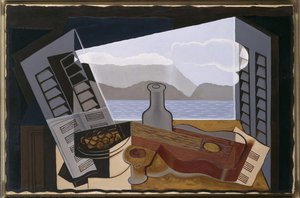
Aperçu en situation
 Envoyer
 Partager
 Détails de l'œuvre
 Guide
Guide

 Télécharger l'image
 Articles similaires
 Radiographie
 Diaporama
 Questions et réponses
 Statistiques
The Smoker

- 130.0 x 96.0 cm


 Lire la suite
Giclées et impressions d'art
Impressions giclées ou sur toile de qualité musée, avec une production rapide et des finitions au choix. ( Commander la reproduction peinte à la main Passer au format numérique)




P118B €10

P118H €10

P118W €10

P438Z €10

P508JH €12

P508YH €12

P805H €10

P805Z €10

P919BZ €10

P919G €10

P919XJ €10

P959ZH €10

P968JZ €12

W106C €8

W218G €10

W218JH €8

W218Y €10

W307PJ €10

W316G €10

W316PJ €8

W316Y €10

W398PJ €8

W4111J €10

W500HY €15

W500JH €15

W692G €12

W849H €8

W940BG €15

W953PJ €8




Choisissez parmi nos formats prédéfinis qui respectent les proportions originales de l’œuvre.

Saisissez la largeur et la hauteur souhaitées pour qu'elles s'adaptent à votre cadre ou à votre mur. Une impression peut être recadrée, mais jamais agrandie au-delà de l'image originale ; ainsi, un format de forme différente entraînera la perte d'une partie de l'image. Nous vous envoyons une maquette numérique pour approbation avant toute impression. L'image présentée sur cette page ne montre pas le recadrage réel — seule la maquette le permet.
Livraison dans le monde entier () en 2 semaines au lieu des 4/5 semaines habituelles. (7 novembre)

Livraison express gratuite dans le monde entier

Toile de lin de qualité supérieure

Assurance transport complète

Garantie de remboursement des droits de douane

Garantie de fidélité des couleurs

Politique de retour de 100 jours (uniquement en cas de défaut)

Garantie de remboursement à 100%

Offre de tarifs dégressifs
 L'option verre n'est disponible que pour les dimensions inférieures à 110 cm.

The Smoker
Giclées et impressions d'art
Format de la reproduction
-


Prix total
€ 72
The Smoker: A Fragmented Portrait of Modern Life
Juan Gris’s “The Smoker,” painted in 1913, isn't merely a depiction of a man enjoying a cigarette; it’s a meticulously constructed meditation on perception, fragmentation, and the burgeoning anxieties of early 20th-century modernity. Created during his pivotal period as a pioneer of Synthetic Cubism alongside Pablo Picasso, this work embodies the movement’s radical departure from traditional representation, offering instead a fractured, multi-faceted view of its subject – a Spanish painter and sculptor named Juan Gris himself.
The painting immediately draws the eye with its dynamic composition. A man, identified through preparatory sketches as Frank Haviland, an American patron of the arts, is presented in a series of interlocking planes and geometric shapes. He’s captured mid-action, puffing on a cigarette, yet his form is simultaneously broken down into its constituent parts – a sharp nose, a tilted head, a fragmented shirt collar – all arranged within a vibrant, almost chaotic, space. This deliberate fragmentation reflects the Cubist principle of depicting objects from multiple viewpoints at once, challenging the viewer’s ability to grasp a single, unified image. The use of *papier collé*, or collage elements—newspaper clippings and other fragments—further enhances this sense of deconstruction, layering textures and visual information onto the canvas.
A Symphony of Color and Technique
Gris masterfully employs a carefully calibrated palette of greens, blues, reds, and oranges to create a visually arresting effect. These bold colors aren’t simply decorative; they contribute significantly to the painting's dynamism and sense of movement. Notice how the smoke itself is rendered in swirling bands of color, adding another layer of complexity to the composition. The technique is equally sophisticated: Gris utilizes short, broken brushstrokes—a hallmark of Synthetic Cubism—to build up the forms and create a palpable sense of depth. The interplay between hard-edged geometric shapes and softer, more organic elements generates a fascinating tension within the painting.
Historical Context and Artistic Significance
“The Smoker” was created during a period of intense artistic experimentation and intellectual ferment in Paris. The rise of Cubism—and its subsequent iterations like Synthetic Cubism—represented a fundamental shift away from traditional representational art, reflecting a broader cultural questioning of established norms and values. Gris’s work stands as a crucial bridge between the analytical rigor of early Cubism (exemplified by Picasso and Braque) and the more expressive, collage-based approach that would characterize the movement's later stages. It was painted during a period when Gris was deeply engaged with his circle of artistic friends—Picasso, Matisse, Apollinaire—and exploring new ways to represent reality through abstraction.
Symbolism and Emotional Resonance
Beyond its formal innovations, “The Smoker” is rich in symbolic meaning. The act of smoking itself can be interpreted as a metaphor for contemplation, introspection, or even the anxieties associated with modern life. The fragmented figure suggests a sense of alienation and detachment—a feeling that resonates powerfully within the context of an increasingly complex and rapidly changing world. The inclusion of Haviland’s attire – a bow tie and top hat – adds a touch of social commentary, hinting at the formality and conventions of the era while simultaneously undermining them through the painting's fractured perspective. Ultimately, “The Smoker” is not simply a portrait; it’s a poignant exploration of human experience in the face of modernity.
This captivating artwork is now housed at the Thyssen-Bornemisza Museum in Madrid, Spain, offering art enthusiasts a chance to witness firsthand this seminal piece of modern art. Reproductions are available through OriginalUniqueArt.com and other reputable sources, allowing you to bring this iconic image into your own space.
Questions et réponses
Quel âge avait Juan Gris lors de la création de « The Smoker » en 1913 ?
Juan Gris avait 26 ans lors de la création de « The Smoker » en 1913. L'âge est calculé à partir de l'année de naissance de l'artiste, 1887.
L'œuvre « The Smoker » dispose-t-elle d'un aperçu en réalité augmentée ?
Visualisez «The Smoker» de Juan Gris sur votre propre mur grâce à la page Aperçu en RA de l'œuvre, en utilisant la réalité augmentée sur un appareil compatible.
Quelle palette de couleurs utilise "The Smoker" ?
Les couleurs de "The Smoker" forment une palette Sombre et profond. Cette classification décrit les familles de couleurs dominantes.
Biographie de l'artiste
Juan Gris : Pionnier du Cubisme
- Né : 23 mars 1887, Madrid, Espagne
- Décédé : 11 mai 1927
Jeunesse et Développement Artistique
José Victoriano González-Pérez, connu sous le nom de Juan Gris, est né à Madrid, en Espagne. Sa jeunesse a été marquée par des études d'ingénierie à l’École des Arts et Sciences de 1902 à 1904. Durant cette période, il contribuait avec des dessins à des périodiques locaux, démontrant un talent précoce pour la représentation visuelle. De 1904 à 1905, Gris a étudié la peinture avec José Moreno Carbonero, perfectionnant ainsi ses compétences artistiques. En 1905, il adopta le pseudonyme Juan Gris, un nom qui deviendrait synonyme de son style distinctif.
Influences Parisiennes et l'Émergence du Cubisme
Un moment décisif dans la carrière de Gris survint en 1906 lorsqu’il déménagea à Paris. Ce déménagement l’exposa à une communauté artistique vibrante, où il se lia d’amitié avec des figures influentes telles que Henri Matisse, Georges Braque et Fernand Léger. Il fut profondément influencé par Pablo Picasso, soumettant initialement des illustrations humoristiques à des revues comme *L'Assiette au Beurre*, *Le Rire*, *Le Charivari* et *Le Cri de Paris*. Vers 1910, Gris se consacra sérieusement à la peinture, se dévouant au développement d’un style cubiste personnel. Il s’éloigna de l’illustration satirique pour adopter des compositions plus abstraites.
Œuvres Clés et Style Artistique
La production artistique de Juan Gris se caractérise par plusieurs éléments clés :
- Clarté et Ordre : Son œuvre mettait l’accent sur la clarté et l’ordre, influençant le style puriste défendu par Amédée Ozenfant et Charles Edouard Jeanneret (Le Corbusier).
- Structure Géométrique : La « période cristalline » de Gris, illustrée par des œuvres telles que *Nature morte devant une fenêtre ouverte* et *Place Ravignan* (1915), présentait une structure géométrique forte.
- Cubisme Synthétique : Après 1913, Gris adopta le cubisme synthétique, utilisant intensivement des techniques comme le papier collé ou le collage. Cela impliquait d’incorporer des matériaux du monde réel dans ses peintures, ajoutant texture et profondeur.
Parmi ses œuvres notables figurent :
- Guitare devant la mer (1925) : Démontre sa simplicité et son adhésion aux principes cubistes.
- Hommage à Pablo Picasso (1912) : Sa première exposition au Salon des Indépendants, témoignant de sa reconnaissance croissante dans le monde artistique.
Héritage et Importance Historique
La contribution de Juan Gris au cubisme est significative. Il a dépassé la phase analytique initiale du mouvement pour adopter une approche plus structurée et synthétique. Son insistance sur la clarté, les formes géométriques et l’incorporation d’objets du quotidien dans ses compositions l'ont établi comme une figure de proue de l'art du XXe siècle. Son œuvre continue d'être célébrée pour sa rigueur intellectuelle et sa beauté esthétique, influençant les générations futures d'artistes.

Juan Gris
1887 - 1927 , Espagne
L'essentiel de l'artiste
- Artistes Influents:
- Pablo Picasso
- Georges Braque
- Henri Matisse
- Date De Décès: 11 mai 1927
- Date De Naissance: 23 mars 1887
- Influences Artistiques:
- Amédée Ozenfant
- Le Corbusier
- Lieu De Naissance: Madrid, Espagne
- Mouvement Artistique: Cubisme, Cubisme synthétique
- Nationalité: Espagnole
- Nom Complet: Juan Gris
- Oeuvres Notables:
- Guitare devant la mer
- Hommage à Picasso
- Nature morte Place Ravignan
Articles connexes
Cubism Unveiled: How Picasso and Braque Redefined Reality Through Geometric Abstraction
Explore the revolutionary world of Cubism. Discover how masters Pablo Picasso and Georges Braque dismantled reality through geometric abstraction to redefine modern art history.
Déconstruction de la réalité : L'impact révolutionnaire du cubisme sur l'art du XXe siècle
Explorez l'impact révolutionnaire du cubisme sur l'art moderne. Découvrez Picasso, Braque et les maîtres de ce mouvement clé. Guide pour collectionneurs éclairés.
Les 10 Chefs-d'œuvre Cubistes Révolutionnaires : Art, Décor & Histoire
Plongez au cœur du cubisme avec les 10 œuvres révolutionnaires de Picasso, Braque et Gris. Découvrez l'histoire, les techniques et l'impact de ce mouvement artistique majeur. Reproductions d'art de qualité musée sur OriginalUniqueArt.com !
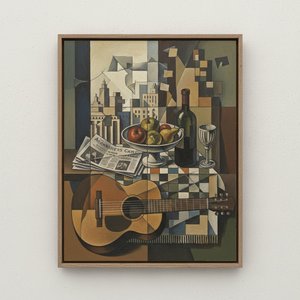
Juan Gris: Cubist Deconstruction & Synthesis – A Comprehensive Exploration
Explore the revolutionary art of Juan Gris – a master of Cubism. Discover his unique approach to deconstruction, vibrant Synthetic Cubist works, and lasting influence on modern art. Expert analysis for collectors.
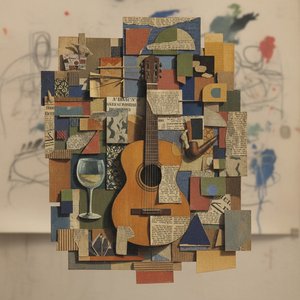
Déconstruction de la réalité : L'évolution et l'impact du cubisme synthétique
Explorez l'évolution du cubisme synthétique avec OriginalUniqueArt : Picasso, Braque et les papiers collés décryptés. Guide pour collectionneurs avertis et passionnés d'art moderne.