

 Aperçu en situation
 Partager
 Partager
 Détails

 Télécharger
 Articles similaires
 Radiographie
 Voir le diaporama
 Statistiques
Mr. Oldham and his Friends
 Oil On Canvas
- WallArt
- Rococo Period
 1750
1750- Early Modern
 105.0 x 130.0 cm
 Tate Gallery
 Afficher la suite
Giclées et impressions d'art
Impressions giclées ou sur toile de qualité musée, avec une production rapide et des finitions au choix. ( Acheter la peinture faite à la main Passer au format image numérique)




P118B $10

P118H $10

P118W $10

P438Z $10

P508JH $12

P508YH $12

P805H $10

P805Z $10

P919BZ $10

P919G $10

P919XJ $10

P959ZH $10

P968JZ $12

W106C $8

W218G $10

W218JH $8

W218Y $10

W307PJ $10

W316G $10

W316PJ $8

W316Y $10

W398PJ $8

W4111J $10

W500HY $15

W500JH $15

W692G $12

W849H $8

W940BG $15

W953PJ $8




Choisissez parmi nos formats prédéfinis qui respectent les proportions originales de l’œuvre.

Vous pouvez saisir vos propres dimensions pour vous adapter à un cadre ou à un espace spécifique. Si la taille sélectionnée ne correspond pas aux proportions de l'image originale, nous recadrerons l'œuvre ou étendrons l'image avec une bordure en miroir ou une couleur unie. Une maquette numérique vous sera envoyée pour approbation avant le début de la production.
Veuillez noter que l'aperçu à l'écran ne reflète pas le recadrage ou l'extension réelle. Seule la maquette montrera avec précision la composition finale.
Bien que des tailles personnalisées soient disponibles, nous vous recommandons de choisir une dimension dans la liste prédéfinie afin de préserver les proportions originales.
Livraison dans le monde entier () en 2 semaines au lieu des 4/5 semaines habituelles. (17 septembre)

Livraison express gratuite dans le monde entier

Toile de lin de haute qualité

Assurance transport complète

Garantie de remboursement des droits de douane

Garantie de fidélité des couleurs

Garantie de retour de 100 jours (uniquement en cas de défaut)

Garantie de remboursement à 100%

Tarifs dégressifs sur quantité
 L'option verre n'est disponible que pour les dimensions inférieures à 110 cm.

Mr. Oldham and his Friends
Giclées et impressions d'art
Format de la reproduction
-


Prix total final
$ 80
A Glimpse into Georgian Camaraderie
In the soft, amber glow of an imagined mid-eighteenth-century evening, Joseph Highmore’s “Mr. Oldham and his Friends” invites the viewer to step into a world of refined leisure and quiet intellectual intimacy. Painted in 1750, this masterpiece serves as a window into the heart of Georgian England, capturing a moment that transcends mere portraiture to become a celebration of social bond and shared experience. The composition centers on four gentlemen gathered around a mahogany table, their relaxed postures and engaged expressions suggesting a conversation caught mid-sentence. There is an undeniable warmth in the scene; the subtle presence of wine glasses and a communal bowl hints at a ritual of conviviality, where the boundaries between formal status and personal friendship blur under the light of mutual respect.
Highmore, a painter who masterfully navigated the transition from the grandiosity of the Baroque to the delicate grace of the Rococo, utilizes this scene to showcase his profound ability to capture character. One gentleman, distinguished by a hat perched elegantly atop his head, adds a touch of aristocratic flair that anchors the group in their social stratum, yet the overall atmosphere remains remarkably accessible and human. For the collector or interior designer, this piece offers more than just a historical record; it provides an emotional anchor for a room, evoking a sense of timeless stability and the enduring value of companionship.
Mastery of Light and Texture
Technically, the painting is a triumph of chiaroscuro, a technique Highmore adapted from the great Baroque masters like Rembrandt to breathe life into his subjects. By employing dramatic contrasts between deep, velvety shadows and luminous highlights, he sculpts the figures, giving them a three-dimensional presence that feels almost tactile. This play of light does more than define form; it directs the eye through the narrative of the painting, drawing attention to the glint of glass, the rich grain of the wood, and the intricate folds of fine fabrics. The artist’s meticulous attention to detail—the way light catches the rim of a wine glass or the subtle texture of a gentleman's waistcoat—demonstrates a level of craftsmanship that elevates the work from a simple "conversation piece" to a profound study in materiality.
The Rococo influence is felt in the painting’s lighter, more graceful tonal palette, which avoids the heavy somberness of earlier eras in favor of an air of elegance. This delicate balance between shadow and light creates a psychological depth, suggesting that beneath the surface of this pleasant gathering lies a rich inner life and a history of shared secrets and intellectual pursuits. Such technical sophistication makes a high-quality reproduction of this work an exquisite addition to any curated collection, offering a sophisticated interplay of light and shadow that can transform the ambiance of a sophisticated study or a grand dining hall.
Symbolism and the Spirit of an Era
Beyond its aesthetic allure, “Mr. Oldham and his Friends” is steeped in the cultural symbolism of the 1750s. The very act of gathering around wine serves as a metaphor for the era's values: indulgence, pleasure, and the cultivation of taste. In the context of Georgian England, such scenes were not merely decorative but were statements of social identity. The painting subtly underscores the importance of patronage and the role of the landed gentry in fostering a culture of refinement and intellectual curiosity. The presence of the mahogany table—a luxury item of the period—further reinforces the themes of prosperity and the global reach of British commerce during this era.
For those looking to bring a piece of history into their contemporary spaces, this artwork offers a profound sense of continuity. It speaks to the universal human desire for connection and the beauty found in quiet, shared moments. Whether placed in a modern minimalist setting to provide a classical counterpoint or integrated into a traditional period room, Highmore’s work continues to resonate, offering an evocative narrative of friendship that remains as relevant today as it was two and a half centuries ago.
Biographie de l'artiste
Première Vie et Carrière
- Né: Londres, Royaume-Uni (1692)
- Décédé: 1780
- Joseph Highmore est né à Londres, troisième fils d'Edward Highmore, un marchand de charbon, et neveu de Thomas Highmore, peintre sergent pour William III.
- Il a montré une capacité artistique précoce mais s'est initialement consacré à des études juridiques sur l'insistance de sa famille.
- À 17 ans, il abandonna le droit pour devenir peintre, fréquentant les académies de dessin dirigées par Godfrey Kneller et des cours d'anatomie par William Cheselden.
Développement Artistique et Style
- Le style de Highmore a évolué à partir d'influences initiales de la peinture baroque pour embrasser l'esthétique rococo.
- Son travail se caractérise par le réalisme, l'attention aux détails et un accent mis sur la capture de la ressemblance physique et de la personnalité de ses sujets.
- Il a obtenu le patronage de la famille royale, en particulier pendant les années 1730 et 1740.
- Un voyage aux Pays-Bas et en France (1732-1734) a élargi ses horizons artistiques.
- Highmore a satisfait une clientèle moyenne grandissante plus tard dans sa carrière.
Œuvres Majeures et Réalisations
- Portraiture: Highmore est surtout connu pour ses portraits de personnalités importantes, notamment le roi George II et le général James Wolfe. Ces œuvres démontrent sa capacité à capturer à la fois la ressemblance physique et le caractère.
- Illustrations pour "Pamela": Sa série de douze peintures basées sur le roman de Samuel Richardson, "Pamela, ou la Vertu Récompensée" (1744), a été très populaire et gravée par Benoist et Louis Truchy. Ces illustrations ont contribué à diffuser l'histoire auprès d'un public plus large.
- Peintures Historiques: Il a également produit des peintures historiques, reflétant son exposition aux traditions artistiques françaises. Hagar et Ishmael, donné à l’hôpital pour enfants abandonnés, illustre cet aspect de son travail.
- Conversation Pieces: Highmore était renommé pour ses "conversation pieces", des portraits de groupe qui dépeignaient des familles ou des rassemblements sociaux dans un cadre informel.
Vie ultérieure et Héritage
- En 1762, Highmore vendit le contenu de son atelier et se retira à Canterbury, où il vécut avec sa fille et son gendre.
- Il est décédé le 3 mars 1780, âgé de 87 ans, et a été enterré d'une manière conforme à une loi encourageant le commerce de la laine.
- Son héritage réside dans sa contribution à la peinture anglaise pendant la période rococo, présentant la société géorgienne et le caractère individuel avec un détail et un réalisme remarquables.
- Il était également auteur, connu pour des œuvres telles que "An Examination Critique des Deux Peintures de Reubens dans la Banqueting House".
Famille et Relations Notables
- Susanna Highmore (née Hiller): Sa femme était une poétesse, bien que peu de ses œuvres aient été publiées.
- Anthony Highmore: Son fils, Anthony Highmore (1719–99), était également un artiste.
- Anthony Highmore Jr.: L'un de ses quinze petits-enfants, Anthony Highmore Jr. (1758–1829), est devenu écrivain sur les affaires juridiques et militant social.
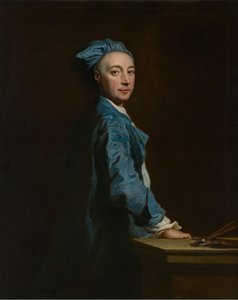
Joseph Highmore
1692 - 1780 , Royaume-Uni
En bref
- Artistes Influents:
- Godfrey Kneller
- William Cheselden
- Date De Décès: 1780
- Date De Naissance: 1692
- Lieu De Naissance: Londres, Royaume-Uni
- Mouvement Artistique: Rococo
- Nationalité: Anglais
- Nom Complet: Joseph Highmore
- Oeuvres Notables:
- Hagar et Ishmael
- Pamela Shows Mr Williams
- George II
- James Wolfe
Articles similaires

The Allure of Elegance in Art: A Historical & Aesthetic Exploration of Refinement & Grace
Explore the exquisite world of Rococo art! Discover its history, masters (Watteau, Boucher & more), and defining elegance. Expert insights for collectors seeking museum-quality reproductions & custom portraits.

Les 10 Chefs-d'Œuvre du Rococo : Artistes, Histoire & Décor Intérieur
Plongez dans l'univers raffiné du Rococo avec les 10 chefs-d'œuvre de Fragonard, Boucher & Watteau. Découvrez l'histoire, les techniques et la magie de ce mouvement artistique. Reproductions tableaux de qualité muséale sur .

L'Esthétique Rococo : Opulence, Rébellion et la Quête du Plaisir au XVIIIe Siècle
Explorez l'esthétique rococo : opulence, rébellion et quête du plaisir au XVIIIe siècle. Découvrez les maîtres (Watteau, Boucher, Fragonard) et l'influence durable de ce style artistique raffiné. Analyse approfondie & reproductions d'exception.
Cultiver l'Ambiance : Guide Curatorial pour la Sélection d'Œuvres d'Art dans les Caves à Vin et Salles de Dégustation – Améliorer l'Expérience Œnologique par le Paysage, le Symbolisme et l'Harmonie Intérieure
Guide curatorial expert pour sublimer votre cave à vin ou salle de dégustation ! Découvrez comment l'art et le symbolisme enrichissent l'expérience œnologique. Conseils & inspiration.

Joseph Highmore: Moral Tales & Domestic Genre in 18th-Century British Art
Explore the captivating world of Joseph Highmore, a leading British Rococo painter. Discover his elegant portraits, insightful 'Pamela' illustrations & contributions to 18th-century art history. Learn more at OriginalUniqueArt.
