
 Aperçu en situation
 Envoyer
 Partager
 Détails de l'œuvre
 Guide
Guide

 Télécharger l'image
 Articles similaires
 Radiographie
 Diaporama
 Q&A
Q&A Statistiques
Flirt

- 34.0 x 49.0 cm


 Lire la suite
L’œuvre d'art présentée sur cette page est protégée par le droit d'auteur, ce qui signifie que nous ne pouvons légalement créer ou vendre de reproduction identique. Cette protection est appliquée en vertu d'accords internationaux tels que la Convention de Berne et par les lois nationales, notamment celles énoncées par le Loi américaine sur le droit d'auteur - Titre 17.
Cette méthode est pleinement conforme aux réglementations sur le droit d'auteur car elle ne repose pas sur la copie ou la duplication de l'œuvre protégée. Il s'agit plutôt d'une réinterprétation créative — une nouvelle peinture qui s'inspire de l'original sans pour autant lui être identique.
Giclées et impressions d'art
Impressions giclées ou sur toile de qualité musée, avec une production rapide et des finitions au choix. ( Commander la reproduction peinte à la main Passer au format numérique)




P118B €10

P118H €10

P118W €10

P438Z €10

P508JH €12

P508YH €12

P805H €10

P805Z €10

P919BZ €10

P919G €10

P919XJ €10

P959ZH €10

P968JZ €12

W106C €8

W218G €10

W218JH €8

W218Y €10

W307PJ €10

W316G €10

W316PJ €8

W316Y €10

W398PJ €8

W4111J €10

W500HY €15

W500JH €15

W692G €12

W849H €8

W940BG €15

W953PJ €8




Choisissez parmi nos formats prédéfinis qui respectent les proportions originales de l’œuvre.

Saisissez la largeur et la hauteur souhaitées pour qu'elles s'adaptent à votre cadre ou à votre mur. Une impression peut être recadrée, mais jamais agrandie au-delà de l'image originale ; ainsi, un format de forme différente entraînera la perte d'une partie de l'image. Nous vous envoyons une maquette numérique pour approbation avant toute impression. L'image présentée sur cette page ne montre pas le recadrage réel — seule la maquette le permet.
Livraison dans le monde entier () en 2 semaines au lieu des 4/5 semaines habituelles. (2 novembre)

Livraison express gratuite dans le monde entier

Toile de lin de qualité supérieure

Assurance transport complète

Garantie de remboursement des droits de douane

Garantie de fidélité des couleurs

Politique de retour de 100 jours (uniquement en cas de défaut)

Garantie de remboursement à 100%

Offre de tarifs dégressifs
 L'option verre n'est disponible que pour les dimensions inférieures à 110 cm.

Flirt
Giclées et impressions d'art
Format de la reproduction
-


Prix total
€ 71
A Dance of Desire and Distortion
In the vibrant, restless landscape of late 1960s Latin American art, few works capture the electric tension of human interaction as vividly as Jorge de la Vega’s "Flirt." Created in 1968, this masterpiece serves as a window into a world where the boundaries between reality and surrealist distortion begin to blur. The painting centers on a captivating scene of social interplay, featuring two women in bikinis who command the viewer's gaze through their poised yet suggestive stances. One figure rests upon the ground, grounded and earthy, while her companion stands nearby, creating a dynamic compositional tension that pulls the eye across the canvas. As the title suggests, there is an undeniable sense of playfulness—a rhythmic, almost musical quality to their movements that hints at the unspoken dialogues of attraction and social performance.
Beyond the central duo, de la Vega weaves a complex tapestry of secondary figures, including a man kneeling in close proximity to the women. This layering of bodies creates a sense of a crowded, bustling environment, perhaps a sun-drenched social gathering where glances are exchanged and secrets are whispered. The composition is far from static; it breathes with a kinetic energy that reflects the artist's ability to capture the "seismographic" shifts of his era. For the collector or interior designer, this piece offers more than just a visual focal point; it provides a narrative depth that invites long periods of contemplation, making it an ideal centerpiece for spaces that value intellectual stimulation and avant-garde flair.
The Mastery of Neo-Figurative Expression
Technically, "Flirt" is a testament to de la Vega’s departure from the rigid constraints of his early architectural training. Moving away from geometric abstraction, he embraced a more fluid, neo-figurative style that allowed for greater emotional expression. The brushwork in this piece possesses a certain urgency, where colors and forms are applied with a confidence that mirrors the spontaneity of the subject matter itself. The artist utilizes a palette that balances the warmth of human skin tones with the vibrant, sometimes jarring accents characteristic of his mid-career evolution. This technique does not merely depict a scene; it reconstructs it, using texture and form to evoke the heat and the psychological weight of the moment.
The symbolism within "Flirt" operates on multiple levels. While at first glance it appears to be a celebration of leisure and summer vitality, there is an underlying layer of social commentary typical of de la Vega’s work. The way the figures are integrated into the background—sometimes merging with the environment or appearing slightly fragmented—suggests the instability of identity in a rapidly changing modern world. It captures the essence of 1968: a year of global upheaval, where the surface-level "flirtation" of society often masked deeper, more profound transformations. To possess a reproduction of this work is to hold a fragment of history, a piece that resonates with the spirit of rebellion and the beauty of metamorphosis.
An Essential Addition to the Sophisticated Interior
For those looking to curate an art collection or design a sophisticated living space, "Flirt" offers a unique opportunity to introduce a sense of movement and historical gravity. Its medium-sized format (34 x 49 cm) makes it incredibly versatile, capable of anchoring a gallery wall or serving as a singular, powerful statement in a minimalist study. The painting’s ability to evoke both nostalgia for the late sixties and a timeless fascination with human connection ensures that it remains relevant across changing decor trends.
Investing in a high-quality hand-painted reproduction of this work allows the admirer to experience the tactile soul of de la Vega's vision. The interplay of light, the deliberate distortion of form, and the evocative subject matter provide an emotional resonance that mass-produced prints simply cannot replicate. Whether you are drawn to its bold aesthetic or its complex psychological layers, "Flirt" stands as a profound testament to the enduring power of Argentine modernism, promising to inspire anyone who encounters its captivating, rhythmic beauty.
Questions et réponses
Qui est l'auteur de « Flirt » et de quel mouvement artistique est-il issu ?
L'œuvre « Flirt » est signée Jorge De La Vega et s'inscrit dans le mouvement Pop Art.
À quelle époque «Flirt» de Jorge De La Vega a-t-il été réalisé ?
«Flirt» de Jorge De La Vega date de la période Modern. Cette époque apporte le contexte historique de l'œuvre.
L'œuvre « Flirt » est-elle plutôt claire ou plutôt sombre dans l'ensemble ?
«Flirt» de Jorge De La Vega présente une luminosité de brilliant, avec une luminance de Bright Balance.
Biographie de l'artiste
Jorge de la Vega : Vie et Œuvre
Jeunesse et Formation
Jorge de la Vega (né le 27 mars 1930 à Buenos Aires, en Argentine – décédé le 26 août 1971) était un artiste aux multiples facettes : peintre, graphiste, dessinateur, chanteur et compositeur. Il a d'abord suivi des études d'architecture à l'Universidad de Buenos Aires de 1948 à 1952. Cependant, il a finalement abandonné cette voie pour se consacrer pleinement à la peinture, devenant en grande partie un artiste autodidacte.
Développement Artistique et Mouvements
Les premières explorations artistiques de De la Vega englobaient des styles à la fois représentatifs et abstraits géométriques dans les années 1950. Un moment charnière de sa carrière a été la formation du groupe Otra Figuración (Autre Figuration) en 1961, aux côtés de Luis Felipe Noé, Rómulo Macció et Ernesto Diera. Ce mouvement, également connu sous le nom de Nueva Figuración (Nouvelle Figuration), représentait une réaction contre l'abstraction géométrique dominante dans l'art argentin à cette époque.
- Le groupe visait à réintroduire la figure humaine dans leur travail, allant au-delà de la simple imitation et explorant les angoisses existentielles individuelles.
- Un voyage en Europe avec le groupe *Otra Figuración* s'est avéré influent, inspirant une nouvelle direction artistique.
- Plus tard, une période aux États-Unis l'a exposé au mouvement Pop Art naissant à New York City, ce qui a considérablement influencé son style.
Thèmes Clés et Influences
L’œuvre de De la Vega se caractérise par un engagement critique envers la société contemporaine. Il abordait fréquemment les thèmes de la consommation, de la critique sociale et des complexités de l'existence humaine. Son art présentait souvent une perspective sombrement humoristique sur la vie moderne.
- Influence du Pop Art : L’imagerie audacieuse et le commentaire que l’on retrouve dans le Pop Art ont fortement influencé son langage visuel.
- Commentaire Social : Il utilisait son art pour questionner les normes sociétales et exposer les absurdités de la culture de consommation.
- Préoccupations Existentielles : De nombreuses œuvres explorent l'identité, l'aliénation et la condition humaine.
Réalisations Majeures et Style Artistique
De la Vega a développé un style distinctif qui mélangeait l’abstraction avec des éléments figuratifs, employant souvent une imagerie troublante et des lignes audacieuses. Ses peintures présentent fréquemment des figures déformées, des formes fragmentées et des objets symboliques. Il était connu pour son esthétique rendue numériquement, même avant que l'art numérique ne devienne courant.
- Œuvres Notables : Parmi ses œuvres les plus reconnues figurent « Praise », « Try Again », « Flirt », « Games of Love and Chance », « Incubation » et la série d’œuvres intitulée "Puzzle".
- Poste d'Enseignant : Il a été professeur invité/artiste à l'Université Cornell en 1965, grâce à une bourse Fulbright.
Transition vers la Musique et Vie Ultérieure
Au cours des dernières années de sa vie, De la Vega s’est détourné de l’art visuel pour se consacrer à la musique. Il est devenu un chanteur-compositeur populaire, créant des chansons de protestation qui reflétaient son regard satirique et sa conscience sociale.
Importance Historique et Héritage
Jorge de la Vega reste une figure importante dans l'histoire de l'art latino-américain. Son implication dans le mouvement *Nueva Figuration* a contribué à redéfinir l'expression artistique argentine pendant une période de changements politiques et sociaux importants. Son œuvre continue de résonner aujourd’hui pour son commentaire perspicace sur la société moderne et son style visuel unique.
- Ses œuvres sont exposées dans des musées à travers l'Argentine, ainsi qu'à l'international – notamment au Phoenix Art Museum, au Museum of Modern Art de Rio de Janeiro, au Brésil, et à l’Art Museum of the Americas auprès de l’OAS à Washington, DC.
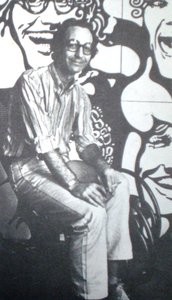
Jorge De La Vega
1930 - 1971 , Argentine
L'essentiel de l'artiste
- Artistes Ou Mouvements Influencés Par Cet Artiste: ['Nueva Figuración']
- Artistes Qui Ont Influencé Cet Artiste: ['Pop Art artists']
- Date De Décès: 26 août 1971
- Date De Naissance: 27 mars 1930
- Lieu De Naissance: Buenos Aires, Argentine
- Mouvement Artistique Ou Style: Nueva Figuración, Pop Art
- Nationalité: Argentin
- Nom Complet: Jorge de la Vega
- Œuvres Notables:
- Louange
- Réessayer
- Flirt
- Jeux d'amour…
- Incubation
- Puzzle
Articles connexes

10 Œuvres d'Art Pleines d'Esprit : Joie et Décoration Intérieure
Découvrez 10 œuvres d'art iconiques débordantes de joie et d'esprit ! Explorez l'histoire de Matisse, Renoir, Van Gogh et plus encore. Trouvez l'inspiration déco et achetez des reproductions de tableaux de qualité musée sur OriginalUniqueArt.com.

The Enduring Muse: Women as Subject & Symbol in Art History
Explore the rich history of women in art – from iconic muses to groundbreaking artists. Discover feminist movements, global perspectives & reclaim female narratives with OriginalUniqueArt.
Portrayals of Power & Perception: A Historical Survey of Women in Art
Explore the rich history of women in art – from iconic muses to groundbreaking artists. Discover feminist movements & reclaim female narratives with OriginalUniqueArt. Expert insights for discerning collectors.
Le Regard Féminin à Travers les Âges : Représentations et Révolutions Artistiques de la Femme
Explorez l'évolution du regard féminin dans l'art à travers les âges ! Découvrez les représentations artistiques de la femme, des mythes aux mouvements féministes. Analyse approfondie et reproductions d'art sur OriginalUniqueArt.
The Eloquence of Arrangement: Compositional Strategies in Western Art from the Renaissance to Modernism
Explore the evolution of compositional strategies in Western art! Discover how masters like Raphael & Zurbaran used perspective, proportion, and dynamic arrangement to create timeless masterpieces. Enhance your art appreciation today!