

 Aperçu en situation
 Partager
 Partager
 Détails
 Guide imprimable

 Télécharger
 Articles similaires
 Radiographie
 Voir le diaporama
 Statistiques
29.3.69
 Oil On Canvas
- WallArt
- Abstract Expressionism
 Modern
 199.0 x 366.0 cm
 Fitzwilliam College
 Afficher la suite
L’œuvre d'art présentée sur cette page est protégée par le droit d'auteur, ce qui signifie que nous ne pouvons légalement créer ou vendre de reproduction identique. Cette protection est appliquée en vertu d'accords internationaux tels que la Convention de Berne et par les lois nationales, notamment celles énoncées par le Loi américaine sur le droit d'auteur - Titre 17.
En tant qu'alternative respectueuse et légale, nous proposons des œuvres d'art personnalisées, peintes à la main et inspirées de l'original. Nos artistes talentueux et professionnels étudient avec soin le style, l'ambiance et l'essence artistique de l'œuvre originale pour créer une pièce nouvelle et unique qui évoque la même émotion — tout en restant une création originale en soi.
Cette méthode est pleinement conforme aux réglementations sur le droit d'auteur car elle ne repose pas sur la copie ou la duplication de l'œuvre protégée. Il s'agit plutôt d'une réinterprétation créative — une nouvelle peinture qui s'inspire de l'original sans pour autant lui être identique.
Reproduction à l'huile faite à la main
Huile sur toile peinte à la main, avec cadre et dimensions personnalisés, réalisée sur commande par nos artistes. ( Passer au format impression Passer au format image numérique)




P118B €10

P118H €10

P118W €10

P438Z €10

P508JH €12

P508YH €12

P805H €10

P805Z €10

P919BZ €10

P919G €10

P919XJ €10

P959ZH €10

P968JZ €12

W106C €8

W218G €10

W218JH €8

W218Y €10

W307PJ €10

W316G €10

W316PJ €8

W316Y €10

W398PJ €8

W4111J €10

W500HY €15

W500JH €15

W692G €12

W849H €8

W940BG €15

W953PJ €8




Choisissez parmi nos formats prédéfinis qui respectent les proportions originales de l’œuvre.

Saisissez la largeur et la hauteur souhaitées, pour s'adapter à votre cadre ou à votre mur. Cette œuvre est peinte à la main ; ainsi, pour un format de forme différente, l'artiste peut peindre un peu plus autour du tableau ou réduire légèrement les bords — c'est vous qui choisissez. Nous vous envoyons une maquette numérique pour approbation avant que la peinture ne commence. L'image présentée sur cette page ne reflète pas le résultat réel — seule la maquette le fait.
Après la commande, l’équipe OriginalUniqueArt.com contactera le client par e-mail pour recueillir ses instructions et lui fournira une maquette d’aperçu
Livraison dans le monde entier () en 3 à 4 semaines au lieu des 5 semaines habituelles. (22 octobre). Aucun compromis sur la qualité.

Livraison express gratuite dans le monde entier

Toile de lin de haute qualité

Assurance transport complète

Garantie de remboursement des droits de douane

Garantie de fidélité des couleurs

Garantie de retour de 100 jours (uniquement en cas de défaut)

Garantie de remboursement à 100%

Tarifs dégressifs sur quantité
 L'option verre n'est disponible que pour les dimensions inférieures à 110 cm.

29.3.69
Technique de reproduction
Format de la reproduction
-


Prix total final
€ 262
A Symphony in Red: Exploring John Hoyland's "29.3.69"
John Hoyland’s “29.3.69” is not merely a painting; it’s an immersive experience, a bold declaration of color and form that commands attention. This large-scale abstract expressionist work, measuring 199 x 366 cm, pulsates with an intensity born from the deliberate interplay of red hues and stark black planes. Created in 1969, a period of significant social and artistic upheaval, the piece reflects a shift away from traditional representation towards pure emotional expression through color and texture. Hoyland, a British artist who emerged as a leading figure in abstract painting, sought to liberate paint from the constraints of depicting recognizable imagery, instead harnessing its inherent power to evoke feeling and create spatial dynamics on the canvas. The date itself – 29.3.69 – hints at a specific moment captured, not literally, but emotionally, within the artist’s creative process.The Language of Color and Form
At first glance, “29.3.69” appears as a fragmented landscape of color. Dominating the composition are variations of red—scarlet, brick, crimson—that bleed into one another, creating a sense of heat and energy. These vibrant reds are dramatically contrasted by large blocks of deep black, which serve not to negate the color but rather to amplify it, creating pockets of visual rest and emphasizing the dynamism of the surrounding hues. Thin lines of green and yellow punctuate this predominantly monochromatic world, acting as subtle disruptions that prevent the composition from becoming overwhelming. These accents introduce a sense of unexpectedness, drawing the eye across the canvas and adding layers of complexity. Hoyland’s technique is characterized by a heavily layered application of paint – an impasto style—which creates a rich, textured surface. This physicality of the paint adds another dimension to the work, inviting viewers to appreciate not only the colors themselves but also the artist's gestural process. The absence of traditional perspective further enhances the sense of flatness and spatial ambiguity; shapes exist as independent planes within the frame, challenging our conventional understanding of depth and space.A Context of Artistic Innovation
To fully understand “29.3.69,” it’s crucial to consider its historical context. Hoyland was deeply influenced by American Abstract Expressionists like Robert Motherwell and Barnett Newman, artists who championed large-scale canvases and pure abstraction. However, Hoyland wasn't simply imitating his American counterparts; he adapted their principles to create a distinctly British voice in abstract art. His work aligns with movements such as Post-Painterly Abstraction and Color Field painting, but it possesses a unique energy—a fragmentation and dynamism that sets it apart. The incident at the Royal Academy Schools, where his early abstract works were initially removed, highlights the resistance to abstraction within the British art establishment at the time. Hoyland’s persistence in pursuing this artistic path demonstrates a commitment to pushing boundaries and challenging conventional notions of what constitutes “proper” painting. His travels to New York in 1964 proved transformative, solidifying his dedication to non-representational forms and fostering lasting friendships with key figures in the American art scene.Emotional Resonance and Lasting Impact
“29.3.69” evokes a powerful emotional response through its bold color choices and dramatic contrasts. The intensity of the red hues can be interpreted as representing passion, energy, or even tension, while the stark black blocks suggest a sense of mystery or perhaps underlying conflict. The deliberate imbalance in the composition—the significantly larger black block—contributes to an unsettling yet captivating effect, drawing viewers into a world of visual and emotional complexity. Ultimately, Hoyland’s work transcends mere aesthetics; it is an exploration of human emotion through the language of color and form. “29.3.69” stands as a testament to Hoyland's artistic vision—a vibrant and enduring contribution to the landscape of abstract expressionism that continues to resonate with audiences today, offering a compelling dialogue between color, texture, and feeling.Questions et réponses
Pourquoi le statut du droit d'auteur de « 29.3.69 » est-il tel qu'il est ?
«29.3.69» de John Hoyland est dans le toujours protégé par le droit d'auteur. Les droits d'auteur sont calculés à partir de l'année du décès de l'artiste, et John Hoyland est décédé en 2011.
L'œuvre «29.3.69» de John Hoyland, conservée au Fitzwilliam College, peut-elle faire l'objet de reproductions légales ?
«29.3.69» de John Hoyland, conservée au Fitzwilliam College, est dans le toujours protégé par le droit d'auteur. Ce statut détermine si des reproductions de l'image peuvent être réalisées.
Quelle émotion l'œuvre Abstract Expressionism «29.3.69» dégage-t-elle ?
L'émotion Powerful de « 29.3.69 » accompagne son style Abstract Expressionism.
Biographie de l'artiste
Début de vie et formation
- Naissance : John Hoyland est né le 12 octobre 1934 à Sheffield, Yorkshire, en Angleterre, dans une famille ouvrière.
- Formation : Il a fréquenté la Sheffield School of Art and Crafts (1946–51), suivie de la Sheffield College of Art (1951–56). Il a ensuite étudié à la Royal Academy Schools de Londres de 1956 à 1960.
- Premières influences : Initialement formé à la peinture figurative, Hoyland a été profondément marqué par sa découverte de l'art abstrait. Un moment décisif s'est produit lors d'un voyage dans le sud de la France en 1953, et plus tard par son exposition aux œuvres de Nicholas de Staël et des expressionnistes abstraits américains à la Tate Gallery en 1959.
- Incident à la Royal Academy : Un événement notable pendant ses études à la Royal Academy a été le retrait de ses peintures abstraites de l'exposition par Sir Charles Wheeler, alors président de la Royal Academy, qui a remis en question la capacité de Hoyland à “peindre correctement”. Cette situation a été résolue grâce à l'intervention de Peter Greenham, démontrant une acceptation croissante de l'abstraction.
Développement artistique et influences
- Trouver sa voix : Les années 1960 ont été cruciales pour le développement artistique de Hoyland. Il a commencé à établir son style distinctif, caractérisé par des couleurs audacieuses, des formes simplifiées et une surface picturale plate.
- Connexions américaines : Un tournant important a été son premier voyage à New York en 1964 avec une bourse de la Peter Stuyvesant Foundation. Là, il a rencontré des artistes influents tels que Robert Motherwell, Mark Rothko et Barnett Newman, nouant des amitiés durables et absorbant leurs philosophies artistiques.
- Influences clés : Le travail de Hoyland a été influencé par l'abstraction post-peinturale, la peinture Color Field et l'abstraction lyrique. Il admirait des artistes tels que Matisse, Van Gogh, Rouault et Chaïm Soutine, ainsi que les expressionnistes abstraits américains.
- Rejet des étiquettes : Hoyland n'aimait pas être qualifié de peintre “abstrait”, préférant simplement s'identifier comme un "peintre", estimant que le terme impliquait des contraintes géométriques inutiles. Il trouvait son inspiration dans les formes naturelles, en particulier le cercle, qu'il considérait comme une forme puissante et organique.
Faits saillants de sa carrière et œuvres majeures
- Premières expositions : La première exposition personnelle de Hoyland a eu lieu à la Marlborough New London Gallery en 1964, suivie de sa première exposition muséale à la Whitechapel Art Gallery en 1967, organisée par Bryan Robertson.
- Groupe Situation : Il a été impliqué dans le groupe influent Situation, exposant des peintures abstraites à grande échelle visant à immerger les spectateurs dans la couleur et la forme.
- Reconnaissance internationale : En 1969, il a représenté la Grande-Bretagne aux côtés d'Anthony Caro à la Biennale de São Paulo au Brésil.
- Évolution du style : Tout au long des années 1970, les peintures de Hoyland sont devenues plus texturées. Il a exposé abondamment à la Waddington Galleries de Londres et a également présenté son travail à New York avec Robert Elkon Gallery et André Emmerich Gallery.
- Carrière ultérieure et récompenses : Il a remporté le prix John Moores Painting Prize en 1982 et le Wollaston Award de la Royal Academy en 1998. Des rétrospectives de son travail ont été organisées à la Serpentine Gallery (1979), à la Royal Academy (1999) et à Tate St Ives (2006).
Héritage et importance historique
- Contribution à l'abstraction britannique : John Hoyland est considéré comme l'un des principaux peintres abstraits britanniques, jouant un rôle essentiel dans le développement et la reconnaissance de l'abstraction au sein de la scène artistique britannique.
- Influence sur les artistes ultérieurs : Son utilisation audacieuse de la couleur, ses compositions dynamiques et son engagement envers l'expression picturale ont influencé des générations d'artistes.
- Collections publiques : Les œuvres de Hoyland sont conservées dans de nombreuses collections publiques et privées, dont la Tate et la collection Murderme de Damien Hirst, ce qui témoigne de son importance artistique durable.
- Fellowship de la Royal Academy : Il a été élu à la Royal Academy en 1991 et nommé professeur de peinture à la Royal Academy Schools en 1999, consolidant ainsi sa position au sein de l'establishment artistique.
- Décès et reconnaissance continue : John Hoyland est décédé le 31 juillet 2011, à l'âge de 76 ans. Son travail continue d'être exposé et célébré pour son dynamisme, sa profondeur émotionnelle et sa contribution significative à la peinture abstraite.

John Hoyland
1934 - 2011 , Royaume-Uni
En bref
- Artistes Influents:
- Staël
- Rothko
- Newman
- Date De Décès: 31 juillet 2011
- Date De Naissance: 12 octobre 1934
- Influencé Par:
- Post-peinture
- Color Field
- Lieu De Naissance: Sheffield, Royaume-Uni
- Mouvement Artistique: Abstraction picturale
- Nationalité: Britannique
- Nom Complet: John Hoyland
Articles connexes

Expressionnisme Abstrait : Les 10 Chefs-d'Œuvre Incontournables pour Décorer avec Art et Histoire
Plongez au cœur de l'Expressionnisme Abstrait avec ! Découvrez les 10 œuvres majeures de Pollock, Rothko et De Kooning. Histoire, techniques & inspiration déco. Explorez la collection complète en ligne.
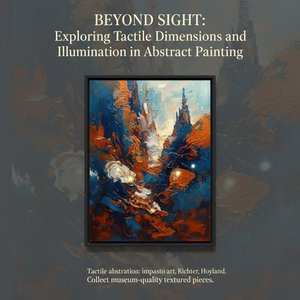
Au-delà de la Vue : Exploration des Dimensions Tactiles et de l'Illumination dans la Peinture Abstraite
Explorez les dimensions tactiles et l'illumination en peinture abstraite. Analyse experte, histoire de l'art & conseils pour collectionneurs avertis. Découvrez l'émotion cachée des œuvres.

Constable : Les 25 Chefs-d'Œuvre du Maître Anglais | OriginalUniqueArt
Plongez dans l'univers de John Constable avec les 25 œuvres incontournables du maître anglais. Découvrez l'histoire, la technique et l'émotion derrière ses paysages romantiques. Reproductions de qualité muséale sur OriginalUniqueArt.com.
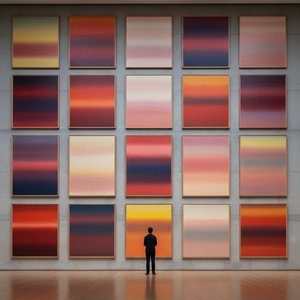
Mark Rothko : Les 25 Œuvres Maîtresses de l'Abstraction Coloriste | OriginalUniqueArt
Plongez dans l'univers émotionnel de Mark Rothko avec les 25 œuvres clés du maître de l'abstraction. Découvrez l'histoire, la technique et le pouvoir des couleurs de ces tableaux iconiques. Reproductions d'art de qualité musée sur OriginalUniqueArt.com

Kandinsky : Les 25 Œuvres Maîtresses d'un Pionnier de l'Art Abstrait | OriginalUniqueArt
Plongez dans l'univers vibrant de Kandinsky ! Découvrez les 25 œuvres majeures du pionnier de l'art abstrait. Explorez son expressionnisme, ses couleurs audacieuses et l'histoire fascinante derrière chaque tableau. Reproductions d'exception sur OriginalUniqueArt.com.

