Menu

() ·

A painting made for you, by hand

Le Wagon à Charbon

Reproduction à l'huile faite à la main

Huile sur toile peinte à la main, avec cadre et dimensions personnalisés, réalisée sur commande par nos artistes. ( Passer au format impression Passer au format numérique)

Description de la pièce

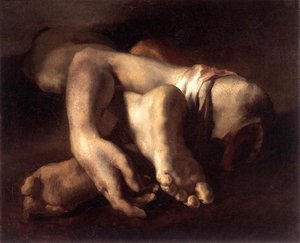
Admirez une magnifique reproduction en noir et blanc du tableau "Le Wagon à Charbon" de Théodore Géricault, chef-d'œuvre du romantisme français capturant un voyage rural animé.

Biographie de l'artiste

Explorez le romantisme dramatique de Théodore Géricault (1791-1824). Découvrez son chef-d'œuvre « Le Naufrage de la Méduse » et des peintures puissantes reflétant les défis humains du XIXe siècle.

from ·

Chapter 1

How large should it be?

Slide to change the size; the picture on the left shows the frame at its real width. The proportions of the original are kept.

Format standard
sur mesure
CM
INCH

Choisissez parmi nos formats prédéfinis qui respectent les proportions originales de l’œuvre.

largeur
hauteur

Saisissez la largeur et la hauteur souhaitées, pour s'adapter à votre cadre ou à votre mur. Cette œuvre est peinte à la main ; ainsi, pour un format de forme différente, l'artiste peut peindre un peu plus autour du tableau ou réduire légèrement les bords — c'est vous qui choisissez. Nous vous envoyons une maquette numérique pour approbation avant que la peinture ne commence. L'image présentée sur cette page ne reflète pas le résultat réel — seule la maquette le fait.

Chapter 2

How should it arrive?

Choose the edges of the stretched canvas

Choose your frame

Corner sample of the WhiteWrap canvas edge finish, stretched on bois massif bars
White €1
Corner sample of the BlurSideWrap canvas edge finish, stretched on bois massif bars
Blurside €1
Corner sample of the ExtendedWrap canvas edge finish, stretched on bois massif bars
Extended €1
Corner sample of the P118B picture frame: polystyrène moulé, 5 cm wide and 3 cm thick
P118B €10
Corner sample of the P118H picture frame: polystyrène moulé, 5 cm wide and 3 cm thick
P118H €10
Corner sample of the P118W picture frame: polystyrène moulé, 5 cm wide and 3 cm thick
P118W €10
Corner sample of the P438Z picture frame: polystyrène moulé, 5.5 cm wide and 3.5 cm thick
P438Z €10
Corner sample of the P508JH picture frame: polystyrène moulé, 7 cm wide and 3.5 cm thick
P508JH €12
Corner sample of the P508YH picture frame: polystyrène moulé, 7 cm wide and 3.5 cm thick
P508YH €12
Corner sample of the P805H picture frame: polystyrène moulé, 5 cm wide and 3.5 cm thick
P805H €10
Corner sample of the P805Z picture frame: polystyrène moulé, 5 cm wide and 3.5 cm thick
P805Z €10
Corner sample of the P919BZ picture frame: polystyrène moulé, 7 cm wide and 3.5 cm thick
P919BZ €10
Corner sample of the P919G picture frame: polystyrène moulé, 7 cm wide and 3.5 cm thick
P919G €10
Corner sample of the P919XJ picture frame: polystyrène moulé, 7 cm wide and 3.5 cm thick
P919XJ €10
Corner sample of the P959ZH picture frame: polystyrène moulé, 5 cm wide and 3 cm thick
P959ZH €10
Corner sample of the P968JZ picture frame: polystyrène moulé, 6 cm wide and 4 cm thick
P968JZ €12
Corner sample of the W106C picture frame: bois massif, 5 cm wide and 3 cm thick
W106C €8
Corner sample of the W218G picture frame: bois massif, 5 cm wide and 3 cm thick
W218G €10
Corner sample of the W218JH picture frame: bois massif, 5 cm wide and 3 cm thick
W218JH €8
Corner sample of the W218Y picture frame: bois massif, 5 cm wide and 3 cm thick
W218Y €10
Corner sample of the W307PJ picture frame: bois massif, 6 cm wide and 3 cm thick
W307PJ €10
Corner sample of the W316G picture frame: bois massif, 6 cm wide and 3 cm thick
W316G €10
Corner sample of the W316PJ picture frame: bois massif, 6 cm wide and 3 cm thick
W316PJ €8
Corner sample of the W316Y picture frame: bois massif, 6 cm wide and 3 cm thick
W316Y €10
Corner sample of the W398PJ picture frame: bois massif, 5 cm wide and 3 cm thick
W398PJ €8
Corner sample of the W4111J picture frame: bois massif, 6.5 cm wide and 3.5 cm thick
W4111J €10
Corner sample of the W500HY picture frame: bois massif, 7 cm wide and 5 cm thick
W500HY €15
Corner sample of the W500JH picture frame: bois massif, 7 cm wide and 5 cm thick
W500JH €15
Corner sample of the W692G picture frame: bois massif, 8 cm wide and 4 cm thick
W692G €12
Corner sample of the W849H picture frame: bois massif, 5 cm wide and 3 cm thick
W849H €8
Corner sample of the W940BG picture frame: bois massif, 7.5 cm wide and 4.5 cm thick
W940BG €15
Corner sample of the W953PJ picture frame: bois massif, 6 cm wide and 3.5 cm thick
W953PJ €8
Corner sample of the H24-GOLD picture frame: bois sculpté et apprêté au gesso, 10 cm wide and 6 cm thick
H24-GOLD €30
Corner sample of the H24-SILVER picture frame: bois sculpté et apprêté au gesso, 10 cm wide and 6 cm thick
H24-SILVER €30
Corner sample of the H36-GOLD picture frame: bois sculpté et apprêté au gesso, 15 cm wide and 6.5 cm thick
H36-GOLD €45
Corner sample of the H36-SILVER picture frame: bois sculpté et apprêté au gesso, 15 cm wide and 6.5 cm thick
H36-SILVER €45
Aperçu du cadre
Sous cadre

Moulding: . Overall size with the frame: .

Chapter 3

Who paints it, and should anything change?

Examples of what can be changed: Replace face with customer photo; Add pet (e.g., replace cat with dog); Include hidden message in background; Change background landscape or elements.
After order, OriginalUniqueArt.com team will email client for instructions and provide a mockup preview

Livraison dans le monde entier () en 3 à 4 semaines au lieu des 5 semaines habituelles. (31 octobre). Aucun compromis sur la qualité.

Chapter 4

The finishing touches

A nameplate, as in a museum?

Détails de la plaque en bronze gravée

This elegant plaque features the artist's name and the title of the artwork, finely engraved for a timeless presentation.

It is made from bronze with a refined, elegant finish. The text is precisely laser-engraved for a sharp and permanent result. Measuring 9x2 cm, the plaque is compact yet easy to read. It's built to be durable and scratch-resistant, offering a professional, museum-quality look. Mounting is simple thanks to the included adhesive backing.

Détails de la plaque en acrylique transparent

The plaque includes essential engraved details such as the artist's name, the title of the artwork, the date it was created, the type of media used-like oil on canvas or watercolor-a brief description of the piece, and a QR code that links to the complete artwork information.

It is crafted from clear acrylic, offering a sleek, modern appearance. The text is UV-engraved in black to ensure strong visual contrast. With a size of 10x15 cm, it ensures optimal readability. It comes equipped with two metal hooks for secure wall mounting. The plaque is designed to be weather-resistant, making it suitable for various environments, and it includes interactive features that work seamlessly with smartphone scanning.

Détails de la plaque en acrylique noir

This elegant plaque includes engraved information such as the artist's name, the title of the artwork, the date it was created, the type of media used (like oil on canvas or watercolor), a short description of the artwork, and a QR code for quick access to more information.

The plaque itself is made from refined black acrylic with a premium finish. The text is laser-engraved in white for high contrast and readability. Its size is 10x15 cm, designed to be easy to read. It comes with two metal hooks for professional mounting. The design is sleek and fits any interior style. It is also weather-resistant and durable, with built-in digital integration for mobile compatibility.

A protective varnish?

When do you need it?

Chapter 5

Your painting, as you ordered it

Le Wagon à Charbon

Technique de reproduction

Format de la reproduction

-

Artiste de prestige

Plus de détails, de finesse et un temps de production accru

-

Cadre de reproduction

-

-

Pour les œuvres ou reproductions dont un côté mesure plus de 105 cm (environ 41 pouces), le cadre sera expédié sous forme de kit démonté. Cette méthode garantit une livraison sécurisée et prévient tout dommage pendant le transport.

Assemblage professionnel requis - ce produit n'est pas destiné au bricolage (DIY).
Le kit doit être assemblé et la toile tendue par un encadreur professionnel expérimenté, en utilisant de la colle à bois (non fournie), une pince à tendre la toile et des serre-joints pour maintenir les traverses d'équerre pendant le séchage de la colle. Un assemblage incorrect ou une tension inégale de la toile peut endommager l'œuvre de manière irréversible et n'est pas couvert par notre garantie.

  • Toutes les baguettes en bois massif sont incluses, découpées avec précision à la taille requise.

  • À assembler avec les vis fournies, ainsi qu'avec de la colle à bois pour les assemblages d'angles (non fournie), à prévoir par votre encadreur.

  • L'utilisation d'outils professionnels est requise et non incluse : une pince à tendre la toile (tendeur) et des serre-joints pour maintenir les baguettes bien d'équerre pendant le séchage de la colle.

Important :
L'assemblage des angles nécessite de la colle à bois, les barres doivent être maintenues avec des serre-joints jusqu'au séchage complet de la colle, et le tendage de la toile sur le châssis assemblé nécessite une pince à tendre la toile. Aucun de ces éléments n'est inclus dans le kit. Veuillez consulter un encadreur professionnel expérimenté avant de commander ce format.

Cartel

-

-

Vernis de protection

Vernis brillant (intensifie les couleurs, protège de la lumière et de l'humidité)

-

Personnaliser mon œuvre

Exemples de personnalisation : remplacer le visage par une photo du client ; ajouter un animal de compagnie (par exemple, remplacer un chat par un chien) ; inclure un message caché en arrière-plan ; modifier le paysage ou les éléments d'arrière-plan.

-

Livraison urgente

Livraison dans le monde entier () en 3 à 4 semaines au lieu des 5 semaines habituelles. (31 octobre). Aucune concession sur la qualité.

-

Livraison express

Livraison dans le monde entier () sous 5 semaines. (7 novembre).

Inclus

Prix total

€ 266

Prix total € 266

L'option verre n'est disponible que pour les dimensions inférieures à 110 cm.

Included with every order

  • Livraison express gratuite dans le monde entier
  • Toile de lin de qualité supérieure
  • Assurance transport complète
  • Garantie de remboursement des droits de douane
  • Garantie de fidélité des couleurs
  • Politique de retour de 100 jours (uniquement en cas de défaut)
  • Garantie de remboursement à 100%
  • Offre de tarifs dégressifs

Deutsch Kohlenwagen : Une Énigme Romantique au Service du Voyage

La peinture, intitulée « Deutsch Kohlenwagen », offre une scène saisissante capturée en noir et blanc par Jean-Louis André Théodore Géricault, artiste dont la vie fut marquée par une passion pour le mouvement et une sensibilité aiguë aux drames de son époque. Datant de 1822, cette œuvre témoigne d’une période clé du romantisme français où les artistes cherchaient à exprimer les profondeurs émotionnelles humaines et à représenter les défis rencontrés dans la vie quotidienne.

  • Le Sujet : Une scène simple mais riche en détails : un homme conduisant une voiture tirée par deux chevaux sur une route poussiéreuse. Plusieurs personnes sont présentes, ajoutant à l’atmosphère de mouvement et d’aventure.
  • Le Style Romantique : Géricault embrasse pleinement les principes du romantisme avec une composition dynamique et une attention particulière aux effets atmosphériques. La lumière douce et diffuse contribue à créer une ambiance contemplative tout en accentuant les contours des personnages et des chevaux.
  • La Technique : Utilisant la peinture à l’huile sur toile, Géricault maîtrise parfaitement les effets de couleur et de texture pour donner vie à sa scène. Les coups de pinceau sont énergiques et précis, capturant avec une remarquable fidélité les mouvements des chevaux et les expressions des hommes.

Au-delà de la beauté esthétique, « Deutsch Kohlenwagen » porte en lui un poids émotionnel considérable. La peinture évoque le désir d’exploration, la camaraderie humaine et la lutte pour survivre dans des circonstances difficiles. Elle rappelle les préoccupations philosophiques du romantisme concernant l’individu confronté aux forces naturelles et sociales.

  • Symbolisme : Les chevaux représentent la puissance brute et la liberté, tandis que la voiture symbolise le progrès et le voyage vers l'inconnu. La route poussiéreuse représente les défis rencontrés dans la vie quotidienne et souligne la vulnérabilité humaine face aux éléments.
  • Impact Emotionnel : Cette œuvre incite à la réflexion sur la beauté fugace de la jeunesse et la nécessité de saisir les opportunités offertes par la vie. Elle rappelle également l'importance des liens humains et la valeur de partager les expériences avec ceux qu’on aime.

Une reproduction haute qualité de « Deutsch Kohlenwagen » apporterait une touche d’élégance classique à tout intérieur contemporain, offrant un hommage subtil à l'esprit artistique du XIXe siècle.

Questions et réponses

Comment puis-je prévisualiser une reproduction de «Le Wagon à Charbon» de Théodore Géricault ?

Pour prévisualiser une reproduction de «Le Wagon à Charbon» de Théodore Géricault, consultez la page d'aperçu de l'œuvre : Aperçu en situation.

Quel est le rapport entre le sujet de « Le Wagon à Charbon » et les thèmes habituels de Théodore Géricault ?

Les thèmes récurrents de Théodore Géricault incluent dramatic romantic expression, classical aesthetics & observation, revolutionary spirit, tragedy, horse carriage symbolism, géricault’s artistic legacy ; « Le Wagon à Charbon » se concentre sur horse carriage, rural landscape, travel scene, romantic era, classical composition, black white print, 19th century art.

À quel artiste est attribuée l'œuvre "Le Wagon à Charbon" ?

« Le Wagon à Charbon » a été créé par Théodore Géricault. Les informations présentes sur cette page décrivent l'œuvre originale de Théodore Géricault.

More about this painting

Aperçu en situation Visualiser en RA Passer au format impression Passer au format numérique Envoyer
Détails de l'œuvre Guide Ajouter aux favoris Télécharger l'image Articles similaires Radiographie Diaporama Q&A Statistiques

In numbers

  • 1822the year it was painted
  • 29frames to choose from
  • standard sizes, in its own proportions
  • 5weeks to paint and deliver it
Théodore Géricault

Théodore Géricault

1791 - 1824, France

Quick facts about Théodore Géricault

  • Artistic Movement Or Style: Romanticisme
  • Artists Or Movements Influenced By This Artist: ['Eugène Delacroix']
  • Artists Who Influenced This Artist:
    • Rubens
    • Titian
    • Velázquez
  • Date Of Birth: 26 septembre 1791
  • Full Name: Jean-Louis André Théodore Géricault
  • Nationality: Francais
  • Notable Artworks:
    • Le Naufrage de la Méduse
    • Cheval effrayé par l'orage
    • Wounded Cuirassier
  • Place Of Birth: Rouen, France

Biographie de l'artiste

Jean-Louis André Théodore Géricault (1791 - 1824): A Pioneer of Romantic Art

Théodore Géricault, born September 26, 1791, in Rouen, France, stands as a monumental figure in the history of French art—a testament to Romantic fervor and an uncompromising commitment to portraying human suffering with unparalleled dramatic intensity. His life was tragically curtailed by illness at just thirty-two, yet his artistic legacy continues to inspire awe and admiration for its boldness and emotional depth. From humble beginnings within a family steeped in legal tradition, Géricault’s path toward artistic greatness was marked by intellectual curiosity and an early fascination with the equestrian arts—a passion nurtured under the tutelage of Carle Vernet, a celebrated painter known for his depictions of English sporting events. This formative influence instilled in him a meticulous attention to detail and a profound understanding of anatomy and movement, qualities that would become hallmarks of his distinctive style.

Early Training & Influences: The Crucible of Classical Tradition

Géricault’s formal education commenced at the Lycée Impérial in Paris, where he studied under Pierre Bouillon—a staunch defender of classical ideals who nevertheless recognized Géricault's innate talent for capturing emotion and conveying profound psychological insight. Bouillon’s rigorous instruction shaped Géricault’s artistic sensibilities, grounding him in the traditions of Greco-Roman sculpture and fostering a disciplined approach to composition. Simultaneously, he pursued independent study at the Louvre—the epicenter of artistic discourse during his time—immersing himself in the works of titans like Rubens, Titian, Velázquez, Rembrandt, and Michelangelo. This exposure ignited within him an ardent desire to emulate their mastery of light, shadow, and expressive brushwork—a pursuit that would propel him toward a singular vision of art as a vehicle for confronting uncomfortable truths and eliciting visceral emotional responses.

The Louvre & The Birth of Romantic Expression

Unlike many of his contemporaries who adhered rigidly to Neoclassical conventions, Géricault rejected the stylized elegance favored by the Académie Française. Instead, he embraced the dynamism and psychological complexity championed by Romantic artists—a movement that sought to liberate art from formal constraints and explore the depths of human emotion. His formative years at the Louvre fostered a rebellious spirit—one that would soon challenge established artistic norms and propel him toward groundbreaking innovations. He meticulously copied masterpieces by Rubens and Rembrandt, absorbing their techniques for conveying profound emotional resonance and mastering the subtleties of chiaroscuro—a dramatic interplay of light and shadow that became an indispensable element of his artistic vocabulary. This dedication to observation and experimentation cemented Géricault’s position as a visionary artist—one who dared to confront societal injustices and depict human suffering with unflinching honesty.

The Raft of the Méduse: A Masterpiece of Dramatic Intensity

Géricault's magnum opus, *The Raft of the Medusa* (1818-1819), stands as an unparalleled achievement in Romantic art—a monumental canvas that transcends mere historical narrative and becomes a searing indictment of human folly and governmental negligence. Inspired by the harrowing true story of the shipwreck of the French frigate Méduse in 1816, where incompetence and callous disregard for human life resulted in unimaginable suffering for its passengers, Géricault undertook exhaustive research—interviewing survivors, studying corpses at hospitals, and constructing a scale model of the raft itself—to ensure meticulous accuracy and maximize emotional impact. The resulting painting is not merely a depiction of tragedy; it’s an immersive experience that confronts viewers with the raw horror of abandonment, desperation, and impending doom. Géricault skillfully employed pyramidal composition—drawing inspiration from Michelangelo—to create a dynamic tension that draws the eye across the canvas and underscores the profound psychological drama unfolding before its gaze. The painting's controversial reception at the Salon of 1819 solidified Géricault’s reputation as a daring innovator—a courageous artist who defied artistic conventions and championed an uncompromising commitment to portraying human suffering with unflinching honesty.

Legacy & Influence: Shaping the Course of Romantic Art

Théodore Géricault's influence on subsequent generations of artists is undeniable—particularly Eugène Delacroix, whom he mentored and whose own paintings bear the indelible stamp of Géricault’s stylistic vision. His unwavering belief in realism—combined with his masterful command of dramatic composition and expressive brushwork—established him as a cornerstone of Romantic art—a movement that prioritized emotional intensity over formal elegance and sought to capture the turbulent spirit of its time. Beyond his artistic achievements, Géricault remains an enduring symbol of artistic integrity—a testament to the transformative power of observation, research, and unwavering dedication to conveying profound psychological insight. His bronze figure reclines on his tomb at Père Lachaise Cemetery in Paris—a poignant reminder of a life tragically cut short but indelibly etched into the annals of art history—forever enshrined as one of France’s most visionary and influential painters.

Informations clés

  • Dimensions: 42 x 66 cm
  • Location: Collection privée
  • Movement: Romanticisme
  • Year: 1822
  • Influences: Carle Vernet
  • Artistic style: Réalisme émotionnel

Quiz d'art

Chaque question ne comporte qu'une seule bonne réponse.

Question 1:
Quel est le sujet principal du tableau "Deutsch Kohlenwagen" ?
Question 2:
Dans quelle période artistique Géricault est-il considéré comme un artiste majeur ?
Question 3:
Quel matériau prédominant est utilisé dans la peinture "Deutsch Kohlenwagen" ?
Question 4:
Quel est le personnage central du tableau ? Il représente...
Question 5:
La peinture "Deutsch Kohlenwagen" évoque une atmosphère particulière : quelle émotion principale cherche-t-elle à transmettre ?