
 Aperçu en situation
 Envoyer
 Partager
 Détails de l'œuvre

 Télécharger
 Articles similaires
 Radiographie
 Diaporama
 Stats
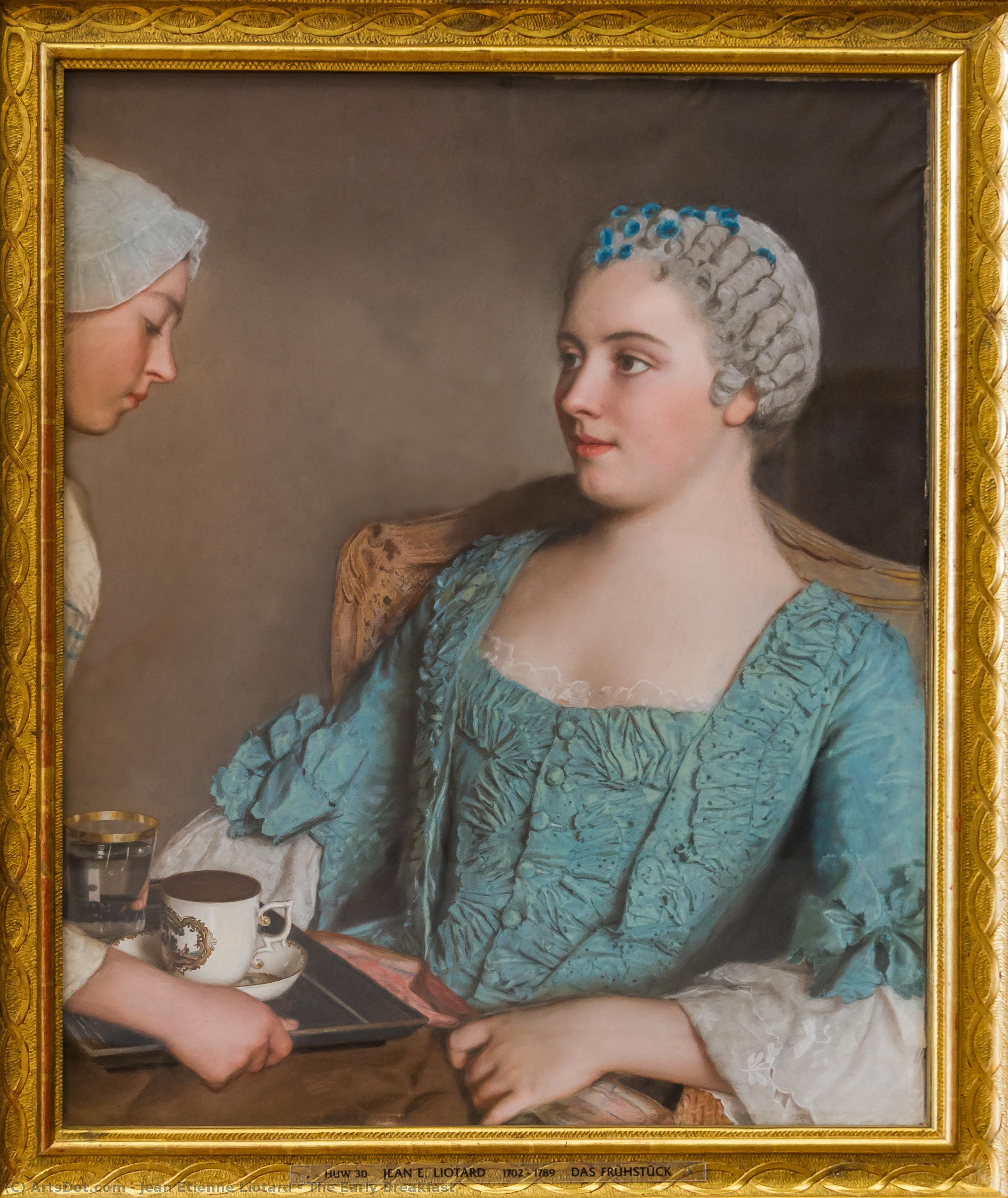
StatsThe Early Breakfast


 Lire la suite
Reproduction à l'huile faite à la main
Huile sur toile peinte à la main, avec cadre et dimensions personnalisés, réalisée sur commande par nos artistes. ( Switch to Print Switch to Digital Image)




P118B $10

P118H $10

P118W $10

P438Z $10

P508JH $12

P508YH $12

P805H $10

P805Z $10

P919BZ $10

P919G $10

P919XJ $10

P959ZH $10

P968JZ $12

W106C $8

W218G $10

W218JH $8

W218Y $10

W307PJ $10

W316G $10

W316PJ $8

W316Y $10

W398PJ $8

W4111J $10

W500HY $15

W500JH $15

W692G $12

W849H $8

W940BG $15

W953PJ $8




Choisissez parmi nos formats prédéfinis qui respectent les proportions originales de l’œuvre.

Vous pouvez saisir vos propres dimensions pour l'adapter à un cadre ou à un espace spécifique. Si la taille sélectionnée ne correspond pas aux proportions de l'image d'origine, nous recadrerons l'œuvre ou prolongerons la peinture avec des éléments peints à la main supplémentaires. Une maquette numérique vous sera envoyée pour approbation avant le début de la production.
Veuillez noter que l'aperçu à l'écran ne reflète pas le recadrage ou l'extension réels. Seule la maquette montrera fidèlement la composition finale.
Bien que des tailles personnalisées soient disponibles, nous vous recommandons de sélectionner une dimension dans la liste prédéfinie afin de préserver les proportions d'origine.
Après la commande, l’équipe OriginalUniqueArt.com contactera le client par e-mail pour recueillir ses instructions et lui fournira une maquette d’aperçu
Livraison dans le monde entier () en 3 à 4 semaines au lieu des 5 semaines habituelles. (8 septembre). Aucun compromis sur la qualité.

Livraison express gratuite dans le monde entier

Toile de lin de qualité supérieure

Assurance transport complète

Garantie de remboursement des droits de douane

Garantie de fidélité des couleurs

Politique de retour de 100 jours (uniquement en cas de défaut)

Garantie de remboursement à 100%

Offre de tarifs dégressifs
 L'option verre n'est disponible que pour les dimensions inférieures à 110 cm.

The Early Breakfast
Technique de reproduction
Format de la reproduction
-


Prix total
$ 325
A Moment of Refined Intimacy: Jean-Étienne Liotard’s “The Early Breakfast”
Jean-Étienne Liotard's "The Early Breakfast," painted in 1756, is more than just a depiction of two women sharing tea; it’s a meticulously crafted tableau of Rococo elegance and subtle psychological depth. This pastel masterpiece, now residing in the Alte Pinakothek in Munich, offers a glimpse into the refined social life of the European aristocracy while simultaneously hinting at quiet contemplation and perhaps even a touch of melancholy. Liotard, a Genevan artist renowned for his travels throughout Europe and his mastery of pastel, expertly captures an intimate scene that speaks volumes through its carefully considered details.
A Window into Rococo Style
The painting firmly establishes itself within the Rococo style – a movement characterized by its delicate ornamentation, soft color palettes, and emphasis on grace and pleasure. Liotard’s brushwork is remarkably fluid, creating an atmosphere of luxurious softness. The forms are rounded and flowing, reminiscent of shells or swirling fabrics, typical hallmarks of this era. Notice how the drapery of the women's clothing seems to undulate with a life of its own, contributing significantly to the painting’s overall sense of movement and elegance. The shallow perspective further enhances this feeling of intimacy, drawing the viewer directly into the scene as if they are witnessing this private moment firsthand.
Technique and Materials: The Art of Pastel
Liotard's choice of pastel is crucial to understanding the painting’s impact. Pastel, a relatively new medium at the time, allowed for an unprecedented level of detail and luminosity. Liotard skillfully layered thin glazes of color, building up complex textures and subtle gradations of tone. The rendering of fabric—the lace trim on the young woman's dress, the folds in her shawl—is particularly remarkable, demonstrating his meticulous attention to surface detail. The use of light is diffused and even, creating a serene atmosphere that contrasts with the vibrant colors used. This technique allows for an almost velvety texture, adding depth and richness to the image.
Symbolism and Social Context
Beyond its aesthetic beauty, “The Early Breakfast” is rich in symbolic meaning. The luxurious clothing—the blue dress, the pearl pendant—clearly indicates the women’s elevated social status. Tea itself was a symbol of sophistication and leisure during this period, representing an opportunity for polite conversation and refined entertainment. The partially visible second woman, with her back to the viewer, adds an element of mystery and perhaps even a hint of longing. The composition suggests a quiet moment of connection between these two women, a shared experience within the confines of their privileged world. Liotard’s background as an art dealer and connoisseur likely informed his understanding of the social rituals depicted here.
Emotional Resonance and Lasting Appeal
Despite its formal elegance, “The Early Breakfast” possesses a remarkable emotional resonance. The painting evokes a sense of quiet intimacy, serenity, and perhaps even a subtle melancholy. It’s not a boisterous or dramatic scene; rather, it captures a fleeting moment of grace and connection. Liotard's ability to convey such complex emotions through the careful arrangement of figures and colors is what makes this work so enduringly captivating. It invites viewers to contemplate the quiet beauty of everyday moments and the subtle nuances of human interaction – a testament to the artist’s profound understanding of both art and life.
Biographie de l'artiste
early life and training
Jean-Étienne Liotard, a Genevan painter, art connoisseur, and dealer, was born on December 22, 1702, in Geneva, Switzerland. His parents, French Protestants, had fled to Geneva after 1685. Liotard's artistic journey began under the guidance of professors Daniel Gardelle and Petitot, whose enamels and miniatures he skillfully replicated. Gardelle’s meticulous craftsmanship instilled in him a profound appreciation for detail and precision—qualities that would define his entire oeuvre. Petitot fostered Liotard’s understanding of composition and perspective, shaping his artistic vision from its earliest stages.artistic career
Liotard's wanderings spanned Europe, notably Paris, Rome, Constantinople (Istanbul), and Vienna, where his portraits commanded considerable prestige. He honed his skills under Jean-Baptiste Massé and François Lemoyne in Paris, absorbing the stylistic innovations of Rococo. These masters championed a style characterized by elegance, asymmetry, and playful ornamentation—influences that subtly permeated Liotard’s own artistic endeavors. His expedition to Constantinople between 1738 and 1742 proved transformative; encountering Claude Alexandre de Bonneval (Humbaraci Ahmed Pacha) broadened his horizons and exposed him to Ottoman culture. This experience fueled his fascination with orientalism, evident in numerous pastel depictions capturing the vibrant atmosphere of Turkish domestic life. Liotard’s dedication to artistic excellence was recognized by the Académie royale de peinture et de sculpture, though his ambitious tableau of David au Temple was rejected due to its stylistic divergence from prevailing tastes.notable works and style
Liotard's mastery of pastel is spectacularly demonstrated in masterpieces such as “Dutch Girl at Breakfast,” a luminous depiction showcasing his exceptional ability to convey emotion through subtle tonal variations. Similarly, "La Liseuse, The Chocolate Girl" exemplifies his delicate draughtsmanship and meticulous attention to detail—characteristics that cemented his reputation as one of the foremost pastel artists of his time. His portrait of Maria Frederike van Reede-Athlone at Seven, housed in the Getty Museum, stands as a testament to his naturalistic approach and profound understanding of human anatomy. Liotard’s distinctive style combined meticulous observation with expressive brushwork, resulting in images imbued with both realism and poetic beauty.legacy and later life
Liotard continued to produce captivating landscapes and still lifes until his death on June 12, 1789, in Geneva. Beyond his artistic achievements, he left an indelible mark as a scholar and intellectual—most notably through the publication of “Traité des principes et des règles de la peinture” (Treatise on the Principles and Rules of Painting) in 1781. This seminal work established Liotard as a pivotal figure in shaping artistic discourse during the Enlightenment, advocating for direct observation and rejecting academic conventions. His legacy persists today, inspiring artists and scholars alike to revisit his extraordinary creations with renewed appreciation.
Jean-Étienne Liotard
1702 - 1789 , Switzerland
L'essentiel de l'artiste
- Artistic Movement Or Style: Pastoralisme
- Artists Or Movements Influenced By This Artist:
- Jean Baptiste Massé
- François Lemoyne
- Artists Who Influenced This Artist:
- Daniel Gardelle
- Petitot
- Date Of Birth: Décembre 22, 1702
- Date Of Death: Juin 12, 1789
- Full Name: Jean-Étienne Liotard
- Nationality: Suisse
- Notable Artworks:
- La fille aux œufs
- La jeune femme au chocolat
- Maria Frederike van Reede-Athlone à sept
- Place Of Birth: Geneva, Suisse
Articles connexes

Serene Blue Backgrounds: Discover Soulful Art to Transform Your Space with Timeless Elegance
Transform your home with soulful blue art. From serene Monet impressions to modern textured sculptures, discover curated masterpieces designed to inspire calm. Explore expert art consultations and bespoke hand-painted reproductions to create your personal sanctuary.

Les 10 Chefs-d'œuvre Dominés par le Bleu Ardoise : Art, Histoire & Décor
Plongez dans l'univers fascinant des 10 plus beaux tableaux dominés par le bleu ardoise. Découvrez l'histoire, les artistes et les techniques de ces chefs-d'œuvre impressionnistes et contemporains. Inspirez votre décoration intérieure avec !

Les 10 Chefs-d'Œuvre du Rococo : Artistes, Histoire & Décor Intérieur
Plongez dans l'univers raffiné du Rococo avec les 10 chefs-d'œuvre de Fragonard, Boucher & Watteau. Découvrez l'histoire, les techniques et la magie de ce mouvement artistique. Reproductions tableaux de qualité muséale sur .
The Allure of Azure: Exploring the Symbolic & Aesthetic Depths of Blue in Art History
Explore the rich history of blue in art! Discover its symbolism, from ancient pigments to modern masterpieces by Kandinsky & Seurat. Uncover the psychological impact and cultural meanings behind this captivating hue.

L'Esthétique Rococo : Opulence, Rébellion et la Quête du Plaisir au XVIIIe Siècle
Explorez l'esthétique rococo : opulence, rébellion et quête du plaisir au XVIIIe siècle. Découvrez les maîtres (Watteau, Boucher, Fragonard) et l'influence durable de ce style artistique raffiné. Analyse approfondie & reproductions d'exception.


