Format du texte

() ·

Une peinture faite pour vous, à la main

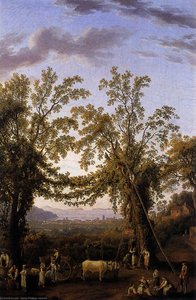
Grandes Cascades à Tivoli

Reproduction à l'huile faite à la main

Huile sur toile peinte à la main, avec cadre et dimensions personnalisés, réalisée sur commande par nos artistes. ( Passer au format impression Passer au format numérique)

Description de la pièce

Découvrez Grandes Cascades à Tivoli (1783) de Hackert. Un chef-d'œuvre rococo mêlant détails magistraux et perspective atmosphérique.

Biographie de l'artiste

Jacob Philipp Hackert (1737-1807) : peintre paysagiste allemand célèbre pour ses scènes italiennes et son style classique. Artiste de cour de Ferdinand I, influencé par Vernet & Goethe. Découvrez ses chefs-d'œuvre !

à partir du ·

Chapitre 1

Quelle dimension choisir ?

Faites glisser pour modifier la taille ; l'image de gauche présente le cadre à sa largeur réelle. Les proportions de l'original sont conservées.

Format standard
sur mesure
CM
INCH

Choisissez parmi nos formats prédéfinis qui respectent les proportions originales de l’œuvre.

largeur
hauteur

Saisissez la largeur et la hauteur souhaitées, pour s'adapter à votre cadre ou à votre mur. Cette œuvre est peinte à la main ; ainsi, pour un format de forme différente, l'artiste peut peindre un peu plus autour du tableau ou réduire légèrement les bords — c'est vous qui choisissez. Nous vous envoyons une maquette numérique pour approbation avant que la peinture ne commence. L'image présentée sur cette page ne reflète pas le résultat réel — seule la maquette le fait.

Chapitre 2

Comment souhaitez-vous qu'il vous soit livré ?

Choisissez le type de bordure pour votre toile tendue

Choisissez votre cadre

Corner sample of the WhiteWrap canvas edge finish, stretched on bois massif bars
Bords blancs €1
Corner sample of the BlurSideWrap canvas edge finish, stretched on bois massif bars
Bords estompés €1
Corner sample of the ExtendedWrap canvas edge finish, stretched on bois massif bars
Bords imprimés €1
Corner sample of the P118B picture frame: polystyrène moulé, 5 cm wide and 3 cm thick
P118B €10
Corner sample of the P118H picture frame: polystyrène moulé, 5 cm wide and 3 cm thick
P118H €10
Corner sample of the P118W picture frame: polystyrène moulé, 5 cm wide and 3 cm thick
P118W €10
Corner sample of the P438Z picture frame: polystyrène moulé, 5.5 cm wide and 3.5 cm thick
P438Z €10
Corner sample of the P508JH picture frame: polystyrène moulé, 7 cm wide and 3.5 cm thick
P508JH €12
Corner sample of the P508YH picture frame: polystyrène moulé, 7 cm wide and 3.5 cm thick
P508YH €12
Corner sample of the P805H picture frame: polystyrène moulé, 5 cm wide and 3.5 cm thick
P805H €10
Corner sample of the P805Z picture frame: polystyrène moulé, 5 cm wide and 3.5 cm thick
P805Z €10
Corner sample of the P919BZ picture frame: polystyrène moulé, 7 cm wide and 3.5 cm thick
P919BZ €10
Corner sample of the P919G picture frame: polystyrène moulé, 7 cm wide and 3.5 cm thick
P919G €10
Corner sample of the P919XJ picture frame: polystyrène moulé, 7 cm wide and 3.5 cm thick
P919XJ €10
Corner sample of the P959ZH picture frame: polystyrène moulé, 5 cm wide and 3 cm thick
P959ZH €10
Corner sample of the P968JZ picture frame: polystyrène moulé, 6 cm wide and 4 cm thick
P968JZ €12
Corner sample of the W106C picture frame: bois massif, 5 cm wide and 3 cm thick
W106C €8
Corner sample of the W218G picture frame: bois massif, 5 cm wide and 3 cm thick
W218G €10
Corner sample of the W218JH picture frame: bois massif, 5 cm wide and 3 cm thick
W218JH €8
Corner sample of the W218Y picture frame: bois massif, 5 cm wide and 3 cm thick
W218Y €10
Corner sample of the W307PJ picture frame: bois massif, 6 cm wide and 3 cm thick
W307PJ €10
Corner sample of the W316G picture frame: bois massif, 6 cm wide and 3 cm thick
W316G €10
Corner sample of the W316PJ picture frame: bois massif, 6 cm wide and 3 cm thick
W316PJ €8
Corner sample of the W316Y picture frame: bois massif, 6 cm wide and 3 cm thick
W316Y €10
Corner sample of the W398PJ picture frame: bois massif, 5 cm wide and 3 cm thick
W398PJ €8
Corner sample of the W4111J picture frame: bois massif, 6.5 cm wide and 3.5 cm thick
W4111J €10
Corner sample of the W500HY picture frame: bois massif, 7 cm wide and 5 cm thick
W500HY €15
Corner sample of the W500JH picture frame: bois massif, 7 cm wide and 5 cm thick
W500JH €15
Corner sample of the W692G picture frame: bois massif, 8 cm wide and 4 cm thick
W692G €12
Corner sample of the W849H picture frame: bois massif, 5 cm wide and 3 cm thick
W849H €8
Corner sample of the W940BG picture frame: bois massif, 7.5 cm wide and 4.5 cm thick
W940BG €15
Corner sample of the W953PJ picture frame: bois massif, 6 cm wide and 3.5 cm thick
W953PJ €8
Corner sample of the H24-GOLD picture frame: bois sculpté et apprêté au gesso, 10 cm wide and 6 cm thick
H24-GOLD €30
Corner sample of the H24-SILVER picture frame: bois sculpté et apprêté au gesso, 10 cm wide and 6 cm thick
H24-SILVER €30
Corner sample of the H36-GOLD picture frame: bois sculpté et apprêté au gesso, 15 cm wide and 6.5 cm thick
H36-GOLD €45
Corner sample of the H36-SILVER picture frame: bois sculpté et apprêté au gesso, 15 cm wide and 6.5 cm thick
H36-SILVER €45
Aperçu du cadre
Sous cadre

Baguette : . Dimensions hors tout avec le cadre : .

Chapitre 3

Qui le peint, et y a-t-il des modifications à apporter ?

Exemples de personnalisation possibles : Remplacer le visage par la photo du client ; Ajouter un animal (ex: remplacer le chat par un chien) ; Inclure un message caché en arrière-plan ; Modifier le paysage ou les éléments de l'arrière-plan.
Après la commande, l'équipe de OriginalUniqueArt.com contactera le client par e-mail pour obtenir ses instructions et lui fournir un aperçu de la maquette

Livraison dans le monde entier () en 3 à 4 semaines au lieu des 5 semaines habituelles. (6 novembre). Aucun compromis sur la qualité.

Chapitre 4

Les dernières touches

Une plaque nominative, comme au musée ?

Détails de la plaque en bronze gravée

This elegant plaque features the artist's name and the title of the artwork, finely engraved for a timeless presentation.

It is made from bronze with a refined, elegant finish. The text is precisely laser-engraved for a sharp and permanent result. Measuring 9x2 cm, the plaque is compact yet easy to read. It's built to be durable and scratch-resistant, offering a professional, museum-quality look. Mounting is simple thanks to the included adhesive backing.

Détails de la plaque en acrylique transparent

The plaque includes essential engraved details such as the artist's name, the title of the artwork, the date it was created, the type of media used-like oil on canvas or watercolor-a brief description of the piece, and a QR code that links to the complete artwork information.

It is crafted from clear acrylic, offering a sleek, modern appearance. The text is UV-engraved in black to ensure strong visual contrast. With a size of 10x15 cm, it ensures optimal readability. It comes equipped with two metal hooks for secure wall mounting. The plaque is designed to be weather-resistant, making it suitable for various environments, and it includes interactive features that work seamlessly with smartphone scanning.

Détails de la plaque en acrylique noir

This elegant plaque includes engraved information such as the artist's name, the title of the artwork, the date it was created, the type of media used (like oil on canvas or watercolor), a short description of the artwork, and a QR code for quick access to more information.

The plaque itself is made from refined black acrylic with a premium finish. The text is laser-engraved in white for high contrast and readability. Its size is 10x15 cm, designed to be easy to read. It comes with two metal hooks for professional mounting. The design is sleek and fits any interior style. It is also weather-resistant and durable, with built-in digital integration for mobile compatibility.

Un vernis protecteur ?

Pour quand en avez-vous besoin ?

Chapitre 5

Votre tableau, tel que vous l'avez commandé

Grandes Cascades à Tivoli

Technique de reproduction

Format de la reproduction

-

Artiste de prestige

Plus de détails, de finesse et un temps de production accru

-

Cadre de reproduction

-

-

Pour les œuvres ou reproductions dont un côté mesure plus de 105 cm (environ 41 pouces), le cadre sera expédié sous forme de kit démonté. Cette méthode garantit une livraison sécurisée et prévient tout dommage pendant le transport.

Assemblage professionnel requis - ce produit n'est pas destiné au bricolage (DIY).
Le kit doit être assemblé et la toile tendue par un encadreur professionnel expérimenté, en utilisant de la colle à bois (non fournie), une pince à tendre la toile et des serre-joints pour maintenir les traverses d'équerre pendant le séchage de la colle. Un assemblage incorrect ou une tension inégale de la toile peut endommager l'œuvre de manière irréversible et n'est pas couvert par notre garantie.

  • Toutes les baguettes en bois massif sont incluses, découpées avec précision à la taille requise.

  • À assembler avec les vis fournies, ainsi qu'avec de la colle à bois pour les assemblages d'angles (non fournie), à prévoir par votre encadreur.

  • L'utilisation d'outils professionnels est requise et non incluse : une pince à tendre la toile (tendeur) et des serre-joints pour maintenir les baguettes bien d'équerre pendant le séchage de la colle.

Important :
L'assemblage des angles nécessite de la colle à bois, les barres doivent être maintenues avec des serre-joints jusqu'au séchage complet de la colle, et le tendage de la toile sur le châssis assemblé nécessite une pince à tendre la toile. Aucun de ces éléments n'est inclus dans le kit. Veuillez consulter un encadreur professionnel expérimenté avant de commander ce format.

Cartel

-

-

Vernis de protection

Vernis brillant (intensifie les couleurs, protège de la lumière et de l'humidité)

-

Personnaliser mon œuvre

Exemples de personnalisation : remplacer le visage par une photo du client ; ajouter un animal de compagnie (par exemple, remplacer un chat par un chien) ; inclure un message caché en arrière-plan ; modifier le paysage ou les éléments d'arrière-plan.

-

Livraison urgente

Livraison dans le monde entier () en 3 à 4 semaines au lieu des 5 semaines habituelles. (6 novembre). Aucune concession sur la qualité.

-

Livraison express

Livraison dans le monde entier () sous 5 semaines. (13 novembre).

Inclus

Prix total

€ 290

Prix total € 290

L'option verre n'est disponible que pour les dimensions inférieures à 110 cm.

Inclus avec chaque commande

  • Livraison express gratuite dans le monde entier
  • Toile de lin de qualité supérieure
  • Assurance transport complète
  • Garantie de remboursement des droits de douane
  • Garantie de fidélité des couleurs
  • Politique de retour de 100 jours (uniquement en cas de défaut)
  • Garantie de remboursement à 100%
  • Offre de tarifs dégressifs

Une Symphonie de Lumière et de Pierre

Dans la grande tapisserie de la peinture de paysage de la fin du XVIIIe siècle, peu d'œuvres capturent l'intersection époustouflante entre l'ordre classique et l'émotion romantique naissante avec autant de maestria que les « Grandes Cascades à Tivoli » de Jacob Philipp Hackert. Peinte en 1783, cette toile monumentale sert de fenêtre sur un monde où la nature est à la fois un chef-d'œuvre structuré et une force indomptée. La scène se déploie avec une cascade spectaculaire qui capte l'attention du spectateur, s'écoulant à travers un paysage accidenté et verdoyant. Hackert ne se contente pas de dépeindre un lieu géographique ; il orchestre une symphonie visuelle où le rugissement de l'eau se ressent par le regard, et où la brume fraîche des chutes semble s'échapper de la surface même de la peinture à l'huile.

La composition est un témoignage de l'influence durable de maîtres tels que Claude Lorrain et Nicolas Poussin. Hackert emploie une structure pyramidale traditionnelle, une technique qui apporte un sentiment de stabilité et d'équilibre éternel à un sujet par ailleurs turbulent. Cette approche architecturale de la nature guide l'œil vers le haut, suivant la descente de l'eau vive vers les collines luxuriantes et vallonnées qui encadrent la scène. Grâce à l'utilisation experte de la perspective atmosphérique, l'artiste crée un immense sentiment d'échelle ; les montagnes lointaines et les horizons doux et brumeux suggèrent un monde qui s'étend bien au-delà des limites du cadre, invitant l'observateur à se perdre dans l'immensité du paysage italien.

La Maîtrise de la Lumière et de la Texture

Techniquement, « Grandes Cascades à Tivoli » est un triomphe du clair-obscur. Hackert utilise des contrastes dramatiques entre les crevasses profondes et ombragées des rochers et les reflets brillants et lumineux qui dansent à la surface de l'eau. Ce jeu de lumière fait plus que créer de la profondeur ; il imprègne la peinture d'une qualité vivante, presque respirante. La touche de l'artiste est remarquablement versatile, passant sans transition des reflets lisses comme le verre dans les bassins tranquilles au rendu texturé et tactile des pierres moussues et du feuillage dense. Un tel souci du détail garantit que chaque élément — des arêtes vives d'un précipice aux nuages doux et éphémères dans le ciel — contribue à une réalité cohérente et immersive.

Pour le collectionneur averti ou le designer d'intérieur, cette pièce offre un sentiment de grandeur inégalé. La palette, riche de verts terreux, d'ocres profonds et de blancs éclatants, constitue une ancre sophistiquée pour tout espace de prestige. Qu'elle soit placée dans une galerie baignée de lumière ou dans un bureau à l'atmosphère feutrée et classique, la peinture agit comme un point focal qui irradie à la fois la tranquillité et la puissance. C'est une œuvre qui ne se contente pas de décorer un mur ; elle transforme un environnement, apportant la majesté sublime du monde naturel dans l'intimité du foyer.

Un Pont Entre les Époques

Au-delà de sa splendeur esthétique, l'œuvre possède une profonde signification historique. Hackert se situe à un carrefour fascinant de l'histoire de l'art, jetant un pont entre l'élégance raffinée et décorative des époques Rococo et Baroque et l'esprit sensible et émotif du Romantisme. Bien que la peinture conserve la précision polie et l'aisance classique de sa formation à l'Académie des Arts de Prusse, il existe un pouls indéniable de sentiment moderne dans la façon dont il capture l'énergie brute des cascades. Cette dualité rend l'œuvre particulièrement fascinante ; elle offre la satisfaction intellectuelle de la composition classique parallèlement à la réponse viscérale et émotionnelle déclenchée par la beauté écrasante de la nature.

Posséder une reproduction de cette envergure, c'est détenir un fragment d'histoire qui célèbre l'harmonie entre l'humanité et l'environnement. L'inclusion subtile d'éléments pastoraux — de petites figures et du bétail se déplaçant dans le paysage — suggère un monde où la vie humaine existe dans un dialogue calme et respectueux avec l'échelle monumentale de la nature. C'est une invitation à contempler l'éternel, un chef-d'œuvre de lumière et de pierre qui continue d'inspirer l'émerveillement plus de deux siècles après sa création.

Questions et réponses

À quelle période de la carrière de Jakob Philipp Hackert appartient « Grandes Cascades à Tivoli » ?

«Grandes Cascades à Tivoli» appartient à la période Période de maturité de la carrière de Jakob Philipp Hackert. Cette classification relie l'œuvre à l'évolution de l'artiste.

Quelle est la technique utilisée pour "Grandes Cascades à Tivoli" et quelles sont ses dimensions ?

«Grandes Cascades à Tivoli» de Jakob Philipp Hackert est une œuvre réalisée en Huile sur toile, mesurant 120 x 170 cm.

«Grandes Cascades à Tivoli» de Jakob Philipp Hackert est-il une composition en portrait, en paysage ou carrée ?

«Grandes Cascades à Tivoli» de Jakob Philipp Hackert présente un format Format paysage. Le format décrit les proportions de la composition.

En savoir plus sur cette peinture

Aperçu en situation Visualiser en RA Passer au format impression Passer au format numérique Envoyer
Détails de l'œuvre Guide Ajouter aux favoris Télécharger l'image Articles similaires Radiographie Diaporama Questions et réponses Statistiques

En chiffres

  • 1783l'année de création
  • 29cadres au choix
  • formats standards, dans leurs propres proportions
  • 5semaines de travail et de livraison
Jakob Philipp Hackert

Jakob Philipp Hackert

1737 - 1807, Allemagne

Informations clés sur Jakob Philipp Hackert

  • Artistic Movement Or Style: Classique, Romantique
  • Artists Or Movements Influenced By This Artist: ['Vedutismo']
  • Artists Who Influenced This Artist:
    • Vernet
    • Wille
    • Lorrain
  • Date Of Birth: 15 septembre 1737
  • Date Of Death: 28 avril 1807
  • Full Name: Jacob Philipp Hackert
  • Nationality: Allemand
  • Notable Artworks:
    • Vue du mont Ventoux
    • Harpie à Caserta
  • Place Of Birth: Prenzlau, Allemagne

Biographie de l'artiste

Early Life and Artistic Foundations

Jacob Philipp Hackert’s story begins in Prenzlau, a small town within the Margraviate of Brandenburg (now part of Germany), on September 15, 1737. His upbringing was profoundly shaped by his father, Philipp Hackert, who practiced as both a portraitist and an animal painter – a dual profession that instilled in young Jacob a deep appreciation for visual representation and artistic skill. His uncle, also a painter residing in Berlin, further nurtured his nascent talent, providing additional guidance and instruction. Formal training commenced at the prestigious Prussian Academy of Arts in Berlin in 1758, where he diligently honed the technical foundations essential to any aspiring artist – mastering perspective, anatomy, color theory, and the various techniques of drawing and painting. However, Hackert’s artistic journey extended beyond the confines of the studio; his early travels through Swedish Pomerania and, crucially, his time in Stockholm exposed him to a broader European artistic landscape. A particularly significant commission from Baron Adolf Friedrich von Olthof – the creation of decorative murals for the baron's estate – proved transformative, broadening Hackert’s horizons and introducing him to diverse aesthetic sensibilities and the demands of large-scale projects. These formative years were not merely about acquiring technical skills; they laid the groundwork for his future artistic vision, shaping his eye and preparing him for the grander stages of his career.

The Italian Awakening: Paris, Rome, and Naples

A pivotal moment in Hackert’s life arrived with his relocation to Paris between 1765 and 1768, alongside fellow Swiss artist Balthasar Anton Dunker. This period proved profoundly influential, immersing him within a vibrant artistic milieu teeming with innovation and experimentation. He found himself deeply inspired by Claude Joseph Vernet, the celebrated painter of landscapes and seascapes, absorbing elements of Vernet’s dramatic compositions, his masterful use of light and shadow, and his ability to evoke powerful atmospheric effects into his own burgeoning style. Simultaneously, he benefited from the tutelage of Johann Georg Wille, a renowned German engraver, who refined his precision, attention to detail, and understanding of printmaking techniques. In 1768, Hackert embarked on a journey that would irrevocably alter his artistic trajectory – he traveled to Italy with his brother Georg, establishing himself primarily in Rome and Naples. This move marked the beginning of an extraordinarily prolific period fueled by numerous commissions for views of the Italian countryside, particularly those commissioned by Sir William Hamilton, a prominent British diplomat and art collector. He traversed the length and breadth of Italy, meticulously documenting its beauty – from the rugged peaks of the Apennines to the sun-drenched shores of the Mediterranean – gaining recognition as a master landscape painter capable of capturing both the grandeur and the intimacy of the Italian world.

Style and Influences: A Synthesis of Classical Grace and Romantic Emotion

Hackert’s artistic style represents a compelling synthesis of classical landscape painting and an emerging Romantic sensibility. Heavily influenced by the works of Claude Lorrain, whose carefully composed ideal landscapes provided him with a template for his own paintings, Hackert's compositions are characterized by balanced arrangements that blend observed reality with an idealized aesthetic vision. However, he distinguished himself through an unwavering commitment to botanical accuracy and a desire for recognizable depictions of place. His paintings are marked by sharp renderings of natural details – the texture of bark, the delicate veins of leaves, the shimmering surface of water – and realistic portrayals of Italian scenery bathed in a warm, golden light. He wasn’t simply painting landscapes; he was capturing moments, evoking emotions, and transporting the viewer to another time and place. His work embodies a unique blend of classical restraint and Romantic exuberance, reflecting the evolving artistic sensibilities of his era.

Patronage, Recognition, and Historical Significance

Hackert's artistic success wasn’t solely dependent on his talent; strategic patronage played a crucial role in elevating his status within the European art world. His ability to capture the sublime beauty of Italy resonated with prominent figures across Europe, leading to numerous commissions and accolades. A landmark commission arrived from Catherine the Great of Russia – a cycle of paintings depicting the pivotal Battle of Chesma, solidifying his reputation on an international scale. Further bolstering his standing was a fruitful relationship with Pope Pius VI, resulting in significant artistic projects that showcased his skill and versatility. In 1786, Hackert reached the pinnacle of his career when he was appointed court painter to Ferdinand I of the Two Sicilies in Naples. This prestigious role extended beyond mere painting; he was entrusted with advising on the creation of a painting restoration laboratory at the Museo di Capodimonte and overseeing the transfer of the esteemed Farnese collections from Rome to Naples, demonstrating his deep understanding of art history and conservation. He produced notable paintings depicting Caserta and the Royal Palace of Caserta, as well as a series illustrating the Bourbon ports. Intriguingly, Hackert also served as a secret informant for Russia during this time, maintaining contact with Andrey Razumovsky – a testament to the complex political landscape in which he operated. A particularly cherished connection blossomed between Hackert and Johann Wolfgang von Goethe during the latter’s visit to Naples in 1786, forging a friendship that further elevated his intellectual standing.

Legacy and Lasting Impact

Jacob Philipp Hackert died on April 28, 1807, in San Pietro di Careggi near Florence. His legacy extends far beyond his individual works; he is remembered as one of the most important landscape painters of the late 18th century. He bridged artistic traditions between Germany and Italy, fostering cross-cultural exchange and leaving behind a substantial body of work that continues to inspire awe and admiration for its beauty, technical mastery, and enduring historical importance. His paintings are not merely representations of scenery; they are windows into a world imbued with both classical grace and Romantic emotion.

Informations clés

  • Year: 1783
  • Artist: Jacob Philipp Hackert
  • Artistic style: Peinture de paysage classique
  • Notable elements or techniques: Perspective atmosphérique ; Rendu détaillé
  • Title: Grandes Cascades à Tivoli

Quiz d'art

Chaque question ne comporte qu'une seule bonne réponse.

Question 1:
À quel mouvement artistique « Grandes Cascades à Tivoli » de Hackert est-il principalement associé ?
Question 2:
L'utilisation de la perspective atmosphérique dans la peinture permet d'obtenir quel effet ?
Question 3:
« Grandes Cascades à Tivoli » illustre le style Rococo en raison de son accent sur :
Question 4:
Qui a commandé à Hackert la création de peintures murales décoratives pour le domaine d'Olthof ?
Question 5:
Quelle est une influence notable sur le style artistique de Hackert, comme en témoigne sa collaboration avec Goethe ?