Aperçu en situation
 Partager
 Partager
 Détails
 Guide imprimable

 Télécharger
 Articles similaires
 Radiographie
 Voir le diaporama
 Statistiques
Paysage
 Huile sur toile
- Art mural
- Romanticism
 1850
1850 225.0 x 920.0 cm
 Walker Art Gallery
 Afficher la suite
Reproduction à l'huile faite à la main
Huile sur toile peinte à la main, avec cadre et dimensions personnalisés, réalisée sur commande par nos artistes. ( Passer au format impression Passer au format image numérique)




P118B €10

P118H €10

P118W €10

P438Z €10

P508JH €12

P508YH €12

P805H €10

P805Z €10

P919BZ €10

P919G €10

P919XJ €10

P959ZH €10

P968JZ €12

W106C €8

W218G €10

W218JH €8

W218Y €10

W307PJ €10

W316G €10

W316PJ €8

W316Y €10

W398PJ €8

W4111J €10

W500HY €15

W500JH €15

W692G €12

W849H €8

W940BG €15

W953PJ €8




Choisissez parmi nos formats prédéfinis qui respectent les proportions originales de l’œuvre.

Saisissez la largeur et la hauteur souhaitées, pour s'adapter à votre cadre ou à votre mur. Cette œuvre est peinte à la main ; ainsi, pour un format de forme différente, l'artiste peut peindre un peu plus autour du tableau ou réduire légèrement les bords — c'est vous qui choisissez. Nous vous envoyons une maquette numérique pour approbation avant que la peinture ne commence. L'image présentée sur cette page ne reflète pas le résultat réel — seule la maquette le fait.
Après la commande, l’équipe OriginalUniqueArt.com contactera le client par e-mail pour recueillir ses instructions et lui fournira une maquette d’aperçu
Livraison dans le monde entier () en 3 à 4 semaines au lieu des 5 semaines habituelles. (25 octobre). Aucun compromis sur la qualité.

Livraison express gratuite dans le monde entier

Toile de lin de haute qualité

Assurance transport complète

Garantie de remboursement des droits de douane

Garantie de fidélité des couleurs

Garantie de retour de 100 jours (uniquement en cas de défaut)

Garantie de remboursement à 100%

Tarifs dégressifs sur quantité
 L'option verre n'est disponible que pour les dimensions inférieures à 110 cm.

Paysage
Technique de reproduction
Format de la reproduction
-


Prix total final
€ 263
Un Paysage Visionnaire : Chef-d'œuvre Atmosphérique de Turner
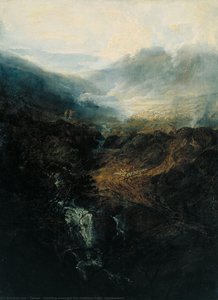
Cette œuvre captivante, intitulée "Paysage", offre un aperçu de l’esprit novateur de J.M.W. William Turner, l’un des peintres romantiques britanniques les plus célébrés. Découvert roulé dans son atelier après sa mort en 1851, cette pièce représente une facette intrigante de sa période expérimentale – un témoignage de sa quête incessante pour capturer des moments fugaces et des effets atmosphériques sur la toile. La dimension monumentale (225 x 920 cm) attire immédiatement l’attention, plongeant le spectateur dans un monde de beauté brumeuse et d'horizons vastes. Les fines fissures verticales à la surface ne sont pas des imperfections, mais plutôt la preuve de son histoire unique et de son processus de création expérimental, ajoutant à son attrait et à son authenticité.Style & Technique : L’Empreinte de l'Atmosphère
Le style caractéristique de Turner est immédiatement reconnaissable dans ce paysage. Il privilégie l’atmosphère et la lumière avant tout détail précis, s’éloignant ainsi d’une simple représentation de la nature pour évoquer un sentiment et une expérience. La composition utilise des bandes horizontales – ciel, terre lointaine et végétation au premier plan – chacune rendue avec des coups de pinceau amples et expressifs qui estompent les frontières entre les formes. Cette technique crée un sentiment de vastitude et de distance, typique du travail de Turner. Bien que le médium précis reste débattu (probablement une combinaison d’aquarelles et de glacis à l'huile), l'effet est celui d'une diffusion lumineuse, comme si l'on regardait à travers un voile de brume. L’absence de lignes dures contribue à la fluidité et à la qualité organique de la scène, soulignant le dynamisme de la nature.Symbolisme & Résonance Émotionnelle
Au-delà de son attrait visuel, ce "Paysage" porte un poids symbolique profond. L’atmosphère brumeuse évoque un sentiment de mystère et invite à la contemplation, reflétant la fascination de Turner pour le sublime – la puissance et la beauté inspirantes de la nature qui inspirent à la fois l'émerveillement et une pointe de mélancolie. La palette de couleurs atténuées – principalement des tons terreux (bruns, ocres, jaunes et gris) ponctués de bleus pâles – contribue à un sentiment général de tranquillité et d’introspection. La peinture peut être interprétée comme une méditation sur la nature éphémère du temps et la grandeur durable du monde naturel. Elle témoigne de la petitesse de l'humanité au sein de l'immensité de l'existence, suscitant à la fois un sentiment d'humilité et une profonde connexion.Contexte Historique & L’Héritage de Turner
Créée vers 1850, cette peinture s'inscrit fermement dans la période romantique, un mouvement qui mettait l'accent sur l'émotion, l'individualisme et le pouvoir de la nature plutôt que sur la raison et les idéaux classiques. Turner était une figure essentielle de cette époque, repoussant les limites de la peinture de paysage et influençant des générations d’artistes, notamment les impressionnistes. Son utilisation innovante de la couleur et de la lumière a ouvert la voie à de nouvelles explorations artistiques, consolidant sa place parmi les figures les plus importantes de l'histoire de l'art occidental. Posséder une reproduction de cette œuvre n'est pas seulement acquérir un bel objet de décoration ; c’est embrasser un héritage d'innovation artistique et d'expression émotionnelle profonde.Questions et réponses
«Paysage» de J.M.W. Turner est-il une œuvre lumineuse ou sombre ?
« Paysage » présente une luminosité globale de éclatant, avec une luminance de Lumineux.
Existe-t-il des œuvres similaires à « Paysage » ?
La page Œuvres similaires de «Paysage» de J.M.W. Turner présente des œuvres similaires.
L'œuvre «Paysage» de J.M.W. Turner est-elle conservée dans le pays d'origine de l'artiste ?
Oui - l'œuvre est conservée dans le pays d'origine de l'artiste. Le pays de naissance de J.M.W. Turner est Royaume-Uni, et le musée qui détient l'original de « Paysage » se trouve en Royaume-Uni.
Biographie de l'artiste
A Life Painted in Light: The World of J.M.W. Turner
Joseph Mallord William Turner, known to the world as J.M.W. Turner, was more than just a painter; he was a visionary who redefined landscape art and paved the way for modern abstraction. Born in Maiden Lane, Covent Garden, London, in 1775, his beginnings were humble – the son of a barber and wig maker. Yet, even as a child, a remarkable talent blossomed within him. By age fourteen, he was enrolled at the Royal Academy, exhibiting his first work just a year later. This early promise wasn’t merely technical skill; it hinted at an innate understanding of light, color, and atmosphere that would become the hallmarks of his extraordinary career. He supplemented his artistic education with practical experience as an architectural draftsman, honing his perspective and compositional abilities – skills that would prove invaluable in rendering both detailed topographical views and vast, emotive landscapes. Turner’s early life was marked by a dedication to his craft, fueled by a natural aptitude and a relentless pursuit of artistic excellence.The Romantic Tempest: Style and Influences
Turner emerged during the height of the Romantic era, but he wasn’t simply a follower of its conventions. He absorbed influences from various sources – the Dutch masters like Claude Lorrain and Aelbert Cuyp for their luminous landscapes, and artists such as Richard Wilson for his poetic approach to nature. However, Turner didn’t merely imitate; he synthesized these influences into something entirely new. His work is characterized by an expressive use of color, often employing bold contrasts and vibrant hues to convey emotion and atmosphere. He was fascinated by the power and drama of nature – turbulent seascapes, fiery sunsets, and swirling storms became recurring motifs in his paintings. He wasn’t interested in simply depicting what he saw; he sought to capture the *feeling* of a place, the sublime awe inspired by the natural world. This pursuit led him to experiment with increasingly loose brushwork, dissolving forms into washes of color and light – techniques that would anticipate the Impressionist movement decades later. From 1840, his work gained significant recognition thanks to the championing of John Ruskin, who elevated landscape painting to a new level of critical acclaim.A Prolific Legacy: The Scope of Turner’s Output
The sheer volume of Turner’s artistic output is astonishing. He created over 550 oil paintings, nearly 2,000 watercolors, and an astounding 30,000 works on paper. This prolificacy wasn’t simply a matter of quantity; it reflected his tireless exploration of different subjects, techniques, and styles. His paintings range from detailed topographical views of British landscapes to dramatic historical scenes and evocative maritime paintings. He was equally adept at capturing the tranquility of a pastoral scene and the terrifying power of a raging storm. Works like “Fort Vimieux” exemplify his mastery of depicting atmospheric effects – the swirling clouds, the crashing waves, and the intense light all contribute to a sense of drama and sublime beauty. Similarly, "Scene in the Campagna" showcases his ability to capture the warmth and serenity of the Italian countryside with delicate brushwork and luminous colors. Beyond painting, Turner was also a skilled printmaker, further disseminating his artistic vision through engravings and lithographs.Turner's Artistic Vision: Light and Atmosphere
Turner’s genius lay in his unparalleled understanding of light and atmosphere—concepts that would become central to the Impressionist movement. He meticulously studied how sunlight interacted with surfaces, capturing fleeting moments of illumination and shadow with astonishing accuracy. His canvases pulsated with color, reflecting the shifting moods of the natural world. Unlike earlier painters who sought to represent landscapes realistically, Turner prioritized conveying emotion and sensation above all else. He achieved this through a revolutionary technique—loose brushstrokes blended together to create luminous washes of color that seemed to dissolve into the air. This approach challenged conventional artistic standards and established Turner as a pioneer of modern art.Recognition and Influence: A Lasting Impact
Turner’s work garnered considerable acclaim during his lifetime, particularly from John Ruskin, who recognized his visionary spirit and championed his artistic achievements. Despite facing criticism for his unconventional style and perceived lack of polish, Turner remained steadfast in his pursuit of artistic excellence. His legacy extends far beyond the canvases he created; he profoundly influenced subsequent generations of artists—inspiring them to embrace experimentation and explore new expressive possibilities. Today, J.M.W. Turner is regarded as one of Britain’s greatest landscape painters—a true titan of Romantic art whose enduring vision continues to captivate audiences worldwide. His paintings are celebrated for their beauty, boldness, and emotional depth—testaments to his extraordinary talent and unwavering dedication to the transformative power of art.
J.M.W. Turner
1775 - 1851 , Royaume-Uni
En bref
- Date De Décès: 19 décembre 1851
- Date De Naissance: 23 avril 1775
- Influence Sur Les Artistes: ['Impressionnisme']
- Lieu De Naissance: Londres, Royaume-Uni
- Mouvement Artistique: Romantisme
- Nationalité: Britannique
- Nom Complet: J.M.W. Turner
- Œuvres Notables:
- Le Combattant téméraire
- Pluie, Vapeur et Vitesse
- Carisbrook Castle, Île de Wight
- Paysage
Articles connexes

Éphémères Visions : L'Aquarelle, Histoire et Résonance Émotionnelle d'un Art Intemporel
Explorez l'histoire fascinante de l'aquarelle, des origines à nos jours. Découvrez les techniques, les artistes emblématiques et nos conseils d'experts pour collectionner ces œuvres éphémères. OriginalUniqueArt.

Les 10 Chefs-d'œuvre du Paysage Romantique : Artistes et Décor d'Intérieur
Plongez dans l'émotion du Romantisme avec les 10 plus beaux paysages de Friedrich, Turner & Delacroix. Découvrez leur histoire et trouvez l'inspiration déco idéale sur OriginalUniqueArt.com !

Ephemeral Visions: Exploring the Artistic Legacy & Contemporary Practice of Watercolor Painting
Explore the captivating world of watercolor painting! Discover its rich history, essential techniques, influential artists & collecting tips. A comprehensive guide for art enthusiasts from OriginalUniqueArt.

Les 10 Chefs-d'œuvre de l'Aquarelle qui ont Révolutionné l'Art | OriginalUniqueArt
Plongez dans l'univers fascinant des 10 chefs-d'œuvre de l'aquarelle qui ont marqué l'histoire de l'art. Découvrez Turner, Monet, Goya et bien d'autres ! Retrouvez ces œuvres emblématiques en reproductions exceptionnelles sur OriginalUniqueArt.com.

L'Aquarelle : Histoire, Techniques et Nuances d'une Peinture de Lumière Éphémère
Explorez l'histoire fascinante de l'aquarelle, des techniques ancestrales aux maîtres impressionnistes. Découvrez les artistes emblématiques et nos conseils pour apprécier et collectionner cette peinture lumineuse.