Northern Renaissance · 1598
Forest Landscape (Gillis Van Coninxloo, 1598)
Gillis Van Coninxloo (1544–1607) a réalisé Forest Landscape. Elle date de 1598. Il appartient au mouvement Northern Renaissance. Réalisée en Oil On Panel. Il est conservé au Musée de Liechtenstein à Vienne, Autriche. Ses dimensions sont 42 × 61 cm.
- 1598
- Oil On Panel
- 42 × 61 cm
- Musée de Liechtenstein, Vienne

 Aperçu en situation

 Peinture à l'huile faite main
 Envoyer
 Partager
 Fiche pédagogique


 Télécharger l'image
 Articles similaires
 Radiographie
 Diaporama
 Questions et réponses

 Statistiques
Forest Landscape, en bref
- Titre
- Forest Landscape
- Artiste
- Gillis Van Coninxloo (1544–1607)
- Lieu de naissance de l'artiste
- Anvers, Belgique
- Date
- 1598
- Technique
- Oil On Panel
- Dimensions
- 42 × 61 cm
- Où le voir
- Musée de Liechtenstein, Vienne, Autriche
- Mouvement
- Northern Renaissance
- Période
- Early Modern
- Sujet
- forest landscape, dark woods, path, village view, atmospheric, tranquility
Que représente Forest Landscape ?
Identification of the Forest Landscape Artwork
The artwork titled Forest Landscape is a painting by the Flemish artist Gillis Van Coninxloo. Executed in 1598, this work is an oil on panel. The physical dimensions of the piece are 42 x 61 cm. It is currently held within the Liechtenstein Museum in Vienna, Austria.
This specific composition depicts a dense woodland environment. The scene features a winding path that leads into a thicket of trees. The foliage consists of various shades of green, while the trunks and branches create a heavy canopy overhead. In the background, a small village is visible through the gaps in the trees, providing a sense of distance within the forest setting.
The subject matter focuses on the natural world, specifically the textures of bark, leaves, and moss. A single, small human figure is positioned beneath a tree within the landscape. The composition utilizes a dark palette of browns, greens, and ochres to define the wooded area. Light filters through the upper branches, creating a contrast between the shadowed recesses of the undergrowth and the illuminated patches of the clearing.
Composition and Visual Elements
The composition is largely symmetrical, organized around a winding path that leads the eye toward the center of the image. This path cuts through a dense woodland, where the trunks and branches of trees intertwine to form a thick canopy overhead. Only a few small patches of sky are visible through the gaps in the foliage. Within this enclosed space, a single tiny human figure reclines beneath a tree, positioned near the center of the scene. The scale of the trees and the surrounding undergrowth dwarfs the figure, emphasizing the vastness of the natural environment.
Color is concentrated in the various hues of green found in the leaves and the mossy textures of the forest floor. These greens contrast with the dark browns and ochres of the tree trunks and the earth. In the background, a small village is visible through the trees, providing a sense of distance and depth. The lighting creates a chiaroscuro effect, with strong contrasts between the deep shadows of the thickets and the light that filters through the canopy onto the path and the reclining figure.
Technique and Artistic Style
The artist utilized oil on panel to establish a sense of depth and a tangible texture across the surface. The application of paint likely involves multiple layers and glazing, a method used to achieve a specific luminosity within the darker sections of the composition. This technique allows light to appear as though it is filtering through the canopy, creating a chiaroscuro effect through the deliberate placement of light and shadow. The resulting atmosphere is defined by a palette of dark colors and a high degree of intricate detail.
The composition is built upon a dense arrangement of ancient oaks and thick undergrowth. There is a clear priority placed on the textural richness of the natural elements, specifically the bark of the trees, the individual leaves, and the presence of moss. These organic forms are rendered with meticulous care, contributing to the overall density of the woodland scene. The interplay of light and shadow defines the verticality of the trunks and the irregular shapes of the foliage, emphasizing the physical presence of the forest environment.
Artistic Influence and Legacy
Gillis Van Coninxloo occupied a central position in the evolution of Northern landscape art. His technical approach functioned as a bridge between the intricate traditions of Mannerism and the atmospheric depth characteristic of the early Baroque. Through his development of the forest landscape, he moved away from panoramic vistas toward intimate, enclosed woodland scenes. This shift prioritized the textural details of bark, leaves, and moss, often submerging small human figures within an expansive, detailed natural environment.
The influence of his method extended to several prominent painters of the period. Jan Brueghel the Elder and Pieter Schoubroeck were among those affected by his stylistic developments. His approach to dense, immersive woodland compositions also impacted the work of Roeland Savery and various other Flemish and Dutch landscape painters. This specific work, created about 1598, represents his technical skill and craftsmanship in rendering the natural world.
Dans quel musée se trouve Forest Landscape ?
Musée de Liechtenstein
Vienne, Autriche
Un joyau de la splendeur baroque viennoise Niché au cœur de l'historique Ringstraße de Vienne, le Musée Liechtenstein s'épanouit dans un écrin qui est tout autant un chef-d'œuvre que les trésors qu'il protège. Logé dans le magnifique Palais Liechtenstein, le musée propose un voyage immersif dans l'âme de l'élégance aristocrastique et l'héritage profond de la Maison de Liechtenstein. À mesure que les visiteurs approchent de cette structure palatiale, ils sont accueillis par la grandeur architecturale d'une époque révolue, où chaque corniche dorée et chaque escalier majestueux murmurent des récits de prestige impérial.


Images haute résolution de Forest Landscape

Domaine public : l'artiste est décédé en 1607.
Autres formats, recadrages et citations →Gillis Van Coninxloo, Forest Landscape (1598), Musée de Liechtenstein. Domaine public
Questions sur Forest Landscape, réponses
Où peut-on voir «Forest Landscape» de Gillis Van Coninxloo actuellement ?
«Forest Landscape» de Gillis Van Coninxloo est exposé au Musée de Liechtenstein, Vienne, Autriche. La mention du musée se rapporte à l'œuvre originale et non aux reproductions.
En quelle année «Forest Landscape» de Gillis Van Coninxloo a-t-il été créé ?
«Forest Landscape» de Gillis Van Coninxloo a été créé en 1598.
Quelle technique a été utilisée pour «Forest Landscape» de Gillis Van Coninxloo ?
Gillis Van Coninxloo a utilisé la technique du Oil On Panel pour « Forest Landscape ». Cette technique définit la nature matérielle de l'œuvre originale.
Quelles sont les dimensions réelles de «Forest Landscape» de Gillis Van Coninxloo ?
«Forest Landscape» mesure 42 x 61 cm dans sa forme originale. Les dimensions originales constituent une référence utile lors du choix de la taille d'une reproduction.
Que représente « Forest Landscape » ?
L'œuvre « Forest Landscape » représente forest landscape, dark woods, path, village view, atmospheric, tranquility, nature scene, 16th century.
L'œuvre « Forest Landscape » est-elle dans le domaine public ?
Concernant les droits d'auteur, « Forest Landscape » est dans le dans le domaine public - ses droits d'auteur sont tombés dans le domaine public.
Qui est l'auteur de "Forest Landscape" ?
« Forest Landscape » a été créé par Gillis Van Coninxloo. Les informations présentes sur cette page décrivent l'œuvre originale de Gillis Van Coninxloo.
À quel mouvement artistique appartient « Forest Landscape » ?
« Forest Landscape » est une œuvre issue du Northern Renaissance. Ce mouvement définit la tradition artistique à laquelle l'œuvre appartient.
À quelle étape de la carrière de Gillis Van Coninxloo « Forest Landscape » s'inscrit-elle ?
Au cours de la carrière de Gillis Van Coninxloo, « Forest Landscape » s'inscrit dans la période Late 16th Century. Cette phase permet de le comparer aux autres œuvres de l'artiste.
À propos de l'artiste, Gillis Van Coninxloo
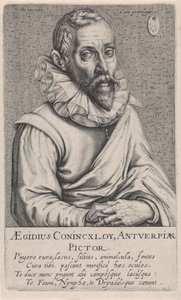
1544–1607, Belgique
Gillis Van Coninxloo
Un Maître du Royaume Verdoyant Gillis van Coninxloo s'impose comme une figure charnière dans l'évolution du paysage septentrional, agissant comme un pont essentiel entre les traditions maniéristes complexes et la profondeur atmosphérique naissante du début du Baroque. Né à Anvers, en Belgique, sa vie fut profondément liée au riche héritage artistique des Pays-Bas. Fils de peintre, il fut immergé dans un univers où le savoir-faire artisanal et l'observation de la nature étaient primordiaux. Sa formation initiale auprès de maîtres tels que Pieter Coecke van Aelst le Jeune et Lenaert Kroes lui assura une base rigoureuse, mais c'est son passage dans l'atelier de Gillis Mostaert qui permit véritablement à son talent de s'épanouient, lui permettant de contribuer à des œuvres professionnelles tout en affinant sa vision unique.
À propos de Gillis Van Coninxloo Œuvres notables de Gillis Van Coninxloo
Autres œuvres de Gillis Van Coninxloo
 Jonas prêchant aux Ninivites1583
 Bois avec Saint Jérôme1583
 Paysage avec le jugement de Midas1598
 Paysage avec le Jugement de Pâris1610
Essais sur Forest Landscape
 Peintres français de l'école de BarbizonDécouvrez les chefs-d'œuvre de l'école de Barbizon, de Rousseau à Daubigny. Explorez la collection sur OriginalUniqueArt.com.
 10 chefs-d'œuvre de la forêt : entre mystère et sérénitéPlongez dans 10 chefs-d'œuvre de la forêt, de Van Gogh à Klimt. Explorez cette collection sur OriginalUniqueArt.com.
 Mastering the Horizon: An Art Historian’s Guide to the World's Most Iconic Landscape PaintingsExplore the profound history of landscape painting with our expert guide. From Impressionist light to Chinese traditions, discover the tech…