Aperçu en situation
 Partager
 Partager
 Détails
 Guide imprimable

 Télécharger
 Articles similaires
 Radiographie
 Voir le diaporama
 Statistiques
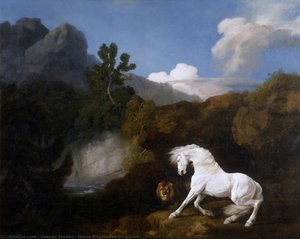
Lion Devouring a Horse
 Oil On Canvas
- WallArt
- Romantic Realism
 1763
1763 69.0 x 104.0 cm
 Tate Gallery
 Afficher la suite
Giclées et impressions d'art
Impressions giclées ou sur toile de qualité musée, avec une production rapide et des finitions au choix. ( Acheter la peinture faite à la main Passer au format image numérique)




P118B €10

P118H €10

P118W €10

P438Z €10

P508JH €12

P508YH €12

P805H €10

P805Z €10

P919BZ €10

P919G €10

P919XJ €10

P959ZH €10

P968JZ €12

W106C €8

W218G €10

W218JH €8

W218Y €10

W307PJ €10

W316G €10

W316PJ €8

W316Y €10

W398PJ €8

W4111J €10

W500HY €15

W500JH €15

W692G €12

W849H €8

W940BG €15

W953PJ €8




Choisissez parmi nos formats prédéfinis qui respectent les proportions originales de l’œuvre.

Vous pouvez saisir vos propres dimensions pour vous adapter à un cadre ou à un espace spécifique. Si la taille sélectionnée ne correspond pas aux proportions de l'image originale, nous recadrerons l'œuvre ou étendrons l'image avec une bordure en miroir ou une couleur unie. Une maquette numérique vous sera envoyée pour approbation avant le début de la production.
Veuillez noter que l'aperçu à l'écran ne reflète pas le recadrage ou l'extension réelle. Seule la maquette montrera avec précision la composition finale.
Bien que des tailles personnalisées soient disponibles, nous vous recommandons de choisir une dimension dans la liste prédéfinie afin de préserver les proportions originales.
Livraison dans le monde entier () en 2 semaines au lieu des 4/5 semaines habituelles. (10 octobre)

Livraison express gratuite dans le monde entier

Toile de lin de haute qualité

Assurance transport complète

Garantie de remboursement des droits de douane

Garantie de fidélité des couleurs

Garantie de retour de 100 jours (uniquement en cas de défaut)

Garantie de remboursement à 100%

Tarifs dégressifs sur quantité
 L'option verre n'est disponible que pour les dimensions inférieures à 110 cm.

Lion Devouring a Horse
Giclées et impressions d'art
Format de la reproduction
-


Prix total final
€ 69
The Drama of Nature Captured: George Stubbs' Lion Devouring a Horse
To stand before George Stubbs’ magnificent "Lion Devouring a Horse" is to be plunged into a moment of raw, untamed drama. This 1763 oil on canvas does more than merely depict an animal encounter; it arrests time itself, freezing the apex of conflict in vivid, masterful strokes. Stubbs, celebrated for his unparalleled anatomical studies of equine life, elevates this scene beyond mere natural history painting into a profound meditation on power dynamics and survival. The sheer energy radiating from the central action—the lion’s powerful jaws closing upon the struggling form of the horse—is breathtaking, inviting the viewer to lean in, breathless, as if they too are witnessing the struggle firsthand.
Mastery of Form and Color
Stubbs' technical brilliance is immediately apparent. The artist possessed an almost scientific understanding of musculature, rendering both creatures with startling verisimilitude. Observe the texture: the lion’s coat, rendered in deep, brooding shades of brown and black, contrasts dramatically against the lighter, more yielding tones used for the horse and the surrounding landscape. This masterful use of color heightens the tension; the rich saturation of the foreground elements pops against the serene, yet dramatic, backdrop of the rocky terrain beneath a clear blue sky. The composition is inherently balanced, guiding the eye inexorably toward the violent nexus at the center, while the scattered trees and open sky provide just enough context to ground this intense spectacle in a believable, if theatrical, outdoor setting.
Historical Echoes and Artistic Lineage
The genesis of this powerful piece is rooted in classical antiquity. Stubbs himself noted that his inspiration stemmed from an antique marble sculpture encountered during his travels to Rome. This connection suggests that the painting is not just a record of wildlife, but a dialogue across centuries—a conversation between Renaissance artistic ideals and the vibrant realism of the Georgian era. By referencing such classical models while executing it in the rich, tactile medium of oil on canvas, Stubbs bridges epochs. It speaks to an enduring human fascination with mythic struggle, making the work timeless regardless of its 18th-century origins.
Symbolism and Emotional Resonance
Beyond the technical prowess lies a deeper symbolic resonance. The confrontation between the lion—often a symbol of raw, untamed masculine power—and the horse, frequently representing nobility, grace, or even humanity itself, creates an immediate tension. The act depicted suggests a brutal assertion of dominance. For the modern collector or decorator, this painting offers more than just decorative flair; it injects a palpable sense of narrative drama into any space. It is a conversation piece that demands attention, suggesting themes of struggle, inevitable change, and the raw beauty found at the precipice of conflict.
Bringing the Drama Home
For those who wish to capture this electrifying moment in their own interiors, acquiring a high-quality reproduction allows one to possess this masterpiece's energy without leaving the comfort of home. The ability of an oil painting medium to retain such depth and vibrancy ensures that the drama—the tension between the predator and the prey—remains immediate and visceral. It is an investment not only in art history but in a continuous source of dramatic, sophisticated inspiration for any discerning eye.
Questions et réponses
Quel âge avait George Stubbs lors de la création de « Lion Devouring a Horse » ?
George Stubbs avait 39 ans lors de la création de « Lion Devouring a Horse » en 1763. L'âge est calculé à partir de l'année de naissance de l'artiste, 1724.
Quelle est la date de création de «Lion Devouring a Horse» de George Stubbs ?
«Lion Devouring a Horse» date de 1763. Cette date inscrit l'œuvre dans la carrière de George Stubbs ainsi que dans son époque.
Où devrait être accrochée une reproduction de «Lion Devouring a Horse» de George Stubbs ?
Le format (Landscape) et l'espace recommandé (Living Room) sont les deux caractéristiques de disposition enregistrées pour «Lion Devouring a Horse» de George Stubbs.
Comment le style de « Lion Devouring a Horse » s'inscrit-il dans l'époque de son créateur ?
«Lion Devouring a Horse» de George Stubbs s'inscrit dans le mouvement Romantic Realism, au sein de l'époque L'époque moderne de son créateur.
Qui a créé "Lion Devouring a Horse" ?
« Lion Devouring a Horse » est attribué à George Stubbs.
Un téléchargement en haute résolution de « Lion Devouring a Horse » est-il disponible ?
« Lion Devouring a Horse » est disponible en tant que un téléchargement d'image numérique haute résolution, à acheter directement sur cette page.
Quelle est l'atmosphère générale de «Lion Devouring a Horse» de George Stubbs ?
L'atmosphère générale de «Lion Devouring a Horse» de George Stubbs est Dramatic. Cette ambiance décrit l'impression globale de l'œuvre.
Biographie de l'artiste
Premières années et formation
George Stubbs, peintre anglais renommé, est né le 25 août 1724 à Liverpool, au Royaume-Uni. Les premières années de sa vie sont marquées par un manque d'informations précises jusqu’à l’âge de 35 ans, la plupart des détails provenant des mémoires d’Ozias Humphry, basés sur des conversations avec Stubbs en 1794. Son parcours artistique a débuté à l’âge de 15 ans, lorsqu’il travailla initialement sous la direction de son père, tanneur ou préparateur de cuir. Il s'est ensuite adressé à Hamlet Winstanley, un peintre et graveur du Lancashire, pour un bref apprentissage. Cette courte période lui a permis d’étudier la collection de Knowsley Hall.Développement artistique et œuvres notables
La passion de Stubbs pour l’anatomie l’a conduit à s'installer à York en 1744, où il étudia sous la direction du chirurgien Charles Atkinson au York County Hospital. L'un de ses premiers travaux survivants est un ensemble d'illustrations pour le manuel de médecine de John Burton, publié en 1751. En 1756, Stubbs a loué une ferme dans le Lincolnshire et y a passé 18 mois à disséquer des chevaux, assisté par sa concubine, Mary Spencer. Cela a conduit à la publication de *L'anatomie du cheval* en 1766, dont les dessins originaux sont aujourd’hui conservés à la Royal Academy. Son travail a rapidement été reconnu par d'importants mécènes aristocratiques, notamment le 3e duc de Richmond, qui lui commanda trois grandes peintures en 1759. Cela marqua le début de sa carrière réussie, avec des œuvres produites pour plusieurs ducs et lords, culminant à l’achat d’une maison à Marylebone, Londres.Style artistique et influences
Le style de Stubbs se caractérise par une précision anatomique exceptionnelle, un réalisme minutieux et une attention particulière aux détails de la fourrure et du pelage des animaux. Il était influencé par les études scientifiques de l'époque, notamment en anatomie, mais aussi par l’art classique romain et grec. Ses peintures de chevaux sont particulièrement célèbres pour leur dynamisme et leur représentation fidèle de l'anatomie équine. Bien que réaliste dans sa description des animaux, Stubbs a également exploré des thèmes plus imaginatifs et romantiques, comme en témoignent ses séries de tableaux représentant un lion attaquant un cheval. Ces œuvres s’inscrivent dans le courant naissant du mouvement romantique, anticipant les développements artistiques du XIXe siècle.Héritage et contributions à l'art
L'œuvre la plus célèbre de Stubbs est sans doute *Whistlejacket*, une peinture d'un cheval pur-sang en galop commandée par le 2e marquis de Rockingham, aujourd’hui conservée à la National Gallery de Londres. Cette œuvre, ainsi que deux autres commandes pour Rockingham, rompent avec les conventions artistiques de l'époque en présentant des arrière-plans unis et sobres. *Whistlejacket* illustre parfaitement la maîtrise de Stubbs dans la capture de l'essence du cheval, son mouvement et sa puissance. Ses séries de peintures sur un lion attaquant un cheval sont considérées comme des exemples précoces du mouvement romantique, démontrant son influence sur l’art du XVIIIe siècle. L’héritage de Stubbs en tant qu’artiste équin reste inégalé, ses œuvres continuant d'inspirer et d'impressionner les amateurs d'art dans le monde entier.Œuvres majeures et expositions
Stubbs a laissé derrière lui un vaste corpus d'œuvres comprenant des portraits de chevaux, de chiens, de lions et d’autres animaux. Parmi ses autres œuvres notables figurent *La chasse du Grosvenor*, *Un Spaniel Noir d'Eau*, *Un Chasseur de Bays avec deux Spaniels* et *Lion attaquant un cheval*. Ses œuvres sont aujourd'hui exposées dans les plus grands musées du monde, notamment la National Gallery de Londres, le Holburne Museum à Bath et la Galerie Roy Miles à Londres. La Collection de Bearsted au Warwickshire possède également des œuvres significatives de Stubbs.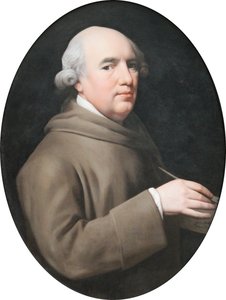
George Stubbs
1724 - 1806 , Royaume-Uni
En bref
- Artistes Influents: ['Hamlet Winstanley']
- Date De Naissance: 25 août 1724
- Lieu De Naissance: Liverpool, Royaume-Uni
- Mouvement Artistique: Romantisme
- Nationalité: Britannique
- Nom Complet: George Stubbs
- Œuvres Notables:
- Whistlejacket
- Lion attaquant un cheval
- La chasse du Grosvenor
Articles similaires
George Stubbs: Anatomical Precision & Romantic Vision in 18th-Century British Art
Explore the captivating world of George Stubbs, the 18th-century master renowned for his anatomical precision & Romantic animal paintings. Discover his legacy and investment potential.
The Noble Steed on Canvas: A Historical & Artistic Exploration of Horse Painting Across Cultures
Explore the rich history of horse painting! Discover masterpieces from Stubbs to Munnings & learn about symbolism, techniques & artists. Find museum-quality reproductions at OriginalUniqueArt.

Georges Seurat : Les 25 Œuvres Maîtresses du Pointillisme | OriginalUniqueArt
Plongez dans l'univers lumineux de Georges Seurat ! Découvrez les 25 œuvres majeures du pointillisme, de 'Un dimanche après-midi à l'Île de la Grande Jatte' aux 'Poseuses'. Reproductions d'art exceptionnelles et inspiration déco sur OriginalUniqueArt.com.

Georges Braque : Les 25 Œuvres Maîtresses du Cubisme et de la Modernité | OriginalUniqueArt
Plongez dans l'univers de Georges Braque avec les 25 œuvres incontournables du cubisme. Découvrez l'histoire, les techniques et l'impact de ce maître de l'art moderne. Reproductions d'art exceptionnelles sur OriginalUniqueArt.com.
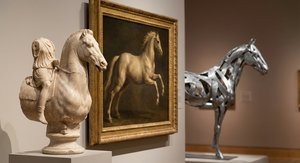
The Noble Steed: A Historical and Artistic Exploration of Horses in Fine Art
Explore the rich history of horses in fine art! From ancient depictions to Renaissance masterpieces & beyond, discover iconic artworks and artists. Learn about symbolism, techniques, and find museum-quality reproductions at OriginalUniqueArt.