
 Aperçu en situation
 Envoyer
 Partager
 Détails de l'œuvre

 Télécharger
 Articles similaires
 Radiographie
 Diaporama
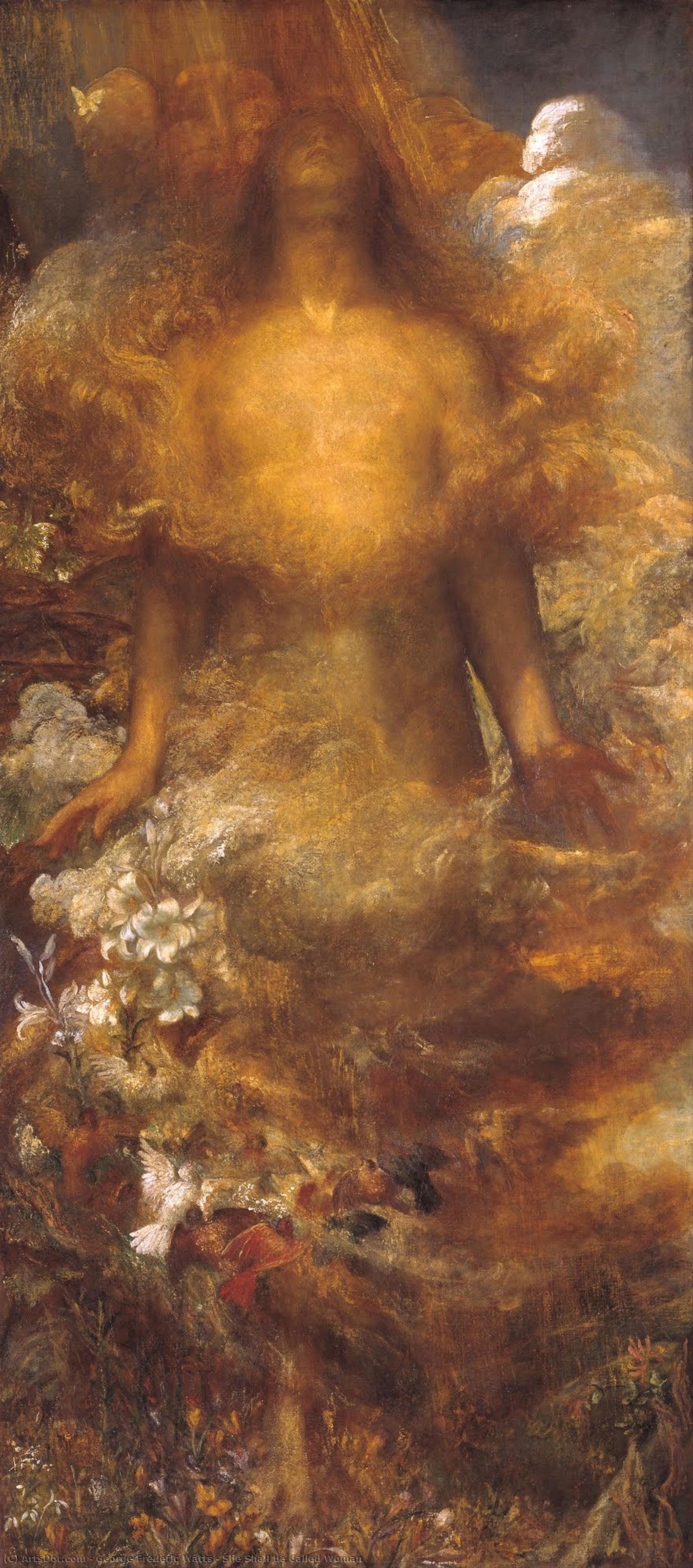
She Shall be Called Woman
 Oil On Canvas
- WallArt
- Symbolist Movement
 1880
1880- 19th Century
 116.0 x 257.0 cm
 Tate Britain
 Lire la suite
Reproduction à l'huile faite à la main
Huile sur toile peinte à la main, avec cadre et dimensions personnalisés, réalisée sur commande par nos artistes. ( Commander l'impression Télécharger l'image haute résolution)




P118B $10

P118H $10

P118W $10

P438Z $10

P508JH $12

P508YH $12

P805H $10

P805Z $10

P919BZ $10

P919G $10

P919XJ $10

P959ZH $10

P968JZ $12

W106C $8

W218G $10

W218JH $8

W218Y $10

W307PJ $10

W316G $10

W316PJ $8

W316Y $10

W398PJ $8

W4111J $10

W500HY $15

W500JH $15

W692G $12

W849H $8

W940BG $15

W953PJ $8




Choisissez parmi nos formats prédéfinis qui respectent les proportions originales de l’œuvre.

Vous pouvez saisir vos propres dimensions pour l'adapter à un cadre ou à un espace spécifique. Si la taille sélectionnée ne correspond pas aux proportions de l'image d'origine, nous recadrerons l'œuvre ou prolongerons la peinture avec des éléments peints à la main supplémentaires. Une maquette numérique vous sera envoyée pour approbation avant le début de la production.
Veuillez noter que l'aperçu à l'écran ne reflète pas le recadrage ou l'extension réels. Seule la maquette montrera fidèlement la composition finale.
Bien que des tailles personnalisées soient disponibles, nous vous recommandons de sélectionner une dimension dans la liste prédéfinie afin de préserver les proportions d'origine.
Après la commande, l’équipe OriginalUniqueArt.com contactera le client par e-mail pour recueillir ses instructions et lui fournira une maquette d’aperçu
Livraison dans le monde entier () en 3 à 4 semaines au lieu des 5 semaines habituelles. (21 août). Aucun compromis sur la qualité.

Livraison express gratuite dans le monde entier

Toile de lin de qualité supérieure

Assurance transport complète

Garantie de remboursement des droits de douane

Garantie de fidélité des couleurs

Politique de retour de 60 jours (uniquement en cas de défaut)

Garantie de remboursement à 100%

Offre de tarifs dégressifs
 L'option verre n'est disponible que pour les dimensions inférieures à 110 cm.

She Shall be Called Woman
Technique de reproduction
Format de la reproduction
-


Prix total
$ 300
Description de l'œuvre
The Enigmatic Figure: A Portrait of Quiet Strength
George Frederic Watts’ “She Shall be Called Woman,” painted circa 1875-92, is not a portrait in the conventional sense. It's an arresting study in stillness and profound contemplation, capturing a woman seemingly lost within her own thoughts. The figure, rendered with a deliberate lack of explicit detail – her face obscured by a veil of dark hair – immediately invites speculation and projection. She stands bathed in a diffused light, reminiscent of a northern sky, suggesting both vulnerability and an inner resilience. The composition is carefully balanced; the verticality of her form contrasts subtly with the horizontal sweep of the landscape behind her, creating a sense of groundedness despite the ethereal quality of the scene.
Watts’ masterful use of oil paint allows for a remarkable depth of texture and color. The muted palette – predominantly blues, greens, and browns – evokes a mood of melancholy and introspection. Notice how he builds up layers of pigment to create subtle gradations in tone, particularly around the folds of her dress and the suggestion of foliage behind her. This technique isn’t merely decorative; it contributes significantly to the painting's overall sense of atmosphere and emotional resonance.
A Symbolist Vision: Echoes of Myth and Philosophy
“She Shall be Called Woman” firmly establishes Watts as a key figure within the Symbolist movement, a European artistic current that flourished in the late 19th century. Rejecting the realism and materialism prevalent in much of 19th-century art, Symbolists sought to express inner states of mind, spiritual truths, and mythological themes through evocative imagery and suggestive forms. This painting is deeply rooted in this philosophy; it’s less about depicting a specific individual and more about embodying an abstract concept – womanhood itself.
The veiled face, a recurring motif in Watts' work, symbolizes the hidden depths of the female psyche, the mysteries that lie beneath the surface. The landscape behind her is not merely a backdrop but a symbolic representation of the inner world—a suggestion of nature’s wisdom and the cyclical rhythms of life. Watts drew heavily on classical mythology and philosophy for inspiration, particularly Plato's concept of the “Allegory of the Cave,” which explores the journey from ignorance to enlightenment. The woman in this painting can be interpreted as a figure emerging from darkness into a realm of greater understanding.
Historical Context: Victorian Sensibilities and Spiritual Yearning
To understand "She Shall be Called Woman," it’s crucial to consider the social and intellectual climate of Victorian England. The era was marked by rapid industrialization, social upheaval, and a growing sense of spiritual unease. Many Victorians felt alienated from the materialism of the age and yearned for something more meaningful—a connection to nature, spirituality, and the timeless values of antiquity. Watts’ art reflects this yearning, offering a refuge from the anxieties of modern life.
Watts himself was deeply influenced by his travels in Italy, where he encountered the works of Michelangelo and Giotto, which profoundly shaped his artistic vision. His interest in classical mythology and philosophy further informed his work, leading him to explore themes of beauty, truth, and the human condition with a profound sensitivity.
Emotional Resonance: A Portrait of Inner Strength
Despite her obscured features, “She Shall be Called Woman” radiates an undeniable sense of strength and dignity. The painting’s power lies not in its literal depiction but in its ability to evoke a feeling—a quiet contemplation, a profound awareness of the mysteries of existence. It's a portrait that invites viewers to project their own hopes, fears, and aspirations onto the figure, creating a deeply personal and resonant experience.
Reproductions of this iconic work offer an opportunity to bring Watts’ evocative vision into any space, serving as a reminder of the enduring power of art to illuminate the human spirit. Consider framing it in a manner that complements its muted palette and contemplative mood – perhaps against a neutral wall or within a room filled with natural light.
Biographie de l'artiste
Premières années et éducation
George Frederic Watts, figure marquante du mouvement symboliste, est né le 23 février 1817 à Marylebone, Londres. Son enfance fut marquée par une santé fragile et la perte de sa mère à un jeune âge. Le père de Watts, fabricant de pianos, lui offrit une éducation chrétienne conservatrice et l'initia aux classiques, dont l’Iliade. Cette influence classique deviendrait plus tard un pilier de son style artistique.Carrière
Watts entama son parcours artistique à l'âge de 10 ans, apprenant la sculpture sous la direction de William Behnes. Il s'inscrit ensuite comme étudiant aux Royal Academy Schools à 18 ans. Sa première exposition à l’Académie en 1837 marqua le début d'une carrière prolifique.- Caractacus, un dessin soumis à un concours pour concevoir des fresques pour les nouvelles Houses of Parliament, lui valut un premier prix en 1843.
- Ses voyages ultérieurs en Italie (1843-1847) et son association avec l'ambassadeur britannique Henry Fox influencèrent son style, comme on le voit dans son portrait de Lady Holland, exposé en 1848.
- Le retour de Watts en Grande-Bretagne conduisit à une commande de fresque dans les Houses of Parliament, qu'il acheva entre 1848 et 1853.
Maîtrises symbolistes
Les œuvres les plus célèbres de Watts incluent :- Hope and Love and Life, destiné à faire partie d’un cycle symbolique épique appelé « La Maison de la Vie ».
- Le triomphe du chevalier écarlate (tiré de La Faërie Queene), achevé en 1852-53, témoigne de sa maîtrise des sujets allégoriques.
- Son portrait de l'actrice Ellen Terry, peint en 1864, exemplifie sa capacité à capturer l’essence de ses sujets.
Influences et développement artistique
Watts a été influencé par un large éventail d'artistes et de mouvements, notamment la Renaissance italienne, le préraphaélisme et le symbolisme européen. Son style évolua au fil du temps, passant d’un réalisme initial à une approche plus allégorique et symbolique. Il était particulièrement intéressé par l'exploration des thèmes universels tels que l'amour, la mort, l'espoir et la foi. Ses voyages en Italie lui permirent d'étudier les maîtres anciens et de développer un sens aigu du dessin et de la composition. L’influence de son association avec Henry Fox se manifesta dans ses portraits, qui témoignent d’une grande attention aux détails et à la psychologie des sujets.Héritage et signification historique
L'influence de Watts sur le monde de l'art est indéniable. Son association avec le mouvement symboliste et son utilisation innovante de la couleur et de la forme en ont fait une figure appréciée dans l’histoire de l’art britannique. Il a contribué à populariser les thèmes allégoriques et symboliques dans la peinture victorienne, ouvrant la voie à des générations d'artistes. Découvrez les œuvres de George Frederic Watts sur OriginalUniqueArt.comMusées présentant l’œuvre de Watts
- Lincoln's Inn, présentant sa fresque Justice, a hemicircle of lawgivers.
- La Watts Gallery – Artists' Village à Guildford, au Royaume-Uni, dédiée à la préservation des œuvres de Watts et d’autres artistes.

George Frederic Watts
1817 - 1904 , Royaume-Uni
L'essentiel de l'artiste
- Artistic Movement Or Style: Symbolisme
- Artists Or Movements Influenced By This Artist: ['Mouvement symboliste']
- Artists Who Influenced This Artist:
- William Beanes
- Henry Fox
- Date Of Birth: 23 février 1817
- Date Of Death: 1904
- Full Name: George Frederic Watts
- Nationality: Britannique
- Notable Artworks:
- Hope and Love and Life
- The Triumph of the Red Cross Knight
- Portrait d'Ellen Terry
- Place Of Birth (City And Country): Marylebone, Royaume-Uni
Articles connexes

Georges Braque : Les 25 Œuvres Maîtresses du Cubisme et de la Modernité | OriginalUniqueArt
Plongez dans l'univers de Georges Braque avec les 25 œuvres incontournables du cubisme. Découvrez l'histoire, les techniques et l'impact de ce maître de l'art moderne. Reproductions d'art exceptionnelles sur OriginalUniqueArt.com.

Georges Seurat : Les 25 Œuvres Maîtresses du Pointillisme | OriginalUniqueArt
Plongez dans l'univers lumineux de Georges Seurat ! Découvrez les 25 œuvres majeures du pointillisme, de 'Un dimanche après-midi à l'Île de la Grande Jatte' aux 'Poseuses'. Reproductions d'art exceptionnelles et inspiration déco sur OriginalUniqueArt.com.
George Frederic Watts: Symbolism, Spirituality & Victorian Ideal Beauty
Explore the captivating Symbolist art of George Frederic Watts. Discover his allegorical masterpieces, classical influences & spiritual themes. Learn about his legacy and find high-quality reproductions at OriginalUniqueArt.
Frederick Waters Watts: A Victorian Vision of Aestheticism & Spiritual Symbolism
Explore the captivating world of Frederick Watts, a key Victorian painter blending aestheticism & spiritual symbolism. Discover his allegorical masterpieces like 'Hope' and delve into his artistic journey with OriginalUniqueArt.

The Enduring Legacy of Oil on Canvas: Technique, History & Aesthetic Impact
Explore the rich history & techniques of oil painting – from Renaissance masters to Impressionism. Discover pigments, layering methods, and why this timeless medium endures. Expert insights for artists & art enthusiasts.



