

 Aperçu en situation
 Envoyer
 Partager
 Détails de l'œuvre

 Télécharger
 Articles similaires
 Radiographie
 Diaporama
Self-Portrait


 Lire la suite
Reproduction à l'huile faite à la main
Huile sur toile peinte à la main, avec cadre et dimensions personnalisés, réalisée sur commande par nos artistes. ( Commander l'impression Télécharger l'image haute résolution)




P118B $10

P118H $10

P118W $10

P438Z $10

P508JH $12

P508YH $12

P805H $10

P805Z $10

P919BZ $10

P919G $10

P919XJ $10

P959ZH $10

P968JZ $12

W106C $8

W218G $10

W218JH $8

W218Y $10

W307PJ $10

W316G $10

W316PJ $8

W316Y $10

W398PJ $8

W4111J $10

W500HY $15

W500JH $15

W692G $12

W849H $8

W940BG $15

W953PJ $8




Choisissez parmi nos formats prédéfinis qui respectent les proportions originales de l’œuvre.

Vous pouvez saisir vos propres dimensions pour l'adapter à un cadre ou à un espace spécifique. Si la taille sélectionnée ne correspond pas aux proportions de l'image d'origine, nous recadrerons l'œuvre ou prolongerons la peinture avec des éléments peints à la main supplémentaires. Une maquette numérique vous sera envoyée pour approbation avant le début de la production.
Veuillez noter que l'aperçu à l'écran ne reflète pas le recadrage ou l'extension réels. Seule la maquette montrera fidèlement la composition finale.
Bien que des tailles personnalisées soient disponibles, nous vous recommandons de sélectionner une dimension dans la liste prédéfinie afin de préserver les proportions d'origine.
Après la commande, l’équipe OriginalUniqueArt.com contactera le client par e-mail pour recueillir ses instructions et lui fournira une maquette d’aperçu
Livraison dans le monde entier () en 3 à 4 semaines au lieu des 5 semaines habituelles. (21 août). Aucun compromis sur la qualité.

Livraison express gratuite dans le monde entier

Toile de lin de qualité supérieure

Assurance transport complète

Garantie de remboursement des droits de douane

Garantie de fidélité des couleurs

Politique de retour de 60 jours (uniquement en cas de défaut)

Garantie de remboursement à 100%

Offre de tarifs dégressifs
 L'option verre n'est disponible que pour les dimensions inférieures à 110 cm.

Self-Portrait
Technique de reproduction
Format de la reproduction
-


Prix total
$ 300
Description de l'œuvre
A Glimpse into the Soul of Neoclassicism
In the quiet intensity of Gaspare Landi’s Self-Portrait, painted in 1806, we are invited to encounter not just a man, but an era. The canvas serves as a profound window into the early nineteenth century, capturing the essence of the Italian Neoclassical movement through a deeply personal lens. As the viewer approaches this masterful work, they are met with a gaze that is both piercing and contemplative, reflecting the serious demeanor of an artist who navigated the shifting cultural tides of his time. The subject, presented in formal attire of the period, wears a dark, structured coat and a crisp white shirt with a delicate ruffled collar, elements that speak to a refined social standing and the disciplined elegance characteristic of the age.
The composition is a masterclass in balance and focus. By placing the figure centrally against a muted, neutral brown background, Landi eliminates all worldly distractions, forcing an intimate confrontation between the sitter and the observer. This deliberate use of negative space ensures that every nuance of the artist's expression—the subtle tension around the eyes and the composed set of the mouth—becomes the focal point of the narrative. For the collector or interior designer, this piece offers a sophisticated anchor for a room, providing a sense of historical weight and intellectual depth that transcends mere decoration.
Technique, Light, and the Art of Presence
The technical prowess displayed in this self-portrait is nothing short of extraordinary. Landi utilizes a light source emanating from the upper left, a technique reminiscent of the great masters, which casts soft, evocative shadows across the right side of his face. This chiaroscuro effect does more than just create three-dimensional volume; it breathes life into the skin tones and highlights the meticulous rendering of textures. One can almost feel the weight of the heavy fabric in his coat and the lightness of the ruffled linen at his neck.
Every brushstroke serves a purpose in building the illusion of reality. The artist’s attention to detail—from the precise placement of buttons to the careful grooming of his hair—demonstrates the rigorous training he received under masters like Pompeo Battoni. This level of precision makes the portrait an ideal candidate for high-quality reproductions, as the subtle gradations of light and shadow are preserved to inspire awe in any setting. The painting does not merely represent a face; it captures a presence, making it a captivating addition to galleries or private studies where the interplay of light and shadow can be fully appreciated.
A Legacy Captured in Pigment
Beyond its aesthetic beauty, the Self-Portrait carries the historical significance of Gaspare Landi’s illustrious career. As a prominent figure in Rome and a future President of the Accademia San Luca, Landi was a custodian of classical ideals during a period of immense political and social change. This painting, created during the height of his maturity, acts as a visual manifesto of his commitment to clarity, dignity, and the pursuit of perfection. It is a testament to an artist who sought to find permanence in an era of transition.
For those seeking to infuse their living spaces with a sense of timelessness, this artwork offers more than just visual appeal; it offers a connection to the heritage of European art. Whether placed in a contemporary minimalist setting to provide a striking historical contrast or within a traditional library to complement classical motifs, Landi’s self-portrait remains an enduring symbol of the human spirit and the eternal power of the Neoclassical vision.
Biographie de l'artiste
A Life Illuminated by Neoclassical Ideals
Gaspare Landi, born in Piacenza, Italy, on January 6th, 1756, emerged as a significant figure within the Italian Neoclassical movement. His early years hinted at a spirited and joyful disposition, yet beneath this playful exterior lay a burgeoning artistic talent waiting to be nurtured. This potential was recognized by his distant relative and patron, Marquis Giambattista Landi, whose generous financial support in 1781 proved pivotal. It enabled the young artist to journey to Rome – the very heart of Italian art and culture – and embark on formal training that would shape his destiny. This act of patronage wasn’t merely a transaction; it was an investment in a future master, allowing Landi access to the artistic currents and intellectual fervor that defined the era.Roman Apprenticeship and Artistic Flourishing
Upon arriving in Rome at the age of twenty-five, Landi entered the studios of Domenico Corvi and Pompeo Battoni, two prominent artists who would become instrumental in his development. Corvi’s influence likely honed Landi's technical precision, while Battoni instilled a sense of classical composure and refined elegance. These masters weren’t simply instructors; they were conduits to the artistic heritage of antiquity, guiding Landi towards an aesthetic rooted in order, clarity, and idealized form. During this formative period, Landi quickly established himself as a skilled painter specializing in religious scenes, mythological subjects, and portraiture. He wasn't merely replicating styles but synthesizing them into something uniquely his own – a blend of technical mastery and dramatic composition that soon garnered attention within the Roman art scene. His ability to imbue his canvases with emotional intensity, coupled with meticulous anatomical detail, set him apart from his contemporaries.Rivalry, Ambition, and Defining Works
Landi’s artistic journey wasn't without its competitive edge. He found himself in a notable rivalry with Vincenzo Camuccini, another leading Neoclassical painter in Rome. This dynamic, rather than hindering creativity, spurred both artists to push the boundaries of their skill and ambition. The competition manifested most strikingly in Piacenza, where Landi created Lo Spasimo (The Agony), a monumental canvas depicting Christ’s struggle on the road to Calvary. It was deliberately conceived as a direct response to Camuccini's work, a bold statement of artistic prowess intended to surpass his rival. Beyond this defining piece, Landi produced other significant works during this period, including Diomedes and Ulysses bearing off the Palladium (1783) – showcasing his skill in mythological narratives – and The Marriage of Abraham and Sarah, once housed in the Pinacoteca at Parma. His religious iconography also flourished, exemplified by the Madonna addolorata created for the church of Santa Casa at Loreto, a testament to his ability to convey profound spiritual emotion through paint.Academic Recognition and Legacy
Landi’s talent didn't go unnoticed by the artistic establishment. In 1805, he was elected as a member of the prestigious Accademia di San Luca in Rome, a recognition of his contributions to the art world. His ascent within the Academy continued; he became a professor of painting theory in 1812 and ultimately its president in 1817 – positions that underscored his influence and leadership within the Roman artistic community. He received accolades from various rulers, including being made a Chevalier of the Order of the Iron Crown and other prestigious orders, further solidifying his reputation. A brief return to Piacenza around 1820 proved unsatisfying; he found provincial life stifling and soon re-established himself in Rome in 1824. His final work, an Assumption, was placed in the church of San Francesco di Paola in Naples, a fitting culmination to a career dedicated to artistic excellence. Gaspare Landi died on February 28th, 1830, leaving behind a legacy as a refined artist and influential academic leader whose work embodies the ideals of Neoclassicism – order, clarity, and a profound reverence for classical themes. While perhaps not as universally celebrated as some of his contemporaries, Landi’s contributions to Italian art remain significant, particularly in shaping artistic education during his time and demonstrating a masterful command of form and emotion within the constraints of neoclassical style.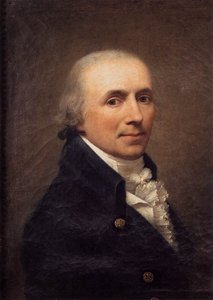
Gaspare Landi
1756 - 1830 , Italie
L'essentiel de l'artiste
- Artistic Movement Or Style: Néoclassicisme
- Artists Or Movements Influenced By This Artist: ['Néoclassicisme']
- Artists Who Influenced This Artist:
- Domenico Corvi
- Pompeo Battoni
- Date Of Birth: 6 janvier 1756
- Date Of Death: 28 février 1830
- Full Name: Gaspare Landi
- Nationality: Italien
- Notable Artworks:
- Lo Spasimo
- Diomedes et Ulysse portant le Palladium
- Le Mariage d’Abraham et Sarah
- Place Of Birth: Piacenza, Italie
Articles connexes

Drama and Light: A Definitive Guide to the Italian Baroque Masterpieces and the Revolution of Chiaroscuro
Explore the dramatic world of Italian Baroque art. Discover how masters like Caravaggio used chiaroscuro and tenebrism to revolutionize painting through light, shadow, and profound realism. A definitive guide for history lovers and art collectors.

Les 10 Chefs-d'œuvre Baroques qui ont Révolutionné l'Art |
Plongez au cœur du baroque avec les 10 chefs-d'œuvre de Caravaggio, Rembrandt et Rubens. Découvrez l'histoire fascinante de ces artistes et leurs tableaux célèbres. Reproductions d'art de qualité muséale sur – Explorez la collection !

Le Drame Baroque : L'Art qui Apporte la Splendeur dans Votre Intérieur
Plongez dans l'univers somptueux du baroque ! Découvrez son histoire, comment l'intégrer à votre intérieur et les œuvres incontournables. : reproductions d'art de qualité supérieure.

Italian Baroque Unlocked: High-Drama Art That Hits Hard
Dive into the high-drama world of Italian Baroque art. Discover how chiaroscuro, intense emotion, and theatrical lighting redefined aesthetics. Explore the visceral power of the Counter-Reformation through a modern lens with expert insights from OriginalUniqueArt.com.

The Visceral Stage: Exploring Dramatic Narratives & Emotional Intensity in Baroque Art
Explore the dramatic world of Baroque art! Discover iconic masters like Caravaggio & Rembrandt, their techniques, and the movement's lasting impact. Expert insights for collectors & enthusiasts at OriginalUniqueArt.

