Academic Art · 1915
Kit Carson (Frederick William Macmonnies, 1915)
Frederick William Macmonnies (1863–1937) a réalisé Kit Carson. Elle date de 1915. Il appartient au mouvement Academic Art. Réalisée en Bronze. Il est conservé au Sagamore Hill National Historic Site à Oyster Bay, États-Unis d'Amérique.

 Peinture à l'huile faite main
 Envoyer
 Partager
 Fiche pédagogique


 Télécharger l'image
 Articles similaires
 Diaporama
 Questions et réponses

 Statistiques
Kit Carson, en bref
- Titre
- Kit Carson
- Artiste
- Frederick William Macmonnies (1863–1937)
- Lieu de naissance de l'artiste
- Brooklyn Heights, États-Unis
- Date
- 1915
- Technique
- Bronze
- Où le voir
- Sagamore Hill National Historic Site, Oyster Bay, États-Unis d'Amérique
- Mouvement
- Academic Art
- Période
- 19th Century
- Sujet
- man, horse, rifle, rock, foliage, bronze
Que représente Kit Carson ?
The Depiction of Kit Carson by Macmonnies
In this bronze work, Frederick William Macmonnies captures Kit Carson on horseback. The sculpture portrays the frontiersman as a significant figure from American history, presented in a moment of action. It was unveiled in 1911 as a large public sculpture celebrating the pioneers of the American Old West. Macmonnies, a sculptor known for his ability to imbue bronze with a sense of vitality, focuses here on the physical presence of the rider and his mount.
The subject, Kit Carson, is depicted with a sense of determination. He sits poised upon the horse, his form integrated into the rugged landscape of the base. This piece reflects the artist's interest in capturing the essence of movement and the spirit of the American frontier. By focusing on the tension within the figure, Macmonnies provides a study of a man defined by the landscape he navigated.
Composition and Visual Elements of the Sculpture
The composition is inherently dynamic, capturing a fleeting moment of action. The rider is poised with a focused intensity, appearing as if he is in the very act of aiming a rifle. This sense of movement is anchored by an elaborate base, where sculpted rocks and foliage provide a rugged foundation for the scene. The perspective is slightly low, looking up at the statue to lend the figure an imposing presence.
Visual rhythm is achieved through a careful balance of lines. Strong, defined lines delineate the musculature of both the horse and the rider, emphasizing the physical tension of the moment. These angular elements contrast with the curved lines that define the contours of the horse's body and the flowing mane. Depth is achieved through the use of overlapping forms, such as the rider positioned in front of the horse’s head, which creates a sense of three-dimensional space within the bronze.
Technique and Materials of the Bronze Work
The sculpture is cast in bronze, a choice that allows for the intricate rendering of the rider and his mount. The execution suggests the use of the lost-wax casting method, or cire perdue, which has enabled the artist to capture fine details within the musculature and the folds of the clothing. This technique provides a level of precision necessary for such a dynamic, active pose.
The surface of the bronze is not perfectly smooth; instead, it possesses a granular quality. This texture lends a sense of realism to the piece, mimicking the ruggedness of the frontier setting. The color palette remains quiet, dominated by muted tones of brown and grey. These hues shift subtly where light meets the metal, creating highlights and shadows that emphasize the three-dimensional form of the horse and rider.
The work rests upon an elaborate base composed of sculpted rocks and foliage. While the sculpture itself is bronze, the base is likely fashioned from stone or plaster to provide a stable, grounded foundation for the equestrian figure. The interplay between the heavy, textured base and the detailed bronze figure creates a sense of weight and presence.
Related Works by Frederick William Macmonnies
To understand the breadth of Macmonnies's sculptural language, one might look toward his earlier explorations of form and movement. His ability to capture a sense of rhythmic vitality is evident in works such as Bacchante and Infant Faun and his depiction of Diana. These pieces demonstrate a particular sensitivity to the human figure in motion, a quality that defined much of his celebrated output during the Beaux-Arts era. He possessed a rare capacity to imbue bronze and marble with a sense of breath, moving beyond static representation to capture fleeting gestures.
His reach extended from intimate mythological studies to significant civic commissions. He designed the Pan fountain sculpture for Rohallion in New Jersey, a work that reflects his ability to integrate sculpture into functional, decorative environments. This skill for public engagement is further seen in the colossal group Civic Virtue, a fountain created for New York City Hall. Such large-scale projects required a mastery of both monumental scale and intricate detail, balancing the requirements of urban architecture with a refined aesthetic sensibility.
The artist also achieved significant recognition through his portraiture and historical depictions. His 8' tall Nathan Hale statue remains a notable example of his ability to imbue historical figures with profound dignity. Through these diverse subjects—from the mythological to the patriotic—Macmonnies established a presence that bridged classical traditions with a modern, energetic approach to the medium of bronze.
Dans quel musée se trouve Kit Carson ?
Sagamore Hill National Historic Site
Oyster Bay, États-Unis d'Amérique
L'Écrin Historique de Sagamore Hill : Un Voyage au Cœur de l’Amérique Sagamore Hill National Historic Site, niché dans le paisible cadre d’Oyster Bay sur la côte nord de Long Island, est bien plus qu’une simple maison historique. C’est une fenêtre ouverte sur l’esprit d’un président, un témoignage tangible de son héritage et un chef-d'œuvre architectural qui incarne l’esthétique raffinée du début du XXe siècle. Loin des fastes des grandes résidences officielles, Sagamore Hill conserve une atmosphère intime et chaleureuse, où les visiteurs peuvent presque entendre les échos des conversations animées de Theodore Roosevelt et de sa famille.


Images haute résolution de Kit Carson

Domaine public : l'artiste est décédé en 1937.
Autres formats, recadrages et citations →Frederick William Macmonnies, Kit Carson (1915), Sagamore Hill National Historic Site. Domaine public
Questions sur Kit Carson, réponses
Dans quel musée se trouve l'original de « Kit Carson » ?
Vous pouvez admirer l'original de « Kit Carson » au Sagamore Hill National Historic Site, Oyster Bay, États-Unis d'Amérique.
En quelle année «Kit Carson» de Frederick William Macmonnies a-t-il été créé ?
«Kit Carson» de Frederick William Macmonnies a été créé en 1915.
Quelle technique a été utilisée pour «Kit Carson» de Frederick William Macmonnies ?
«Kit Carson» de Frederick William Macmonnies est réalisé en Bronze. Les reproductions visent à restituer l'aspect de cette technique.
Que représente «Kit Carson» de Frederick William Macmonnies ?
«Kit Carson» de Frederick William Macmonnies représente : man, horse, rifle, rock, foliage, bronze, hat.
L'œuvre «Kit Carson» de Frederick William Macmonnies est-elle dans le domaine public ?
«Kit Carson» de Frederick William Macmonnies est dans le dans le domaine public - ses droits d'auteur sont tombés dans le domaine public. Ce statut régit les modalités de reproduction de l'image de l'œuvre.
À quel artiste est attribuée l'œuvre "Kit Carson" ?
L'artiste à l'origine de « Kit Carson » est Frederick William Macmonnies. L'œuvre est répertoriée sous le nom de Frederick William Macmonnies.
À quel mouvement artistique appartient « Kit Carson » ?
«Kit Carson» de Frederick William Macmonnies appartient au mouvement Academic Art. Ce mouvement apporte le contexte stylistique de l'œuvre.
À quelle période de la carrière de Frederick William Macmonnies se situe « Kit Carson » ?
«Kit Carson» appartient à la période Mature Period de la carrière de Frederick William Macmonnies. Cette classification relie l'œuvre à l'évolution de l'artiste.
Quel âge avait Frederick William Macmonnies lors de la création de « Kit Carson » ?
Lorsque « Kit Carson » a été créé en 1915, Frederick William Macmonnies — né(e) en 1863 — était âgé(e) de 52 ans.
À propos de l'artiste, Frederick William Macmonnies

1863–1937, États-Unis
Frederick William Macmonnies
Le Sculpteur de Lumière et de Bronze : La Vie de Frederick William Macmonnies À l'intersection vibrante de l'ambition américaine et du raffinement européen, le nom de Frederick William Macmonnies résonne comme un symbole de l'ère Beaux-Arts. Né à Brooklyn Heights en 1863, Macmonnies fut un enfant prodige de la taille de pierre, possédant une capacité innée à insuffler la vie dans la matière froide dès son plus jeune âge. Son parcours ne fut pas seulement une quête de croissance personnelle, mais une véritable odyssée transatlantique qui allait finalement faire de lui le sculpteur expatrié le plus célèbre de sa génération. Il possédait une maîtrise rare et double, alliant la fluidité du trait pictural à la permanence structurelle de la sculpture, lui permettant d'aborder la forme avec une sensibilité unique à la lumière et au mouvement que peu de ses contemporains pouvaient égaler.
À propos de Frederick William Macmonnies Œuvres notables de Frederick William Macmonnies
Autres œuvres de Frederick William Macmonnies
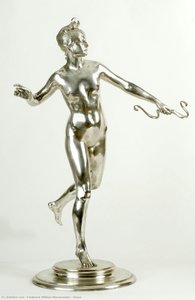 Diane1890
 Young Chevalier1898
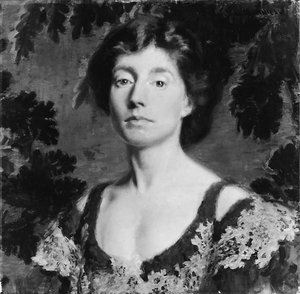 May Suydam Palmer1903
 Stephen S. Palmer, Trustee 1908-1913, Donor of Palmer Hall (1853-1913)1915

Essais sur Kit Carson
 Œuvres américaines des années 1900Découvrez l'âge d'or de l'art américain avec Winslow Homer et Remington. Explorez la collection complète sur OriginalUniqueArt.com.
 Capturing Motion: The Timeless Beauty of Sir Alfred James Munnings' Equestrian MasterpiecesDiscover the breathtaking equestrian mastery of Sir Alfred James Munnings. Explore an art-history journey through his impressionistic captu…
 Œuvres américaines des années 1910Découvrez l'art américain des années 1910, de l'impressionnisme de Hassam au réalisme de Bellows. Explorez la collection sur OriginalUnique…