

 Aperçu en situation
 Partager
 Partager
 Détails
 Guide imprimable

 Télécharger
 Articles similaires
 Radiographie
 Voir le diaporama
 Statistiques
The Stairway
 Huile sur toile
- Décoration murale
- Cubism
 1913
1913- Moderne
 144.0 x 118.0 cm
 Kunsthaus Zürich
 Afficher la suite
Reproduction à l'huile faite à la main
Huile sur toile peinte à la main, avec cadre et dimensions personnalisés, réalisée sur commande par nos artistes. ( Passer au format impression Passer au format image numérique)




P118B €10

P118H €10

P118W €10

P438Z €10

P508JH €12

P508YH €12

P805H €10

P805Z €10

P919BZ €10

P919G €10

P919XJ €10

P959ZH €10

P968JZ €12

W106C €8

W218G €10

W218JH €8

W218Y €10

W307PJ €10

W316G €10

W316PJ €8

W316Y €10

W398PJ €8

W4111J €10

W500HY €15

W500JH €15

W692G €12

W849H €8

W940BG €15

W953PJ €8




Choisissez parmi nos formats prédéfinis qui respectent les proportions originales de l’œuvre.

Vous pouvez saisir vos propres dimensions pour l'adapter à un cadre ou à un espace spécifique. Si la taille sélectionnée ne correspond pas aux proportions de l'image d'origine, nous recadrerons l'œuvre ou prolongerons la peinture avec des éléments peints à la main supplémentaires. Une maquette numérique vous sera envoyée pour approbation avant le début de la production.
Veuillez noter que l'aperçu à l'écran ne reflète pas le recadrage ou l'extension réels. Seule la maquette montrera fidèlement la composition finale.
Bien que des tailles personnalisées soient disponibles, nous vous recommandons de sélectionner une dimension dans la liste prédéfinie afin de préserver les proportions d'origine.
Après la commande, l’équipe OriginalUniqueArt.com contactera le client par e-mail pour recueillir ses instructions et lui fournira une maquette d’aperçu
Livraison dans le monde entier () en 3 à 4 semaines au lieu des 5 semaines habituelles. (2 octobre). Aucun compromis sur la qualité.

Livraison express gratuite dans le monde entier

Toile de lin de haute qualité

Assurance transport complète

Garantie de remboursement des droits de douane

Garantie de fidélité des couleurs

Garantie de retour de 100 jours (uniquement en cas de défaut)

Garantie de remboursement à 100%

Tarifs dégressifs sur quantité
 L'option verre n'est disponible que pour les dimensions inférieures à 110 cm.

The Stairway
Technique de reproduction
Format de la reproduction
-


Prix total final
€ 258
A Revolution in Form: Exploring Léger’s ‘The Stairway’ (1913)
Fernand Léger's *The Stairway*, painted in 1913, stands as a pivotal work bridging the gap between Cubism and his signature “Tubism.” This dynamic composition isn’t merely a depiction of figures on stairs; it’s a bold statement about modernity, mechanization, and the evolving relationship between humanity and the machine age.Deconstructing Reality: Style & Technique
The painting exemplifies Léger's move away from traditional representation towards geometric abstraction. Cubist principles are readily apparent in the fragmented forms and multiple perspectives presented simultaneously, yet *The Stairway* distinguishes itself through its emphasis on cylindrical and conical shapes – a hallmark of his developing style. The artist masterfully employs a limited but powerful palette of primary colors (red, blue, yellow) contrasted with stark blacks, whites, and greys. This deliberate contrast isn’t simply aesthetic; it embodies the dynamics of modern life, mirroring the energy and tension of an increasingly industrialized world. The technique involves layering paint to create a dense surface, with visible brushstrokes contributing to the painting's tactile quality despite its overall smoothness.A World in Flux: Historical Context & Influences
Created on the cusp of World War I, *The Stairway* reflects the anxieties and transformations of early 20th-century Europe. Léger, initially an Impressionist, embraced Cubism around 1909, but the war profoundly impacted his artistic vision. The ensuing sense of fragmentation and destabilization found expression in new art forms like collage and assemblage. Léger wasn’t simply reacting to destruction; he was fascinated by the mechanization of the world. He saw beauty and power in machines, believing they represented the future – a belief that permeated his work during this period. The painting embodies the spirit of innovation and change that defined the era.Beyond Representation: Subject & Symbolism
The subject matter appears to depict three figures engaged in some form of movement, possibly dancing or performing. However, their identities are deliberately obscured by the Cubist fragmentation. This isn’t a portrait of individuals; it's an exploration of humanity as part of a larger mechanical system. The angular steps contrast with the rounded appendages of the figures, further emphasizing this interplay between organic and inorganic forms. While lacking overt symbolism, the painting evokes a sense of energy, rhythm, and perhaps even alienation – emotions central to the modern experience.Emotional Resonance & Lasting Impact
*The Stairway* isn’t a comfortable or passive viewing experience. Its dynamic composition and bold colors create a feeling of instability and movement. The fragmented forms challenge conventional notions of beauty and representation, forcing the viewer to actively engage with the artwork. This painting is not just a visual statement; it's an intellectual one. Léger’s work paved the way for later movements like Pop Art, influencing artists who also explored the relationship between art, technology, and popular culture. Its architectural order within the visual arts makes it a striking piece suitable for modern interiors seeking a bold focal point. Measuring 144 x 118 cm, *The Stairway* commands attention and continues to resonate with audiences today as a powerful testament to the transformative power of modernity.Questions et réponses
Qui a créé « The Stairway » et en quelle année ?
«The Stairway» a été créé par Fernand Léger en 1913.
«The Stairway» est-il une œuvre célèbre du Cubism ?
Au sein du mouvement Cubism, « The Stairway » affiche un niveau de popularité Reconnue.
Puis-je examiner « The Stairway » plus en détail ?
La vue X de «The Stairway» de Fernand Léger se trouve sur la page Rayons X de l'œuvre : une exploration interactive de l'image à travers onze couches optiques.
À quel âge Fernand Léger a-t-il créé « The Stairway » ?
Fernand Léger a réalisé « The Stairway » à l'âge de 32. L'artiste est né en 1881 et l'œuvre date de 1913.
Qui est l'artiste derrière « The Stairway » ?
L'artiste à l'origine de « The Stairway » est Fernand Léger. L'œuvre est répertoriée sous le nom de Fernand Léger.
Quelle est la date de création de «The Stairway» de Fernand Léger ?
«The Stairway» date de 1913. Cette date inscrit l'œuvre dans la carrière de Fernand Léger ainsi que dans son époque.
«The Stairway» de Fernand Léger est-il une œuvre lumineuse ou sombre ?
Les valeurs enregistrées pour «The Stairway» de Fernand Léger sont : une luminosité de lumineux, une luminance de Luminosité douce.
Biographie de l'artiste
jeune vie et formation
fernand léger, peintre, sculpteur et cinéaste français, est né le 4 février 1881 à Argentan, Orne, en Normandie inférieure. Son père élevait du bétail, et léger a initialement été formé à l'architecture de 1897 à 1899. Il s’est ensuite installé à Paris en 1900, se débrouillant comme dessinateur architectural.développement artistique
Le travail précoce de léger a été influencé par l'impressionnisme, comme le montrent le jardin de ma mère (mon jardin) (1905). Après avoir fréquenté l'école des beaux-arts et l’académie Julian, il a commencé à travailler sérieusement comme peintre à 25 ans. Son style s'est développé en une forme personnelle de cubisme, que les critiques ont qualifié de "tubisme" pour son accent sur les formes cylindriques.cubisme et le groupe des Puteaux
En 1910, léger a exposé au Salon d’automne aux côtés de jean metzinger et henri le fauconnier. Il a rejoint le groupe des Puteaux, également connu sous le nom de section d’or (la section dorée), avec d'autres artistes tels que francis picabia et marcel duchamp.guerre et son influence sur le travail de léger
Les expériences de léger à la Première Guerre mondiale ont eu un impact significatif sur son œuvre. Pendant son séjour au front, il a produit des croquis d'artillerie, d'avions et de soldats. Sa peinture soldier avec un tuyau (1916) reflète cette période.œuvre ultérieure et héritage
L'œuvre post-guerre de léger, caractérisée par des formes machine-like élégantes, le lia à la tradition de la peinture figurative française. Ses paysages animés de 1921 ont présenté des figures et des animaux dans des formes harmonieuses et rationalisées.- voir les œuvres de fernand léger sur OriginalUniqueArt
- en savoir plus sur fernand léger sur wikipedia
- découvrez le musée national fernand léger (france) avec OriginalUniqueArt
- la femme assise (100 x 81 cm, tubisme)
- élément de machine (cubisme)

Fernand Léger
1881 - 1955 , France
En bref
- Artistes Influents:
- Cézanne
- Impressionnisme
- Date De Décès: 1955
- Date De Naissance: 4 février 1881
- Influences Artistiques: ['Pop Art']
- Lieu De Naissance: Argentan, France
- Mouvement Artistique: Cubisme, Tubisme
- Nationalité: Française
- Nom Complet: Fernand Léger
- Oeuvres Notables:
- La Grande Parade
- Machine Élément
- Femme assise
- Paysages animés
Articles similaires

Les 10 Chefs-d'œuvre Dominés par le Bleu Ardoise : Art, Histoire & Décor
Plongez dans l'univers fascinant des 10 plus beaux tableaux dominés par le bleu ardoise. Découvrez l'histoire, les artistes et les techniques de ces chefs-d'œuvre impressionnistes et contemporains. Inspirez votre décoration intérieure avec !

Modern Geometry & Machine Age Beauty: A Collector's Guide to the Cubist Vision of Fernand Léger
Explore the profound geometric mastery of Fernand Léger. Discover how his 'Tubism' and Machine Age aesthetics redefined modern art, offering timeless inspiration for discerning collectors seeking to integrate Cubist dynamism into sophisticated contemporary interiors.

Blancs Sublimes : Les 10 Chefs-d'œuvre de la Peinture Révélés par
Plongez dans l'univers fascinant des 10 plus beaux tableaux blancs de l'histoire de l'art ! Découvrez Monet, Whistler, Kandinsky et d'autres maîtres. Inspirez votre décoration intérieure avec : reproductions de qualité muséale en ligne.
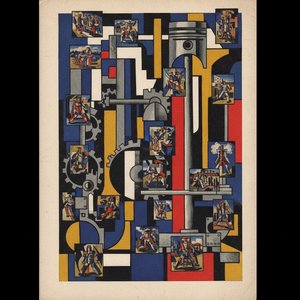
Fernand Léger : Les 25 Œuvres Maîtresses d'un Pionnier du Modernisme | OriginalUniqueArt
Plongez dans l'univers vibrant de Fernand Léger ! Découvrez les 25 œuvres majeures du cubisme et du tubisme, explorant formes géométriques et couleurs audacieuses. Retrouvez des reproductions d'art exceptionnelles sur OriginalUniqueArt.com.

L'Âme Industrielle : 10 Chefs-d'œuvre Révélant la Beauté du Monde Moderne | OriginalUniqueArt
Plongez dans l'âme industrielle de 10 chefs-d'œuvre emblématiques ! Découvrez les histoires fascinantes de Van Gogh, Monet et d'autres artistes ayant capturé la beauté brute du monde moderne. Reproductions de qualité musée sur OriginalUniqueArt.com – Explorez la collection en ligne.


