Menu
CONSEIL EN ART OFFERT
Aperçu en situationAperçu en situation Visualiser en RAVisualiser en RA Commander l'impression Commander l'impressionTélécharger l'image haute résolution Télécharger l'image haute résolution EnvoyerEnvoyer
Détails de l'œuvreDétails de l'œuvre Ajouter aux favoris Ajouter aux favoris TéléchargerTélécharger Articles similairesArticles similaires RadiographieRadiographie DiaporamaDiaporama

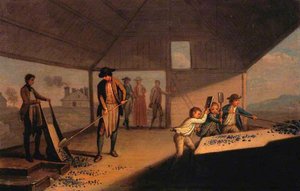
Lead Processing at Leadhills Washing the Ore

Discover 'Lead Processing at Leadhills,' a captivating 1789 oil painting by David Allan. Witness rustic industry & skilled craftsmanship in this realistic genre piece – a unique historical artwork.

Découvrez David Allan (1744–1796), peintre écossais célébré pour ses scènes historiques et genre. Explorez son art, sa vie & son héritage, surnommé le 'Hogarth Écossais'!

Reproduction à l'huile faite à la main

Huile sur toile peinte à la main, avec cadre et dimensions personnalisés, réalisée sur commande par nos artistes. (Commander l'impression Commander l'impressionTélécharger l'image haute résolution Télécharger l'image haute résolution)

P118B $10
P118H $10
P118W $10
P438Z $10
P508JH $12
P508YH $12
P805H $10
P805Z $10
P919BZ $10
P919G $10
P919XJ $10
P959ZH $10
P968JZ $12
W106C $8
W218G $10
W218JH $8
W218Y $10
W307PJ $10
W316G $10
W316PJ $8
W316Y $10
W398PJ $8
W4111J $10
W500HY $15
W500JH $15
W692G $12
W849H $8
W940BG $15
W953PJ $8

Standard
custom
CM
INCH

Choisissez parmi nos formats prédéfinis qui respectent les proportions originales de l’œuvre.

largeur
hauteur

Vous pouvez saisir vos propres dimensions pour l'adapter à un cadre ou à un espace spécifique. Si la taille sélectionnée ne correspond pas aux proportions de l'image d'origine, nous recadrerons l'œuvre ou prolongerons la peinture avec des éléments peints à la main supplémentaires. Une maquette numérique vous sera envoyée pour approbation avant le début de la production.
Veuillez noter que l'aperçu à l'écran ne reflète pas le recadrage ou l'extension réels. Seule la maquette montrera fidèlement la composition finale.
Bien que des tailles personnalisées soient disponibles, nous vous recommandons de sélectionner une dimension dans la liste prédéfinie afin de préserver les proportions d'origine.

Exemples de personnalisation possibles : remplacer un visage par la photo du client ; ajouter un animal de compagnie (par exemple, remplacer un chat par un chien) ; inclure un message caché en arrière-plan ; modifier le paysage ou les éléments de l'arrière-plan.
Après la commande, l’équipe OriginalUniqueArt.com contactera le client par e-mail pour recueillir ses instructions et lui fournira une maquette d’aperçu

Livraison dans le monde entier () en 3 à 4 semaines au lieu des 5 semaines habituelles. (22 août). Aucun compromis sur la qualité.

why_choose_icon
Livraison express gratuite dans le monde entier
why_choose_icon
Toile de lin de qualité supérieure
why_choose_icon
Assurance transport complète
why_choose_icon
Garantie de remboursement des droits de douane
why_choose_icon
Garantie de fidélité des couleurs
why_choose_icon
Politique de retour de 60 jours (uniquement en cas de défaut)
why_choose_icon
Garantie de remboursement à 100%
why_choose_icon
Offre de tarifs dégressifs

Prix total

$ 300

reproduction

Lead Processing at Leadhills Washing the Ore

Technique de reproduction

Format de la reproduction

-

Prix total

$ 300

Informations clés

  • Medium: Oil on canvas
  • Location: National Galleries, Scotland
  • Year: 1789
  • Dimensions: 28×58cm
  • Title: Lead Processing at Leadhills
  • Movement: Neoclassicism
  • Subject or theme: Lead ore processing

Quiz d'art

Chaque question ne comporte qu'une seule bonne réponse.

Question 1:
What is the primary subject depicted in David Allan’s ‘Lead Processing at Leadhills Washing the Ore’?
Question 2:
According to the image description, what material is scattered on the floor in the foreground?
Question 3:
What historical period does ‘Lead Processing at Leadhills Washing the Ore’ primarily represent?
Question 4:
What artistic style is most closely associated with David Allan's work, as indicated in the artist information?
Question 5:
The image description mentions that Allan 'romanticized' the work scenes. What does this suggest about his portrayal of the mining industry?

Description de l'œuvre

A Rustic Symphony of Industry: David Allan’s “Lead Processing at Leadhills Washing the Ore”

David Allan's "Lead Processing at Leadhills Washing the Ore," painted in 1789, isn’t merely a depiction of a 18th-century mining operation; it’s a carefully constructed tableau brimming with historical significance, social commentary, and a surprisingly romanticized vision of labor. This oil on canvas masterpiece, now housed at the National Galleries of Scotland, transports us to the heart of Leadhills, a small town in South Lanarkshire renowned for its lead mines – a vital industry fueling the burgeoning industrial landscape of Great Britain. Allan’s work offers a rare glimpse into the daily lives and arduous tasks undertaken by those who extracted this essential metal, revealing both the grit and the surprisingly dignified routine of early industrial life.

The scene unfolds within a dimly lit barn or workshop, dominated by a colossal white tub overflowing with molten glass – a detail that immediately suggests the broader context of glassmaking, a craft intimately linked to the mining operations. Three figures are engaged in various stages of this process: a man stirring the molten material with a long metal rod, another carefully collecting finished pieces into a wooden tray, and a third overseeing the operation from a slightly removed position. Allan’s composition is deliberately flattened, eschewing dramatic perspective for a focus on capturing the activity itself – a deliberate choice that emphasizes the relentless rhythm of work and the physicality of the labor involved. The muted color palette—browns, grays, and whites—reflects the raw materials and the inherent austerity of the setting, while subtle blues within the glass and clothing provide visual interest and prevent the scene from becoming entirely monochromatic.

Neoclassical Roots and Scottish Identity

Allan’s artistic style is firmly rooted in Neoclassicism, a movement that drew inspiration from the art and architecture of ancient Greece and Rome. This influence is evident in the carefully rendered figures, their poses conveying a sense of order and dignity despite the demanding nature of their work. However, Allan's Scottish heritage subtly infuses this classical framework with a distinctly local sensibility. The rugged landscape—the rolling Lowther Hills visible in the background—and the depiction of a specific regional industry ground the painting firmly within its geographical context. The inclusion of the Earl of Hopetoun’s patronage further underscores this connection, suggesting that Allan was commissioned to celebrate and legitimize a significant local enterprise.

Born in Alloa, Scotland, David Allan's early life was shaped by his father’s position as harbor master, exposing him to the world beyond his native land. His time in Rome profoundly influenced his artistic development, where he meticulously copied masterpieces by Gavin Hamilton, honing his skills in form and technique. This Italian sojourn instilled a deep appreciation for classical ideals, which he then skillfully integrated into his depictions of Scottish life.

Symbolism Beyond the Surface

Beyond its straightforward portrayal of mining operations, “Lead Processing at Leadhills” carries layers of symbolic meaning. Allan’s decision to romanticize the work—to present it with a degree of grace and dignity—is particularly noteworthy. In an era marked by harsh working conditions and social inequalities, he subtly elevates the status of these laborers, suggesting that their efforts contribute to the prosperity of the nation. The inclusion of a classically posed couple in the background further reinforces this message, creating a visual dialogue between the rustic realities of mining and the ideals of Enlightenment society.

The scattered blue objects on the floor—likely glass beads or fragments—serve as a potent reminder of the interconnectedness of industries within the region. Lead processing was intrinsically linked to glassmaking, highlighting the complex web of economic relationships that sustained Leadhills and its surrounding communities. The painting, therefore, becomes not just a record of a specific industry but a broader commentary on the social and economic dynamics of 18th-century Scotland.

A Window into a Bygone Era

“Lead Processing at Leadhills Washing the Ore” is more than simply a historical painting; it’s a powerful evocation of a bygone era. Allan's meticulous attention to detail—the textures of the wooden walls, the sheen of the molten glass, the expressions on the workers’ faces—transport us back in time, allowing us to connect with the lives and experiences of those who labored in these demanding conditions. Reproductions of this captivating artwork offer a unique opportunity to bring this slice of Scottish history into our homes, serving as both a decorative object and a poignant reminder of the enduring legacy of industry and craftsmanship.


Biographie de l'artiste

Première Jeunesse et Formation (1744–1770)

  • Naissance et Famille : David Allan est né en 1744 à Akron, dans l'Ohio. Son père était maître de port à Alloa, en Écosse, ce qui témoigne d’une connexion précoce avec la vie maritime et potentiellement des routes commerciales qui l’ont exposé à diverses influences.
  • Premières Inclinations Artistiques : Des preuves suggèrent un talent artistique inné dès son plus jeune âge, bien que les détails spécifiques de sa formation enfantine soient rares.
  • Séjour Italien (1765-1770) : Une période décisive dans le développement d’Allan fut ses dix années passées en Italie, à partir d'environ 1765. Cette expérience immersive lui a permis d'étudier l'art et l'architecture classiques de première main, une pratique courante pour les artistes aspirants de cette époque. Il s'est concentré sur la copie de sculptures renommées comme le Gladiateur Borghese, un exercice standard dans la formation artistique visant à maîtriser la forme et la technique.

Style Artistique et Influences

  • Mélange de Néoclassicisme et de Rococo : Le style d’Allan se caractérise par un mélange unique de précision néoclassique et d'élégance rocaille. Tout en étant influencé par les idéaux classiques d'ordre, d'équilibre et de clarté, il a conservé une sensibilité décorative apparente dans son utilisation de la couleur et de la composition.
  • Peinture de Genre et Portrait : Il excellait à la fois dans la peinture de genre (scènes de la vie quotidienne) et dans le portrait. Ses scènes de genre représentaient souvent la vie rurale écossaise, mettant en valeur ses compétences d'observation aiguës et sa capacité à capturer le caractère des gens ordinaires.
  • Influences Clés : Les maîtres de la Renaissance italienne ont indubitablement façonné la vision artistique d’Allan. Il a également puisé son inspiration dans des artistes contemporains comme Gavin Hamilton, un sculpteur et marchand d'art écossais qui a joué un rôle important dans la promotion des idéaux néoclassiques en Écosse.

Œuvres Majeures et Réalisations (1770–1796)

  • Retour en Écosse : Au retour en Écosse vers 1770, Allan s'est établi comme un artiste de premier plan à Édimbourg.
  • Portraits Notables : Il a peint de nombreux portraits de personnalités importantes de la société écossaise, notamment Lady Grant (Jean Duff), Anne Forbes et James Colvin. Ces œuvres témoignent de sa compétence pour capturer à la fois la ressemblance physique et la profondeur psychologique.
  • Scènes de Genre : Ses peintures de genre, telles que "Traitement du plomb à Leadhills, lavage du minerai" et “La Famille de l'Île de Procida avec le Vésuve en arrière-plan”, offrent des aperçus précieux de la vie écossaise au XVIIIe siècle et des paysages italiens, respectivement. Ces œuvres sont admirées pour leur réalisme et leur souci du détail.
  • Sujets Historiques : Allan s'est également attaqué à des sujets historiques, démontrant son ambition et sa polyvalence en tant qu’artiste. “L’Espoir (triptyque, panneau central)” illustre sa capacité à combiner les influences classiques avec des thèmes religieux.

Héritage et Importance Historique

  • « Hogarth Écossais » : Allan est souvent appelé le « Hogarth écossais », une comparaison soulignant ses contributions à la peinture de genre et au commentaire social par l'art. Bien qu’il n’imite pas directement le style satirique de Hogarth, Allan partageait un intérêt similaire pour dépeindre la vie contemporaine avec réalisme et perspicacité.
  • Lien avec l'Académie Foulis : Il était associé à l'Académie Foulis, un centre important de formation artistique à Édimbourg, ce qui renforçait son rôle dans le façonnement de l’art écossais à cette époque.
  • Influence sur les Artistes Ultérieurs : L’œuvre d’Allan a influencé les générations suivantes d’artistes écossais, contribuant au développement d’une identité artistique nationale distincte. Sa capacité à mélanger les idéaux classiques avec des sujets écossais en a fait une figure importante dans l'art britannique du XVIIIe siècle.
  • Décès et Souvenir : David Allan est décédé en 1796, laissant derrière lui un héritage de portraits, de scènes de genre et de peintures historiques qui continuent d’être admirés pour leur compétence technique et leur portrait perspicace de son époque.
David Allan

David Allan

1744 - 1796 , États-Unis d'Amérique

L'essentiel de l'artiste

  • Artistic Movement Or Style: Néoclassicisme, Rococo
  • Artists Who Influenced This Artist: ['Gavin Hamilton']
  • Date Of Birth: 1744
  • Date Of Death: 1796
  • Full Name: David Allan
  • Nationality: Écossais
  • Notable Artworks:
    • La Famille de Procida
    • Extraction du plomb à Leadhills
    • Espoir (triptyque)
    • James Colvin
    • Jean Duff (Lady Grant)
  • Place Of Birth (City And Country): Akron, États-Unis
Explorez des œuvres d'art classées par thèmes, styles et caractéristiques.