Aperçu en situation
 Partager
 Partager
 Détails
 Guide imprimable

 Télécharger
 Articles similaires
 Radiographie
 Voir le diaporama
 Statistiques
Self-Portrait


 Afficher la suite
Reproduction à l'huile faite à la main
Huile sur toile peinte à la main, avec cadre et dimensions personnalisés, réalisée sur commande par nos artistes. ( Passer au format impression Passer au format image numérique)




P118B €10

P118H €10

P118W €10

P438Z €10

P508JH €12

P508YH €12

P805H €10

P805Z €10

P919BZ €10

P919G €10

P919XJ €10

P959ZH €10

P968JZ €12

W106C €8

W218G €10

W218JH €8

W218Y €10

W307PJ €10

W316G €10

W316PJ €8

W316Y €10

W398PJ €8

W4111J €10

W500HY €15

W500JH €15

W692G €12

W849H €8

W940BG €15

W953PJ €8




Choisissez parmi nos formats prédéfinis qui respectent les proportions originales de l’œuvre.

Saisissez la largeur et la hauteur souhaitées, pour s'adapter à votre cadre ou à votre mur. Cette œuvre est peinte à la main ; ainsi, pour un format de forme différente, l'artiste peut peindre un peu plus autour du tableau ou réduire légèrement les bords — c'est vous qui choisissez. Nous vous envoyons une maquette numérique pour approbation avant que la peinture ne commence. L'image présentée sur cette page ne reflète pas le résultat réel — seule la maquette le fait.
Après la commande, l’équipe OriginalUniqueArt.com contactera le client par e-mail pour recueillir ses instructions et lui fournira une maquette d’aperçu
Livraison dans le monde entier () en 3 à 4 semaines au lieu des 5 semaines habituelles. (21 octobre). Aucun compromis sur la qualité.

Livraison express gratuite dans le monde entier

Toile de lin de haute qualité

Assurance transport complète

Garantie de remboursement des droits de douane

Garantie de fidélité des couleurs

Garantie de retour de 100 jours (uniquement en cas de défaut)

Garantie de remboursement à 100%

Tarifs dégressifs sur quantité
 L'option verre n'est disponible que pour les dimensions inférieures à 110 cm.

Self-Portrait
Technique de reproduction
Format de la reproduction
-


Prix total final
€ 262
A Portrait of Reflection: Benjamin West's Self-Portrait
- The Weight of History
- Neo-Classical Dignity
- Technique and Texture
- Symbolism of the Self
Neo-Classical Dignity: Style and Form
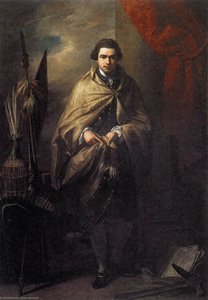
West’s approach firmly aligns with the tenets of Neoclassicism, a movement that sought to revive the artistic principles of ancient Greece and Rome. This is evident in every aspect of the composition – the formal arrangement of the figure, the emphasis on idealized beauty, and the restrained palette. The subject's pose, reminiscent of classical sculptures, conveys an air of dignified composure and intellectual seriousness. His attire—a dark coat with a high collar and a crisp white cravat—is characteristic of late 18th-century fashion, subtly signaling his status as a respected artist within Philadelphia society. The careful attention to detail in the rendering of his clothing – the subtle folds, the texture of the fabric – speaks to West’s commitment to realism, a key element of the Neoclassical style. The dark background serves not as a distraction but rather as a deliberate device, intensifying the focus on the figure and reinforcing the sense of solemnity.Technique and Texture: A Master's Hand
West’s technical skill is immediately apparent in the meticulous rendering of facial features and textures. He employs a glazing technique – applying thin layers of translucent paint over dried underlayers – to achieve remarkable depth and luminosity. The subtle play of light and shadow across his face draws attention to his expressive eyes, conveying a sense of self-assuredness and intellectual curiosity. The brushwork is controlled yet confident, demonstrating West’s mastery of oil paints. Note the delicate rendering of the hair, powdered and meticulously styled, a hallmark of the period's fashion. The texture of the fabric – the heavy wool of the coat, the smooth silk of the cravat – is rendered with remarkable accuracy, adding to the painting’s overall sense of realism and tactile quality. This level of detail was not merely decorative; it served to elevate the portrait beyond a simple likeness, transforming it into a symbol of West's artistic prowess and dedication.Symbolism of the Self: Identity and Ambition
The act of self-portraiture itself held significant symbolic weight in the 18th century. It was a demonstration of an artist’s skill, a declaration of their identity, and often, a meditation on mortality. In West's case, this particular self-portrait is particularly revealing. Painted just as he was establishing himself as a leading portraitist, it represents not only his artistic abilities but also his ambition to achieve recognition within the European art world. The serious expression on his face suggests a man deeply engaged with his craft and aware of its potential impact. The gaze directly at the viewer creates an intimate connection, inviting us into his thoughts and reflecting upon our own relationship with art and self-representation. This portrait is a testament to West’s confidence and determination – qualities that would ultimately define his remarkable career.Questions et réponses
L'œuvre « Self-Portrait » présente-t-elle des contrastes ombre et lumière marqués ?
«Self-Portrait» de Benjamin West présente un contraste Gentle entre ses zones claires et ses zones sombres.
Quelle palette et quel sentiment "Self-Portrait" associe-t-il ?
La palette Earthy de «Self-Portrait» de Benjamin West s'harmonise avec son ton émotionnel Reflective. La couleur est l'un des moyens par lesquels une œuvre transmet une émotion.
Quelle est la notoriété de « Self-Portrait » par Benjamin West ?
« Self-Portrait » est classé comme Recognized.
Biographie de l'artiste
Benjamin West : Pionnier de l'Art Américain
- Né: 10 octobre 1738, Springfield, États-Unis d'Amérique
- Décédé: 11 mars 1820
Jeunesse et Développement Artistique
- Benjamin West est né dans une famille modeste à Springfield, en Pennsylvanie. Son père tenait une auberge, et la famille déménagea plus tard à Newtown Square.
- West a manifesté un talent artistique remarquable dès son jeune âge, apprenant apparemment des techniques de peinture rudimentaires auprès des Amérindiens.
- Il a reçu une éducation formelle limitée mais s'est poursuivi sa passion artistique indépendamment.
- Son début de carrière s'est concentré sur le portrait en Pennsylvanie.
- Un moment décisif est venu avec l'encouragement à peindre "La Mort de Socrate", qui différait considérablement de la gravure originale et a marqué un tournant dans sa carrière.
- En 1760, il voyagea en Italie, étudiant les œuvres des maîtres tels que Titien et Raphaël directement, et rencontrant des artistes néoclassiques tels qu'Anton Rafael Mengs, Gavin Hamilton et Angelica Kauffmann.
Carrière à Londres et la Royal Academy
- West déménagea à Londres en 1763 et devint rapidement une figure importante de la scène artistique britannique.
- Il fut élu membre de la Royal Academy et en occupa plus tard la présidence de 1792 jusqu'à sa mort en 1820.
- Ses peintures historiques, telles que "Le Départ de Regulus", ont rencontré un grand succès, lui valant le surnom d'"Américain Raphaël".
- Il a défendu un style incorporant des vêtements contemporains dans les scènes historiques, notamment évident dans "La Mort du Général Wolfe", qui a remis en question les conventions artistiques traditionnelles et suscité des débats.
Style Artistique et Œuvres Majeures
- Le style de West a évolué des premières influences néoclassiques pour incorporer des éléments du romantisme plus tard dans sa carrière.
- Œuvres notables incluent :
- La Mort du Général Wolfe (1770) – Une œuvre révolutionnaire qui mélange le récit historique avec la tenue vestimentaire contemporaine.
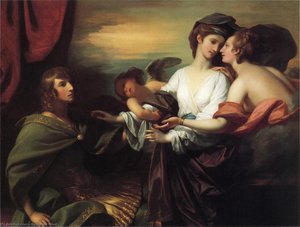
- Thétis apportant l'armure à Achille – Démontre une maîtrise des thèmes classiques et de la composition.
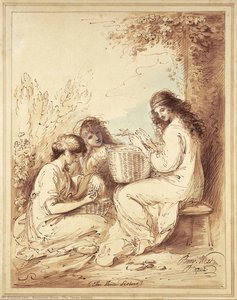
- Les Trois Sœurs – Met en valeur sa capacité à représenter des sujets allégoriques.
- La Fuite d'Astyanax – Une représentation dramatique d'une scène mythologique.
- La Grotte du Désespoir – Exemples de son style romantique en évolution.
- Son travail se caractérise par son ambition, sa composition détaillée et son exploration des thèmes historiques et mythologiques.
Héritage et Importance Historique
- Benjamin West a laissé un impact durable sur l'art américain, ouvrant la voie au genre de la peinture d'histoire et influençant des générations d'artistes.
- Il a joué un rôle crucial dans la formation de l'identité de l'expression artistique américaine.
- Sa présidence de la Royal Academy a considérablement contribué au développement de l'art britannique.
- L'héritage de West s'étend au-delà de ses œuvres individuelles ; il a favorisé un environnement qui encourageait et soutenait les artistes américains émergents étudiant à l'étranger, notamment Allston, Copley et Morse.
- Son approche innovante de la peinture historique a ouvert la voie aux mouvements artistiques futurs et continue d'inspirer les artistes contemporains et les amateurs d'art.

Benjamin West
1738 - 1820 , États-Unis d'Amérique
En bref
- Artistic Movement Or Style: Néo-classicisme, peinture historique
- Artists Or Movements Influenced By This Artist:
- Edward William J. Savage
- Copley
- Allston
- Morse
- Artists Who Influenced This Artist:
- Tiziano
- Rafael
- Date De Décès: 11 mars 1820
- Date De Naissance: 10 octobre 1738
- Full Name: Benjamin West
- Nationalité: Américain
- Notable Artworks:
- La Mort du Général Wolfe
- Thétis apportant l'armure
- Les Trois Sœurs
- La Fuite d'Astyanax
- La Caverne du désespoir
- Place De Naissance: Springfield, États-Unis
Articles connexes
Top 10 des Tableaux Célèbres aux Tons Champignon : Art & Décor Intemporels
Plongez dans l'univers des 10 plus beaux tableaux aux tons champignon ! Découvrez les histoires de Van Gogh, Monet et Cézanne. Inspirez votre décoration intérieure avec : reproductions d'art de qualité muséale et collections exclusives.

Benjamin West: Transatlantic Ambition & Shaping American Art
Explore the life & legacy of Benjamin West, pioneering American artist and Royal Academy president. Discover his Neoclassical masterpieces, transatlantic influence, and lasting impact on art history. Learn more at OriginalUniqueArt.
Les 10 Chefs-d'œuvre Sable : Peintures Célèbres aux Tons Chauds |
Plongez dans les 10 chefs-d'œuvre aux tons sable ! Découvrez l'histoire de Van Gogh, Monet et d'autres artistes renommés. Inspirez votre décoration intérieure avec des reproductions de peintures classiques sur .
Les 10 Chefs-d'œuvre Peints dans les Tons d'Argile : Histoire et Décor
Plongez dans les 10 chefs-d'œuvre peints dans des tons d'argile envoûtants ! Découvrez l'histoire de Van Gogh, Monet et Rembrandt. Trouvez l'inspiration déco & achetez des reproductions tableaux haute qualité sur .

Les 10 Chefs-d'œuvre Noirs : Peintures Célèbres et Décoration d'Intérieur
Plongez dans l'univers fascinant des 10 plus beaux tableaux noirs de l'histoire de l'art. Découvrez les secrets de Goya, Manet, Rothko et autres maîtres. Inspirez votre décoration intérieure avec !