
 Aperçu en situation
 Envoyer
 Partager
 Détails de l'œuvre
 Guide
Guide

 Télécharger l'image
 Articles similaires
 Radiographie
 Diaporama
 Q&A
Q&A Statistiques
Gertrud Schönberg

- 21.0 x 18.0 cm


 Lire la suite
Giclées et impressions d'art
Impressions giclées ou sur toile de qualité musée, avec une production rapide et des finitions au choix. ( Commander la reproduction peinte à la main Passer au format numérique)




P118B €10

P118H €10

P118W €10

P438Z €10

P508JH €12

P508YH €12

P805H €10

P805Z €10

P919BZ €10

P919G €10

P919XJ €10

P959ZH €10

P968JZ €12

W106C €8

W218G €10

W218JH €8

W218Y €10

W307PJ €10

W316G €10

W316PJ €8

W316Y €10

W398PJ €8

W4111J €10

W500HY €15

W500JH €15

W692G €12

W849H €8

W940BG €15

W953PJ €8




Choisissez parmi nos formats prédéfinis qui respectent les proportions originales de l’œuvre.

Saisissez la largeur et la hauteur souhaitées pour qu'elles s'adaptent à votre cadre ou à votre mur. Une impression peut être recadrée, mais jamais agrandie au-delà de l'image originale ; ainsi, un format de forme différente entraînera la perte d'une partie de l'image. Nous vous envoyons une maquette numérique pour approbation avant toute impression. L'image présentée sur cette page ne montre pas le recadrage réel — seule la maquette le permet.
Livraison dans le monde entier () en 2 semaines au lieu des 4/5 semaines habituelles. (3 novembre)

Livraison express gratuite dans le monde entier

Toile de lin de qualité supérieure

Assurance transport complète

Garantie de remboursement des droits de douane

Garantie de fidélité des couleurs

Politique de retour de 100 jours (uniquement en cas de défaut)

Garantie de remboursement à 100%

Offre de tarifs dégressifs
 L'option verre n'est disponible que pour les dimensions inférieures à 110 cm.

Gertrud Schönberg
Giclées et impressions d'art
Format de la reproduction
-


Prix total
€ 71
A Glimpse of Early Twenties Radiance
This captivating portrait, titled Gertrud Schönberg, immediately draws the viewer into a moment suspended in time. The subject, a woman with luminous blonde hair, is rendered with an almost ethereal quality. Her head is tilted gently, suggesting a thoughtful pause or perhaps a shared secret whispered just out of sight. The artist has masterfully placed her face at the very heart of the composition, ensuring that the viewer’s gaze meets hers directly, even as she seems to look beyond the frame. This direct yet indirect engagement gives the piece an immediate intimacy, making the observer feel like an invited confidant.
Palette and Atmosphere: The Warm Embrace of Yellow
What elevates this painting from a mere likeness to a vibrant experience is its striking use of color. The pervasive yellow background acts not just as a backdrop, but as an emotional field—a warm, radiant aura that bathes the entire scene in golden light. This choice imbues the work with palpable energy and optimism. Complementing this warmth are the subtle details, such as the delicate necklace adorning her neck, which catches the light and adds a touch of refined elegance to her ensemble. The overall effect is one of buoyant vitality, perfectly capturing the effervescence often associated with the early 20th century.
Context and Compositional Depth
While Gertrud Schönberg commands the central focus, the inclusion of two other figures—one subtly positioned on the left and another on the right—suggests that this portrait is part of a larger narrative tapestry. These peripheral presences anchor the main subject within a social context, hinting at conversations unfolding or an event taking place just beyond our view. This compositional structure adds layers of mystery; one wonders about the relationship between these figures and what moment in their shared experience the artist chose to immortalize for us.
Artistic Echoes and Enduring Appeal
Painted around 1930, this work sits at a fascinating crossroads of artistic history. While the background suggests the vibrant energy of the interwar period, the technique speaks to a skilled hand capable of capturing both portraiture's formality and modern life's spontaneity. For collectors and designers alike, this piece offers more than just decoration; it offers an emotional anchor—a burst of captured sunlight for any room. Reproducing such a work allows one to bring home not just paint on canvas, but the feeling of that bright, hopeful moment from nearly a century ago.
Questions et réponses
Quelle taille d'impression est recommandée pour « Gertrud Schönberg » ?
Pour «Gertrud Schönberg», un format d'impression de Small est recommandé. D'autres tailles sont disponibles avec les mêmes proportions.
L'œuvre «Gertrud Schönberg» de Arnold Schoenberg, conservée au Arnold Schönberg Center, peut-elle faire l'objet de reproductions légales ?
L'original « Gertrud Schönberg » se trouve au Arnold Schönberg Center, et l'œuvre est dans le domaine public - ses droits d'auteur sont tombés dans le domaine public.
Pour quelle pièce «Gertrud Schönberg» de Arnold Schoenberg est-il recommandé ?
Une reproduction de « Gertrud Schönberg » s'intègre parfaitement dans une Lounge.
Biographie de l'artiste
Early Life and Musical Beginnings
Arnold Schoenberg, Austrian-American composer who created new methods of musical composition involving atonality, namely serialism and the twelve-tone row. He was also one of the most influential teachers of the 20th century; among his most significant pupils were Alban Berg and Anton Webern. He was born on September 13, 1874, in Vienna, Austria. His early life was marked by a humble beginning, with his father being a shoe-shopkeeper. Despite this, Schoenberg’s innate passion for music led him to largely self-educate himself in the field. Schoenberg's early works showcased a Brahmsian–Wagnerian synthesis. As he progressed, he became the central figure of the second Viennese School, alongside Anton Webern and Alban Berg. His compositions, including String Quartet No. 2 (1907–1908), Erwartung (1909), and Pierrot Lunaire (1912), exemplified his innovative approach to atonality.Notable Works
Schoenberg’s oeuvre is remarkably diverse, encompassing orchestral music, chamber ensembles, vocal works, piano pieces, and film scores. However, he is undeniably best known for his groundbreaking explorations of atonality and serialism—methods that fundamentally reshaped the landscape of musical composition. Among his most celebrated achievements are: Suite No. 2 (1930), which showcases a masterful blend of tonal and dissonant elements; Music Typewriter (1928), an experimental piece utilizing a typewriter as a musical instrument; String Quartet No. 2 (1907–1908), considered a cornerstone of Viennese Expressionism; Erwartung (1909), a dramatic opera exploring themes of anxiety and anticipation; Pierrot Lunaire (1912), a song cycle that utilizes Sprechstimme—a vocal technique combining speech and singing—to convey profound emotional depth. Furthermore, Schoenberg’s film music includes scores for films such as “The Seven Deadly Sins” and “Moses and Aaron,” demonstrating his versatility as a composer across various genres.Influence and Legacy
Schoenberg's musical innovations exerted an indelible influence on subsequent generations of composers. His pioneering use of serialism—a compositional technique based on mathematical sequences—established a new paradigm for tonal music, prompting composers like Alban Berg and Anton Webern to develop their own distinctive styles rooted in Schoenberg’s principles. Beyond the realm of composition, Schoenberg's aesthetic and music-historical views profoundly impacted musicologists Theodor W. Adorno and Carl Dahlhaus, shaping debates about musical interpretation and artistic expression. His uncompromising stance against prevailing musical conventions solidified his reputation as a visionary artist who challenged accepted norms and paved the way for radical experimentation in music.Later Life and Recognition
Following the rise of Nazism in Germany, Schoenberg reluctantly abandoned Austria and emigrated to the United States in 1933, where he taught at Yale University until 1944. During World War II, he continued his musical pursuits while grappling with the horrors of the Holocaust—a profound experience that inspired him to create Survivor from Warsaw (1947), a poignant memorial to victims of Nazi persecution. In 1951, Schoenberg received honorary citizenship in Vienna and was elected president of the Israel Conservatory and Academy of Music, cementing his enduring legacy as one of the most influential figures in twentieth-century music history.
Arnold Schoenberg
1874 - 1951 , Autriche
L'essentiel de l'artiste
- Artistic Movement Or Style: Technique à douze tons; Expressionnisme
- Artists Or Movements Influenced By This Artist:
- Anton Webern
- Alban Berg
- Artists Who Influenced This Artist:
- Johannes Brahms
- Richard Wagner
- Date Of Birth: Septembre 13, 1874
- Full Name: Arnold Schoenberg
- Nationality: Autrichien-Américain
- Notable Artworks:
- Suite, op. 29
- Music Typewriter
- Staffliner
- Place Of Birth: Vienne, Autriche
Articles connexes
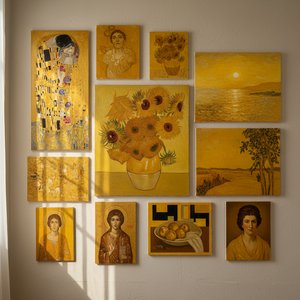
Top 10 des Tableaux Célèbres Dominés par l'Ocre Jaune : Art & Décor Intemporel
Plongez dans la magie de l'ocre jaune à travers 10 tableaux célèbres ! Découvrez les histoires, techniques et émotions derrière ces chefs-d'œuvre d'artistes comme Van Gogh & Monet. Inspirez votre décoration intérieure avec – reproductions de qualité musée.
The Grandeur of Presence: Exploring Representations of Stately Bearing in Western Portraiture
Explore the art of stately bearing in Western portraiture with expert analysis of Renaissance & Baroque masterpieces. Discover symbolism, techniques, and the legacy of iconic portraits – a guide for discerning collectors.
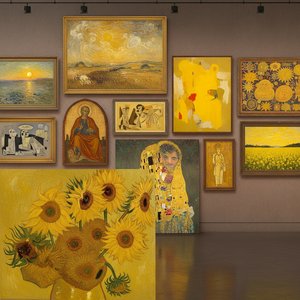
Top 10 des Tableaux Célèbres Dominés par le Jaune Chrome : Art & Décor
Plongez dans le monde vibrant du jaune chrome à travers 10 tableaux célèbres ! Découvrez l'histoire de Van Gogh, Monet et d'autres maîtres impressionnistes. Trouvez l'inspiration déco et achetez des reproductions d'art de qualité muséale sur OriginalUniqueArt.com.

L'Héritage Durable du Portrait Formel : Pouvoir, Identité et Exploration Artistique
Explorez l'histoire fascinante du portrait formel : pouvoir, identité et techniques artistiques maîtrisées. Découvrez Velázquez, Rubens et les secrets de la collection d'art avec OriginalUniqueArt.
The Golden Hue: Exploring Symbolism & Emotion in Yellow Art
Explore the rich symbolism & emotional power of yellow in art history! From Van Gogh to Kandinsky, discover how artists used this vibrant hue. Expert analysis & high-quality reproductions at OriginalUniqueArt.


