Mannerist · 1600
Skeleton (André Vésale, 1600)
André Vésale (1514–1564) a réalisé Skeleton. Elle date de 1600. Il appartient au mouvement Mannerist. Réalisée en Engraving. Il est conservé au Bibliothèque Universitaire de Vilnius à Vilnius, Lithuania.
- 1600
- Engraving
- Bibliothèque Universitaire de Vilnius

 Aperçu en situation

 Peinture à l'huile faite main
 Envoyer
 Partager
 Fiche pédagogique


 Télécharger l'image
 Articles similaires
 Radiographie
 Diaporama
 Questions et réponses

 Statistiques
Skeleton, en bref
- Titre
- Skeleton
- Artiste
- André Vésale (1514–1564)
- Lieu de naissance de l'artiste
- Bruxelles, Belgique
- Date
- 1600
- Technique
- Engraving
- Où le voir
- Bibliothèque Universitaire de Vilnius, Vilnius, Lithuania
- Mouvement
- Mannerist
- Période
- Early Modern
- Sujet
- mortality, death, anatomy, skeletal, renaissance, mannerism
Que représente Skeleton ?
Identification of the Artwork and Artist
We are looking at Skeleton, a work attributed to Andreas Vesalius. This piece is dated about 1600. It offers a quiet, structural view of the human form, captured through the precise hand of an artist who fundamentally changed how we perceive the internal architecture of the body.
Andreas Vesalius was born in Brussels, Belgium, in 1514. His life and his contributions to anatomical study remained central to his identity until his death in 1564. This specific engraving reflects a period of profound inquiry into the mechanics of life and mortality.
Visual Composition and Subject Matter
In this detailed black and white engraving, we find a skeleton seated upon a pedestal. The figure is captured in a moment of quiet contemplation, looking down at a human skull. The composition is complex, utilizing multiple overlapping planes to create a sense of depth and spatial arrangement. This arrangement directs the eye through a series of structural layers, emphasizing the stillness of the scene.
The style is distinctly Mannerist, characterized by a focus on stylized anatomy and expressive gestures. Through this lens, the subject matter addresses the inevitability of death and the human preoccupation with mortality. It is a meditation on the fragility of life, presented through the stark, structural reality of the bone. The interaction between the seated figure and the skull creates a silent dialogue regarding the fate of the human form.
Artistic Technique and Materials
The work is an engraving executed with a precision that reveals the artist's command over the medium. Using primarily ink and paper, the image is constructed through a series of sharp, meticulously rendered lines. These marks do more than define the edges of the form; they build the very substance of the subject. Through the disciplined application of hatching and cross-hatching, a palpable texture is achieved, simulating the hard, matte surface of bone and the subtle folds of fabric. This technical rigor allows for a sophisticated interplay of light and shadow.
The lighting appears to originate from above and slightly in front of the figure, casting shadows that provide a sense of weight and three-dimensionality. This light works in tandem with a linear perspective to establish a convincing sense of space within the composition. The result is a structural clarity that emphasizes the anatomical details through careful shading. The depth of the scene is achieved by layering these elements, creating a quiet, controlled environment for the subject.
Related Works by Andreas Vesalius
To understand the lineage of this piece, one might look toward the artist's other contributions to anatomical study. In 1543, an engraving titled Anatomy was produced, sharing a temporal connection to the era of the De humani corporis fabrica. This work, much like the one before us, captures the silent architecture of bone and muscle through meticulous line work.
There is also the Dissected human body, dated 1543, which is held within the Bibliothèque nationale de France in Paris. This engraving maps the structural reality of the human frame with a similar precision. Another notable piece is the Portrait of Vesalius from his De humani corporis fabrica, which offers a different perspective on the man behind these detailed observations.
- Dissected human body, 1543
- Anatomy, 1543
Current Location of the Artwork
This engraving is held within the Vilnius University Library, situated in Vilnius, Lithuania. It remains a significant part of a collection that is recognized as the oldest and one of the largest academic libraries in Lithuania. The institution has a long history, having been founded in 1570 by the Jesuits.
The library functions as a sanctuary for many historical documents and engravings. Within its walls, this work exists alongside a vast array of manuscripts and incunabula. It is part of a specialized repository that preserves the intellectual history of the region through its extensive holdings.
Dans quel musée se trouve Skeleton ?
Bibliothèque Universitaire de Vilnius
Vilnius, Lithuania
Un sanctuaire d'encre et de pierre : l'âme de Vilnius Pénétrer dans la Bibliothèque de l'Université de Vilnius , c'est franchir un seuil entre le présent éphémère et le poids immuable des siècles. Elle n'est pas seulement un dépositaire de la parole écrite, mais un monument vivant, vibrant, du cœur intellectuel et artistique de la Lituanie. En déambulant dans ses salles sacrées, on ressent l'impression palpable d'être enveloppé par les spectres des érudits d'autrefois — une atmosphère calme et recueillie où le parfum du parchemin vieilli rencontre la grandeur de l'ambition néoclassique.


Images haute résolution de Skeleton

Domaine public : l'artiste est décédé en 1564.
Autres formats, recadrages et citations →André Vésale, Skeleton (1600), Bibliothèque Universitaire de Vilnius. Domaine public
Questions sur Skeleton, réponses
Où peut-on voir «Skeleton» de André Vésale actuellement ?
Vous pouvez admirer l'original de « Skeleton » au Bibliothèque Universitaire de Vilnius, Vilnius, Lithuania.
En quelle année "Skeleton" a-t-il été réalisé ?
«Skeleton» de André Vésale a été créé en 1600.
Quelle technique a été utilisée pour «Skeleton» de André Vésale ?
«Skeleton» de André Vésale est réalisé en Engraving. Les reproductions visent à restituer l'aspect de cette technique.
Que représente « Skeleton » ?
Les thèmes présents dans «Skeleton» de André Vésale incluent mortality, death, anatomy, skeletal, renaissance, mannerism, reflection, human form. Ensemble, ils résument le sujet de l'œuvre.
L'image de «Skeleton» de André Vésale peut-elle être librement reproduite ?
Statut des droits d'auteur pour «Skeleton» de André Vésale : l'œuvre est dans le dans le domaine public - ses droits d'auteur sont tombés dans le domaine public. Cela détermine si les reproductions de l'image peuvent être réalisées librement.
Qui est l'artiste derrière « Skeleton » ?
« Skeleton » a été créé par André Vésale. Les informations présentes sur cette page décrivent l'œuvre originale de André Vésale.
À quel mouvement artistique appartient « Skeleton » ?
« Skeleton » est une œuvre issue du Mannerist. Ce mouvement définit la tradition artistique à laquelle l'œuvre appartient.
À quelle période de la carrière de André Vésale se situe « Skeleton » ?
«Skeleton» appartient à la période Mature Period de la carrière de André Vésale. Cette classification relie l'œuvre à l'évolution de l'artiste.
Quel âge avait André Vésale lors de la création de « Skeleton » ?
André Vésale a réalisé « Skeleton » à l'âge de 86. L'artiste est né en 1514 et l'œuvre date de 1600.
À propos de l'artiste, André Vésale

1514–1564, Belgique
André Vésale
Andreas Vesalius : Le Père de l'Anatomie Moderne Andreas Vesalius (1514 – 1564) s'impose comme une figure monumentale dans l'histoire des sciences et des arts, ayant irrévocablement transformé notre compréhension de l'anatomie humaine tout en établissant un nouveau paradigme pour l'illustration médicale. Né à Bruxelles, en Belgique, la jeunesse de Vesalius fut marquée par une curiosité intellectuelle insatiable et une fascination pour la dissection, des activités qui allaient ultimement définir sa carrière révolutionnaire. Son père, Gerard Vesalius, était un médecin qui lui transmit une passion pour l'observation et l'étude anatomique méticuleuse, façonnant ainsi la trajectoire de ses quêtes érudites. Jeunesse et Éducation : Cursus Académique à Padoue : De Humani Corporis Fabrica : Une Révolution dans l'Illustration Influence et Héritage L'Université de Padoue devint le foyer académique de Vesalius, où il excella en tant qu'étudiant en médecine sous la direction d'Alessandro Vesalius (son oncle), renforçant ainsi son engagement envers l'investigation anatomique.
Autres œuvres de André Vésale
 Anatomie1543
 Dissected human body1543
 Title page1543
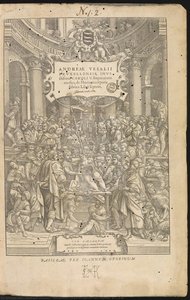 De humani corporis fabrica libri septem, N*.1.1(A)1555

Essais sur Skeleton
 Peintres lituaniens du 20e siècleDécouvrez l'art de Čiurlionis et Lipchitz. Explorez ces chefs-d'œuvre du modernisme lituanien sur OriginalUniqueArt.com.
 Peintres lituaniens du 19e siècleDécouvrez les chefs-d'œuvre de peintres comme Isaac Levitan. Explorez la collection sur OriginalUniqueArt.com.
 The Architecture of Flesh: Mastering Anatomical Precision in Classical Figurative ArtMaster the science of classical figure painting through anatomical study and light. Explore the masters of form today.